
Valletta Waterfront: a visitor's guide to the Floriana promenade

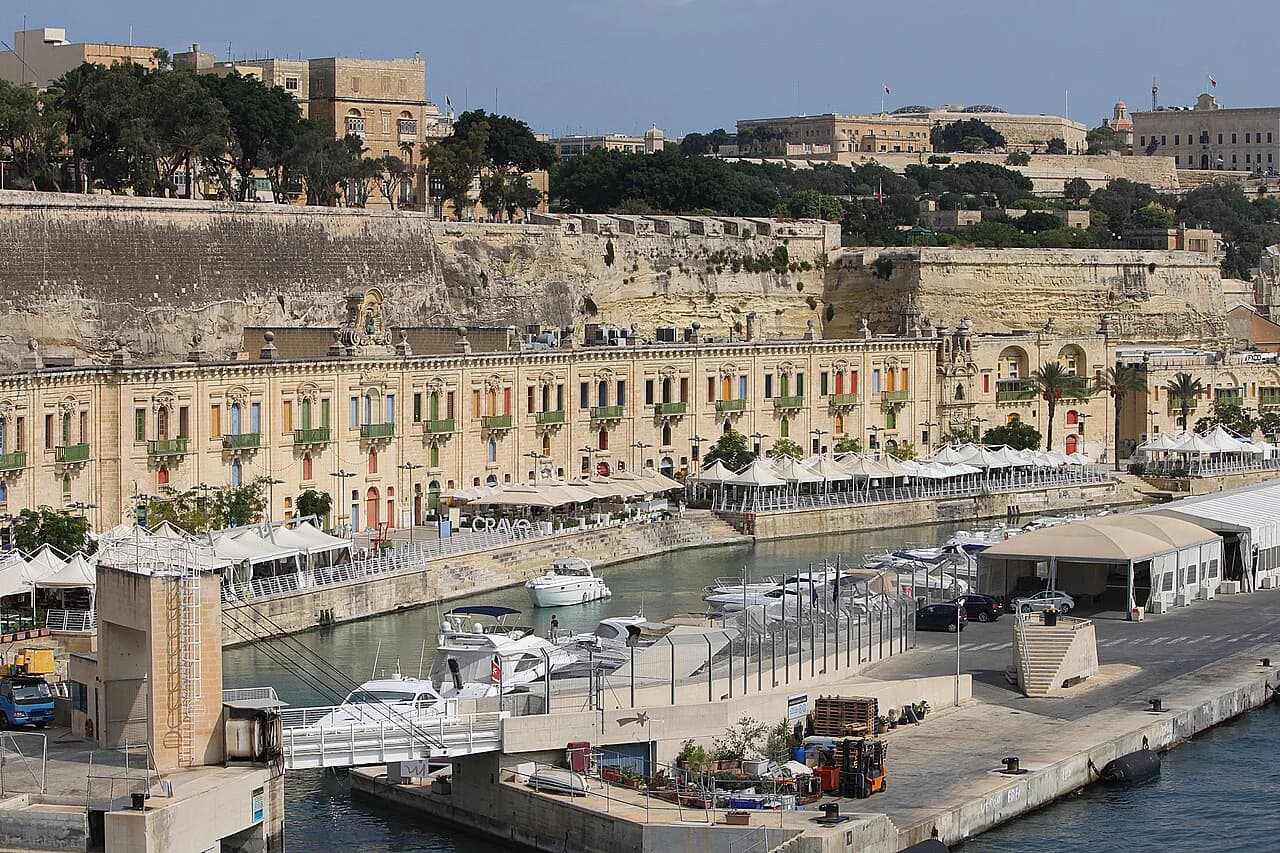
Valletta Waterfront is worth a targeted hour or two, not a whole day. It is a promenade in Floriana, on the Grand Harbour shore below Valletta's walls, so expect baroque warehouses, a chapel, a memorial and a row of restaurants rather than bastions and auberges. This guide covers what to see on the quay, which kitchens face the water, how the harbour view works and how to walk in from Valletta or Floriana.
What and where Valletta Waterfront actually is
The waterfront is a promenade in Floriana, not a street inside Valletta's walled city. That distinction matters when you plan a day: the Triton Fountain, the City Gate and the grid of Valletta's streets sit up the hill, and the quay sits below them on the Grand Harbour. Treat the two as one outing with a walk between them rather than expecting the waterfront to deliver the city's palaces and churches.
Its character is that of a restored port: a long open quay, ocher-coloured baroque buildings facing the water, and a steady turnover of diners, shoppers and passengers from the cruise terminal. It is flat, open and easy to walk, which makes it a comfortable contrast to Valletta's stepped streets. It is also a place where you sit and look rather than tick off sights, so build it into a route rather than making it the route.
For the wider picture of how the capital's districts fit together, the Valletta Neighbourhoods: 5 Area Guides sets out the walled city, Floriana and the harbour-side areas so you can see where the waterfront sits.

The Pinto Stores and their coloured doors
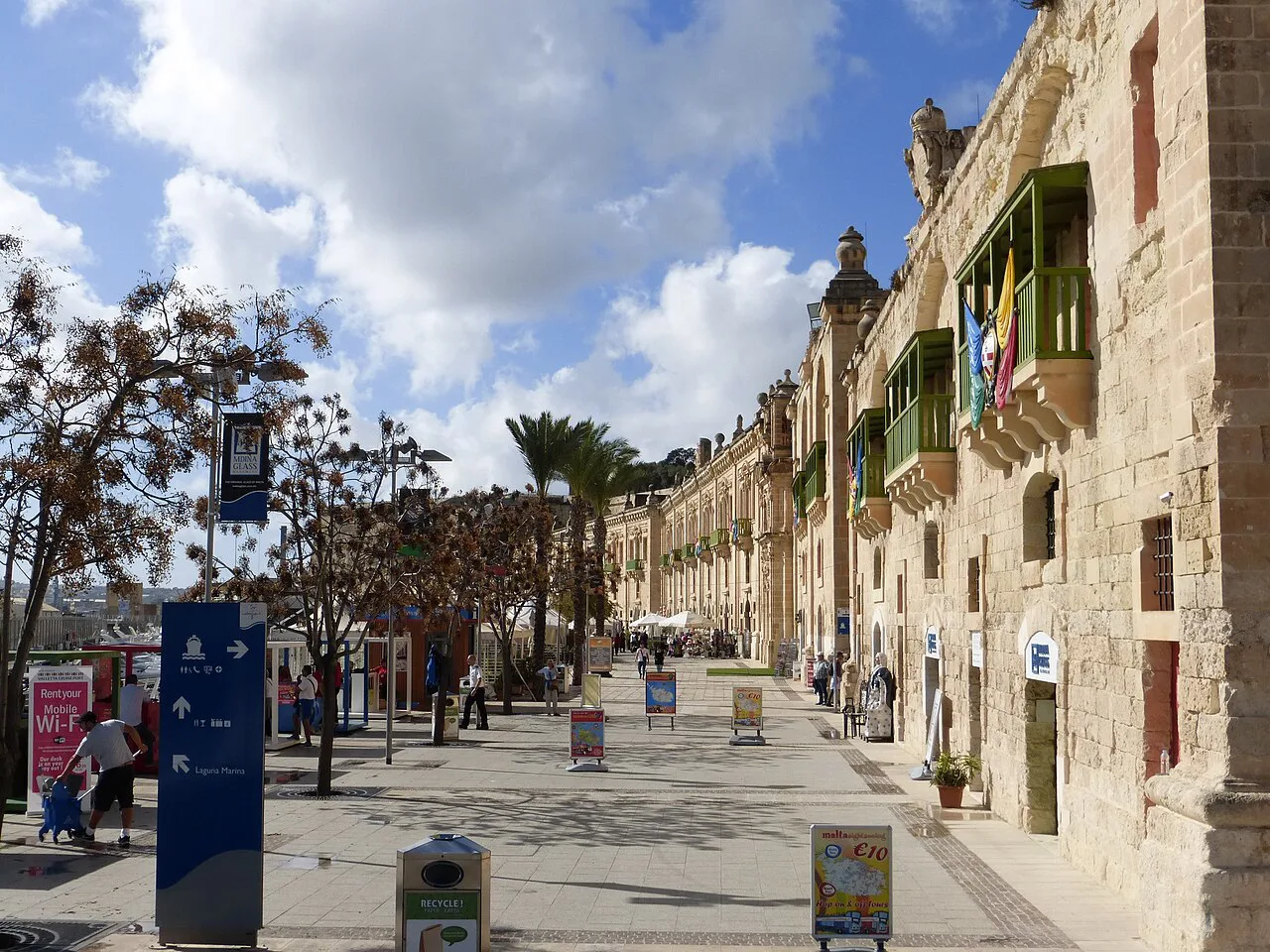
The waterfront's defining buildings are the Pinto Stores, commissioned by Grand Master Pinto and designed by Andrea Belli at the height of the Baroque movement to support harbour activity. The stores are still known by Pinto's name, and their painted doors are the image most visitors carry away. Look along the facades rather than at a single building: the rhythm of doors and the arcade below them is the sight.
The chapel sits between the stores rather than at one end, so the sequence of warehouse, chapel, warehouse is worth noticing as you walk the quay. There is no need to schedule a separate stop for each facade; a slow pass along the waterfront covers the architecture, the chapel and the memorial in one line.

The Chapel of the Flight to Egypt by the Holy Family
The Chapel of the Flight to Egypt by the Holy Family, Il-Kappella tal-Ħarba lejn l-Eġittu, was built in 1752 alongside the stores on Andrea Belli's Baroque design, for the spiritual service of the workers at the Pinto Stores. It is a small building set among the warehouses, so watch for it rather than expecting a standalone church front.
The waterfront's own listing mentions a weekly Mass at the chapel, so if you want to attend rather than look in, confirm the current day and time with the waterfront before you travel. Dress as you would for any Maltese church.
The Child Migrants' Memorial
The Child Migrants' Memorial was inaugurated in 2008 to commemorate the 310 Maltese children, mostly boys, who travelled to Australia between 1950 and 1965 in search of a better life. It is one of the few points on the quay that asks you to stop rather than pass, and it sits among the shops and restaurants rather than in a separate park.
Read the memorial before you settle at a table: the contrast between the two is the honest story of this stretch of harbour, which has been a working port far longer than it has been a place to eat.
Restaurants and bars along the quay
Eating is the main activity here, and the range is wider than a single cuisine. VINOMAD, from the team behind The Brew in Sliema and Ribs House in Naxxar, is built around wine by the glass with self-pour machines and a curated food menu. Mamma Mozzarella covers Italian pizza and pasta, Tribelli serves Maltese and Mediterranean cooking, and Ta' Detta Restaurant is a family-run business specialising in traditional Maltese and Mediterranean food.
For something other than European cooking, Nan Yuan has served Asian food at the waterfront since 2004, and Hi Sushi Malta is a contemporary Japanese and fusion restaurant in the cruise liner harbour. Menus, prices and booking arrangements change, so check the individual venue before you commit an evening to one of them.
The waterfront also lists a wider run of restaurants and bars beyond these, which is useful if you are arriving without a booking and want to compare what is actually open on the day.
Shops and attractions: what the waterfront is set up for
The official site describes the destination as a mix of food, shopping and entertainment, with local shops offering gifts and souvenirs behind the coloured doors. Beyond the stores, chapel and memorial, the listed attractions are the Historic Quay Wall and the Child Migrants' Memorial rather than museums or galleries. Plan accordingly: this is a promenade to stroll, eat on and photograph, not a sightseeing hub.
If you want Malta's headline collections, St John's Co-Cathedral and the national museums are up in Valletta, and the things to do in Valletta guide covers those. The waterfront works best as the flat, open finish to that kind of morning.
Views across the Grand Harbour to Fort Saint Angelo
The waterfront's real draw is the sightline: from the quay you look across the Grand Harbour to Fort Saint Angelo in Birgu, on the Vittoriosa side of the water. The harbour separates Valletta from Vittoriosa, Senglea and Cospicua, so the view lays the Three Cities out opposite you without your needing to take a boat.
Come in the late afternoon if the view is the point: the light softens, the quay fills, and the fort across the water reads clearly. The webcam trained on this stretch gives a live sense of how busy the promenade and harbour are before you set out.
Getting there on foot from Valletta and Floriana
The walk from Valletta's centre is downhill and takes you through or past Floriana, the town whose territory the waterfront actually occupies. Coming back up is the effort, so many visitors walk down, eat, then take the bus or a taxi back up rather than retracing the climb in the heat.
If Floriana is the part you want to see properly, its own guide covers the squares and streets above the waterfront, including Triq San Publiju, so you can pair the two without treating the quay as the whole neighbourhood.
Within walking distance you have the cruise terminal itself, the waterfront chapel and memorial, and the lower edge of Floriana. Valletta's City Gate, the Triton Fountain and the auberges are a climb rather than a stroll, so allow for the gradient when you plan how much of the city to combine with the quay.
Who the waterfront suits, and when it does not
The waterfront suits anyone who wants a flat, unhurried evening with a harbour view, a table and no ticket queue, and it works well for travellers who have already seen the walled city and want somewhere easy to end the day. It also suits a short stop before or after a ferry or cruise movement, because everything is on one level.
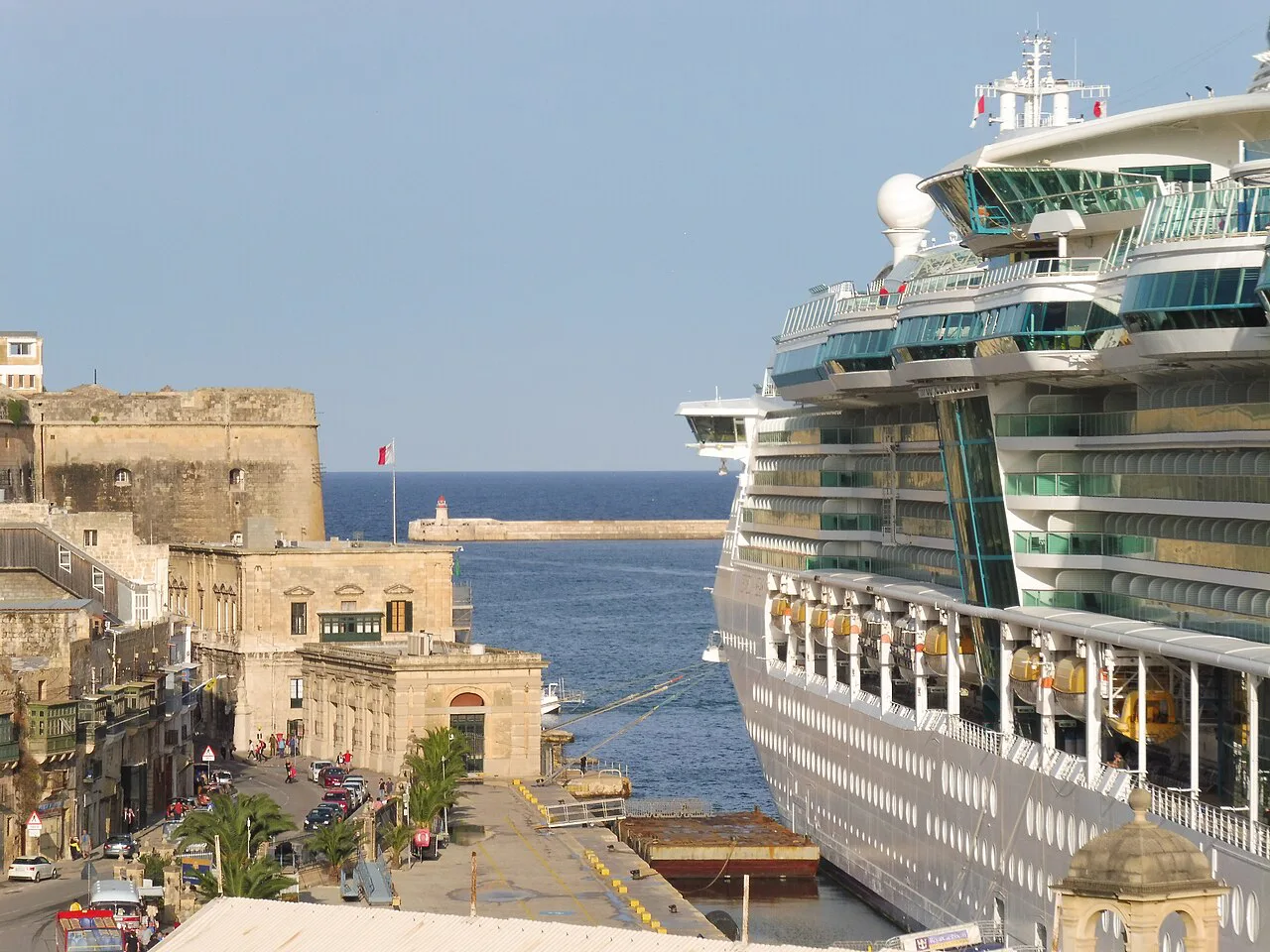
It does not suit anyone hoping for bastions, palaces, museums or a beach: none of those are here, and the promenade is a dining-and-shopping strip first. Cruise days bring a surge of footfall from the terminal, so a mid-afternoon visit in high season feels very different from an evening one.
Treat it as the second half of a day rather than the day itself. Floriana above, or Valletta beyond it, gives the waterfront its context, and the Pietà, Malta guide covers the next inlet round the coast if you are following the harbour southwards.
Practical points: visitor services, transport and parking
The waterfront runs visitor services, transport information and parking as part of the cruise port operation, with a dedicated parking and transport section on its site. If you are driving, read that section before setting out, because the quay serves the terminal as well as diners and shoppers.
Laguna Marina and Valletta Cruise Port are both part of the same complex, and the waterfront publishes an events calendar alongside its restaurants, shops and attractions listings. That calendar is the place to confirm what is on during your dates rather than relying on assumptions about seasonal programming.
The national tourism site carries its own overview page for the attraction, useful as a cross-check before you travel, though it does not set out opening hours or prices there.
Across the water, Marsamxett Harbour is the other side of Valletta and a separate outing; the Marsamxett Harbour guide covers it if you are working your way around the capital's coastline.
Should the waterfront be part of your Valletta day?
Yes, if you want a flat harbour promenade with the Pinto Stores' coloured doors, the 1752 chapel, the Child Migrants' Memorial and a view to Fort Saint Angelo, and if a meal on the quay appeals. No, if you are short of time and have not yet seen Valletta itself: the walled city above holds the palaces, churches and museums, and the waterfront is a companion stop rather than a substitute.
The practical plan is to walk down from Valletta or through Floriana in the late afternoon, see the chapel and memorial, take the harbour view, eat at one of the quay's restaurants and travel back up rather than climbing. If you are continuing along the coast, the Marsa, Malta guide covers the next district inland from the harbour.
Explore more Valletta guides
Frequently Asked Questions
Where is the waterfront in Valletta?
It is in Floriana, on the Grand Harbour shore below Valletta's walls, not inside the walled city. Walk down from Valletta's centre or through Floriana, and expect the climb back up or a bus ride instead.