Things to Do in St Julian's, Malta: Bays, Promenade and Basilica
Plan things to do in St Julian's, Malta: Spinola Bay, the promenade towards Sliema and Balluta Bay, the Mount Carmel basilica and St George's Bay.
On this page
St Julian's works best as a walking district built around three separate waterfronts rather than a sightseeing checklist: Spinola Bay and its fishing boats, the broad promenade stretching towards Sliema and Balluta Bay, and St George's Bay on the other side of the peninsula. Add the Basilica of Our Lady of Mount Carmel and the shopping streets, and you have the core of a half-day, with the rest of the time spent eating or walking further along the coast. This guide covers each of those pieces in turn, says how they connect on foot and looks at how St Julian's serves as a base for the rest of Malta.
Treat the area as one seafront at your peril: Spinola Bay and St George's Bay face different directions and a walk between them crosses the dense cluster of Paceville, which most visitors pass through rather than linger in by day. Everything described here is reachable on foot from the centre, so you do not need a car to see the main stretches, and St Julian's Neighbourhoods: 6 Area Guides makes it easy to weigh the different parts of the district before you settle on an itinerary.
What there is to do in St Julian's, in short
The headline is the waterfront: Spinola Bay with its traditional fishing boats, a photogenic small bay lined with restaurants on one side, and the promenade that runs from there past an outdoor lido and water polo courts towards Sliema. The walk is broad and tree-lined, passing gardens with open-air cafés and finishing in the smarter streets of Sliema if you keep going.
Inland, the Basilica of Our Lady of Mount Carmel is the one named church in St Julian's that rewards a deliberate stop rather than a passing glance, and it sits within easy reach of the shopping streets. St George's Bay gives you a sandy inlet on the eastern side of the peninsula, which matters because the St Julian's waterfront itself has no sandy beach. If you are choosing where to stay or eat, St Julian's Neighbourhoods: 6 Area Guides compares each bay as a base before you commit.
Between those anchors you can fill the day with a spa session, a salsa class, window shopping or a long lunch, all of which the area does well. What St Julian's does not offer is a cluster of museums or archaeology, so plan it as a relaxed coastal day and put Valletta or the temples on another day.
If you are weighing up whether the district deserves a slot in a short trip at all, the honest answer is that its appeal is the seafront and the eating rather than a set of sights. If you are comparing possible bases, St Julian's Neighbourhoods: 6 Area Guides shows how the character changes from one stretch of the peninsula to the next.
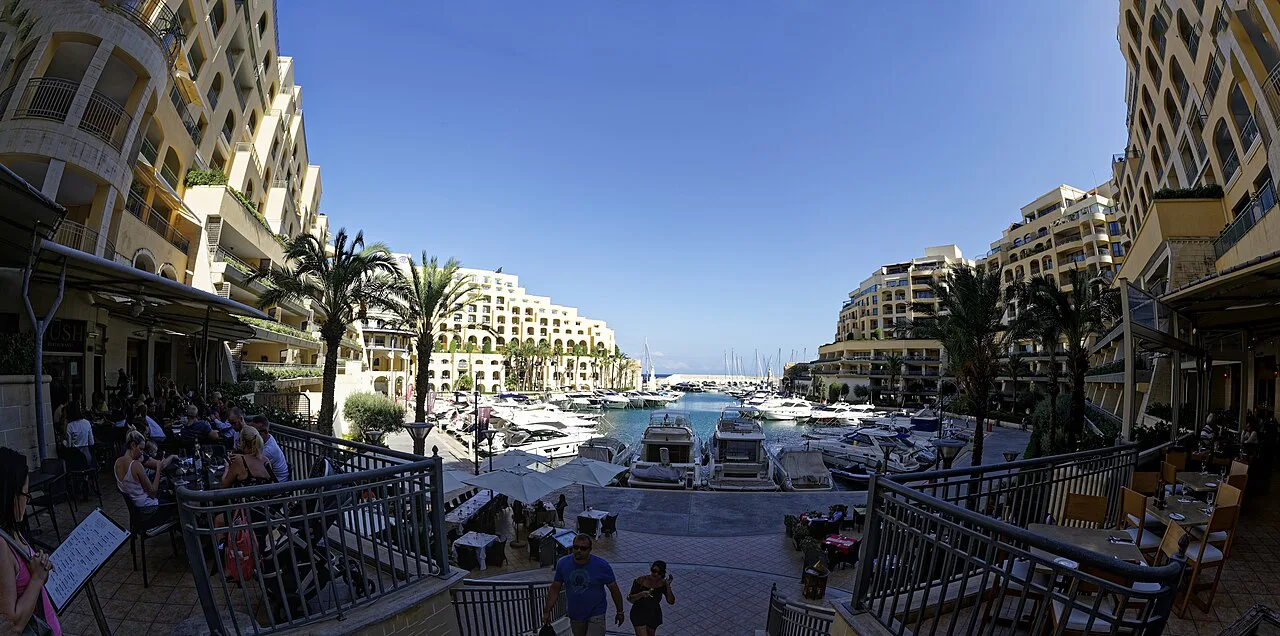
Spinola Bay: fishing boats, the bay and the waterfront
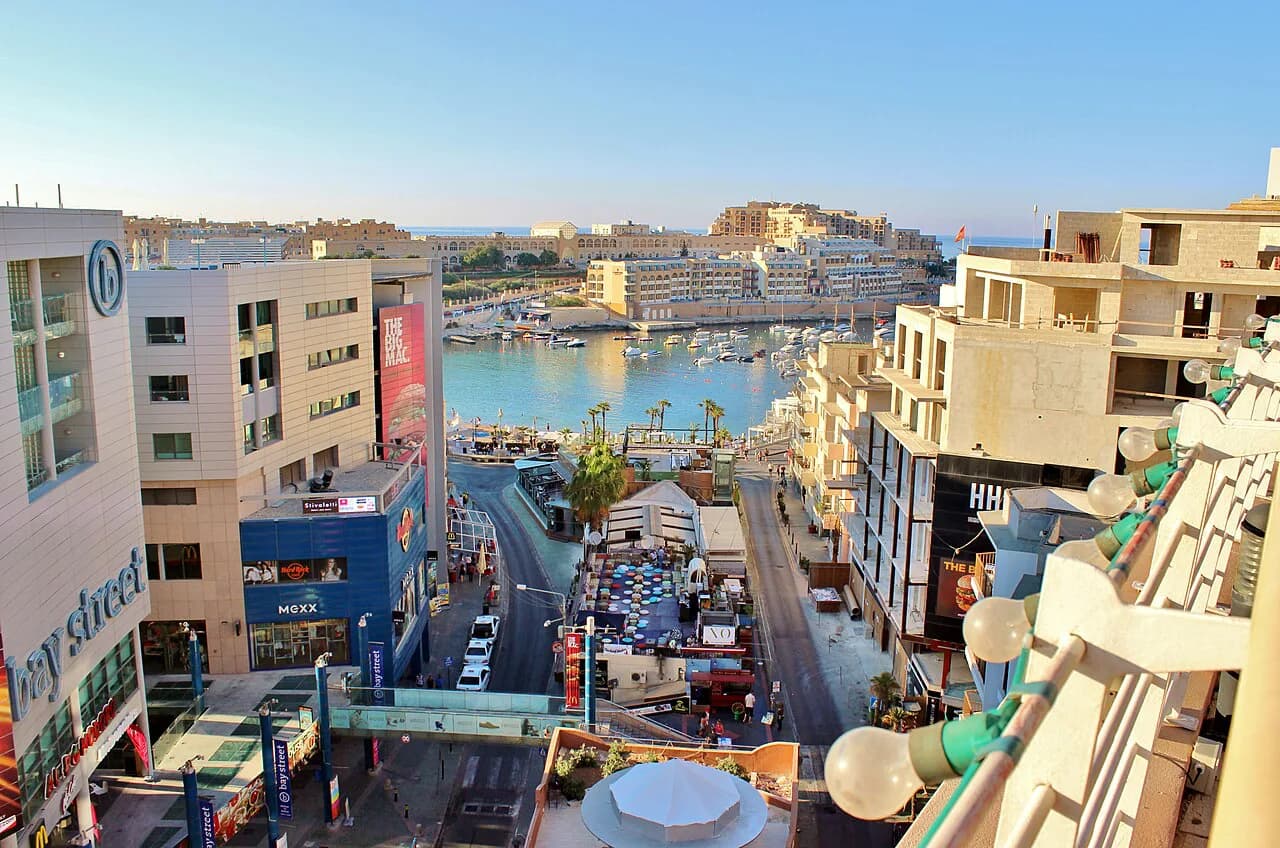
Spinola Bay is the image most people carry of St Julian's: a compact inlet with traditional fishing boats moored in it, cafés and restaurants along one shore and a curve of waterfront that photographs well in low light. Come here first, before the day heats up, and walk the full arc of the bay rather than stopping at the first row of tables.
The bay is small enough to cross in a few minutes, which makes it a natural start or finish point rather than a destination in itself. Sit at the water's edge for a coffee, then head south along the promenade or inland towards the basilica.
Because the waterfront here is lined with places to eat, it is also where you will make your main meal decision. Our guide to the best restaurants in St Julian's, Bay by Bay breaks the options down by stretch of coast so you are not choosing blind from the first menu you pass.
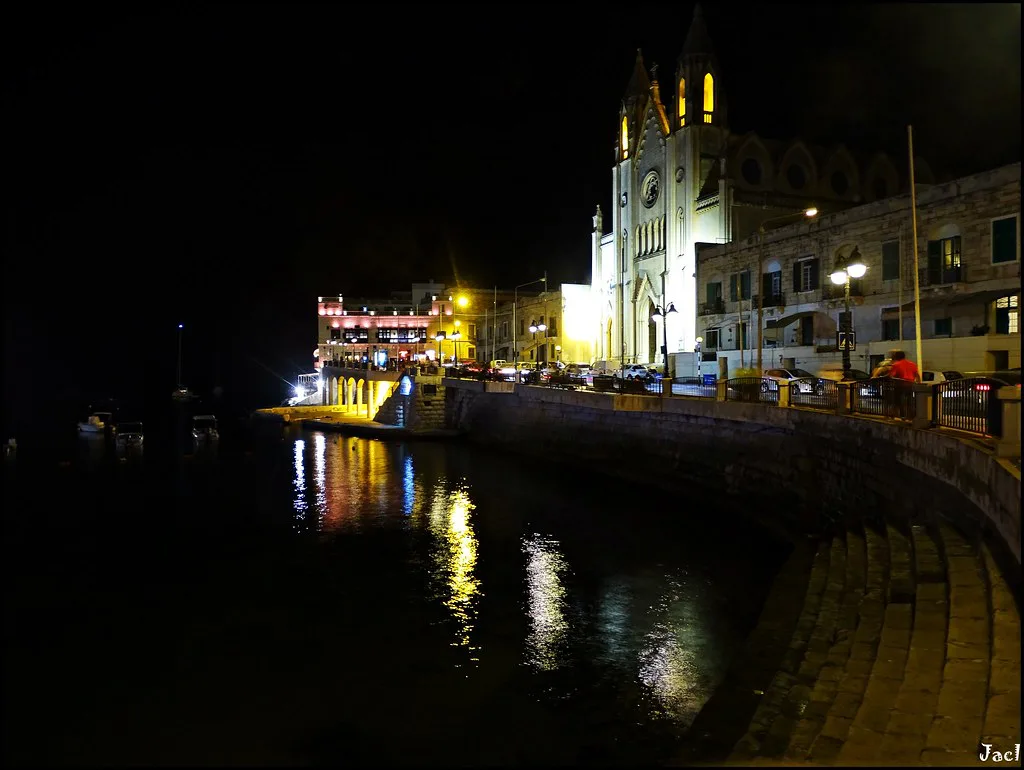
The promenade from St Julian's towards Sliema, Gżira and Balluta Bay
The promenade is the single best thing to do in St Julian's and it costs nothing. From the St Julian's end it runs past an outdoor lido and two water polo courts, through gardens with open-air cafés, and on along the waterfront with sea views the whole way; keep walking and the path brings you towards the Sliema end of the coast.
Set your expectations about the swimming, though: there are no sandy beaches along this stretch of the St Julian's waterfront, and sunbathing happens from flat sandstone rocks at the water's edge. That is fine for a dip and a lie-down, but it is not a beach day, so bring footwear you can walk on rock in and leave the bucket-and-spade plans for St George's Bay.
The walk rewards you at the Sliema end, where smart cafés spill out along the promenade with uninterrupted sea views and the pace shifts from holiday waterfront to something more polished. Allow a good hour or more each way if you plan to stop, or take it one direction and ride back on the bus.
Walkers who want the full picture of how the bays join up should carry the St Julian's Map, because the promenade bends around headlands and the next bay arrives sooner than you expect. If you are also deciding which stretch to stay in, St Julian's Neighbourhoods sets out how each bay compares as a base.
Basilica of Our Lady of Mount Carmel
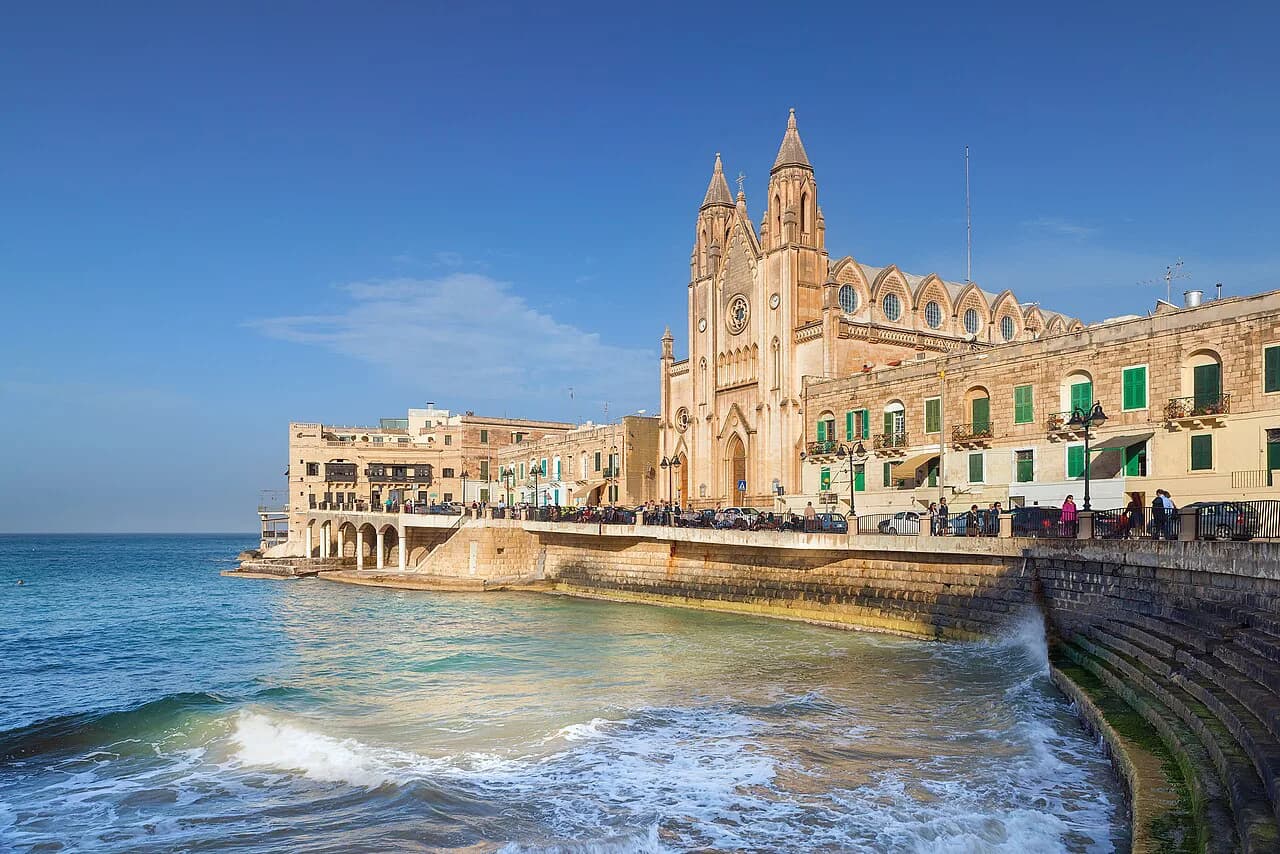
The Basilica of Our Lady of Mount Carmel is the landmark church of St Julian's and the one sight here that justifies stepping off the waterfront. It is a working parish church, so visit outside service times and dress respectfully: shoulders and knees covered is the safe standard for any Maltese church, and a shawl in your bag solves the problem in seconds.
Check the notice board at the door for that day's Mass times rather than relying on a printed guide, because parish schedules can change. Photography inside is best kept brief and quiet, and a small donation is the usual courtesy where one is invited.
St George's Bay
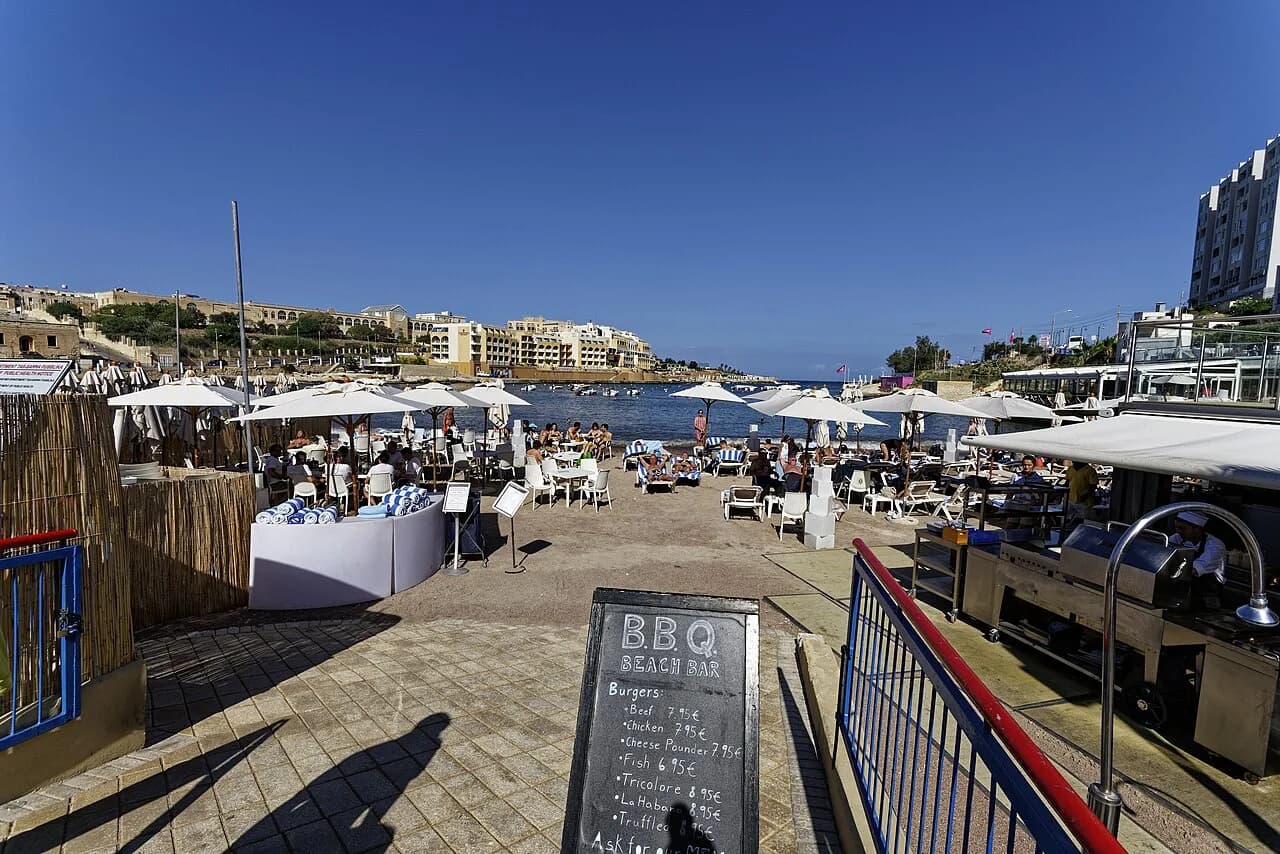
St George's Bay is the sandy inlet on the eastern side of St Julian's and the place to head if you want sand between your toes without leaving the district. It is a small bay rather than a long beach, so in high summer plan around the morning if you want more space.
Pair it with the rest of the peninsula: swim in the morning while the bay is quieter, then walk back across to Spinola Bay for lunch. There is no need to bring a car, and the crossing on foot gives you a sense of how compact St Julian's actually is. If you are still deciding where to sleep, St Julian's Neighbourhoods shows how this side of the peninsula compares with Spinola Bay as a base.
Shopping in St Julian's and nearby Sliema
Shopping is a genuine activity here rather than a filler, with the streets around the centre carrying the usual international names and Sliema's Bisazza Street a short walk or bus ride away for fashion. It makes a sensible wet-weather or midday-heat plan, and our shopping in St Julian's guide groups the streets and centres into a focused route rather than a random wander.
To compare the different parts of the district before you commit to an itinerary, St Julian's Neighbourhoods: 6 Area Guides sets out how each stretch of the peninsula differs, from the quiet waterfront to the busiest streets.
Paceville: what it is before you walk through it
Paceville is the dense cluster of streets at the heart of St Julian's, and by day it is simply the shortest route between Spinola Bay and St George's Bay. Walking through it is unavoidable if you are covering the district on foot, so treat it as a corridor rather than a destination and keep your eyes on the far side.
The area is best known for its evening economy, which is not what this guide covers. If that is your reason for being here, you already know what you are getting; if it is not, plan your walk for daylight and you will barely notice it.
Where St Julian's sits for reaching Valletta and the rest of the island
St Julian's works as a base rather than a sights destination: Valletta for the fortified city and its museums, the Three Cities across the harbour, Mdina and Rabat inland, and the south coast for Marsaxlokk and the temples are all reachable for day trips. Build your days around those trips and keep St Julian's for the evenings and the waterfront. If you are weighing where to stay for those day trips, St Julian's Neighbourhoods sets out how each stretch of the peninsula compares as a base. To turn those day trips into a plan, our Malta Itinerary: Realistic Day-by-Day Plans for 3, 4, 5 and 7 Days shows how to fit the rest of the island around your base here.
Getting around the district itself is on foot, and buses connect St Julian's with Sliema and Valletta, so you can link the promenade walk to a day in the capital without returning to the same bay twice. Check the current route and frequency on the operator's own information before you set out, since services change with the season.
To compare the different parts of the district before you commit to an itinerary, see the neighbourhood guide above, and for a focused eating plan read our guide to the best restaurants in St Julian's, Bay by Bay.
How long St Julian's needs and how to pace a half-day or a full day
A half-day covers Spinola Bay, the basilica and a stretch of the promenade comfortably, with time for a coffee at the water. A full day adds St George's Bay for a swim, a proper lunch and the walk towards Balluta Bay and Sliema, which is where the district earns its keep.
Pace it around the heat and the light: walk the promenade early or late, be indoors or in the water at midday, and leave the basilica for a cooler hour. Avoid trying to see the whole peninsula and Valletta on the same day, because the walking adds up and the buses fill in the afternoon.
Travellers who want the full promenade route, with the lidos, gardens and bays in order, will find the stretch-by-stretch detail in our St Julian's promenade guide, which is the best single page to read before setting out on foot.
Which St Julian's half-day suits you
Choose the promenade if you have one free afternoon: start at Spinola Bay, walk the waterfront towards Balluta Bay and Sliema, and finish with a meal at the water's edge. Choose St George's Bay instead if you want sand and a swim, and add the basilica to either plan on the way past; St Julian's Neighbourhoods breaks down how each of these bays fits into the wider district.
Either way, do not expect St Julian's to fill a week of sightseeing on its own. Use it as a comfortable coastal base, take the bays on foot and spend the rest of your days in Valletta, Mdina and the south.
Explore more St Julian's guides
Frequently Asked Questions
Is St Julian's good for a non-swimmer?
Yes, because the district's main activity is walking rather than swimming. The promenade is broad and level and the sandstone rocks at the water's edge are optional. You can spend a full afternoon on the waterfront without entering the water at all.
How does St Julian's compare with Sliema as a place to walk?
They are effectively one continuous seafront. The promenade runs from the St Julian's bays towards the Sliema end of the coast, so the honest approach is to walk one way and stop wherever the cafés look good rather than treating them as separate destinations.
Do I need to book anything in St Julian's in advance?
Very little. The promenade, the bays and the basilica involve no advance booking, and most activity is spontaneous. If you plan a spa treatment, a specific restaurant table or a class, book directly with the venue and confirm the details with them.
Sources
Notes for your Malta trip
Optional updates when we add or correct a Malta or Gozo guide.
You might also like
Continue reading
More guides you'll find useful