Things to Do in Gozo: Victoria, the Citadel, Dwejra and the Coast
Things to do in Gozo, from Victoria's Citadel and the Ġgantija temples to Dwejra Bay, Ta' Pinu and the Xwejni salt pans, with ferry and car-hire trade-offs.
On this page
Two or three days lets you see Gozo properly. Victoria and the Citadel fill a morning, Ġgantija and the north coast fill an afternoon, and Dwejra and the cliffs deserve a second day rather than a rushed loop off the ferry. This guide splits the island by area and gives each stop a realistic time slot, plus the ferry and car-hire decisions that shape the whole trip.
Gozo is Malta's second island, reached by ferry from Ċirkewwa on the northern tip of Malta or by a foot-passenger fast ferry from Valletta. Once you are across, distances are short, but buses are not frequent, so how you travel decides what you can fit in. The stops below are grouped so you can string two or three together without crossing the island twice.
What there is to see in Gozo, and how many days it takes
Gozo packs a walled Citadel, megalithic temples, a domed Rotunda, sea arches, salt pans and cliff walks into a small island. The practical split is Victoria and the centre in the morning, then either the north coast around Xagħra and Marsalforn or the west around Dwejra and San Lawrenz in the afternoon. A second day covers Ta' Ċenċ, the Wied il-Għasri gorge and Ramla without watching the clock. If you are weighing this against the larger island, our guide to things to do in Malta covers the Valletta and Mdina sights that work as a separate day.
Two nights on the island is a sensible minimum if you want the Citadel museums, the temples and at least one coastal stop without racing. A single day is workable but tight: pick Victoria, one temple site and one coastal area, and accept that you will skip the rest.
Getting to Gozo: the Ċirkewwa car ferry versus the Valletta fast ferry
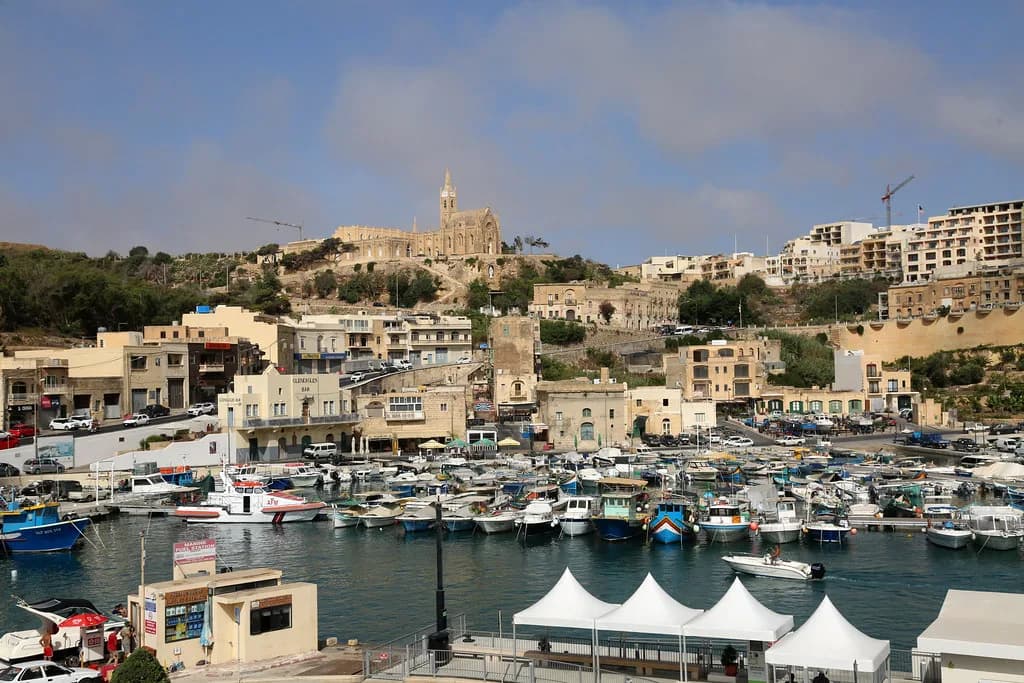
The Gozo Channel car ferry runs from Ċirkewwa to Mġarr Harbour and takes about 25 minutes, and it is the only option if you are bringing a hire car across. The crossing is frequent compared with the fast ferry, and the fare model works in your favour: you pay on the return leg rather than on the outward sailing. The Valletta fast ferry is foot passengers only and reaches Mġarr in roughly 45 minutes for just under €15, which suits anyone planning to use buses or taxis on Gozo or to hire a car locally in Victoria.
The fast ferry is more exposed to weather and can be cancelled when the sea is rough, so it is the less reliable of the two if your plans are fixed. The car ferry also has a summer queue problem at Ċirkewwa, so build slack into the return leg rather than booking the last crossing of the day.
Getting around: rental car against infrequent buses
A hire car is the easiest way to link the Citadel, the temples and the coast in a single day, and driving is on the left. Buses on Gozo run less often than on Malta, which matters most on Sundays and in the evening, so check the route you need before committing to a car-free plan. If you arrive on the fast ferry, you can still hire a car in Victoria rather than at Mġarr.
Parking at the obvious stops is informal rather than organised. At Ta' Ċenċ you park along the roadside, and at the salt pans you simply pull in off the road. That informality is part of Gozo's appeal, but it means you should not expect signed car parks at every sight.
Victoria (Rabat) and the Citadel: what the combined ticket covers
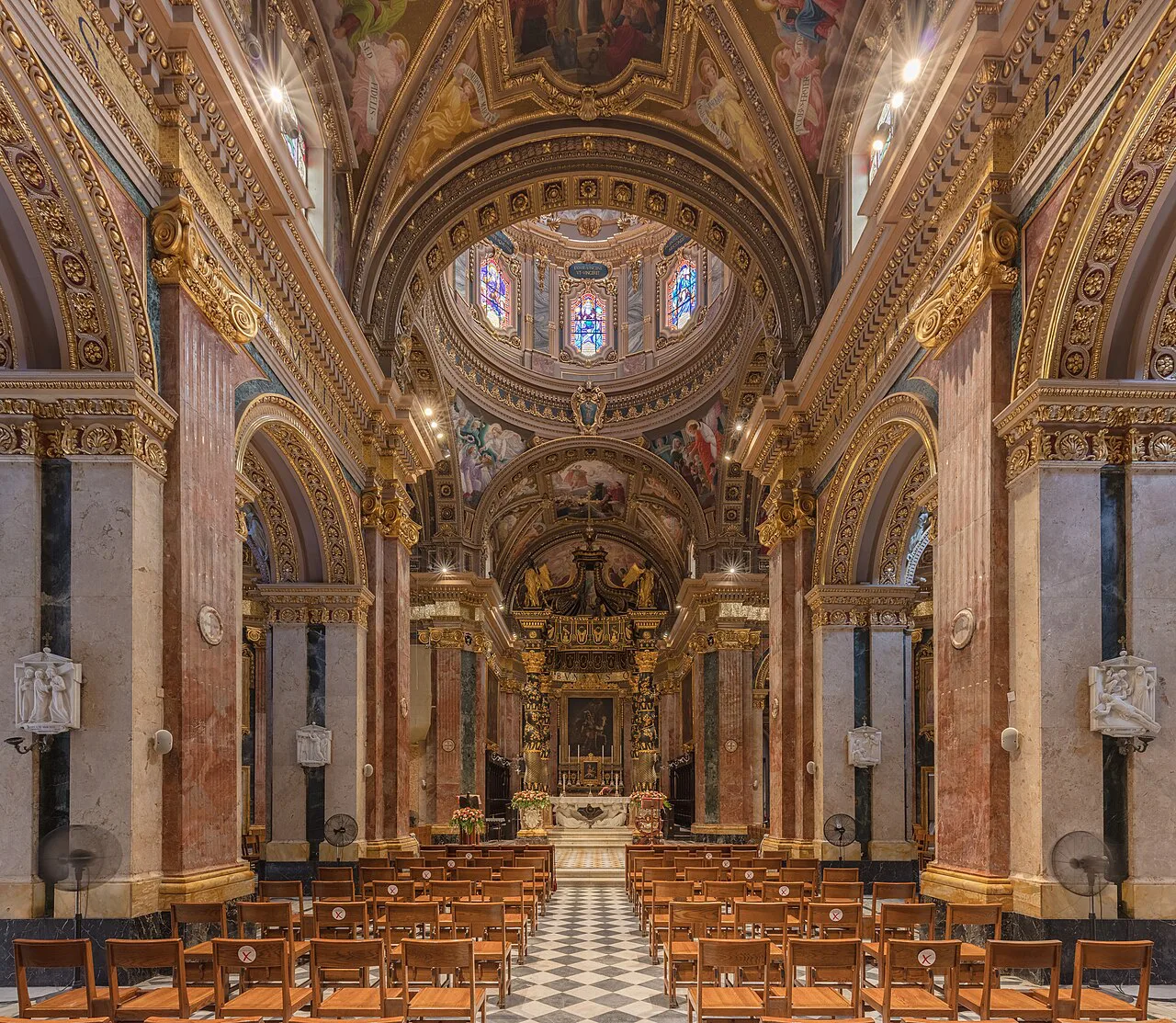
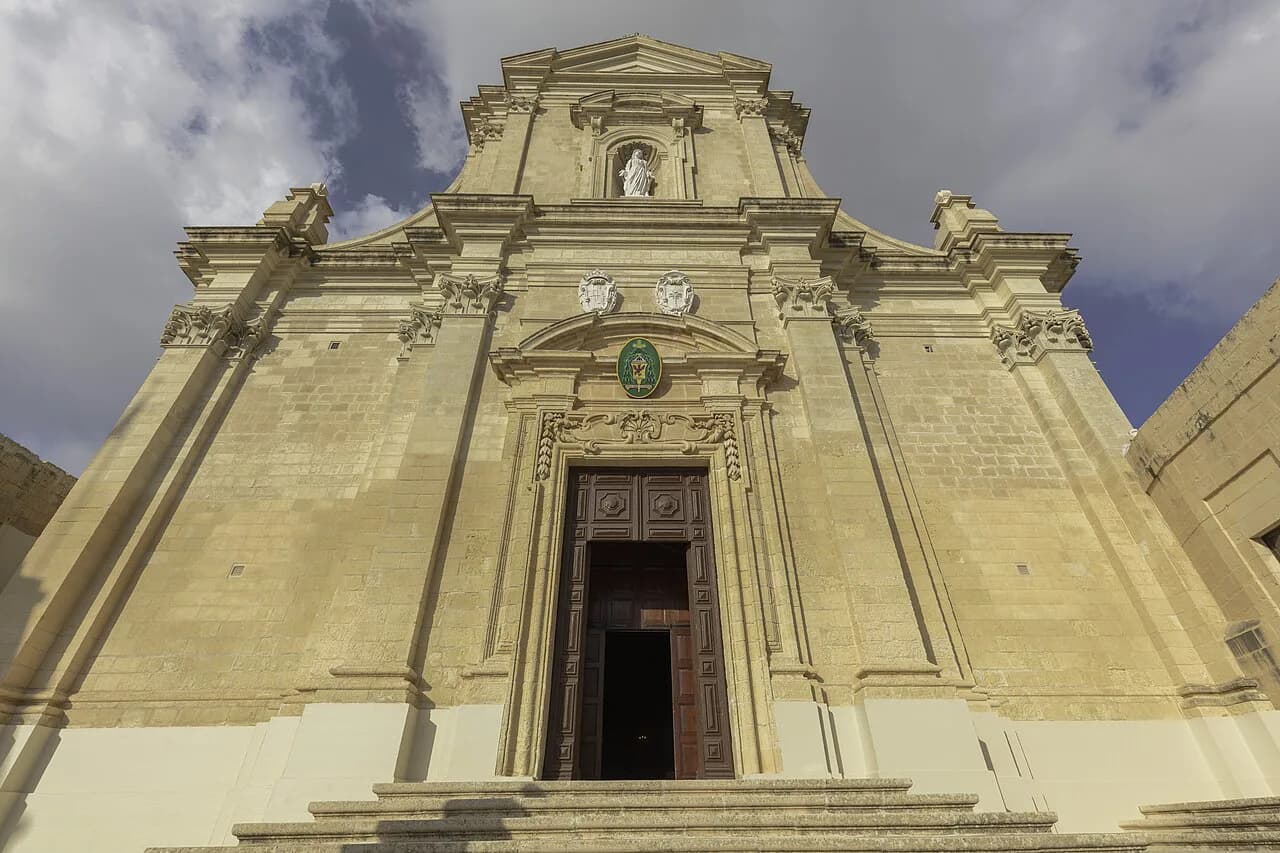
Victoria, also called Rabat, sits in the middle of the island with the Citadel at its centre, and the surrounding streets hold squares, a market and cafés. The Citadel is the headline sight, and one ticket covers the Visitor's Centre with its short film, the Gozo Archaeology Museum, the Nature Museum, the Old Prisons and the Gran Castello Historic House. That bundle makes the Citadel a half-day stop rather than a quick photo, so give it two to three hours. For opening times and the full ticket details, see our Gozo Citadel (Iċ-Ċittadella), Victoria: Visitor Guide.
The thick stone walls around the Citadel date from the sixteenth century, and the walk along them gives you the best sense of how the town sits above the surrounding countryside. Pair the museums with a slow loop of Victoria's lanes and a coffee on a square before moving on.
Ġgantija Temples and Ta' Kola Windmill in Xagħra
The Ġgantija Temples stand side by side at Xagħra, built from limestone blocks, and you pass through a small museum on the way in that explains the excavations. The name means giant in Maltese, and a legend in the local telling credits giants with building them. The site is a UNESCO World Heritage listing, and the open, unshaded platforms get hot at midday, so go early or late.
Ta' Kola Windmill is a short walk from the temples and shows how a miller and his family lived and worked across two floors. Its name comes from the last miller to work there, and it opened as a museum in 1992. Together the two make a natural one-and-a-half-hour stop.
Dwejra Bay: the Azure Window site, the Inland Sea and Fungus Rock
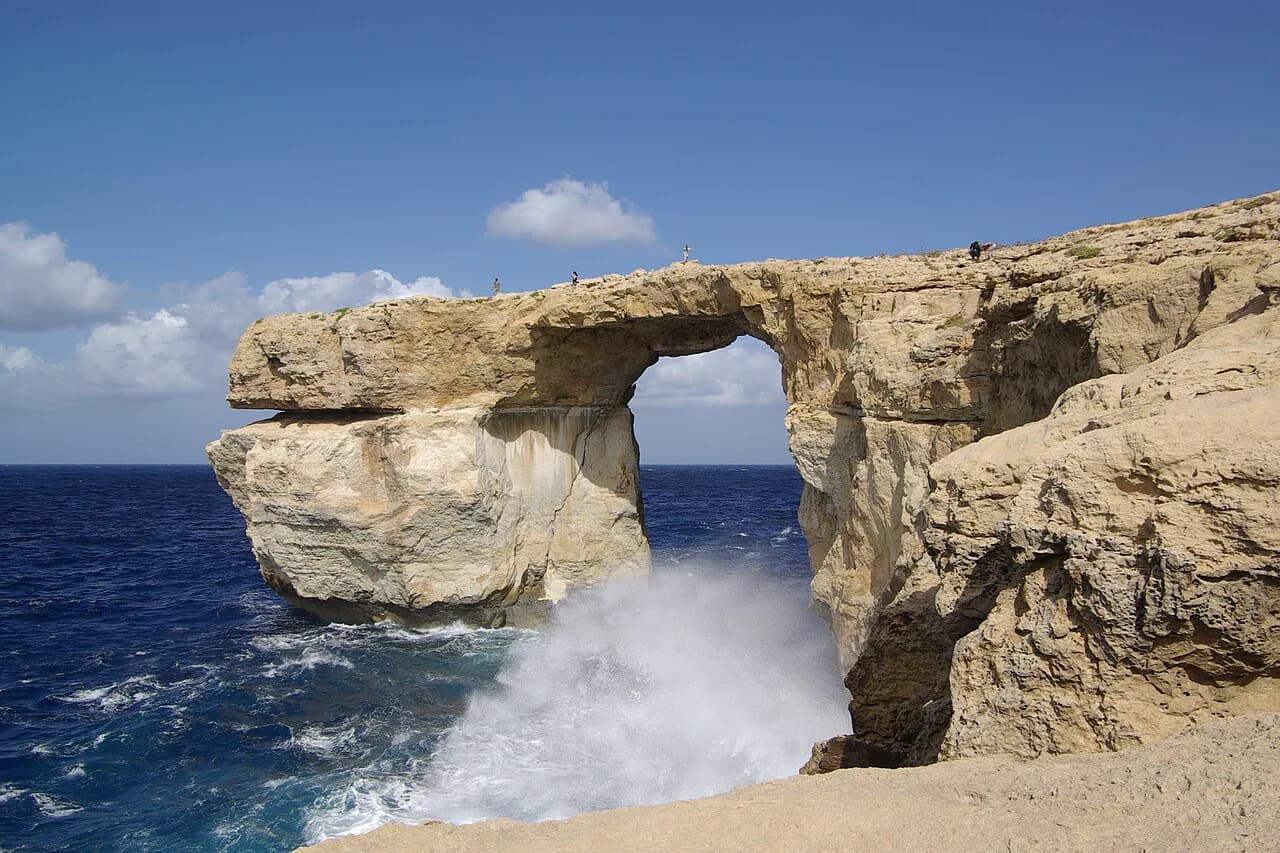
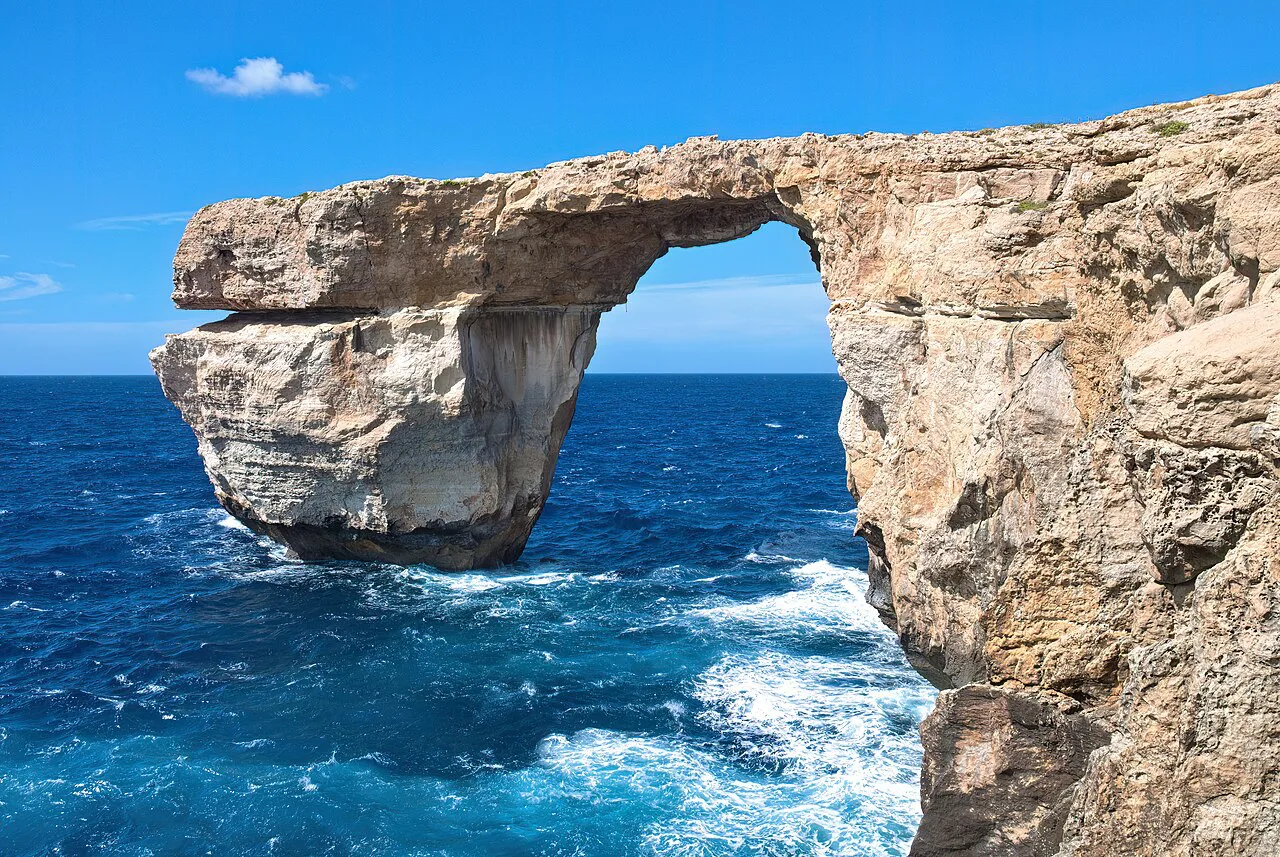
Dwejra is a bay, a dive site and a set of viewpoints rather than a single photo stop. The Azure Window that once stood here collapsed in a storm on 8 March 2017, so come for the Inland Sea, Fungus Rock and the Blue Hole dive site instead of an arch. Evening visits are noticeably quieter than mornings, when tour traffic peaks.
The fallen rocks now form boulders and swim-throughs on the seabed, which is why divers still rate the Blue Hole. Non-divers can walk the shore, watch the boats at the Inland Sea and photograph Fungus Rock from the cliffs. Allow ninety minutes to two hours.
Wied il-Mielaħ sea arch and the San Lawrenz and Għarb lanes
Wied il-Mielaħ is a natural stone arch on the coast near San Lawrenz, and it draws far fewer visitors than the old Azure Window site ever did. On a quiet day you may share it with a handful of climbers. Combine it with a slow drive through the lanes of San Lawrenz and Għarb, where the stone houses and village squares are the point rather than any single sight.
Treat this corner as a half-day rather than a checklist. It rewards stopping, and the roads between the villages are short enough that you can loop back to Victoria without retracing your route.
Ta' Pinu Basilica in Għarb and the Xewkija Rotunda
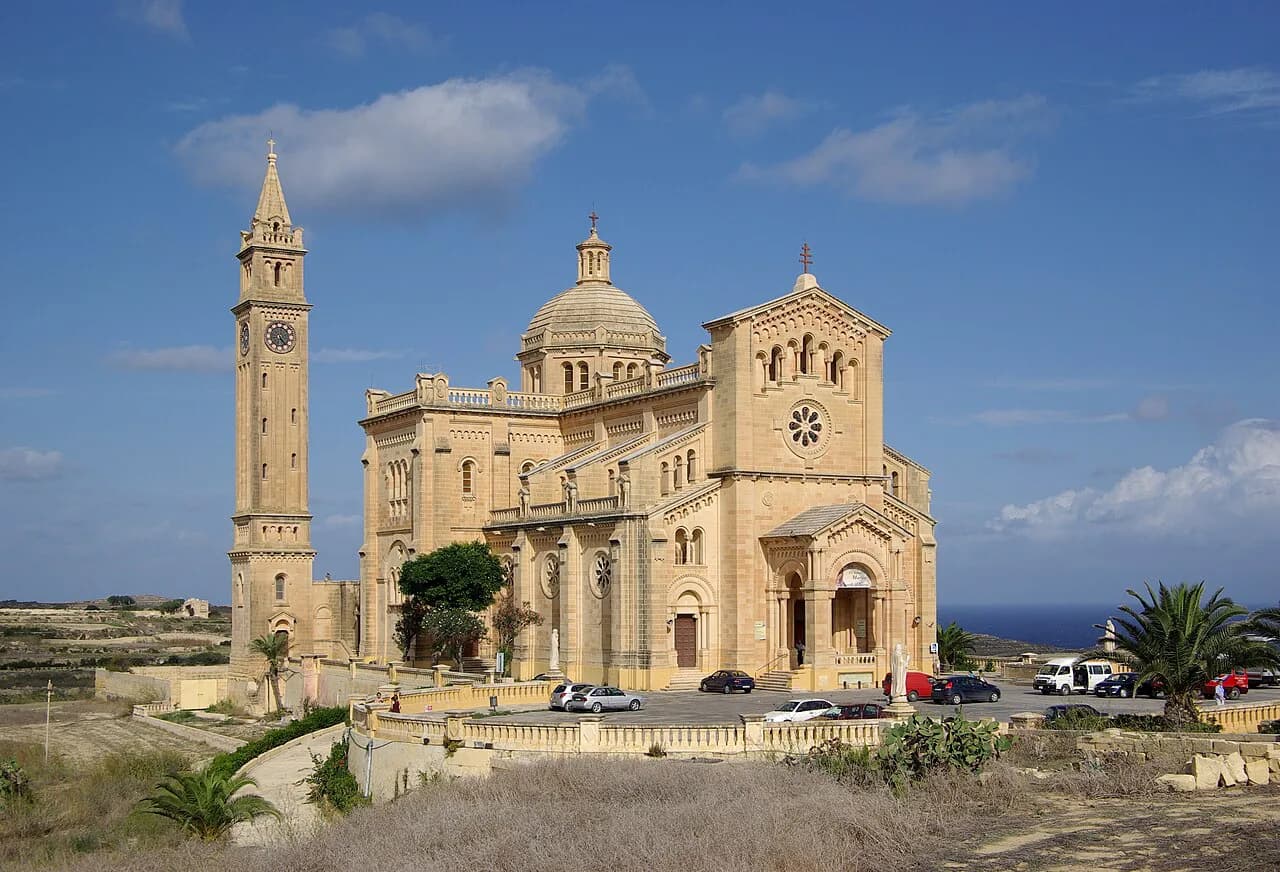
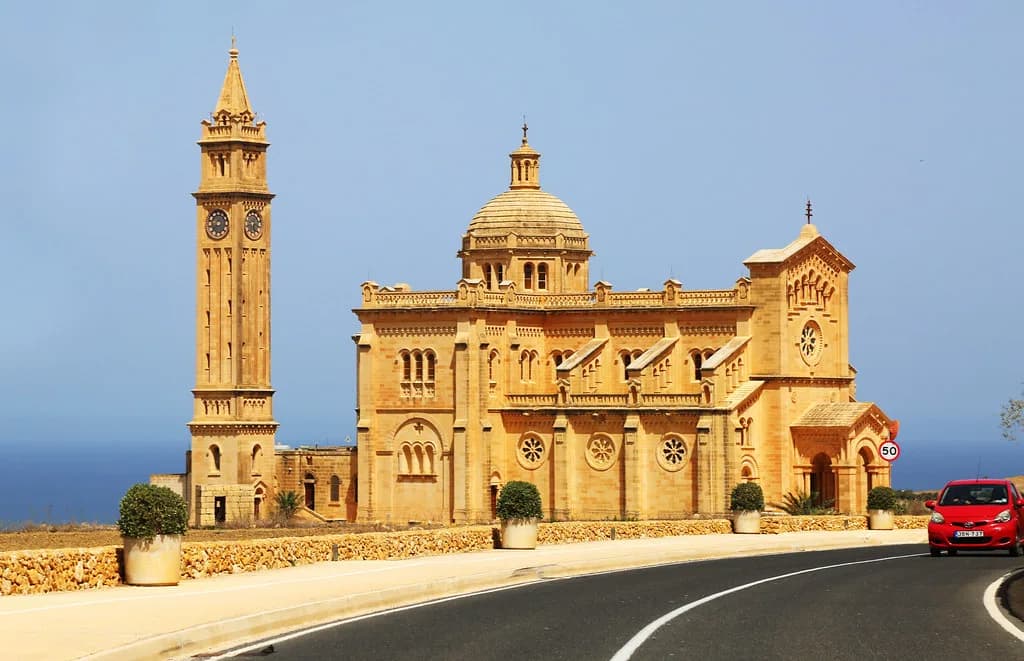
Ta' Pinu is a basilica dedicated to the Virgin Mary, consecrated in 1932, with parts of the building dating to the sixteenth century. Inside there is a gallery of votive offerings, and the setting among the fields near Għarb is quiet enough that many visitors stay longer than planned. Dress respectfully: shoulders and knees covered is the safe rule at any Maltese church.
The Xewkija Rotunda, dedicated to St John the Baptist, opened in 1978 and its dome is visible from across much of the island. It is a short stop on the road between Victoria and Mġarr, and it sits in a small town that is easy to walk through in twenty minutes.
The Xwejni salt pans near Marsalforn
The salt pans at Xwejni, on the north coast near Marsalforn, are squares cut by hand into the limestone and still worked by a handful of salt farmers. You do not need to book anything or walk far: much of the pattern is visible from the road, and stopping to buy a bag of salt supports the families who work the pans. With Marsalforn a short drive away, this works as a twenty-minute roadside stop on the way to or from Xagħra.
The pans have been cut into the limestone for over three centuries, and salt production in the area goes back further still. Wear shoes you do not mind getting gritty and keep off the fragile edges where the rock is wet.
Ta' Ċenċ cliffs above Sannat: no railings, no signs
The Ta' Ċenċ cliffs near Sannat drop steeply to the sea, and the clifftop is covered in flowers and cacti despite the constant breeze. It is also a protected bird sanctuary, so bring binoculars if you want to watch the birds riding the updraughts. There are no signs and no designated parking, so you leave the car along the roadside and follow the trails on foot.
There are no safety railings anywhere along the edge. Keep well back when it is windy, keep children close and do not approach the rim for a better photograph. The absence of infrastructure is exactly why the cliffs feel wild, and it is also why you should treat them with care.
Wied il-Għasri gorge and Tal-Mixta Cave above Ramla Bay
Wied il-Għasri is a narrow inlet on the north coast where the water runs clear between high rock walls, reached by a short walk from the road, with a swim at the gorge on many itineraries. It suits a quiet swim or a look rather than a full afternoon. Tal-Mixta Cave sits on the hill to the right of Ramla Bay, and the walk up rewards you with a view over the bay and the red sand.
Both stops are unmanaged: no ticket, no café, no handrail. Go in daylight, take water and treat the walk back up from Wied il-Għasri as the real effort of the visit.
Ramla il-Hamra and Xlendi: the sandy stop and the inlet stop
Ramla il-Hamra is Gozo's red-sand beach, with dunes behind it, picnic areas and clear water. It works well as a morning stop before the heat peaks, and the walk up to Tal-Mixta Cave starts from the same area. Xlendi, on the south-west coast, is a small inlet with a harbour and restaurants, better for a late lunch than for a full beach day.
Both get busy in the middle of the day in summer. Arriving before ten at Ramla or after three at Xlendi gives you a calmer version of each.
Food stop: ftira from a wood-fired bakery in Nadur
Ftira is a sourdough flatbread topped with thinly sliced potato and, depending on the version, capers, anchovies, olives, egg or Maltese sausage. Maxokk Bakery in Nadur bakes them in a wood-fired brick oven, and it is a bakery rather than a restaurant, so there are no tables: take your ftira away and eat it in the sun. It makes a good lunch stop between Victoria and Ramla.
If you want a sit-down meal instead, the harbour at Xlendi and the squares of Victoria are the obvious places to look. Menus change with the season, so check the board outside before committing.
How to sequence a one-day Gozo visit without overreaching
Start at the Citadel when it opens, give it two hours and walk down through Victoria for coffee. Drive north to Ġgantija and Ta' Kola Windmill for the late morning, then take lunch in Marsalforn or Xagħra before a roadside stop at the Xwejni salt pans. Finish at Dwejra or Wied il-Mielaħ for late afternoon light, then head back to Mġarr with an hour to spare before your crossing. If you are weighing up a day trip with the car ferry and the fast ferry, see A Day Trip to Gozo from Malta, or use the Gozo Map to lay out the route.
If you would rather not drive, book a tour or base yourself in Victoria and use the buses for the Citadel and Xagħra only; keep Dwejra for a second day. Either way, ferry queues at Ċirkewwa are the reliable risk in summer, so plan the return crossing with slack.
Which Gozo stops earn their place on your itinerary
If you have one day, take the Citadel and its museums, Ġgantija with Ta' Kola Windmill, and either Dwejra or Ta' Ċenċ. If you have two, add Ta' Pinu, Wied il-Mielaħ and a slow morning at Ramla, and use the salt pans and Wied il-Għasri as the small stops between bigger ones.
The only decision that really changes the trip is the ferry. The fast ferry is foot passengers only and can be cancelled in rough weather, while the car ferry from Ċirkewwa is the only way to bring a car and unlocks the coast and the cliffs in a way buses cannot match.
Explore more Gozo guides
- A Day Trip to Gozo from Malta
- Gozo Boat Trips
- Gozo Churches
- Gozo Map
- Gozo Tours
- Is Gozo Worth Visiting?
- Things to Do in Victoria (Rabat), Gozo
- Where to Eat in Gozo
- Comino Caves
- Gozo Caves
- Gozo Food
- Gozo History
- Gozo itinerary
- Gozo Kayaking
- Gozo Market
- Gozo Villages
- Shopping in Gozo
- Where to Watch the Sunset on Gozo
Frequently Asked Questions
How long is the ferry from Malta to Gozo?
The Ċirkewwa to Mġarr car ferry crossing takes around 25 minutes, and the Valletta to Mġarr fast ferry takes roughly 45 minutes for foot passengers. The car ferry runs more often and is the only one that carries vehicles, but it can queue heavily in summer.
Do you need a car on Gozo?
Not strictly, but a car makes a big difference. Buses are less frequent than on Malta, so a car-free day works best if you stick to Victoria and Xagħra or book a tour. If you arrive on the fast ferry you can hire a car in Victoria and pick it up there.
Is Gozo worth visiting for a day?
Yes, if you accept that a day covers three stops, not the whole island. The Citadel and its museums, Ġgantija with Ta' Kola Windmill, and one coastal stop such as Dwejra or Ta' Ċenċ make a satisfying day. Two nights is the better plan if you want the cliffs and Ta' Pinu as well.
Sources
Notes for your Malta trip
Optional updates when we add or correct a Malta or Gozo guide.
You might also like
Continue reading
More guides you'll find useful