Gozo Churches: Which Ones Are Worth Stepping Into
Gozo's churches range from the Ta' Pinu shrine near Għarb to village parishes and the Rotunda at Xewkija. Here's what to look for inside each one.
On this page
Four Gozo churches justify a deliberate detour: the Ta' Pinu National Shrine near Għarb, the Gozo Cathedral inside Victoria's Ċittadella, St George's Basilica in the old Rabat, and the Rotunda of St John the Baptist at Xewkija. Everything else is best treated as a village stop on the way between them. This guide covers what to look for inside each one, which villages reward a pause, and how to line them up using Victoria as a base; our Gozo Map is the easiest way to see how the stops sit together.
Expect active parishes rather than museums. Services are held early in the morning and in the evening, and Visit Gozo notes that churches on the island rarely close during the day, so a passer-by can usually step in to look around.
What to expect from Gozo's churches
Village churches on Gozo are often out of all proportion to the hamlets they serve, a point of local pride rather than a quirk of planning. The building you see from the square is usually the parish church, and its size tells you how much the village invested in it.
Styles shift noticeably from one village to the next. Visit Gozo describes a spread from seventeenth-century baroque to twentieth-century neoclassical, alongside small chapels that feel intimate and dome churches that dominate their surroundings.
The Diocese of Gozo lists its churches by locality, from Fontana and Għajnsielem round to Żebbuġ, which is the cleanest way to work out what sits in the village you are already visiting.
Ta' Pinu National Shrine near Għarb: the sanctuary and its ex-votos
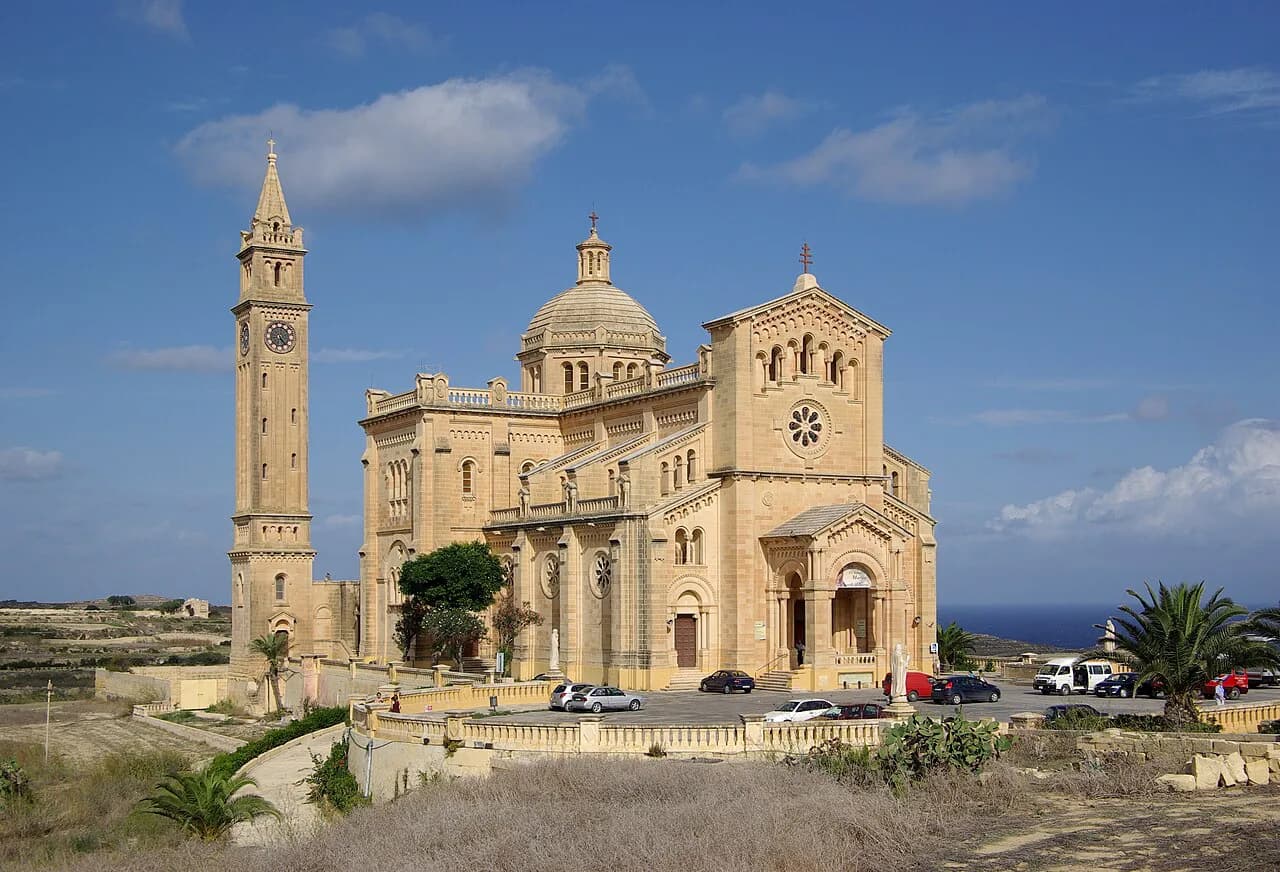
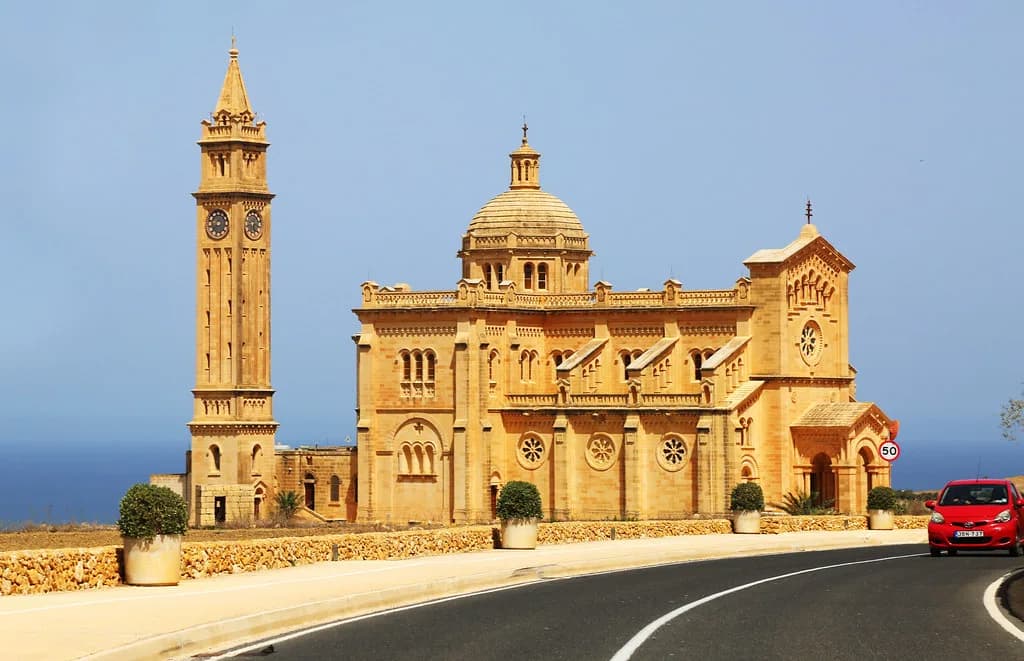
Ta' Pinu stands on the edge of Għarb in open countryside, and the approach across the parvis is as much of the visit as the interior. The mosaic panels flanking the parvis depict the stations of the cross, and the flat ground gives clear views towards the Ta' Ġurdan Lighthouse and the chapel of Saint Demetrius.
Construction of the sanctuary began in 1920 and the church opened its doors in 1935, built to accommodate the pilgrims arriving at the small chapel on the site. It rises to a height of 61 metres and dominates the countryside on the western side of the island.
Inside, two rooms either side of the altar are given over to ex-votos: handwritten accounts, photographs, clothing and other objects left by pilgrims. A Sanctuary Museum holds paintings by some of the islands' most celebrated artists, so allow extra time if you want to see it properly.
The Gozo Cathedral in Victoria's Ċittadella
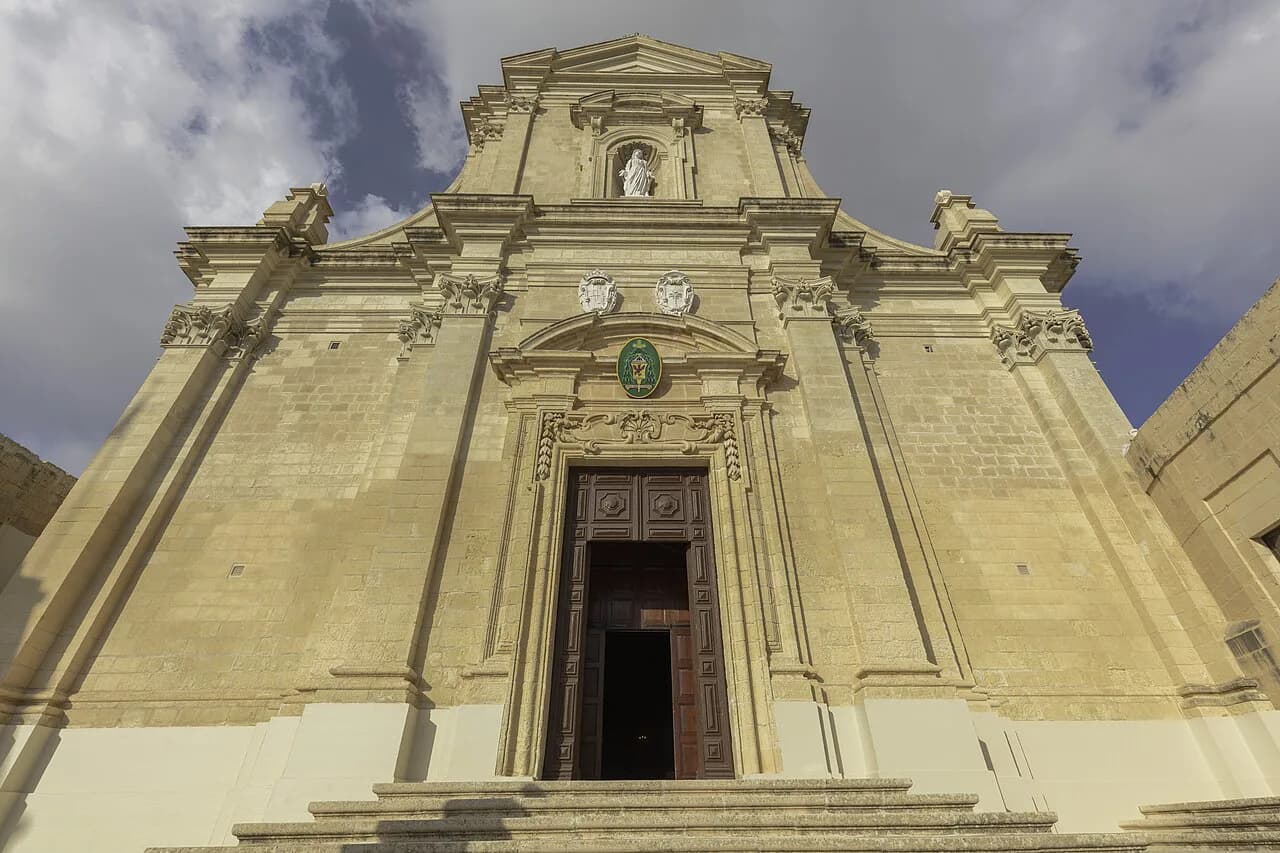
The Gozo Cathedral sits inside the fortifications of the Ċittadella, which puts it on the same short climb as the rest of Victoria's historic core. The present building was inaugurated in 1711 and belongs to the body of work left by the Baroque architect Lorenzo Gafà.
Look up rather than around: the dome is a painted trompe-l'œil, an illusion rather than a stone structure, and knowing that in advance changes what you see. The interior also holds large paintings, several over four metres across, heavy chandeliers and coloured marble tomb slabs.
Give the cathedral itself time to look properly at the paintings and the dome, then use the walls for the view out over Victoria. Pair it with the rest of the sights in the old town rather than treating the church as a standalone stop.
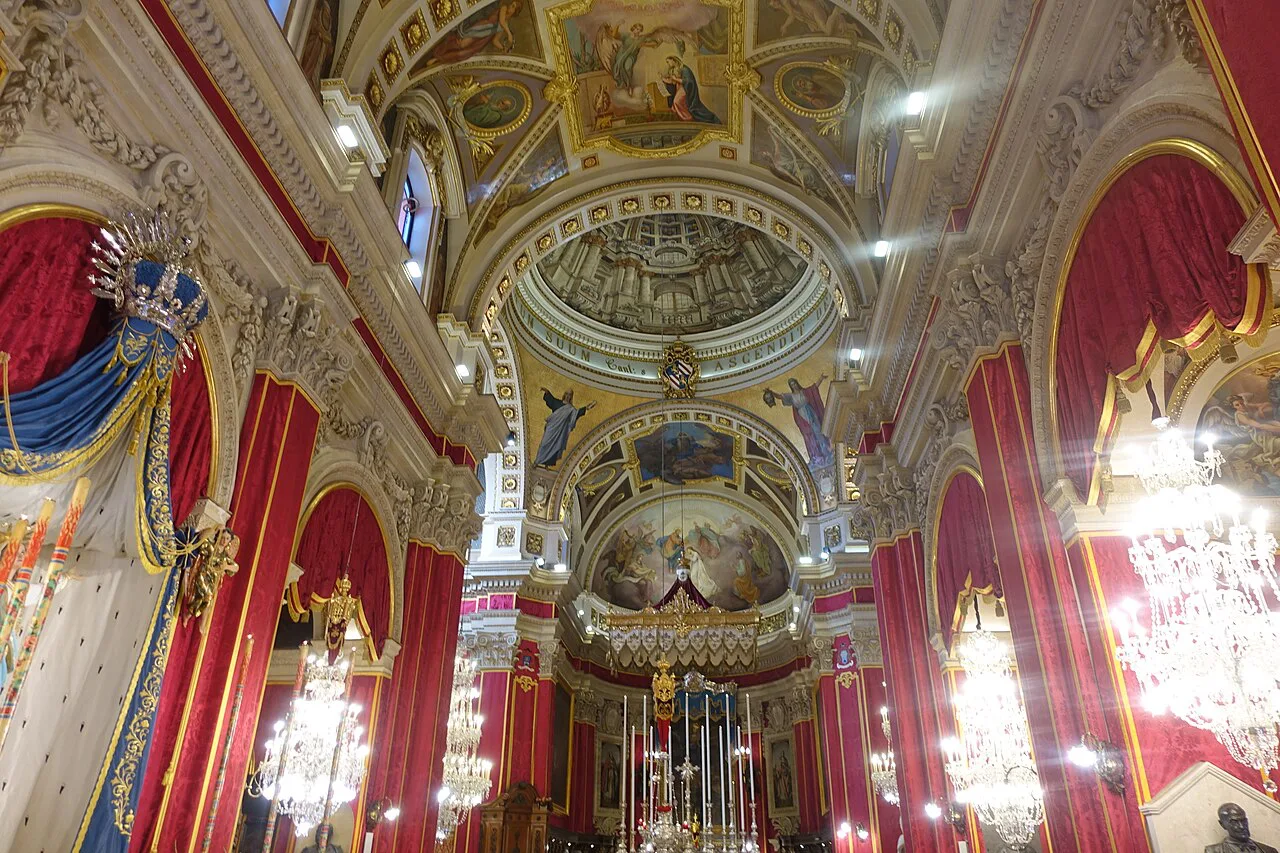
St George's Basilica in Victoria's old Rabat
St George's Basilica stands in the older part of Victoria, the Rabat, below the Ċittadella. It is a minor basilica and collegial parish church, and its position by St George's Square makes it the natural anchor for a wander through the surrounding lanes.
The parish has been the centre of Gozitan church life for centuries. The parish's own history records that Xewkija and Għarb became independent parishes in 1678, with Ta' Sannat, Żebbuġ, Nadur and Xagħra following in 1689, all carved out of the original Rabat parish.
Visit on a weekday if you want quiet, since this is a working parish with a regular mass schedule rather than a visitor attraction. Treat the square outside as part of the stop: it is where the village gathers, and the scale of the basilica reads best from there.
The Rotunda of St John the Baptist at Xewkija
Xewkija's Rotunda is the dome church that replaced the village's old parish church, and it is the building you spot on the skyline from across central Gozo. The Diocese of Gozo lists it under Xewkija as the parish church of St John the Baptist, so it remains a working parish rather than a monument.
Visit Gozo singles out the Rotunda among the island's dome churches, and notes that Gozo has one of the largest domes in the world. Step inside for the volume of the space and the way sound carries, then walk the outside to see how abruptly it rises from the surrounding streets.
Xewkija sits south-east of Victoria, which makes it an easy add-on to a cathedral morning rather than a separate outing. It also works well as the first stop of a loop through the villages towards Għajnsielem and Nadur.
Xagħra and the Basilica of the Nativity of Our Lady
Xagħra's Basilica of the Nativity of Our Lady is a minor basilica and collegial parish church, and it anchors one of the larger village centres on the island. The village is also where you will find the Ta' Savina church of the Nativity of Our Lady, a separate building listed under the same locality.
Xagħra rewards more time than the church alone, since it sits within easy reach of the Ġgantija Temples. If you are building a day around the temples, the basilica is the obvious place to pause before or after, and the village square gives you somewhere to sit between the two.
Check times locally before planning your day around an interior visit here, because this is a parish with services and not an attraction with fixed visiting hours. The exterior and the village setting need no appointment.
Village parishes: Għarb, Għajnsielem, Nadur and Żebbuġ
Għarb holds a second significant church beyond Ta' Pinu: the Basilica of the Visitation, a minor basilica and collegial church in the village itself. That combination, a basilica in the village and the national shrine on its edge, makes Għarb the strongest village stop for anyone interested in church architecture.
Għajnsielem has the Church of Our Lady of Loreto as its parish church, with a second Loreto church on the diocese list, plus St Anthony of Padua. In Nadur the Basilica of Saints Peter and Paul serves as a minor basilica and collegial parish church, with the Church of Our Lady of Mount Carmel alongside it.
Żebbuġ, on the north coast near Marsalforn, has the Church of the Assumption of the Blessed Virgin Mary as its parish church and Stella Maris nearby. Marsalforn adds the Church of St Paul Shipwreck, useful if you are already in the village for the waterfront.
Smaller churches and chapels worth a look
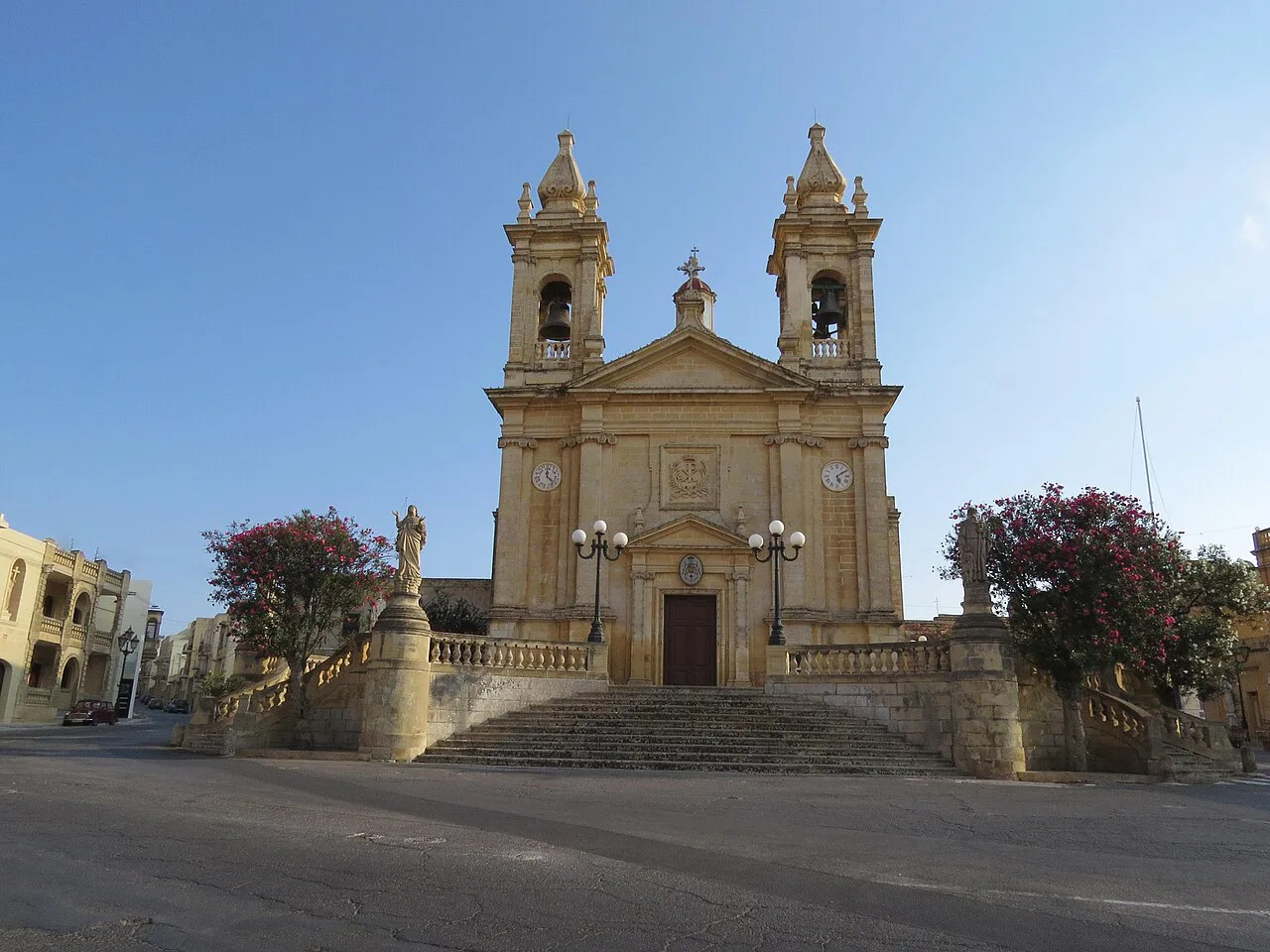
St Margaret's Church at Sannat is a parish church rather than a chapel, and it holds the village's main square. San Lawrenz has the Church of St Lawrence as its parish church, while Santa Luċija keeps things small with the Church of St Lucy in one of the quietest corners of the island.
The Church of Our Lady of Lourdes is listed in the diocese register under Munxar rather than at the harbour village of Mġarr. It is a practical stop if you are passing through that part of the island rather than a destination in its own right.
The Chapel of St Joseph, St Martha's, and the various convent churches in Victoria fill out the picture and are worth ducking into if a door is open. None of them needs planning; they are the reward for walking slowly through the old streets.
Opening times and visiting around mass
Gozo's churches generally hold mass in the early morning and again in the evening, and Visit Gozo notes that they rarely close during the day. That makes a loose approach workable: walk in when you pass, and keep the mass schedule in mind for the two ends of the day.
An interior visit takes a short while for a village parish church and longer at Ta' Pinu if you include the museum and the ex-voto rooms. Build the cathedral and St George's into a Victoria morning and you have used half a day without rushing.
If a door is locked, that is normal for an active parish and not a snub. Come back at the next service time rather than waiting outside, and use the Gozo Map to see what else is within walking distance in the meantime.
Dress and behaviour inside Gozo's churches
These are working parishes, so treat them as you would a church at home: dress modestly, keep your voice down, and respect any service in progress. Photographs are best taken outside service times, and put the camera down if a service is under way.
Keep your voice low and stay behind any cordoned area, particularly around altars and the ex-voto rooms at Ta' Pinu. If a wedding or funeral is in progress, step back out; there is always another church within a few minutes' walk.
Getting between the churches
Victoria is the practical base for a church-focused day, and the town's bus terminus puts the villages within reach. If you are planning the wider trip, our Things to Do in Gozo guide sets the churches alongside the island's other sights.
A car gives you the freedom to string together the western villages in one run: Għarb and Ta' Pinu, then down to San Lawrenz and Santa Luċija. On foot, Victoria alone will occupy you, with the cathedral and St George's within minutes of each other.
A half-day or full-day church route
For a half day, start at the Ċittadella in Victoria, see the cathedral and its trompe-l'œil dome, walk down to St George's Basilica and finish on St George's Square. That is three churches in a compact area, with coffee in between if you pace it properly.
For a full day, add Xewkija's Rotunda on the way out of Victoria, continue to Xagħra for the basilica, then cross to Għarb for the Basilica of the Visitation and Ta' Pinu. Finish at Ta' Pinu in late afternoon, when the parvis and its countryside views are at their best.
If you are combining churches with the rest of the island, treat the buildings as punctuation between the temples, the coast and the villages rather than the whole day. That balance is what makes a short Gozo visit work.
Which church gets your morning?
If you only have time for one, make it the Gozo Cathedral inside the Ċittadella: the painted dome, the Gafà architecture and the walls outside give you the most for an hour's walk. If you have a car and half a day, add Ta' Pinu for the setting and the ex-voto rooms.
Work the village parishes around whichever road you are already driving, and check the parish noticeboard for service times once you arrive in Victoria or Xagħra.
Explore more Gozo guides
Frequently Asked Questions
What is the biggest church in Gozo?
Gozo has several large churches rather than one obvious 'biggest' that the sources rank. The Rotunda of St John the Baptist at Xewkija is the dome church that dominates the skyline of central Gozo, and Visit Gozo places it among the island's notable dome churches and notes Gozo has one of the largest domes in the world. Ta' Pinu near Għarb rises to 61 metres and dominates the countryside on the western side of the island. Size alone is a poor guide to which one to visit.
Does Gozo have a cathedral?
Yes. The Gozo Cathedral, dedicated to the Assumption of the Blessed Virgin Mary, sits inside the fortifications of the Ċittadella in Victoria. The present building was inaugurated in 1711 and is associated with the Baroque architect Lorenzo Gafà, and its dome is a painted trompe-l'œil rather than a stone structure.
When are Gozo's churches open?
Visit Gozo notes that churches on the island usually hold mass in the early morning and evening and rarely close during the day, so you can often step in to look around. Individual parishes keep their own arrangements, so check the noticeboard at the door if a church is locked when you arrive.
Sources
Notes for your Malta trip
Optional updates when we add or correct a Malta or Gozo guide.
You might also like
Continue reading
More guides you'll find useful