Gozo Caves: Calypso's Cave, Ninu's and Xerri's Caves and Sea Caves
Gozo's caves range from Calypso's Cave above Ramla Bay to Ninu's and Xerri's caves in Xagħra and sea caves reached by kayak or boat from Xlendi and Hondoq.
On this page
Gozo's caves fall into two groups: land caves you can walk into, such as Calypso's Cave above Ramla Bay, Mixta Cave in Nadur and the stalactite caves beneath private houses in Xagħra; and sea caves you can only reach by water, from Xlendi, Hondoq or Dwejra. This guide sets out where each one is, how you get in, and what makes each worth the effort.
Plan on half a day for any one of them rather than trying to tick off several. The land caves sit in different corners of the island, and the coastal ones depend on calm water and daylight, so the timing matters more than the distance on the Gozo map.
What caves can you visit on Gozo?
Four land caves are straightforward to reach on foot: Calypso's Cave near Ramla Bay, Mixta Cave above the same bay in Nadur, and Ninu's Cave and Xerri's Grotto in Xagħra. The sea caves sit along the coast instead, entered by kayak, paddleboard, small boat or a swim from a beach, which makes them a different sort of outing altogether.
Treat the two lists separately when you plan. The land caves tolerate wind and cloud, while the sea caves need a settled sea and, for the more remote ones, a rental or a boatman. If the weather turns, keep the inland options and move the coastal ones to another day.
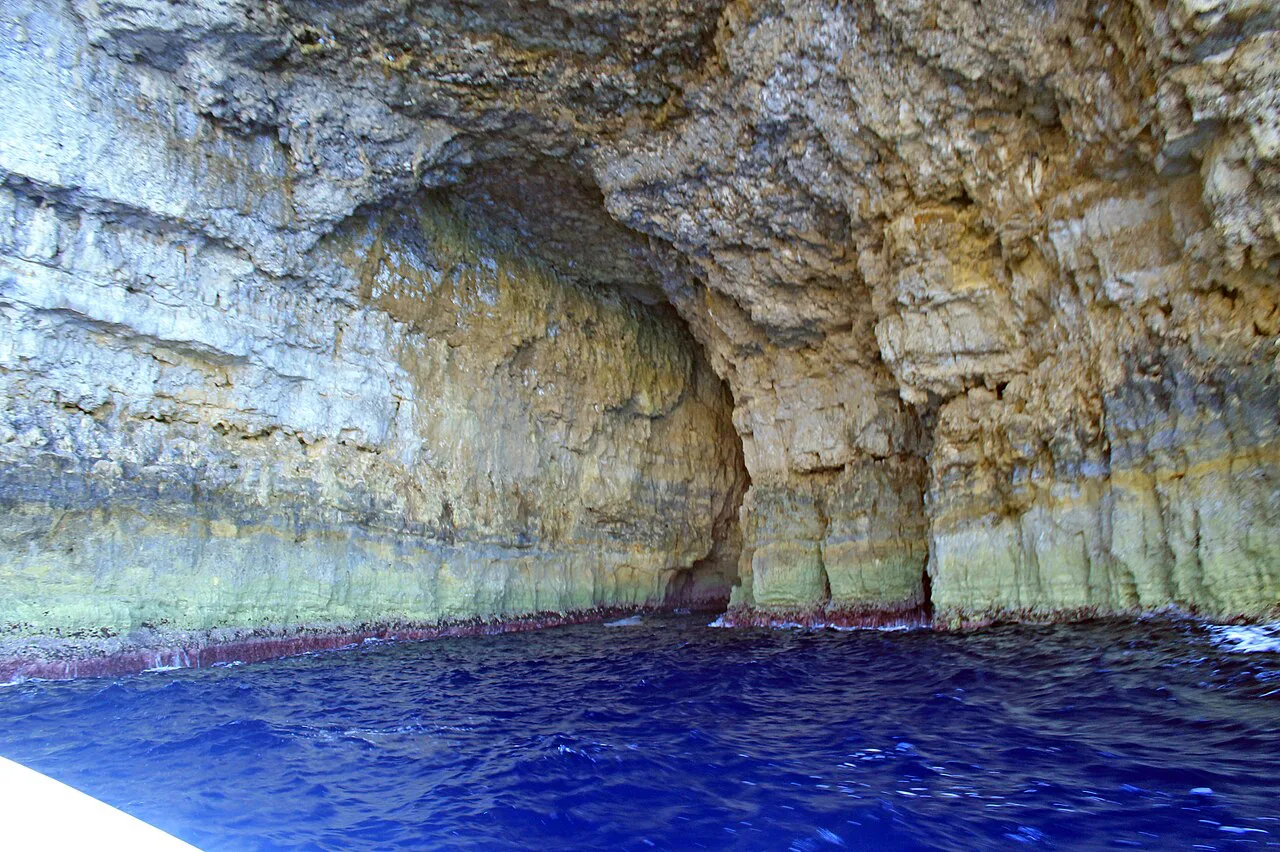
Calypso's Cave above Ramla Bay: where it is and what to expect
Calypso's Cave sits on the slopes above Ramla Bay, on Gozo's northern coast, and appears in Malta's national tourism listings as a named attraction rather than a managed site. It is a natural cave mouth you walk up to, not a visitor centre with a desk and turnstiles, so treat the outing as a short walk with a view rather than a ticketed visit.
The climb up from the bay is the part people underestimate. Go in the morning or late afternoon when the sun is lower, carry water, and wear shoes with grip, since the path is uneven and exposed. Combine it with the bay itself rather than making a special journey from Victoria for the cave alone.
Ninu's Cave and Xerri's Grotto in Xagħra: entering a private house to see stalactites
Both of Xagħra's show caves sit beneath family homes, so you knock on a door and descend from a hallway rather than buy a ticket at a gate. Ninu's Cave was found in 1888 when Giuseppe began digging a well, and the visit takes you a few metres down a curved stone staircase to a cave around 20 metres long, lit to show off its stalactites.
Entry to Ninu's Cave was reported at €1 when this account was written, which is a record of what was charged at the time rather than today's rate; confirm the current charge with the household before you set off. The same house has kept its traditional Gozitan tiles and dark wood furniture, which is part of the appeal.
Xerri's Grotto was discovered in 1923 and lies a few minutes' walk from Ninu's Cave, past a windmill erected in the 1700s. Both are cool inside when the outside temperature climbs towards 35°C, which makes them a sensible stop in the middle of a hot day.
Xagħra itself has a large central square with pavement cafés and a sand-coloured church, so the caves slot easily into a village morning. The Ġgantija Temples and the Xagħra Stone Circle are both close by, and the Stone Circle requires a booking rather than turning up.
Mixta Cave in Nadur: the walk in and the view over Ramla Bay
Mixta Cave looks down on Ramla Bay from the Nadur side, and the approach is a walk along a winding country road rather than a formal monument path. Drive or ride from Nadur towards Ramla and watch for the turnoff onto Triq l-Għassa tal-Maħraġ, the road that leads to the cave.
The cave is open to the sky, with the bay framed below. It is at its most striking in low sunlight, which is the argument for going late rather than at midday, and it draws plenty of people at that hour for exactly that reason.
Sea caves: L'Ghar ta Santa Katarina from Xlendi, reached by kayak, paddleboard or boat
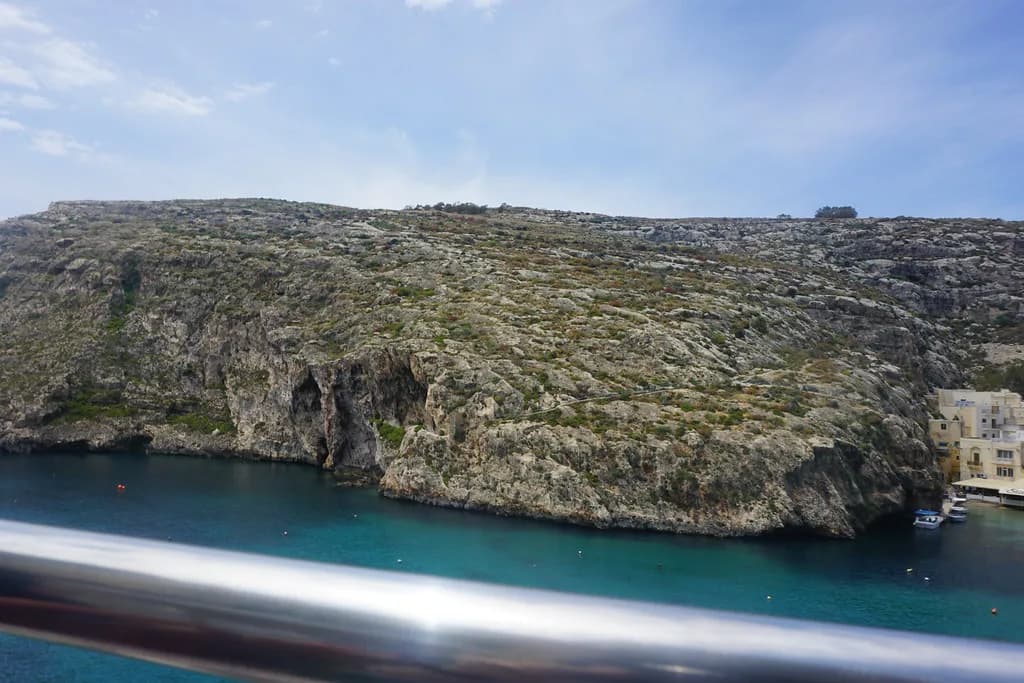
L'Ghar ta Santa Katarina is the sea cave to aim for from Xlendi. Launch from the bay, head out to the end of the inlet, turn right and follow the coast past a smaller cave with an underwater arch until you round the corner into a large chamber with its own rock beach.
Kayaks, paddleboards and boats can be hired in Xlendi, and on a calm day the cave is roughly 15 to 20 minutes away on the water. Wear sea shoes, because the rock beach at the entrance is sharp underfoot, and aim for after 2.30pm in summer when the sun reaches the pale sand at the back of the cave and the water lights up Blue.
If paddling your own craft into a sea cave sounds more involved than you want, a Gozo kayaking session with a guide takes the navigation and the decision-making about conditions off your hands. Either way, the cave sits close to the cliffs, so swell decides whether the day works.
Hondoq Cave and the Ras il-Kanun coastline: swimming or walking in from Hondoq
From Hondoq beach, swim around to the right and follow the coastline until you reach a small bay with a cave tucked into it. It is a good size, usually not visited by too many people, and a cool place to stop in midsummer, with a kiosk and watersports at the beach before you set off.
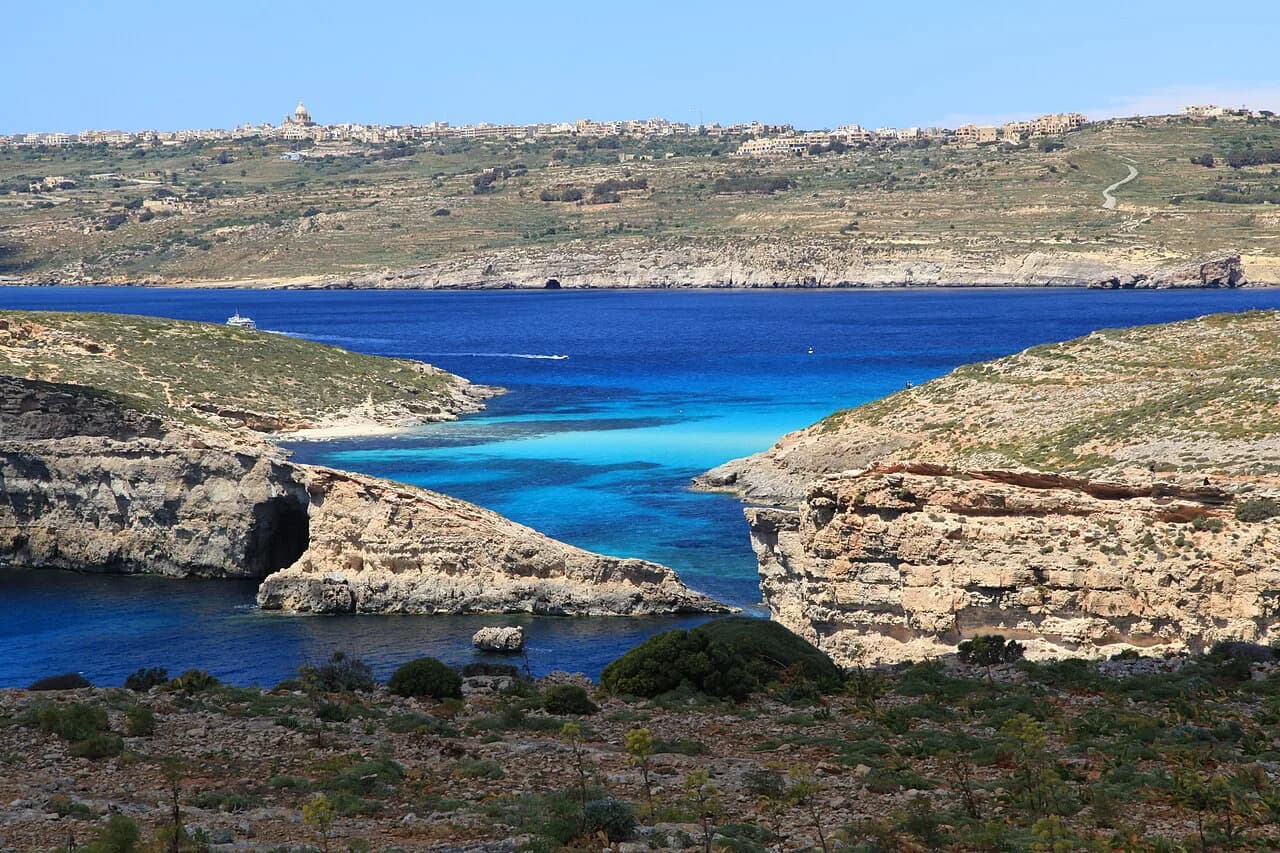
You can also walk in along the coast, but the descent to the bay is steep and awkward, so the swim is the easier route for most people. The shoreline towards Ras il-Kanun is shaped by wind and sea into arches and hidden pockets, and several of these can be reached only from the water.
Inland Sea and Dwejra: the boat through the tunnel to the open sea
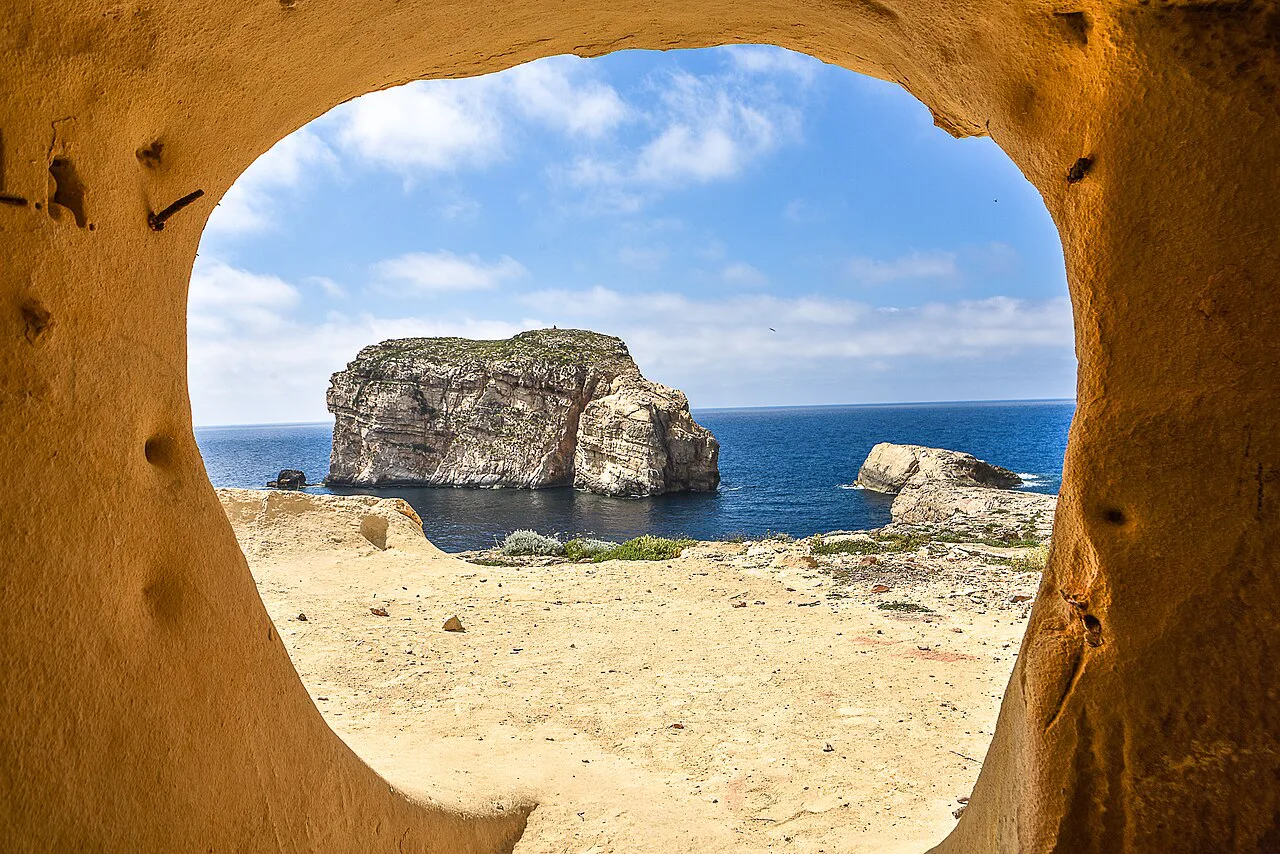
At Dwejra, the Inland Sea is a tidal lagoon ringed by high yellow cliffs, with a short concrete jetty where small open boats leave. The trip runs through a natural tunnel of roughly 100 metres in the cliff, long enough to stand up carefully and look at the stalactites overhead before daylight opens onto the Mediterranean.
The fare was €5 for a fifteen-minute crossing when this trip was recorded, which is history rather than a current rate; ask at the jetty what is charged now. Out on the water the boatman points out Fungus Rock and the cliff formations, and a Gozo boat trip from Dwejra covers the same stretch of coast without the cave passage.
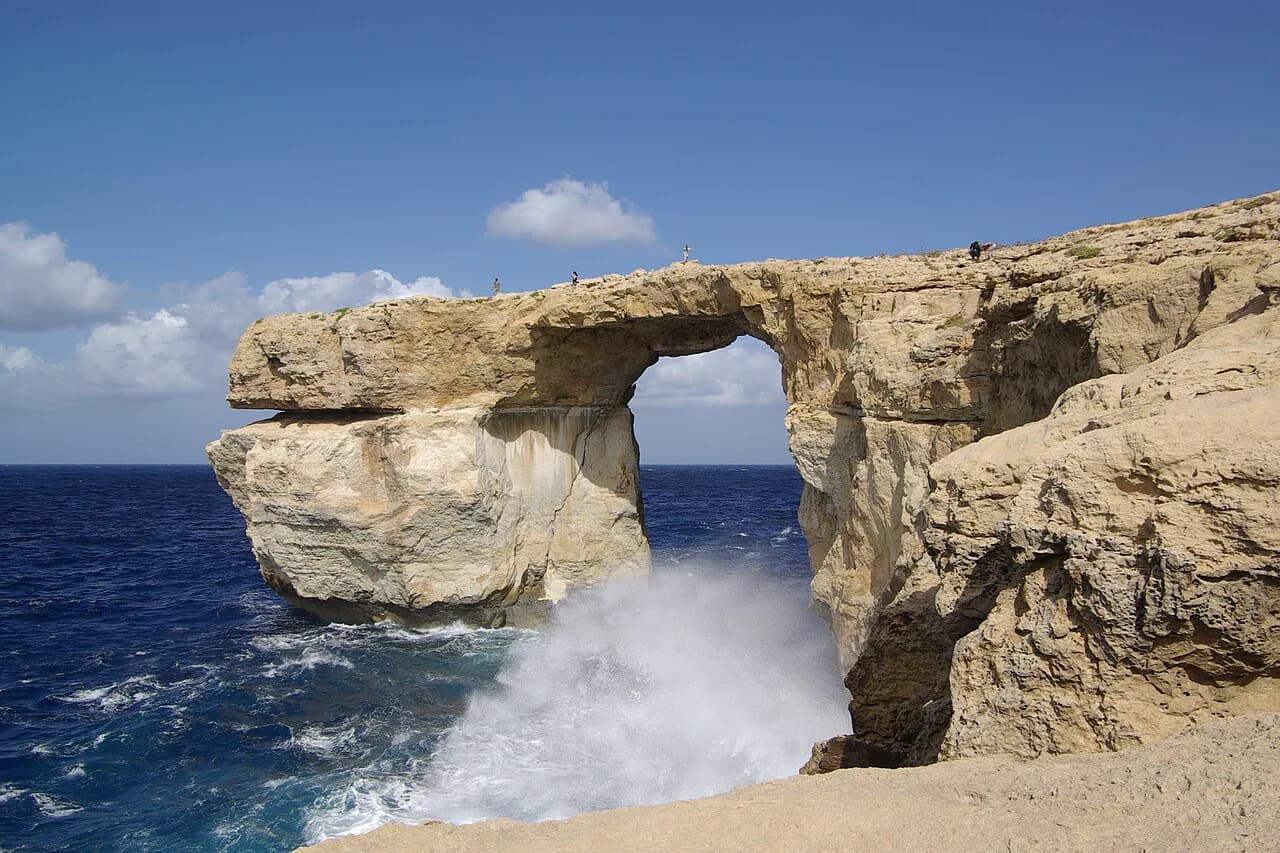
The same 2016 account describes the Azure Window standing above the shore, so do not build a visit around seeing the arch as it then was. The Dwejra coastline, the lagoon and the boat passage remain the reasons to come.
Cave diving on Gozo: why technical divers come and who it suits
Gozo's reputation among cave divers rests on limestone that rainwater and the sea have carved into tunnels, sinkholes and chambers, with the Upper Coralline Limestone doing most of the work in forming them. Many sites are reachable straight from shore, which keeps the logistics simple for divers already trained for overhead environments.
This is technical diving, not a casual snorkel: teams of local and international divers are still surveying and mapping submerged passages, and the cave systems link inland sinkholes with coastal springs. Go with a qualified technical instructor and the right certification, or stay on the surface and enjoy the same cliffs from a boat.
Practical trade-offs: heat, steep paths, sea shoes, timing the light
Heat is the main constraint. The inland caves at Xagħra are cool inside and worth saving for the hottest hours, while Calypso's Cave and Mixta Cave involve exposed walking and are better early or late. Carry water on all of them.
For the water caves, three things decide the day: sea state, footwear and light. Sharp rock at the entrance to L'Ghar ta Santa Katarina makes sea shoes essential, the afternoon sun gives the best colour inside that cave, and Mixta Cave rewards the same late timing. If the sea is unsettled, swap to the land caves and come back another day.
Allow for the walk-in on the coastal routes, since the descents at Hondoq are steep and slow. Build the day around one land cave and one coastal stop rather than four stops across the island, and leave slack for the return leg.
Which Gozo cave should you choose?
Choose Ninu's Cave and Xerri's Grotto if you want the strangeness of entering a family home to see stalactites, and pair them with the Ġgantija Temples in Xagħra. Choose Calypso's Cave or Mixta Cave if you want a view over Ramla Bay with a walk attached.
Choose the sea caves if you are comfortable on the water and the forecast is settled: L'Ghar ta Santa Katarina from Xlendi after 2.30pm in summer, Hondoq Cave by swimming from the beach, or the Inland Sea boat at Dwejra if you would rather someone else did the navigating.
If caves are one part of a wider trip, read the rest of the things to do in Gozo before you fix the days, and use the Gozo map to group the coastal caves with the villages nearest them.
Explore more Gozo guides
Frequently Asked Questions
How do I get to Tal-Mixta Cave in Gozo?
From Nadur, drive or walk towards Ramla Bay and take the turnoff onto Triq l-Għassa tal-Maħraġ, the road that leads to the cave. The final approach is along a winding country road, and the cave itself is a short walk with a view down over Ramla Bay.
Can you visit Ninu's Cave and Xerri's Grotto without booking?
Both caves sit beneath private family homes in Xagħra, so you enter through the house rather than a visitor centre. Knock and ask about visiting on the day; the household sets the terms, so do not assume fixed hours.
Are Gozo's sea caves safe to reach by kayak?
On a calm day the crossings from Xlendi and Hondoq are short, but the entrances are rocky and the swell decides whether it is sensible. Wear sea shoes, check conditions before launching, and go with a guide if you are not confident paddling close to cliffs.
Sources
Notes for your Malta trip
Optional updates when we add or correct a Malta or Gozo guide.
You might also like


Continue reading
More guides you'll find useful