
Gozo Citadel (Iċ-Ċittadella): What to See and How Long to Allow

Allow two to three hours for the Gozo Citadel, Iċ-Ċittadella, the walled fortress on the hill at the centre of Victoria. Most of that is spent on your feet: the bastions, the ditch and the streets inside the walls are one continuous outdoor circuit, while the cathedral and museums are separate stops you fit in as you go. This guide covers where the Citadel sits, how to get up from Victoria, what to see inside the enceinte and how to divide your time.
What the Citadel is and where it sits above Victoria
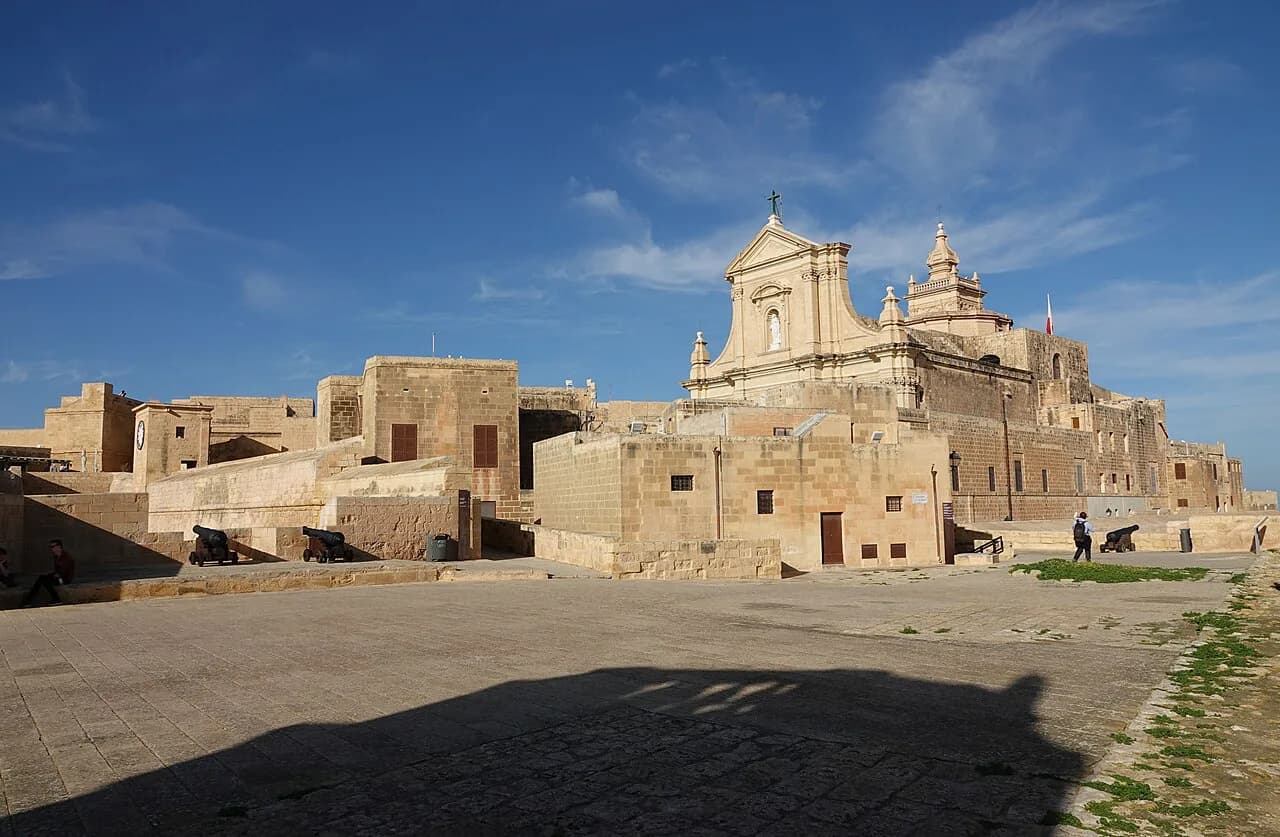
The Citadel, also called the Castello, is the main historic fortress of Gozo, built on a vantage point in the middle of the island. It served as the island's refuge and administrative centre, and the site was fortified in the Bronze Age before becoming a medieval castle.
The walls you walk today mix two periods. The southern and most exposed side was rebuilt from around 1600 to 1622 to designs by the Italian military engineer Giovanni Rinaldini, producing a central bastion, two demi-bastions and two small cavaliers, while the northern medieval line was largely kept and folded into the new work.
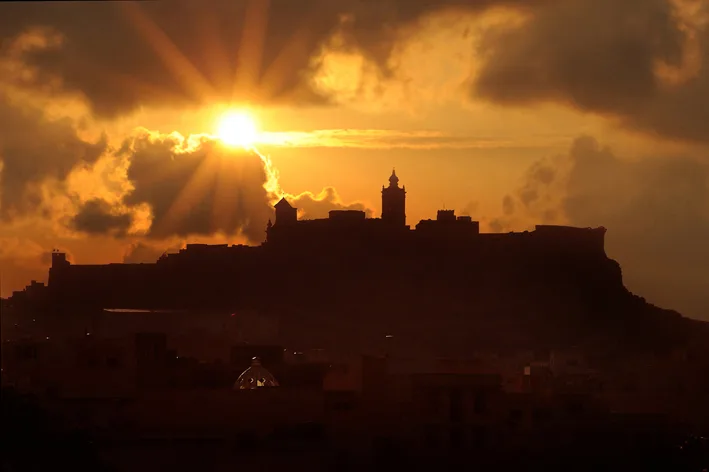
Victoria wraps around the foot of the hill, so the Citadel reads as the town's upper storey rather than a separate excursion. Treat the climb up as part of the visit and start from the centre of Victoria; the town's other sights are covered in the Victoria Attractions: 11 Visitor Guides.

How to get up to the Citadel from Victoria
Every approach ends on foot: buses and cars reach Victoria's centre, and the last stretch is a walk uphill through town to the Citadel's gates.
Walkers should pick the gentlest gradient rather than the shortest line on the map. The ascent is short but steady, and doing it early in the day costs less effort than climbing in the afternoon heat with the sun on the slope.
Drivers should expect to park in Victoria and continue on foot, since the Citadel is a walled historic site rather than a car park with a visitor entrance.
Walking the walls: the bastioned enceinte and medieval defences
The perimeter is the reason to walk the whole site rather than only the buildings. The early seventeenth-century bastioned enceinte survives largely intact, with its ditch, covertway and steep glacis, alongside the older medieval masonry on the northern side.
Follow the circuit and look at how the two systems meet: the Italian-style ramparts replaced the vulnerable southern perimeter, while the medieval line on the north was retained and integrated. That contrast is easiest to read while walking the walls in sequence rather than dipping in and out of doorways.
The open ground of the ditch and the outer works give you the widest views, and they are also the least shaded part of the route. Walk the exposed stretch when you arrive, before the sun is high, and keep the enclosed streets for later.
Inside the walls: the Cathedral of the Assumption and the Cathedral Museum
The Cathedral of the Assumption stands inside the Citadel, built between 1697 and 1711 on the site of the former medieval church. Its position at the heart of the enceinte makes it the natural anchor for the second half of your visit.
The Cathedral of the Assumption is a working place of worship, so cover shoulders and knees before you go in and keep voices low during services. Read the Gozo Cathedral page for the interior before you climb the hill, so you know what you are looking at when you step inside.
The Cathedral Museum is listed among the Citadel's places of interest, so it is best treated as an add-on to the church rather than a separate outing.
The Citadel's museums and historic buildings
Beyond the cathedral, the Citadel holds several small museums and historic buildings worth an hour between them. The Old Prison, the Gozo Nature Museum and the Gozo Museum of Archaeology stand inside the walls, and the Gran Castello complex rounds out the list.
Pick according to your interests rather than trying to see every room. The archaeology collection suits anyone who wants the island's deep chronology in one place, and the Gozo Museum of Archaeology in Victoria's Citadel sets out what was found on the site and across Gozo.
Allow around 20 to 30 minutes per museum and leave slack for the walk between buildings, which is all outdoors. If you are short on time, choose one collection and spend the rest of the visit on the walls.

The Cittadella project and the Visitors' Centre
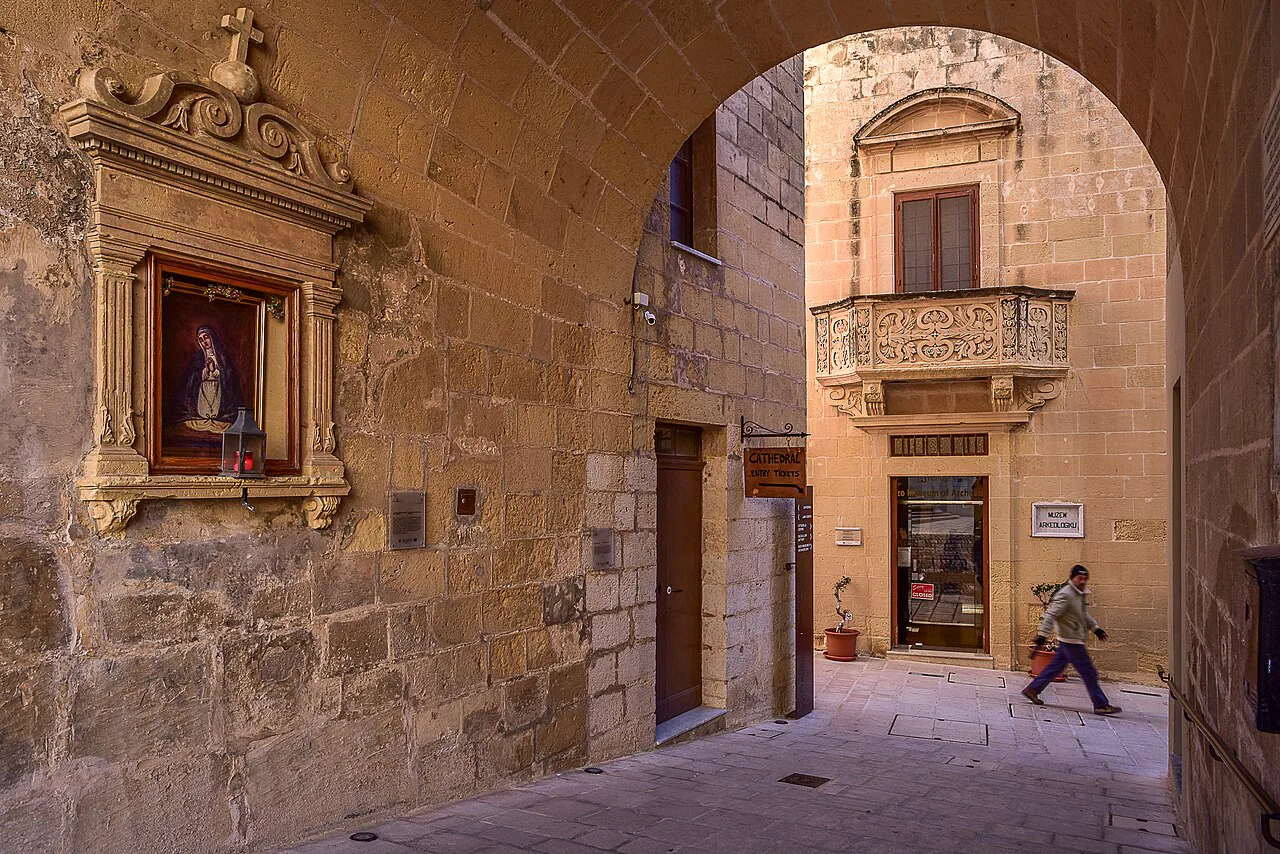
A Visitors' Centre serves the Citadel as part of the Ministry for Gozo's Cittadella project, which was inaugurated on 30 June 2016 after two years and four months of works. Extensive archaeological finds made during the works are now presented to visitors as new attractions.
Start here if you want context before walking the walls, since the centre explains the site as a whole rather than one building.
Views from the bastions over Gozo
The Citadel's position at the centre of Gozo means the bastions and outer works give you a wide sweep over the island in every direction. Walk the full circuit rather than stopping at the first opening, because the views change markedly from the southern ramparts to the northern medieval side.
The best viewpoints are on the exposed outer works, where nothing blocks the sightline. That also means no shade, so bring water and a hat, and save the photographs for the stretch when you are not overheating.
How long to allow, and the heat at midday
Two to three hours covers the walls, the cathedral and one or two museums at an unhurried pace. Add time if you plan to see all three main museums, and add more if you are climbing up from Victoria in the middle of the day.
Midday is the hardest time to be on the bastions, where the stone and the open ditch give no cover. Either arrive early or split the visit: do the outdoor circuit first, then retreat into the cathedral and museums during the hottest hours.
The walks between buildings are all outside, so plan the order of your stops around shade rather than around the map. Carry water with you; there is no reason to rely on finding a tap on the walls.
Tickets and opening hours to confirm before setting out
Charges and opening times vary between the cathedral, the individual museums and the Visitors' Centre, so check each one before you climb the hill. The Cultural Heritage Directorate publishes the Citadel's official information, including contact details for the administration office, and that is the page to confirm arrangements on.
VisitMalta keeps an attraction listing for the Citadel with overview, opening hours and pricing sections, which is a second place to confirm what is running on your dates.
What is nearby in Victoria once you come down
Coming down from the Citadel puts you back in the middle of Victoria, where the town's own sights are within a short walk. St George's Basilica, Victoria, Gozo is the other major church in town and a natural next stop after the cathedral on the hill.
Independence Square in Victoria, Gozo is the central square for a coffee and a sit-down after the climb, and the Teatru Astra in Victoria, Gozo is worth a look for anyone interested in the town's theatre. Both fit into an afternoon that starts at the Citadel.
If you still have energy, the folklore museum Gozo keeps a collection of domestic and craft material in the town, and it pairs well with the Citadel's archaeology for a day built around Gozo's past.
Is the Citadel worth the climb?
Yes, if you give it two to three hours and walk the whole perimeter rather than treating it as a church visit. The bastioned enceinte and the surviving medieval walls are the part you cannot see from Victoria below.
Go early, carry water, cover shoulders for the cathedral and confirm museum arrangements before you set out. The climb is short, the site is compact, and the reward is the island laid out around you.