
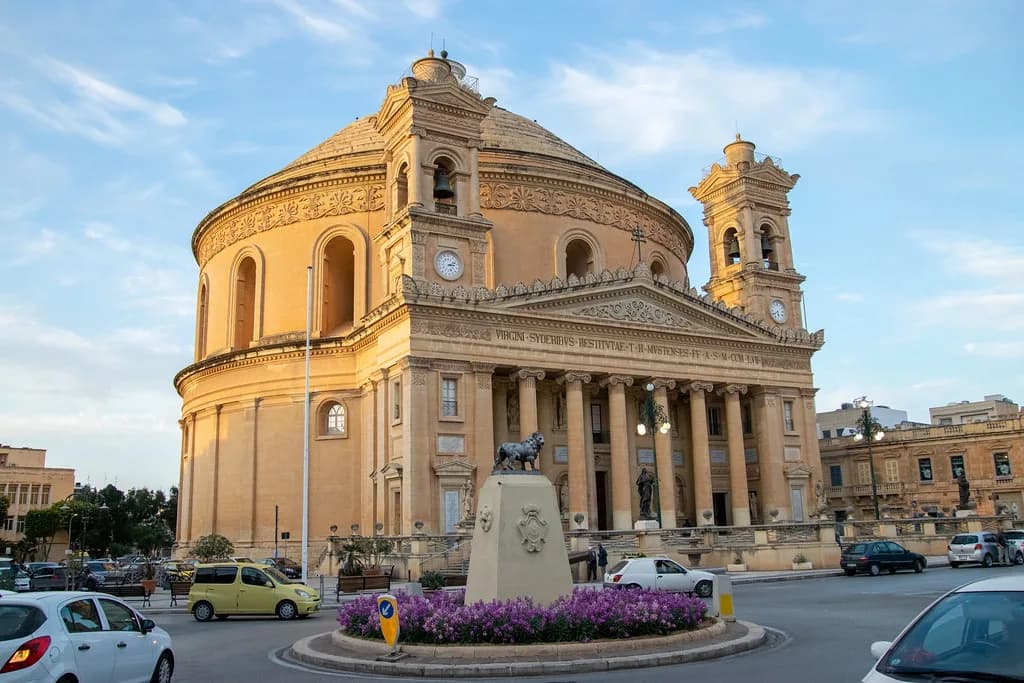
Mosta Rotunda: what to see inside Malta's Mosta Dome
The Mosta Rotunda is worth roughly 45 minutes of your day: a short, striking stop in central Malta built around one enormous unsupported dome and the story of a wartime bomb that pierced it and never went off. The church sits in the middle of the island, which makes it a natural add-on to Mdina and Rabat or the craft village at Ta' Qali rather than a destination in its own right. This guide covers where the Rotunda stands, what to look for inside, what the tickets cover, how to reach it and what to pair it with.
Where the Mosta Rotunda stands
The Rotunda of Mosta, also called the Basilica of the Assumption and known locally as Il-Knisja tar-Rotunda, rises over the town of Mosta in the centre of Malta. It is a working parish church rather than a museum piece, so the building's daily life sets the terms of your visit.
Because Mosta sits mid-island, it is easy to combine with Mdina and Rabat to the west or the craft village at Ta' Qali, and it is a short bus ride or drive from most bases on the island. Treat it as a stop on a central-Malta loop, not as a half-day on its own; the visit itself is compact and the town around it is ordinary and residential.
If you want to see what else the town and its immediate surroundings offer, the wider set of Mosta guides covers the options in one place.
The wartime bomb story
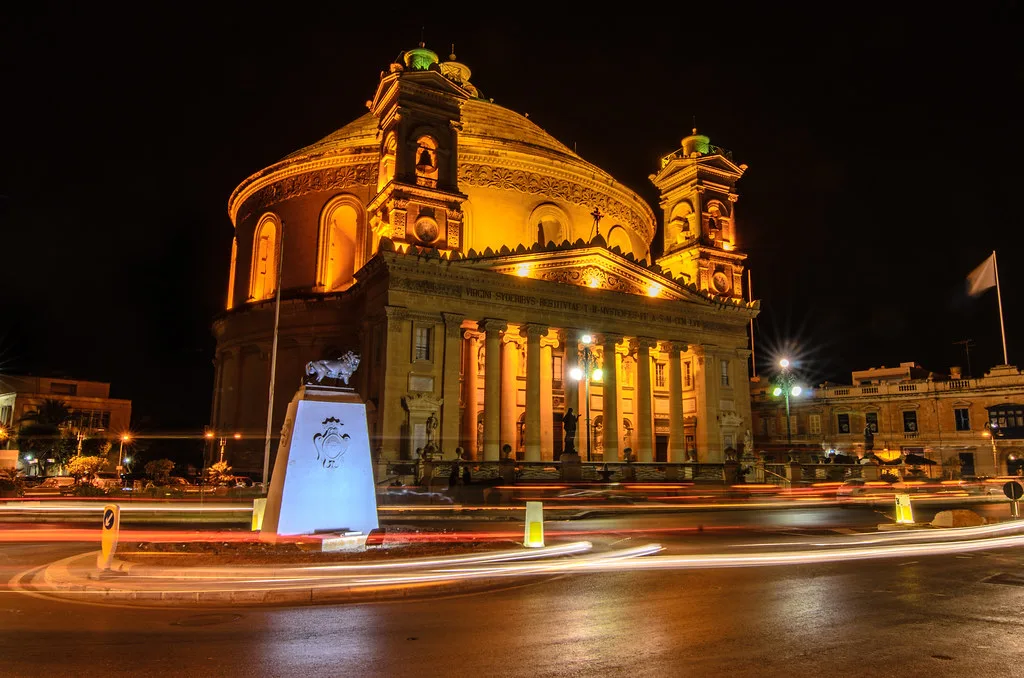
The Rotunda's fame rests on a single wartime event. During Malta's siege a bomb pierced the dome while people were sheltering inside for a service, skidded across the floor and failed to explode. It was defused and taken out to sea, and a replica is on display in the church.
The bomb is the reason many visitors come, and the church displays it as a relic rather than as spectacle; the tone inside stays devotional and quiet.
Inside the church: dome, interior and façade
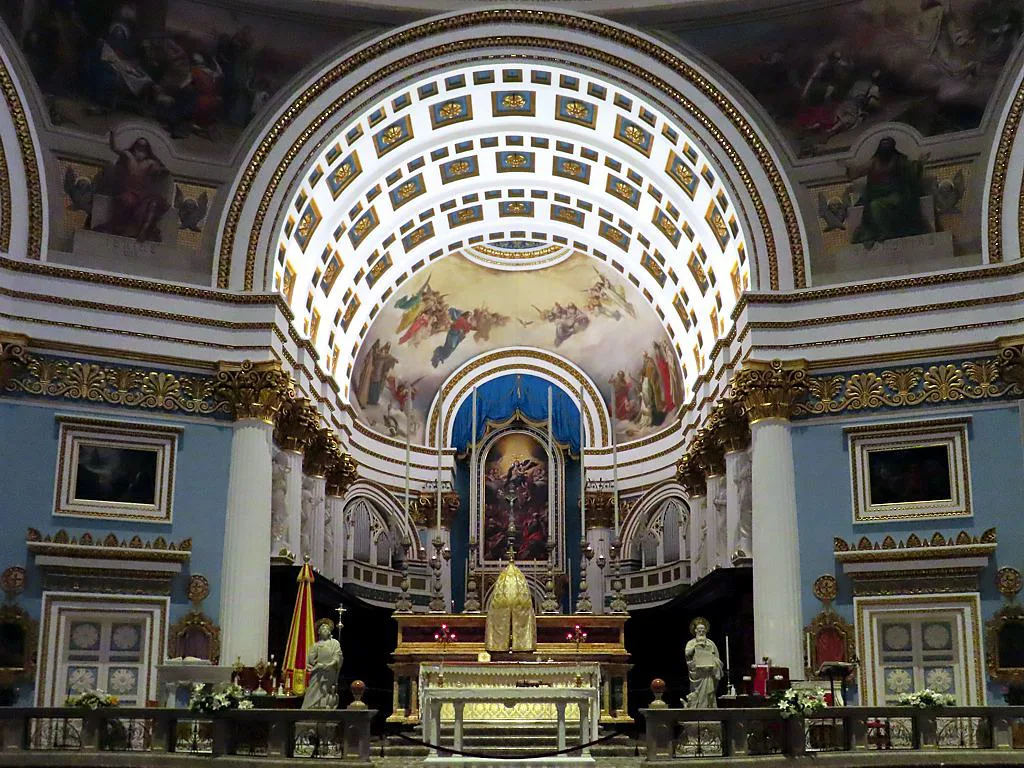
The dome is the thing to look up for. The architect George Grognet de Vassè modelled the Rotunda on the Pantheon in Rome, and it was completed in 1860 with a vast unsupported dome. Look straight up from the centre of the nave to get the full effect.
The interior is painted in Blue, gold and white and filled with statues and ornamental detail in its niches and apses, which rewards a slow circuit of the nave rather than a quick photo from the door. Outside, the façade has an atrium framed by six Ionic columns and is flanked by two bell towers.
Walk round the outside before you go in: the columns and towers read well from the square, and the scale of the dome only makes sense once you have seen the drum from street level.
Tickets: church entry and the Magical Mosta ticket
Two different things are sold here, and it pays to know which you are buying. Ordinary church entry for visitors is a modest ticket of around five euros, which includes the sacristy, the rooftop and a wartime air-raid shelter and museum beneath the basilica. Confirm the current figure with the parish before you travel.
Separately, the parish's own Magical Mosta page describes a named experience that is sold apart from ordinary entry. It is not the same as the standard ticket at the door, so the church site is the place to check what the named ticket includes and what it currently costs.
If you only want to see the dome and the bomb replica, the standard entry ticket is the sensible purchase. Take the Magical Mosta option only if you want the fuller experience the parish describes.
Opening hours and dress code
The Rotunda is a working parish church, and that shapes when you can go in. Visitors are welcomed outside Mass times, so check service times on the parish site before setting out and build your Mosta stop around them.
Dress modestly: shoulders and knees covered is the norm for Maltese churches, and it applies here even in high summer when the walk up from the bus stop leaves you wanting shorts. A light scarf or a shirt tied round the waist solves it in seconds at the door.
Getting there by bus or car
Mosta is a short bus ride or drive from most bases on the island, and the church stands in the town centre. The dome is visible from a fair distance, so aim for the centre of town and park where you can.
The most efficient day pairs Mosta with Mdina and Rabat, which lie to the west and reward a half-day between them, or with Ta' Qali for the craft village. Doing the Rotunda first leaves the rest of the day for the walled city.
How long to allow and when it is busiest
Allow about 45 minutes for the church, the replica and the shelter and museum, which is realistic for a compact visit with a look at the interior and the exterior. Add time if you take the fuller Magical Mosta experience.
If you are combining Mosta with Mdina, do the Rotunda first and save the walled city for later in the day, when you have more time to walk its streets.
Nearby: Mdina, Rabat and Ta' Qali
Mdina and Rabat lie within easy reach and make the obvious pairing, while Ta' Qali's craft village suits anyone wanting something to do after the church. Both fit a central-Malta day built around Mosta.
Two other stops in the area are worth knowing about. Palazzo Parisio, in Naxxar, is a townhouse with gardens that makes a civilised contrast to the church; San Anton Gardens, laid out around San Anton Palace, are a short drive south.
If you have longer in the area, the Ta' Bistra catacombs are a quieter, less-visited alternative to the church for anyone interested in what lies beneath the town; check access before you go, as visiting arrangements change.
The Mosta feast and the church's year
Mosta's parish feast honours the Assumption of Our Lady and is held on 15 August, which is a public holiday across the islands. Expect the town to be busy and the church to be in ceremonial use on that date, which changes the visiting pattern for anyone in Mosta that week.
Is the Mosta Rotunda worth the detour?
Yes, if you are already heading to Mdina, Rabat or Ta' Qali. The Rotunda is a 45-minute stop built around one extraordinary dome and a good story, and the standard entry ticket covering the church, shelter and museum is modest. It is not worth a dedicated trip from the coast on its own unless the dome and the bomb story are specifically what you came for.
Go outside Mass times, dress for a church rather than a beach, confirm the current ticket price on the parish site and pair the visit with Mdina and Rabat for a full central-Malta day.
Explore more Mosta guides
Frequently Asked Questions
How much does it cost to visit the Mosta Rotunda?
Ordinary church entry for visitors has been reported at around five euros, including the sacristy, rooftop, shelter and museum, but this figure is not published on the parish site, so confirm the current price with the parish before you go. The parish also sells a separate Magical Mosta ticket, which is a different product from ordinary church entry and is described on the church website.
Can you visit the Mosta Rotunda outside Mass times?
The Rotunda is a working parish church, so visitors go in outside Mass times; check service times on the parish site before setting out. Dress modestly, with shoulders and knees covered, as you would in any Maltese church.
How long should I spend at the Mosta Rotunda?
About 45 minutes covers the church, the bomb replica and the shelter and museum. Add time if you take the fuller Magical Mosta experience or want to walk round the exterior to see the façade, columns and bell towers.
How do I get to the Mosta Rotunda?
Mosta sits in the middle of Malta and is a short bus ride or drive from most bases, with the church in the town centre. It pairs naturally with Mdina and Rabat to the west or the craft village at Ta' Qali.