
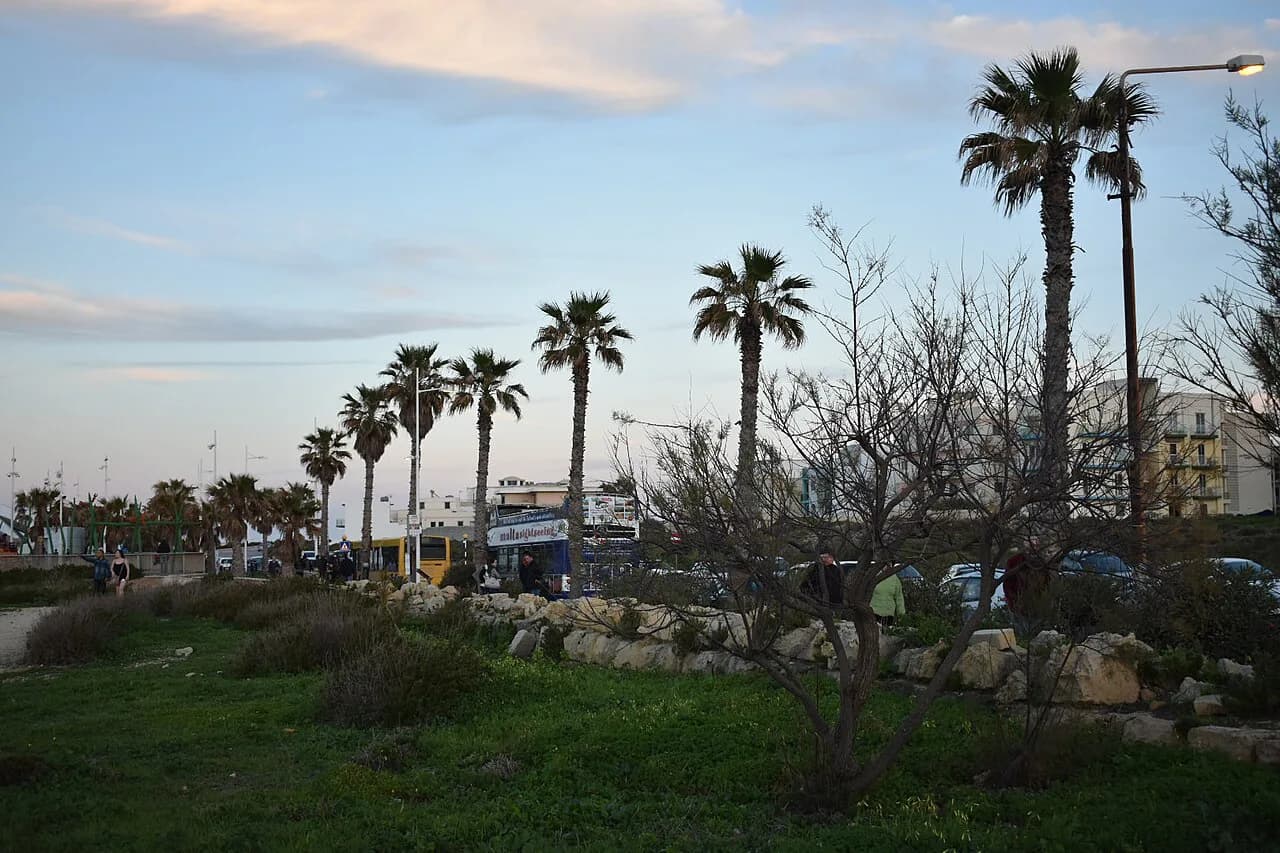
Qawra Point: what to expect at Malta's rocky northern tip

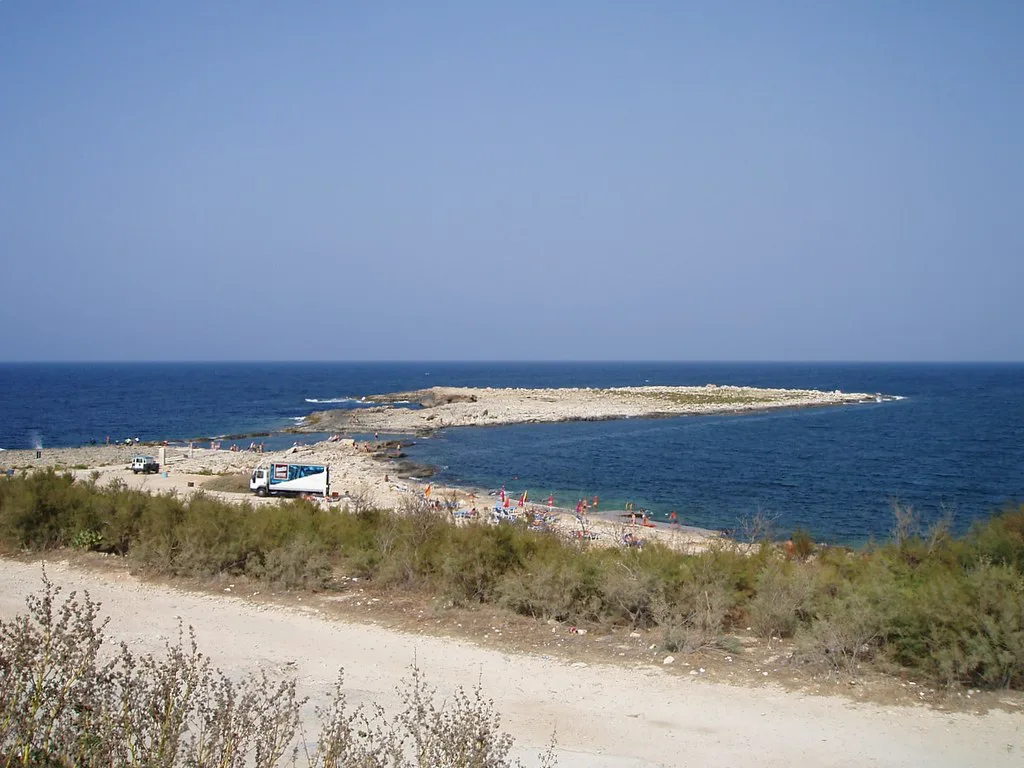
Qawra Point is a rocky swimming spot rather than a sandy beach. Concrete platforms, flat rocks and metal ladders carry you into a shallow, clear lagoon sheltered by an islet and breakwaters, with the Malta National Aquarium directly behind the point. This guide covers how to reach it, where to park, what facilities to expect and when the point works best.
Expect no sand and very little towel space. The appeal is the water instead: transparent, calm when the rest of the coast is churning, and rich enough in marine life to draw snorkellers and first-time divers. Come for a swim and a couple of hours on the rocks rather than a full beach day.
Where Qawra Point sits
The point closes off St Paul's Bay at the northern end of the Qawra and Buġibba promenade, on Malta's north coast. It backs onto the national aquarium, whose building marks the skyline, and faces open sea across water sheltered by a small islet. The man-made beach at Buġibba lies a few hundred metres along the same promenade, so the strip is easy to combine on foot; nearby Salina National Park offers a different kind of outing inland.
Locally the bay is also known as Ta' Fra Ben, the name you will hear from people who swim here. The address area is Qawra, St Paul's Bay, and the promenade itself follows Triq il-Qawra. Access to the water stays public and free even where a lido borders the point, so you do not need to buy anything to swim.
Getting there by bus
The nearest stops sit on the promenade north of Buġibba, a few minutes' walk from the point and the aquarium. Route TD13 runs from Valletta, route 212 serves St Paul's Bay from Sliema, and route 221 is direct from Mellieħa; only the airport connection needs a change. Journeys are typically under an hour from Valletta, and the sea is in sight for most of the final walk.
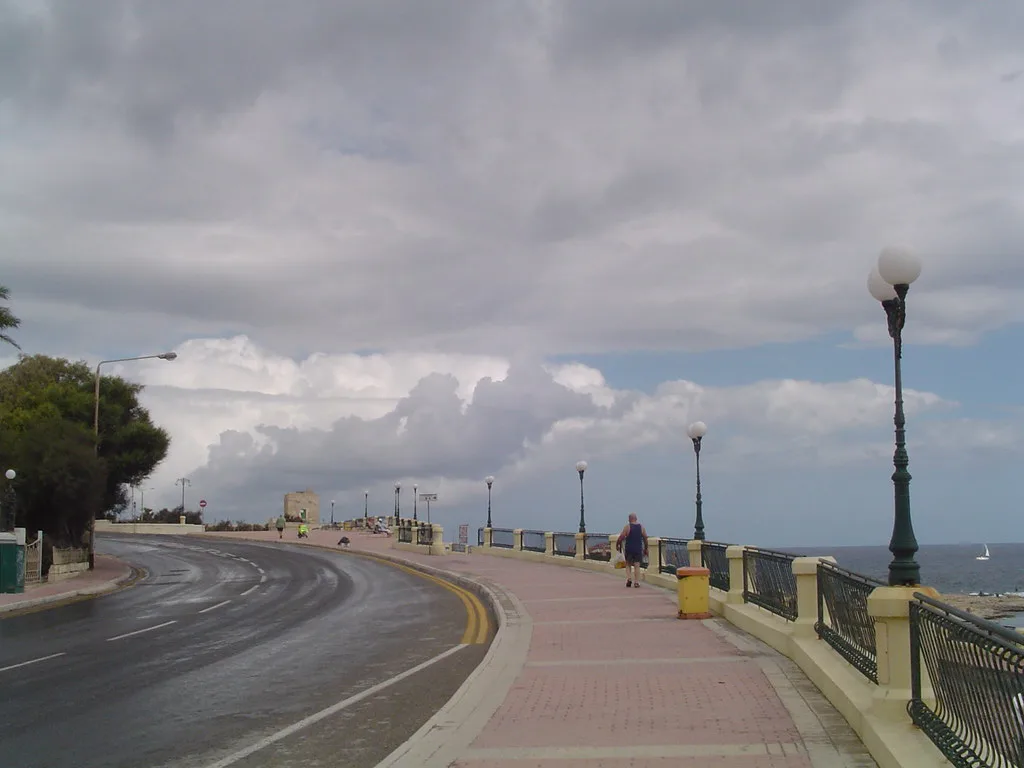
From the Buġibba bus terminal the walk along the coast takes about ten minutes, and you can also follow the shoreline from the stops near Qawra until the watch tower appears. Route numbers and journey times change, so confirm the current service on Malta Public Transport before you set out. Fares differ between the summer window (June to October) and the rest of the year.
Getting there by car
Parking at the point is limited and sometimes paid, so arrive early in summer or plan to park elsewhere and walk the last stretch. The paid car park at the Malta National Aquarium is the dependable fallback, and the Buġibba car parks work if you do not mind finishing on foot along the promenade. Turning off the main road onto the side road is the usual approach, though a free space there is never guaranteed.
If parking stress would spoil the day, a ride-hailing service such as eCabs, Uber or Bolt drops you at the aquarium and removes the problem entirely. White taxis are best avoided in favour of those apps. For anyone staying in Qawra itself, the point is simply a walk.
Swimming and snorkelling
Entry is via concrete platforms, flat rocks and metal ladders, with the shallow water deepening after a short distance. The lagoon is partly sheltered by the islet and breakwaters, which keeps it swimmable when the open coast is rough. Buoys mark the swim zone, and boats pass beyond that line, so stay inside it.
Snorkellers come for the clear water and the marine life around the rocks, and the point is where a local centre runs first scuba experiences in pools about a metre and a half deep. Its Fra Ben cave, around fifteen metres, also draws divers. Children who are confident in water manage the shallow section, but the water gets deep quickly and the rocks are sharp and slippery, so this is not a spot for toddlers.
Facilities and step-free access
Behind the point you will find toilets, sun loungers and umbrellas for hire, a bar, a snack bar and a supervised beach, with places to buy food and drink close by. Unusually for a Maltese swimming spot, the point offers water access for visitors with reduced mobility, alongside disabled access on land. That combination of facilities and a Blue Flag makes it a practical choice as well as a scenic one.
Qawra Point holds Blue Flag status, the international eco-label awarded for water quality, environmental management, safety and services. Treat that as a mark of a well-managed site rather than a guarantee of calm water on your particular day. Check conditions on the day before committing to a long swim.
What to bring and what to leave behind
Bring shoes with grip for the rocks and ladders, a snorkelling mask if you have one, and your own water. Leave the beach umbrella and the expectation of sand at home. A towel draped on flat rock is the reality here, and space runs out quickly once the midday crowd arrives.
Barbecues are popular here in the evenings, with the northeastern seascape as the backdrop, so a late visit has a different character from a morning swim. Jellyfish appear in season, and the rocks grow slippery with use and spray. If you are bringing children, watch the deeper water beyond the shallow shelf rather than assuming a gentle beach.
How long to allow
Two to three hours covers a swim, a snorkel and a lie-down on the rocks, with time for a coffee at one of the bars behind the point. Add an hour if you plan to continue along the promenade to Buġibba. Go early in the morning or outside summer weekends to have the platforms to yourself.
Midday in summer brings heavy crowds, limited shade and the sharpest light on the rock. An early swim before the promenade fills up is the better plan if you want calm water and a free patch of flat stone. Sunset is the other rewarding slot for the views across the bay.
Nearby: the aquarium, the tower and the promenade
The Malta National Aquarium sits immediately behind the point, with an underwater tunnel and six zones, and a visit there is the natural extension of a swimming morning. Confirm current opening hours and ticket prices on the aquarium's own site before you go, since these are not fixed for the season.
Overlooking the bay is a coastal watch tower built under Grandmaster de Redin, and the walk along the promenade towards Buġibba makes an easy add-on. Inland, Salina National Park offers a different kind of outing if you want to swap rock for salt flats and birdlife. Visitors looking for a shaded pause should head for Kennedy Grove, Qawra, a short hop from the seafront.
Is Qawra Point worth a morning?
Yes, if you want clear, sheltered water and are happy on rock rather than sand. The point rewards an early start with calm swimming, good snorkelling and a Blue Flag site with real facilities behind it, including step-free water access. Skip it if you need space to lie out, easy parking at noon or a beach for very small children.
Pair the swim with a walk along the promenade to Buġibba, and check bus times and fares on Malta Public Transport before you travel. Plan the rest of your time in the area with Qawra Attractions: 7 Visitor Guides.
Explore more Qawra guides
Frequently Asked Questions
Is Qawra Point a sandy beach?
No. Qawra Point is a rocky point with concrete platforms, flat rocks and metal ladders into the water. There is no sand and very little space for lying out, so bring grip for the rocks and expect to sit on stone.
Is Qawra Point good for families with small children?
It is not the best choice for toddlers. The shallow section suits confident swimmers, but the water gets deep quickly and the rocks are sharp and slippery. Older children who can snorkel will enjoy the clear water and marine life inside the buoyed swim zone.
Do you need to pay to swim at Qawra Point?
Access to the water is public and free, even where the lido borders the point. Sun loungers and umbrellas are available for hire if you want them, and the paid aquarium car park is the fallback for parking.