St Paul's Islands, Malta: What You Can See and How to See It
St Paul's Islands are two uninhabited islets off Malta's north coast, topped by a statue of Saint Paul. See them from the promenade or a passing boat trip.
On this page
St Paul's Islands are two uninhabited islets in St Paul's Bay, off Malta's north coast, linked by a narrow strip of land and known locally as Il-Gżejjer ta' San Pawl. You cannot land on them: there is no jetty and no scheduled crossing, so the realistic ways to see them are from the waterfront promenade or from a boat trip that passes close by. This guide covers where the islets sit in the bay, the statue that tops them, the shipwreck tradition behind the name and the nature interest of the rocky terrain.
The islands are an easy, free addition to a day around the northern resorts rather than a destination in their own right. Allow the view from shore as a short stop on a promenade walk, and treat a boat passage as the way to see the limestone cliffs and birdlife at close range.
Two islets joined by a narrow strip of land
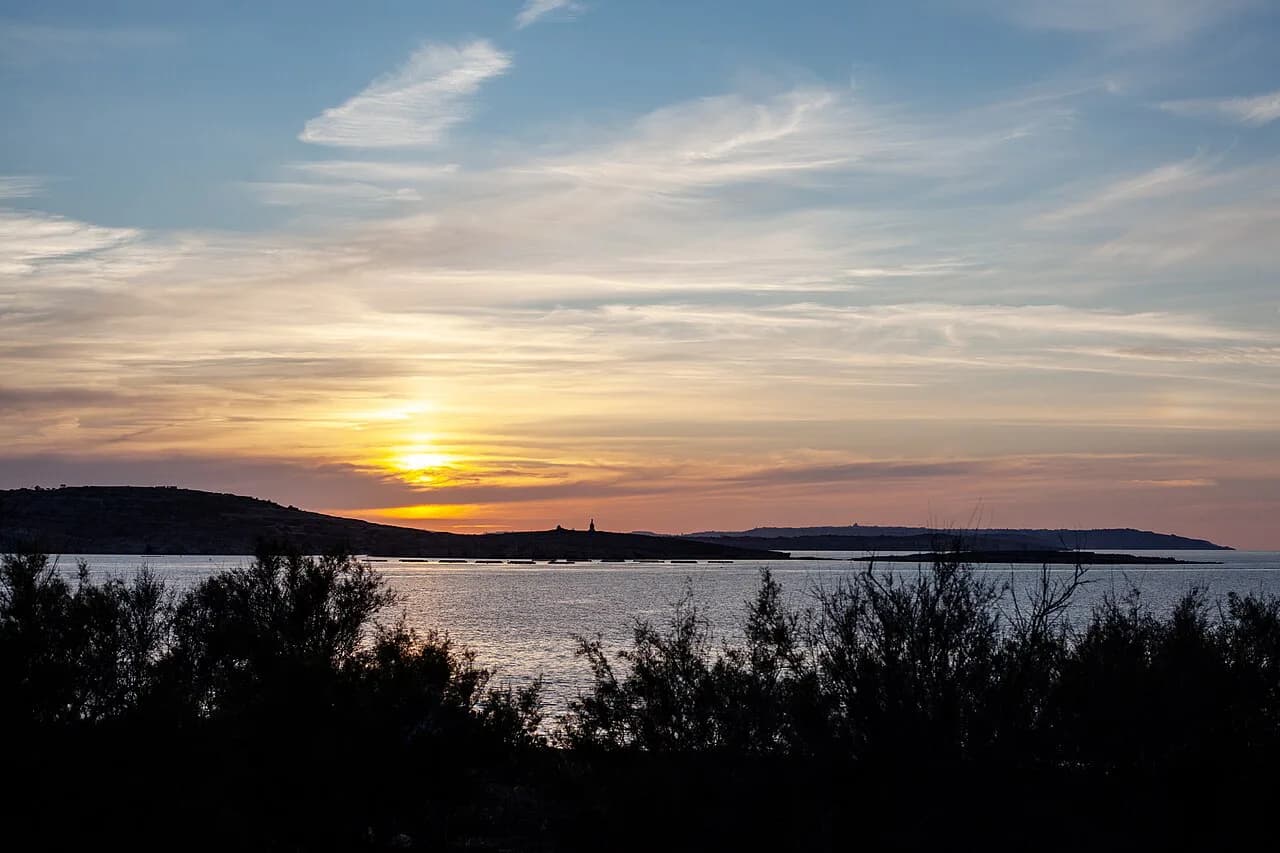
St Paul's Island is not one island but a pair of islets connected by a narrow stretch of land, forming a single geographical feature about 0.12 square kilometres in size. The land is uninhabited and rocky, with limestone cliffs dropping to the sea and low, salt-tolerant shrubs and wild thyme clinging to the arid surface. Seen from the promenade it reads as a low, pale outcrop rather than a green island, which is part of why many visitors walk past without realising what it is.
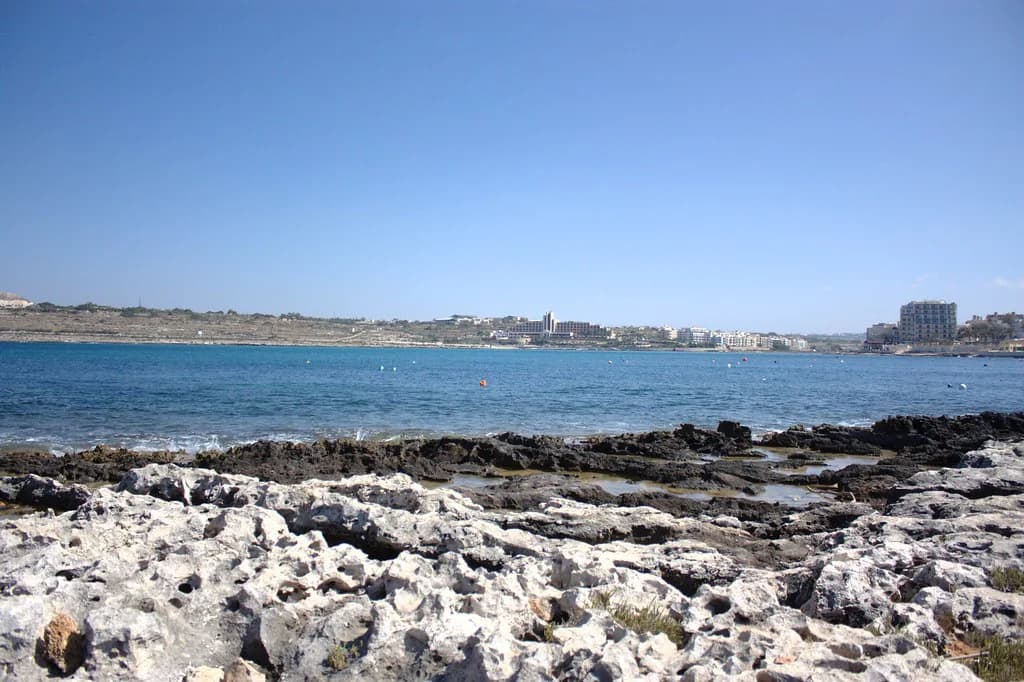
The islets sit in the bay that carries the same name, on Malta's northwest coast roughly 22 km from Valletta. The bay itself spans several distinct places: the older village of St Paul's Bay at the southern end, the resort strip of Buġibba, and Qawra toward the headland. Understanding that spread matters, because where you stand on the waterfront changes how much of the island you see.
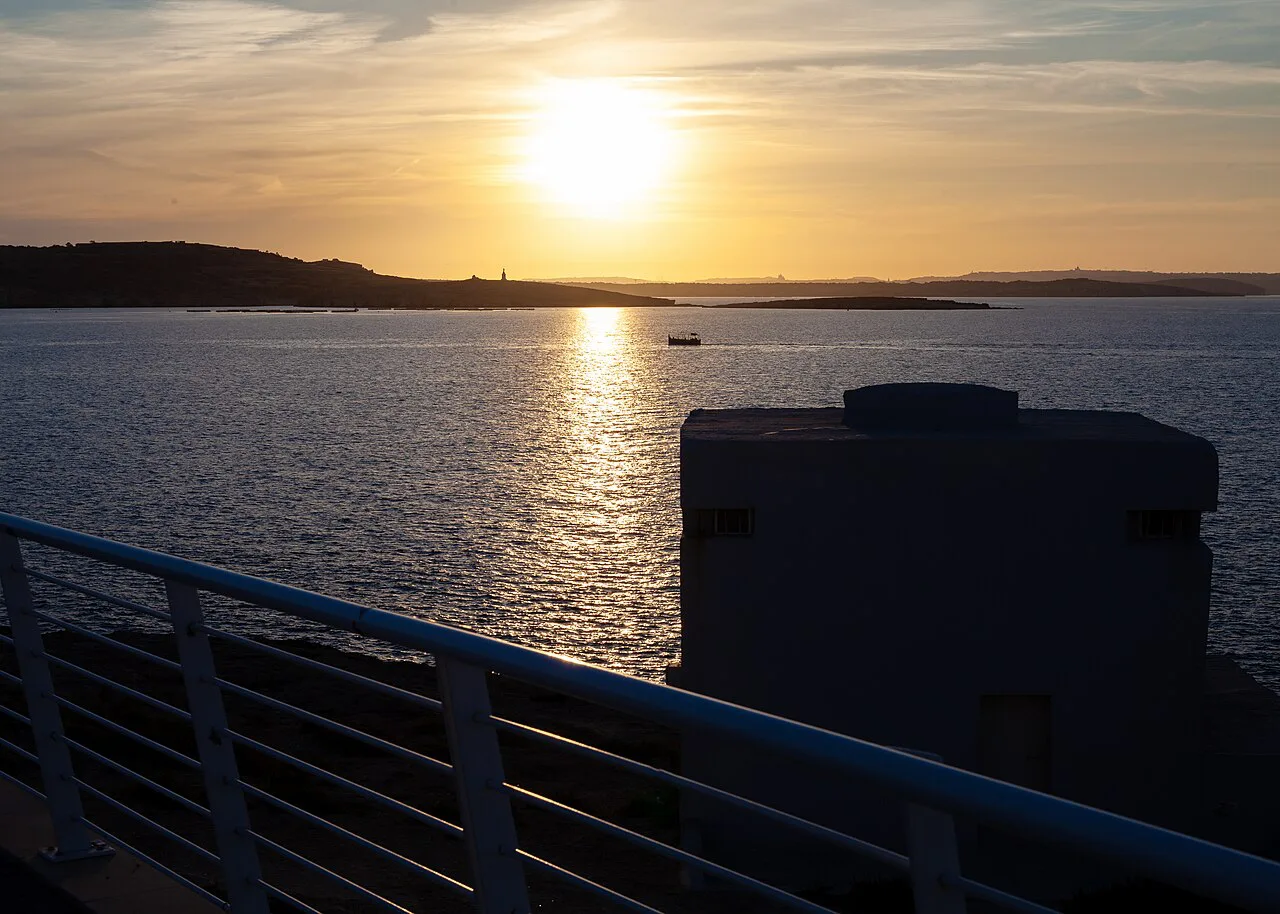
Where to stand for the clearest view
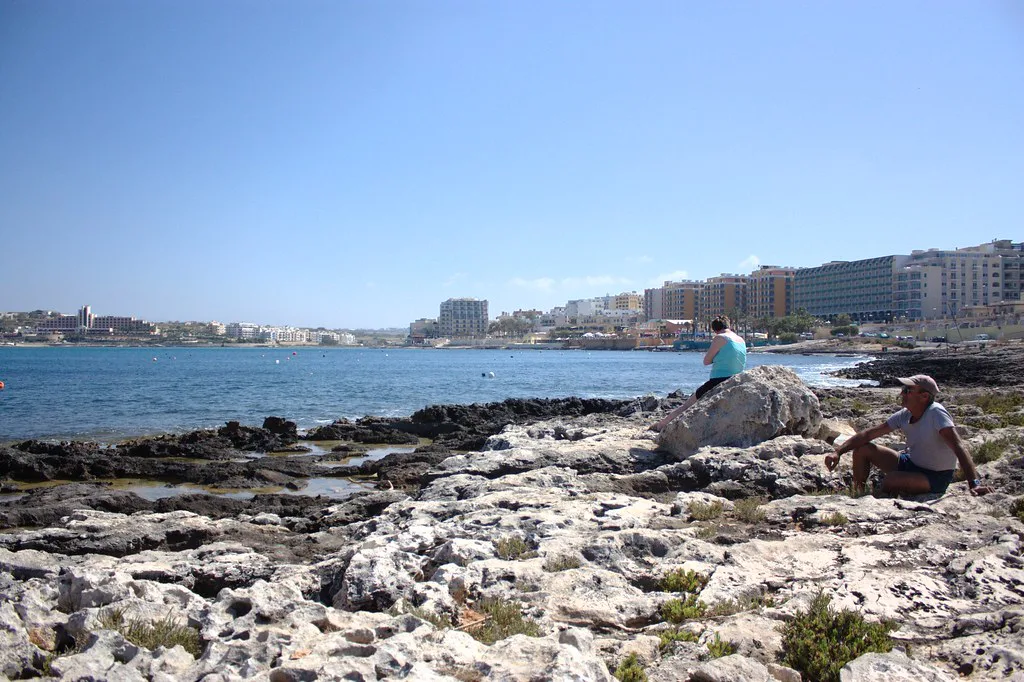
The waterfront path linking St Paul's Bay village with Buġibba and Qawra runs for around 4 km in total, and the islets are most visible from its southern end, near the village itself. Walk south from the Buġibba strip for about ten minutes and the quieter, older waterfront opens up, with the island and its statue in plain view across the water. Dawn and early evening give the best light on the bay and the boats coming in.
If you are working out how the northern resorts fit together before you walk, it helps to see the layout as three linked waterfronts rather than one resort. The Bugibba map sets out the promenade route and the streets behind it, so you can plan a loop that takes in the southern village end rather than turning back at the first café.
The statue of Saint Paul on the island
A tall white statue of Saint Paul stands on the islets, visible from the promenade and from boats in the bay, and it was erected in 1845. It is the landmark that makes the islands easy to identify from shore: look for the white figure against the sky above the low rock. The statue commemorates the shipwreck tradition rather than any structure you can visit, since the island has no landing point or facilities.
The islets are also a protected nature site, and their isolation gives nesting and resting birds a relatively safe foothold. Species recorded there include European shag, yellow-legged gulls and terns, with migratory birds pausing on the crossing. That is the strongest argument for viewing from the water rather than trying to get ashore: the rock is a sanctuary first and a viewpoint second.
The shipwreck story behind the name
The name comes from the tradition that the apostle Paul was shipwrecked on Malta in AD 60 while being taken to Rome for trial, as recounted in the Acts of the Apostles. In the story he was bitten by a viper while lighting a fire on shore and suffered no harm, an episode still marked in Valletta each 10 February. The islets carry his name because of that association, and the statue faces the shore he is said to have reached.
Treat the identification as tradition rather than settled fact: the claim that Paul landed on these islets specifically is contested, and another part of the Mediterranean is also proposed as the wreck site. That does not diminish the view, but it is worth knowing before you repeat the story as certain. The same caution applies to the details of Paul's time on the island, which rest on legend as much as record.
No jetty, no crossing: how a boat trip works
There is no jetty on the islets and no scheduled crossing, so seeing them up close means being on a passing boat trip rather than booking a dedicated excursion. Boats leaving from St Paul's Bay and Buġibba for Comino and Gozo pass the islands on the way north, which makes the passage a bonus of a longer day on the water. Choose a trip whose route hugs this coast rather than heading straight out, and ask before booking whether the boat passes the islets.
Boat trips in the area also run to the sea caves and onward to Gozo, so the island passage is usually one segment of a half or full day rather than the whole point. The Malta Spirit listing for St Paul's Bay tours shows what is typically offered from this departure point. Check the route and the operator's own description rather than assuming every northbound trip comes close.
How long to allow and when to go
A promenade stop for the view takes fifteen to twenty minutes; add the walk between the village end and Buġibba and you have a comfortable hour. Pair it with the National Aquarium on the Qawra Point headland, where admission is around 14 € for adults and 8 € for children, for a half day that works whatever the weather. The aquarium sits at the western edge of the bay, a short walk from the promenade.
Calm seas and thinner crowds are typical from April to June and from September to October, which suits a boat passage better than the busiest summer weeks. Morning and late afternoon give the best light on the rock and the statue; midday flattens it and, in summer, makes the exposed promenade uncomfortable. If you are in the area primarily for the water, the wider things to do in Qawra cover the headland end of the same bay.
What you cannot do on the islands
Landing is not an option: the islets have no jetty, no scheduled crossing and no facilities, so there is nowhere to moor, shelter or buy anything. Everything you need for the day comes with you, and the practical base for the view is the promenade rather than the water's edge of a private boat. Plan the visit around a shore viewpoint or a booked trip, not around getting your feet on the rock.
Because the islets are a nature site with nesting birds, keeping your distance is part of seeing them well. A pair of binoculars earns its place here: the statue is clear to the naked eye, but the birdlife on the cliffs is not. If you want to build the rest of the day around the northern bay, the things to do in Bugibba cover the resort strip between the village and Qawra.
Is the island view worth the stop?
Yes, as a free addition to a northern-bay day rather than a trip of its own. The clearest view is from the southern end of the promenade near St Paul's Bay village, and a boat heading north past the islets gives you the cliffs and birdlife at closer range. Build the day around the waterfront and one other stop, and the islets cost you nothing but the walk.
Explore more Qawra guides
Frequently Asked Questions
Can you land on St Paul's Islands?
No. The islets have no jetty and no scheduled crossing, and they are a protected nature site, so they are seen from the promenade or from a boat passing close by.
How many people live on Saint Paul Island?
None. The islets are uninhabited, with no buildings or facilities, and the only structure on them is the statue of Saint Paul.
What is the connection between the Apostle Paul and Malta?
The tradition holds that Paul was shipwrecked on Malta in AD 60 while being taken to Rome, as told in the Acts of the Apostles. The identification of these islets as the exact site is contested.
Do boat trips stop at the islands?
They pass rather than stop, since there is nowhere to land. Trips from St Paul's Bay and Buġibba heading for Comino, the sea caves and Gozo are the ones that come close.
Sources
Notes for your Malta trip
Optional updates when we add or correct a Malta or Gozo guide.
You might also like

Continue reading
More guides you'll find useful