
Għarb, Gozo: Village Guide to L-Għarb

Għarb is Gozo's westernmost village, set about 3 km northwest of Victoria, the island's capital, which is also called Rabat. It is a small, rural place built around a typical Gozitan square and a baroque parish church, with Ta' Pinu Sanctuary and the Wied il-Mielaħ limestone arch on its fringes. This guide covers the village centre on foot, the outlying sites that need a bus or car, and the practical question of whether to base yourself here rather than in busier Xlendi or Marsalforn.
What and where Għarb is
The name means west, and the village sits at the western end of Gozo, roughly 3 km northwest of Victoria, the island's capital, which Maltese also call Rabat. The local council describes its square as a typical Gozitan square, and the village centre still holds houses with decorated stone balconies that show its age. It became a parish in 1679, and the present church was built in 1699 and consecrated in 1729.
The village has long been a farming community, and its residents kept a distinct old Maltese dialect and a reputation for crafts: locksmiths, blacksmiths, cotton weavers, lace makers, carpenters and cane workers. That craft tradition is the reason the folklore museum here holds more than local curiosity value. If you are weighing up where to base yourself on the island, our Gozo Neighbourhoods: 9 Area Guides sets Għarb against the harbour villages and the southern coast.

Who Għarb suits, and who it does not
Għarb suits travellers who want a quiet rural base within a short drive of Victoria, with the parish church, the square and the folklore museum in walking order and Ta' Pinu a short ride away. It does not suit anyone who wants a beach on the doorstep or an evening scene: the village is inland and small, with a population of about 1,266.
For comparison, Xlendi Gozo is the island's bay resort and Marsalforn, Gozo is the northern coastal village, both better placed for swimming and restaurants. Għarb is the choice for walkers of stone lanes, church interiors and craft collections, and for travellers who treat the inland villages as the point of a Gozo trip rather than a compromise.

The village centre: the baroque parish church, the square and the old balconies
The parish church and collegiate basilica dominates the square at the heart of the village, and it is dedicated to the Visitation, the visit of Our Lady to St Elizabeth. It was built in 1699 and consecrated in 1729, and the local council records its baroque style. The old parish church, known as Taż-Żejt, served the village for 50 years before that and still stands.
Walk out from the square along the lanes and look up: the village centre holds houses with finely decorated stone balconies, one of the features the local council lists among Għarb's places of interest. The council's office is on Triq il-Vizitazzjoni, the street named for the Visitation.
Ta' Pinu Sanctuary on the edge of the village
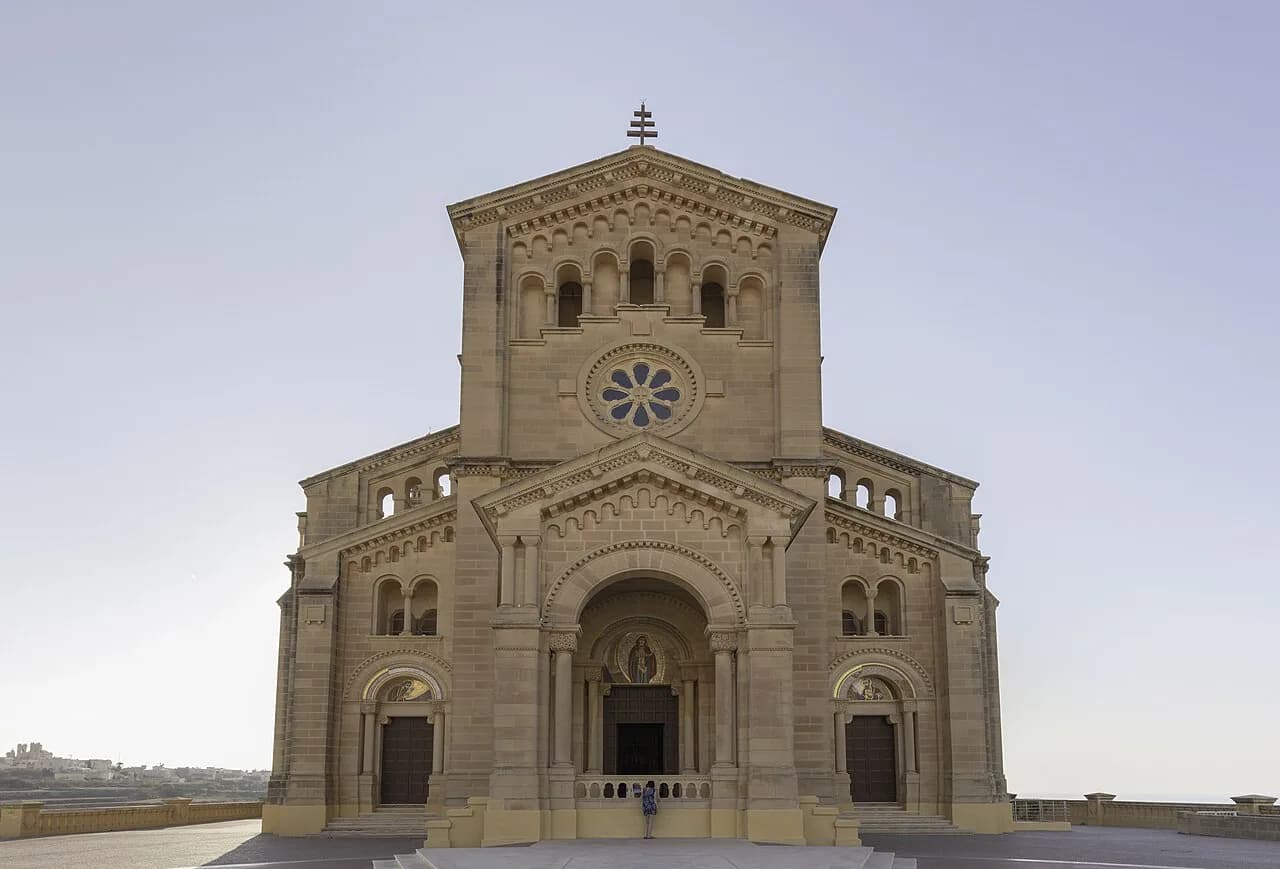
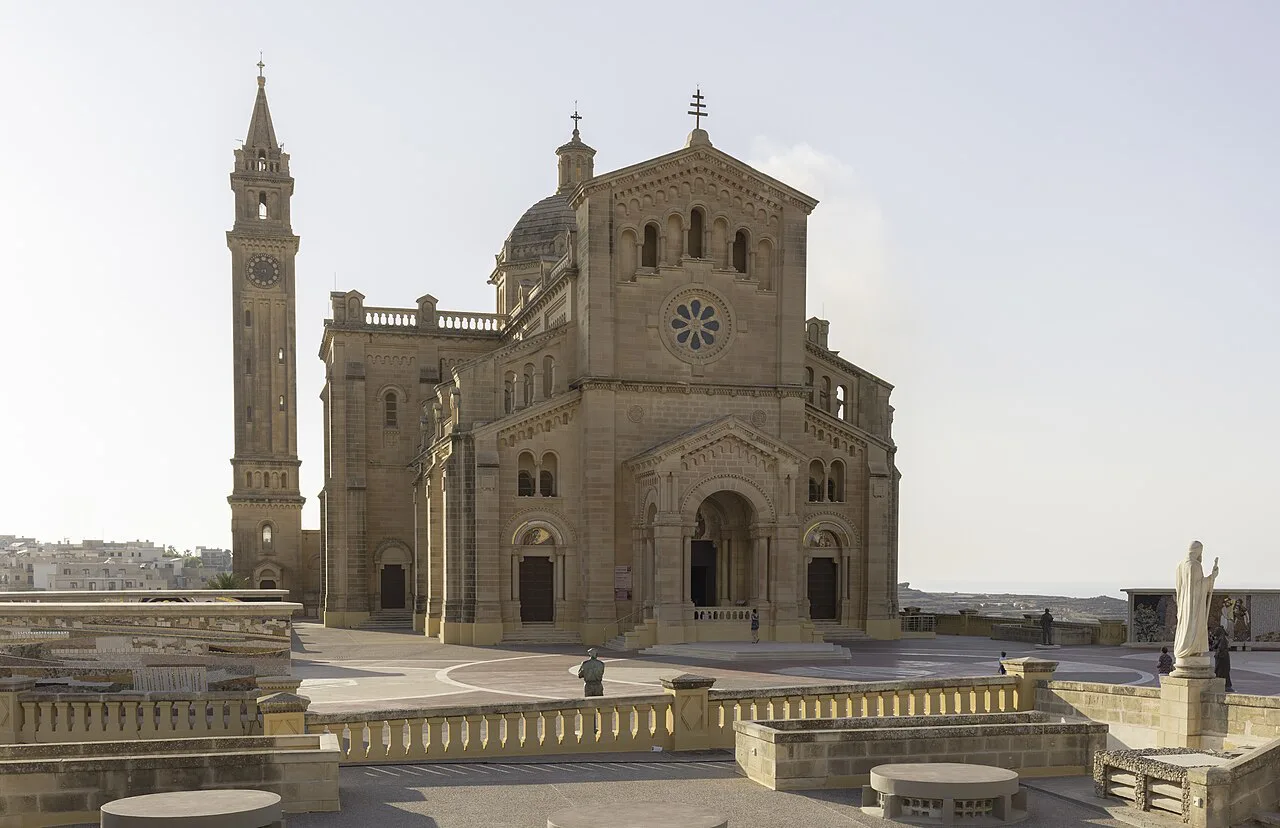
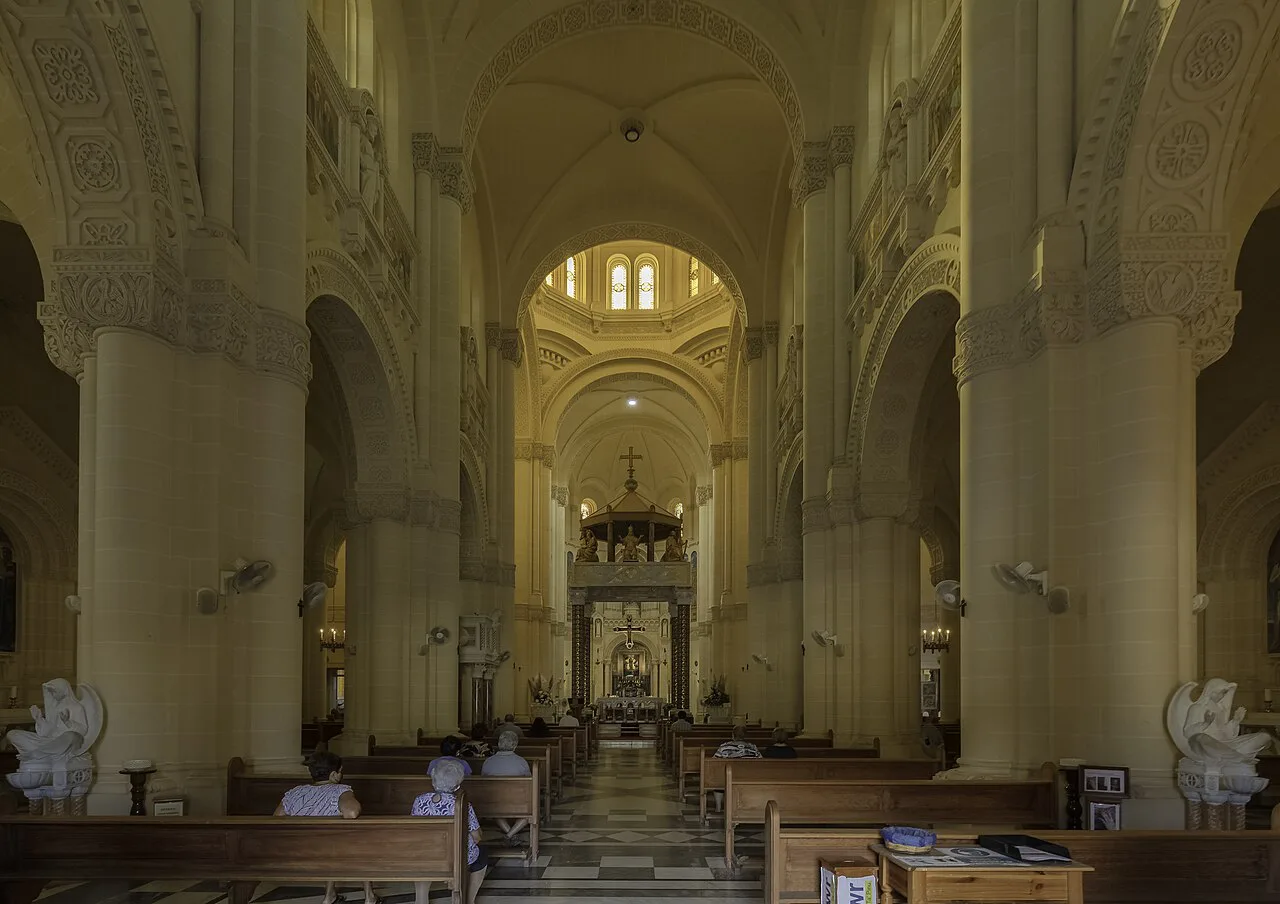
The Basilica of the National Shrine of the Blessed Virgin of Ta' Pinu stands on the outskirts of Għarb, a Roman Catholic minor basilica and national shrine. The present building was constructed between 1920 and 1931 in front of the original chapel, which remains intact and holds the painting of the Assumption associated with the shrine's story.
Plan for it as a separate stop from the village centre rather than part of a square-and-church stroll, because it sits outside the built-up core. The shrine is a working place of worship, so dress and behaviour follow church norms. The shrine is also listed among the places of interest in the village on the local council's site.
Għarb Folklore Museum and the village's craft tradition
The Għarb Folklore Museum occupies a historic 18th-century village house in the heart of the village, and its 28 rooms are filled with objects tied to Gozo's traditional trades: milling, printing, carpentry, wine-making, fishing and smithing. Workshops and antique rooms add to the collection, and the museum gives a grounded look at everyday island life rather than a polished display. The house is associated with Frenċ ta' L-Għarb, the village figure said to have cured ailments with herbs and prayer.
The craft story is what makes the museum worth the stop: Għarb is known for the Sikkina ta' L-Għarb, the village's traditional sharp knife, and the village still has the makers of blades, lace, cloth and cane-work around it. Ta' Dbiegi Crafts Village, listed among the village's places of interest by the local council, continues the theme outside the village centre.
San Dimitri Chapel and the nearby megaliths
San Dimitri is a chapel on the edge of the village, first built in the early 15th century and rebuilt in 1736 in the form you see today. Its altarpiece shows St Demetrius on horseback with an old woman praying and a young man in chains, and the mosaic pavement was laid in 1935, with mosaic added to the walls in 1950.
Near the chapel stands a group of megaliths, where the upper coralline limestone crust typical of Gozitan flat-topped hills has broken into scattered blocks. Treat the chapel and the stones as a short outlying stop rather than a site in its own right, and combine them with the Wied il-Mielaħ window on the same circuit.
Wied il-Mielaħ window and Ta' Dbiegi Crafts Village
The Wied il-Mielaħ window is a natural limestone arch on the coast near Għarb, less known than the Azure Window that once stood at Dwejra. It is the reason many day visitors come to this side of the island, and it rewards a proper stop rather than a photo from a moving car. The ground around it is limestone rock, so wear shoes with grip and keep back from the edge.
Pair the window with a stop at Ta' Dbiegi, which the village website lists among Għarb's places of interest. Dwejra Bay and San Lawrenz lie further west and make a natural extension of the same afternoon.
Getting to Għarb from Victoria and around the village on foot
Għarb lies about 3 km northwest of Victoria, the island's capital, which makes a car, taxi or local bus the practical way to arrive; no source gives a walking time from Victoria. Once in the village, the square, the parish church and the folklore museum sit within a short walk of one another, and the lanes between them are narrow and quiet. The local council lists the streets and services, including a library and internet access, if you need a base for practical errands.
Ta' Pinu, San Dimitri, the megaliths and Wied il-Mielaħ are outside the core, so plan them as a driving or bus loop rather than part of the village walk. If you are arriving from Malta, Mġarr, Gozo is the ferry port, and the island's buses and roads radiate from Victoria. Parking in the village itself is limited and the streets are tight, so park once and walk.
Eating and staying in Għarb
Għarb is a small village and the sources list a handful of places to eat rather than a restaurant strip, so plan around a single lunch or dinner stop rather than an evening of choice. The local council counts four restaurants in the village, alongside its churches and museums. With few options in the village itself, it pays to have a fallback in Victoria if your first choice is full.
For a wider choice of restaurants and a longer evening, Victoria, Gozo's capital, is the nearest town and a short drive away. Travellers who want the sea on the doorstep should look at Xlendi, Gozo or Marsalforn rather than Għarb, which is inland and rural by design.
How long Għarb needs and when to go
Allow half a day for Għarb if you want the square, the parish church, the folklore museum and Ta' Pinu without rushing, and a full day if you add San Dimitri, the megaliths and the Wied il-Mielaħ window. The village centre is compact and walkable, so the time goes on the outlying sites and the driving between them rather than on distance on foot.
Spring and autumn are the most comfortable seasons for walking the lanes and the rocky ground around the window, since the limestone holds heat and the village offers little shade on the fringes. Ta' Pinu draws visitors throughout the day. For the rest of the island, our Gozo Attractions: 9 Visitor Guides covers the temples, forts and museums worth adding to the same trip.
Should Għarb be your Gozo base?
Choose Għarb if you want a quiet, traditional village with a strong craft story, a baroque church on its square and Ta' Pinu on the edge of the village, and you are happy to drive or take the bus to the coast. Skip it as a base if you want a beach, an evening scene or a wide choice of restaurants within walking distance.
Use the square and the folklore museum as your walking core, then treat Ta' Pinu, San Dimitri and the Wied il-Mielaħ window as a short driving loop on the same afternoon. Readers comparing the island's villages can weigh Għarb against Xagħra, Gozo and Sannat before booking, and check current opening times with each site directly.
Explore more Gozo guides
Frequently Asked Questions
Is Għarb in Malta or Gozo?
Għarb is a village on Gozo, the smaller island of the Maltese archipelago, about 3 km northwest of Victoria, Gozo's capital. It is the westernmost village of the island and is reached by road or bus from Victoria, or by ferry to Mġarr and then across the island.
How do you get to Għarb without a car?
Take a bus from Victoria, Gozo's main transport hub, or a taxi; the village is about 3 km northwest of the capital. The outlying sites, including Ta' Pinu, San Dimitri and the Wied il-Mielaħ window, are spread out and need a bus, taxi or car rather than a walk from the square.
What is there to see in Għarb itself?
The parish church and square, the lanes with decorated stone balconies, the Għarb Folklore Museum with its 28 rooms of traditional trades, Ta' Pinu Sanctuary on the edge of the village, and San Dimitri Chapel with its nearby megaliths. The Wied il-Mielaħ window and Ta' Dbiegi Crafts Village sit outside the centre.