
Żurrieq: Malta's Southern Village Base for the Blue Grotto

Żurrieq is a village in Malta's Western Region and a useful southern base if the Blue Grotto boat trip from Wied iż-Żurrieq harbour is the point of your day. The village itself sits inland; the harbour and boat trips are about 3 kilometres away, so treat them as two separate stops rather than one address. This guide covers the village core, the windmills and watchtower, the harbour caves, Filfla offshore, how to reach both parts of the area, and who the area suits.
It is a working village rather than a resort, and that shapes the trip: you come for a church square, a windmill, a harbour and cliffs, not for a promenade of cafés. If you want a walkable evening of restaurants, this is not the base for it. If you want a quiet southern base with early access to the grotto boats before the day heats up, it fits.
What Żurrieq is and where it sits in Malta's south
Żurrieq lies in Malta's Western Region on the south coast, in the same broad corner of the island as the temples at Ħaġar Qim and Mnajdra and the harbour cove at Għar Lapsi. Locally it is described as the largest village in its area and the centre of much of the surrounding commercial activity, which is the practical reason it has more everyday shops than the hamlets around it.
The village has been inhabited since the Bronze Age, so the settlement is not a modern sprawl bolted onto a harbour. Keep the geography straight: the village, the church and the windmills are inland, while the sea, the boat tickets and the cliffs belong to Wied iż-Żurrieq.
For the wider southern picture, the neighbouring areas are covered in the Marsaxlokk Neighbourhoods: 5 Area Guides, and the fishing village itself is worth pairing with a Żurrieq morning if you are driving. Żurrieq is one of the 10 parishes documented in 1436, which explains the ecclesiastical weight of the village centre.

Who Żurrieq suits and who it does not
Żurrieq suits travellers with a car or a willingness to use local buses, because the interesting parts are spread between village and coast. It also suits anyone who wants to be on the water early, since staying nearby shortens the run to Wied iż-Żurrieq harbour. It does not suit anyone whose idea of a Maltese base is a seafront strip of restaurants and bars.
The village is livelier in summer and calmer in the off-peak seasons, which is a real trade-off: quieter lanes against heat on the cliff paths and a higher chance of a choppy sea. If your trip hinges on the boat, build in slack rather than scheduling the grotto and a flight on the same afternoon.
The village core: the Parish Church of St Catherine of Alexandria
The village's anchor is the Parish Church of St Catherine of Alexandria, established in the 17th century, with frescoes and other artworks by local and international artists inside. Build the village half of your day around this square and the lanes leading off it, which is where you get a sense of Żurrieq as a residential place.
Żurrieq is also home to a number of old churches and chapels, so a slow loop of the centre will turn up more than the parish church alone. Church visiting arrangements and service times change, so confirm them at the parish before you plan a visit around the interior. Dress for a place of worship: covered shoulders and knees are the safe default in Maltese churches.
The windmills, including Tax-Xarolla
Żurrieq has five 18th-century windmills, and one of them, Tax-Xarolla, has been restored to working order and is used to keep the local wheat-milling tradition alive. That makes the windmills a genuine sight rather than a roadside curiosity, and Tax-Xarolla is the one to seek out if you only have time for a single stop.
Viewing the windmill from outside takes minutes; going in depends on whatever access the operators offer that week, which is worth asking about locally rather than assuming. Pair the windmill with the village church in one loop on foot and you have covered the inland half of Żurrieq in a morning.
Wardija Tower and the coastal watchtower line
Wardija Tower is one of 13 towers built in the 17th century to guard the coast, and it is the village's link to Malta's wider coastal defence line. It is a modest structure, so treat it as a viewpoint-and-context stop on the way to the sea rather than a destination in itself.
The tower's value is positional: it explains why this stretch of coast was watched, which makes more sense once you are standing on the cliffs above Wied iż-Żurrieq looking at Filfla. If you are short of time, the harbour and the grotto beat the tower; if you have a car and an hour, the sequence village, tower, harbour works well.
Wied iż-Żurrieq harbour and the Blue Grotto caves
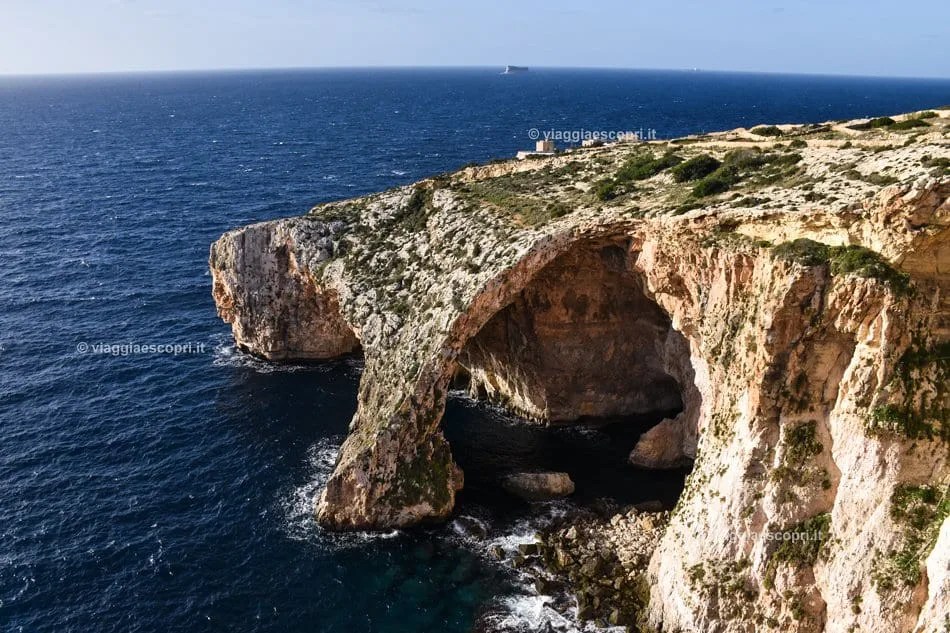
The boat trips leave from Wied iż-Żurrieq harbour, a small port in a narrow inlet cut into the cliffs about 3 kilometres from the centre of Żurrieq. From there the boats run to the Blue Grotto and its sea caves, including the Honeymoon Cave, the Reflection Cave and Cat's Cave.
The Blue Grotto is a collection of sea caverns facing the island of Filfla, and the draw is the way the water reflects colour onto the rock. You can see the blues from the cliffs above the harbour, or take the boat to go inside the caves; the cliff view is the cheaper half and the boat is the part people remember.
Trips can be cancelled when the weather turns, so call ahead to confirm before you commit a morning to the harbour. The operator sets its own fares, and no published rate is quoted here, so check the price at the harbour kiosk before boarding rather than budgeting from an old figure.
Filfla: the island offshore that you cannot land on
Filfla is the small rocky island you see from the cliffs and from the boat, and it is closed to landing in order to protect its ecosystem, including its birdlife. Plan to photograph it from the water or the cliff path and leave it at that; a landing is not on the itinerary.
Its presence is what gives the harbour its scale: the boat route, the caves and the low rock on the horizon all line up in one view. A live webcam at the port shows the inlet and Filfla behind it, which is a sensible way to check sea conditions on the morning you plan to go.
Timing the Blue Grotto: go early, and keep the plan loose
The cave lighting is the reason to go early: as the sun rises, the caves light up, and arriving before midday gives the best chance of the turquoise reflection on the rock. Later in the day you still get a boat ride, but the colour effect that sells the trip is weaker.
The practical consequence is a flexible morning: aim to be at Wied iż-Żurrieq harbour early, and treat a cancellation as a reason to walk the cliffs or visit the temples instead rather than a ruined day. Keep the boat as the first item on the schedule, not the last, so a weather call does not strand the rest of your plan.
Getting to Żurrieq and Wied iż-Żurrieq
Żurrieq is connected to the rest of Malta by road and sits on local bus routes, which is how most visitors without a car will arrive. The harbour is a separate 3-kilometre hop from the village centre, reached by local or tourist bus to Wied iż-Żurrieq, so plan the two legs rather than assuming one stop covers both.
By car, the village and the harbour are an easy pairing with the southern sights, and having your own transport removes the wait between the two. Driving early also puts you at the harbour before the busiest part of the day. Route numbers and timetables are not given here because they change; check them with the operator before you travel.
Other places within reach: Ħaġar Qim, Mnajdra and Għar Lapsi
A short drive from Wied iż-Żurrieq brings you to the Ħaġar Qim and Mnajdra temples, with a visitor centre that explains the site. They are separate ticketed monuments, so check current opening hours and admission with the site operator rather than folding them into a grotto fare.
Għar Lapsi, a cove a short distance from Wied iż-Żurrieq, is the third piece of a natural south-coast morning. If your interests run to the island's older towns, Żejtun: Malta's Old South-East Town and What to See There covers the next parish east, and Birżebbuġa, Malta sits further along the same southern shore.
Eating options near Żurrieq
Żurrieq is a village with everyday commerce, serving the people who live there rather than a seasonal visitor strip.
For a wider choice, Marsaxlokk harbour is the obvious pairing, and its waterfront is covered in Marsaxlokk Attractions: 4 Visitor Guides. Plan lunch there after a Żurrieq morning rather than expecting the village to supply a long restaurant list.
Using Żurrieq as a southern base
If you want the Blue Grotto, the temples and the fishing village as a southern base, Żurrieq keeps the driving short. What you give up is the walkable restaurant and bar scene of Sliema or St Julian's.
A Żurrieq base works best for a short southern stay with a car, not for a week of evening entertainment. If your priorities are the Blue Grotto, the temples and the fishing village, staying here saves daily driving; if they are Valletta nightlife, stay north and visit Żurrieq as a day trip.
Practical constraints: heat, wind and boat conditions
The southern cliffs and temple sites are exposed, so the heat at midday is the main physical constraint between June and September. Walk the harbour and the cliffs in the morning, keep the temple visit for the shoulder hours, and carry water; the boat trip itself is cooling but the walk to and from it is not.
Wind decides the boat: a choppy sea cancels the grotto trips, and the harbour webcam is the quickest way to see what the inlet looks like before you drive down. Check the sea, not just the forecast, and have a fallback that does not depend on the water.
Is Żurrieq worth a day, or a base?
Żurrieq earns a day: the parish church and windmills in the morning, then Wied iż-Żurrieq for the caves, Filfla and the cliffs, with Marsaxlokk for lunch. As a base it is the right choice for a car-borne southern stay and the wrong one for anyone who wants an evening on foot outside the door.
Book the boat around the early light, keep the weather window flexible, and look at Żejtun and Birżebbuġa if you want more of the old south-east on the same trip. The village rewards a slow half-day, not a rushed stop between bigger names.