
Portomaso, St Julian's: a guide to the marina district

Portomaso is the marina district at the centre of St Julian's, and you visit it on foot: a promenade loops around a three-basin yacht marina, with the Hilton Malta, a 23-storey business tower, shops and restaurants set behind it. It is a compact, semi-gated development rather than a public square, so the appeal is the waterside walk and the choice of places to eat rather than a list of ticketed sights. This guide covers how the district is laid out, what sits inside it, who it suits as a base, and how to reach it from the rest of St Julian's, and it sits within our wider set of St Julian's Neighbourhoods guides.
What Portomaso is and where it sits in St Julian's
Portomaso occupies a 128,000m² site in the centre of St Julian's, on Malta's northern coast a short distance north of Valletta. It was developed by Tumas Group and completed in 1999. The development mixes residential apartments with a hotel, offices, shops and a marina, so it functions as a district in its own right rather than a single building.
The layout matters more than the address. The marina side is deliberately pedestrian: around 90% of the development is car-free, with parking placed underground for residents and visitors, and only about 20% of the site is built on. That leaves open views across the water from most of the promenade and keeps the walking route quiet compared with the traffic-heavy streets nearby.

The marina: 110 berths along 1.6km of waterfront
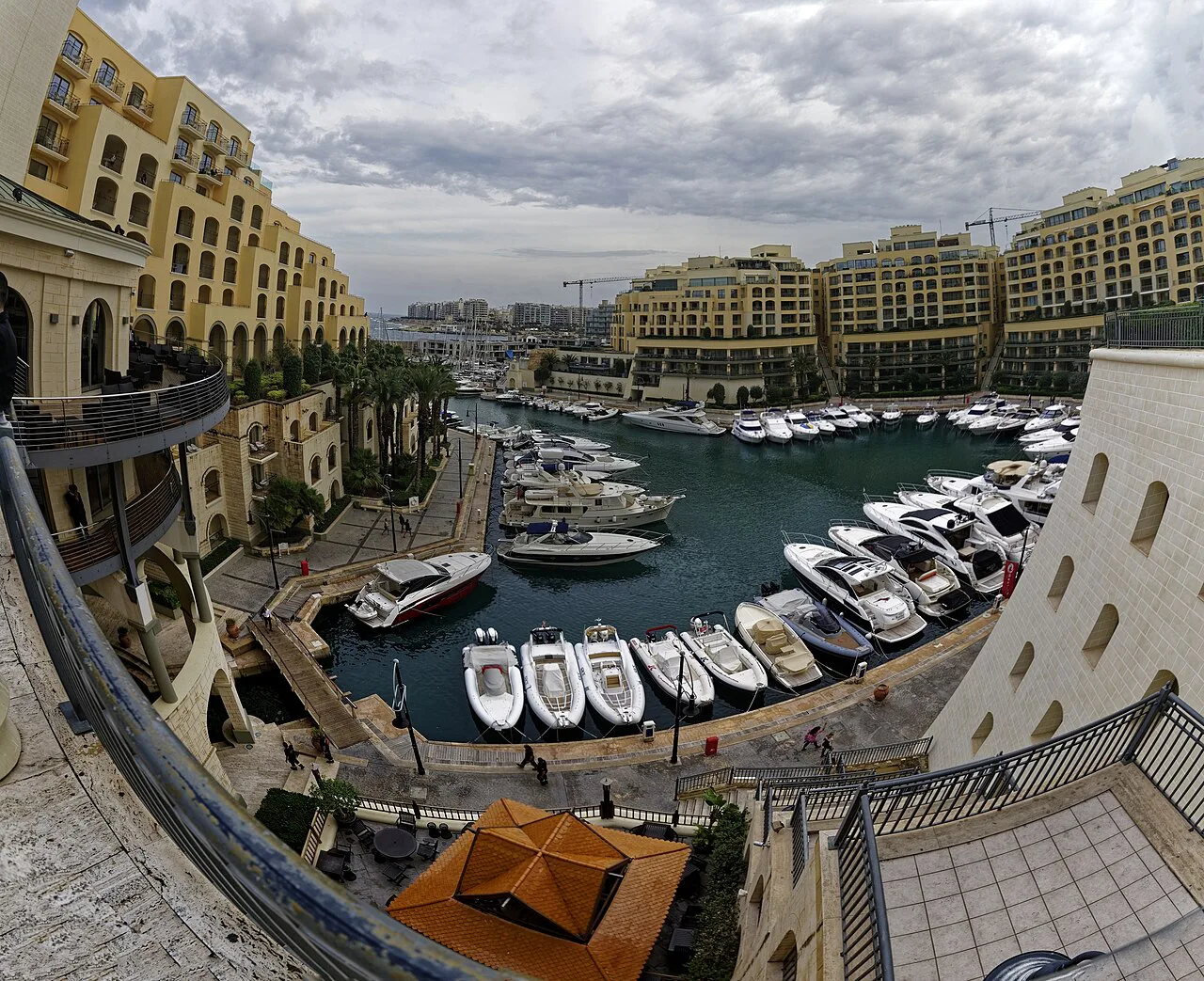
The yacht marina is the reason to come. It has 110 berths spread across three basins, and its meandering design stretches along 1.6km of water frontage. A tree-lined promenade runs right around the marina, so you can walk a continuous loop past the moored boats without doubling back.
Set aside a relaxed block of time for the loop, longer if you stop for coffee or photographs. The circuit is flat and paved, which makes it one of the simplest waterside walks in the area. It is also a working marina, so keep an eye on mooring lines and stay on the promenade rather than the pontoons.
Landmarks in the development
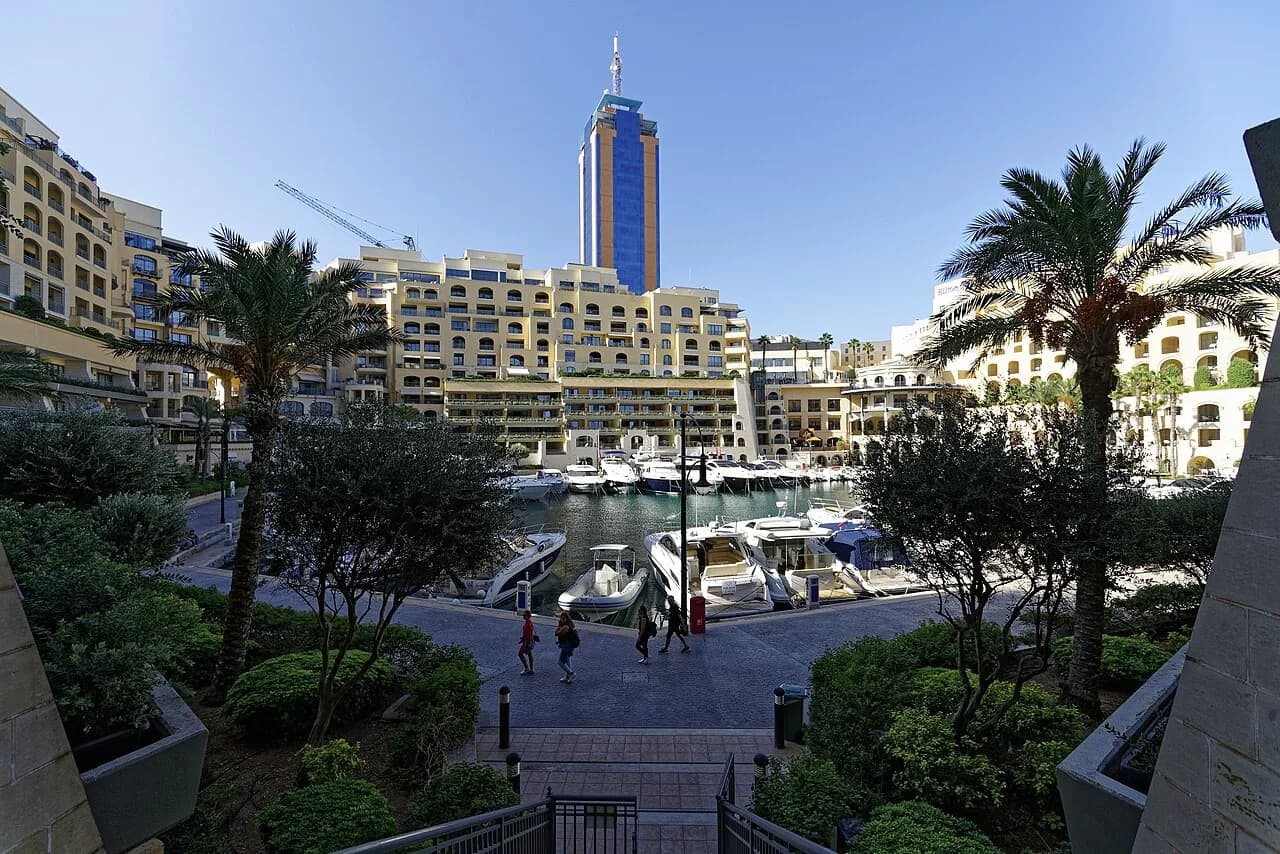
Three structures give Portomaso its skyline. The Hilton Malta is the five-star hotel on the site and includes a beach club, a health and leisure centre and a conference centre. Beside it stands the Portomaso Business Tower, a 23-storey office block that opened in 2001 and rises to about 97.5 metres, making it the obvious landmark when you approach from the surrounding streets. A shopping complex and a casino sit within the development too.
None of these is a sight you tour in the way you would a church or a fort. The tower is an office building, the hotel is for guests, and the shops are everyday retail rather than a destination in themselves. Treat them as the backdrop to the marina walk and as useful orientation points when you are finding your way back to your accommodation.

Who Portomaso suits and who it does not
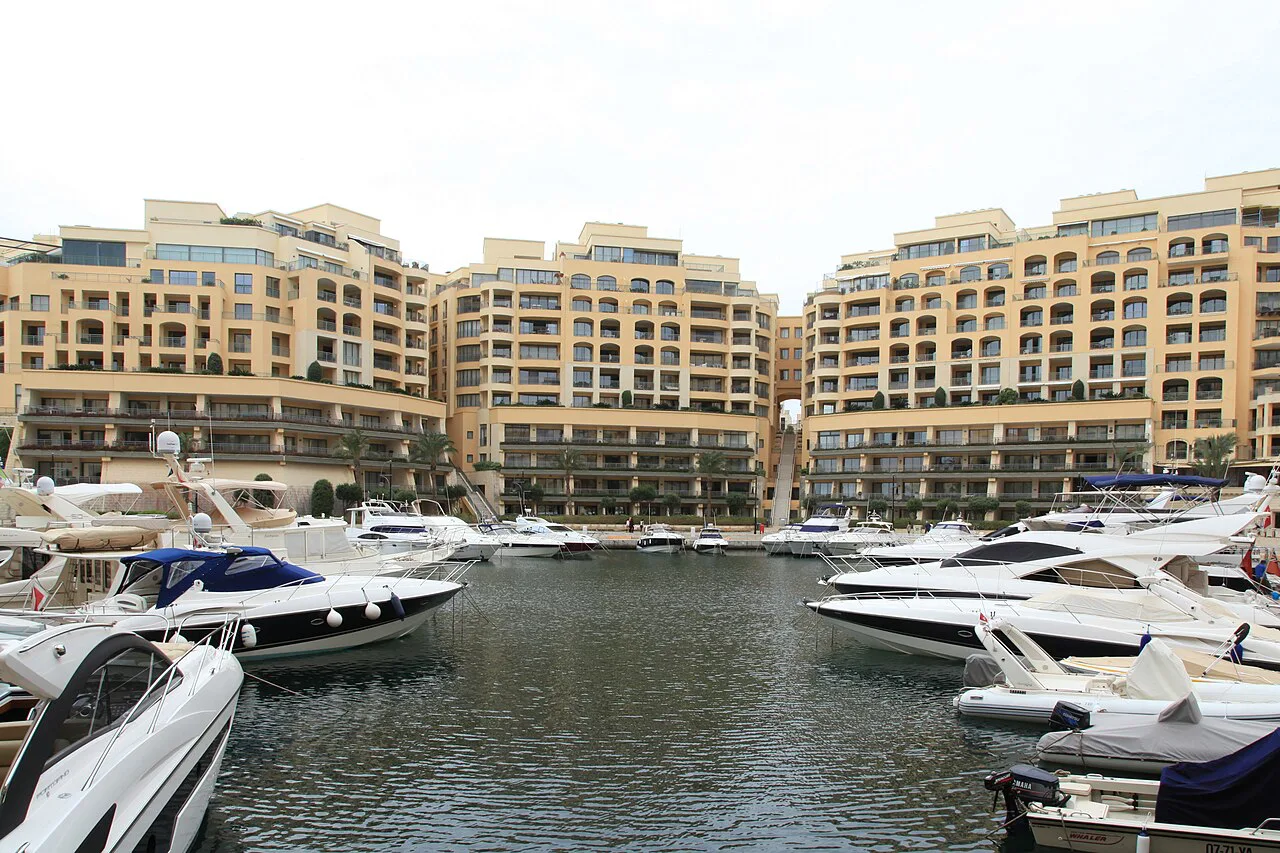
Portomaso suits travellers who want a quiet, self-contained waterside base within walking distance of central St Julian's. The marina side is semi-gated, maintained with a 24-hour security presence in the communal areas, and landscaped, so evenings there feel calmer than the busier streets around the Paceville side of town. If you want restaurants and bars on your doorstep but a calm room to return to, the location works well.
It does not suit anyone hoping for a traditional Maltese neighbourhood of narrow streets, village squares and parish churches. Portomaso is a modern, managed development, and the eating and shopping are correspondingly polished rather than local in character. Travellers who want that atmosphere should look at the older parts of St Julian's, or compare quieter residential areas nearby such as Swieqi and Pembroke before booking.
Eating and drinking around the marina
The development holds a selection of restaurants on its grounds, mostly ranged around the marina and the shopping complex, alongside the Hilton's own dining. These are the easiest options for a meal without leaving the district, and the waterside setting is the main draw. Because the development is largely car-free, the promenade restaurants are reached on foot rather than by pulling up outside.
Portomaso does not hold the whole of St Julian's dining scene. Spinola Bay, a short walk south-west along the coast, has its own cluster of waterfront places and is the natural next stop if you want to compare. Menus and serving times change through the year, so check the board outside or the restaurant's own page before you commit to a particular kitchen.
Staying in Portomaso: apartments and the Special Designated Area
Short lets in Portomaso are mostly serviced apartments in the residential blocks, ranging from one to four bedrooms and from about 70m² up to around 500m², with private terraces and, in some units, their own pools; these figures describe the residential units generally rather than any specific short let. The Hilton Malta covers the hotel side of the same site. Availability and terms shift constantly, so book through a letting agent or the individual property listing and confirm what is included before you pay.
Portomaso holds Special Designated Area status, which means EU and non-EU buyers can purchase units there without an Acquisition of Immovable Property permit, and owners can let them out without the restrictions that apply elsewhere. For a visitor this is background rather than something you act on: it explains why so many of the apartments around the marina appear on short-let platforms. Renters still deal with an individual owner or agency, not the development.
Getting there and getting around on foot
Portomaso sits in the middle of St Julian's, so the realistic way in is on foot from the surrounding streets. Buses stop in central St Julian's, a short walk from the marina entrance, and the walk in from Spinola Bay follows the coast road. Taxis and ride-hailing drop at the street entrances rather than on the promenade, since the marina side is pedestrian.
Once inside, everything in the district is walkable: the marina loop, the shops, the tower and the hotel are all within a few minutes of each other. Parking is underground for those arriving by car. Bus routes, frequencies and fare structures change, so check the operator's current information on the day rather than relying on an old timetable.
Marina walk or a base for the rest of St Julian's?
Treat Portomaso as a relaxed half-day: walk the marina loop, stop for lunch on the waterside, and use the tower and the Hilton as landmarks to orient yourself. If you are choosing where to sleep, pick Portomaso for calm, managed surroundings and easy access to central St Julian's, and look at Swieqi or Pembroke if you would rather be in a residential neighbourhood away from the marina.
Before booking a short let, confirm the exact block, what the terrace or pool access includes, and how you collect keys, since arrangements vary by owner. For everything else in the town, start with the wider St Julian's Neighbourhoods: 6 Area Guides and work out which district matches the trip you have in mind.
Explore more St Julian's guides
Frequently Asked Questions
Is Portomaso part of St Julian's or a separate town?
It is a district within St Julian's, on Malta's northern coast just north of Valletta, developed by Tumas Group and completed in 1999. It contains apartments, the Hilton Malta, an office tower, shops and a yacht marina.
Can you walk around Portomaso Marina without staying there?
Yes. A tree-lined promenade loops around the three-basin marina along 1.6km of waterfront, and about 90% of the development is car-free, with parking underground. It is a flat, paved circuit; allow a relaxed stretch of time rather than rushing it.
Is Portomaso a good base for visiting Valletta and Sliema?
It is a calm, self-contained base within walking distance of central St Julian's, where buses stop. Check current bus routes and times on the day, as these change.
What does Special Designated Area status mean for a visitor renting in Portomaso?
It allows EU and non-EU buyers to purchase units without an Acquisition of Immovable Property permit and lets owners rent them out without the usual restrictions. In practice it explains the volume of short lets; renters still deal with an individual owner or agency.