
Mellieħa Air Raid Shelter: What You'll See in the War Tunnels

The Mellieħa air raid shelter is a warren of tunnels dug into the limestone beneath Mellieħa, and it suits travellers who want a compact, enclosed piece of Second World War history rather than another church or bastion. Allow roughly an hour to walk the corridors at an unhurried pace and read the displays. This guide covers where the shelter sits in town, what you actually walk through and which Mellieħa sights combine with it.
Mellieħa is a hilly village on Malta's northwest coast, well north of the harbour district around Valletta and Sliema, and the shelter is one of the wartime sites cut into the rock under the built-up centre. It is a single focused stop rather than a full day out, so plan it alongside the parish church, Saint Agatha's Tower or the coast below the ridge.
What the Mellieħa air raid shelter is
The shelter is a network of underground passages tunnelled through Malta's soft limestone to protect residents during wartime bombing. It sits in Mellieħa itself, beneath the streets of the village, which makes it easy to fold into a morning in town rather than a separate excursion. Visitors walk into the tunnels on foot and follow the corridors through the rock.
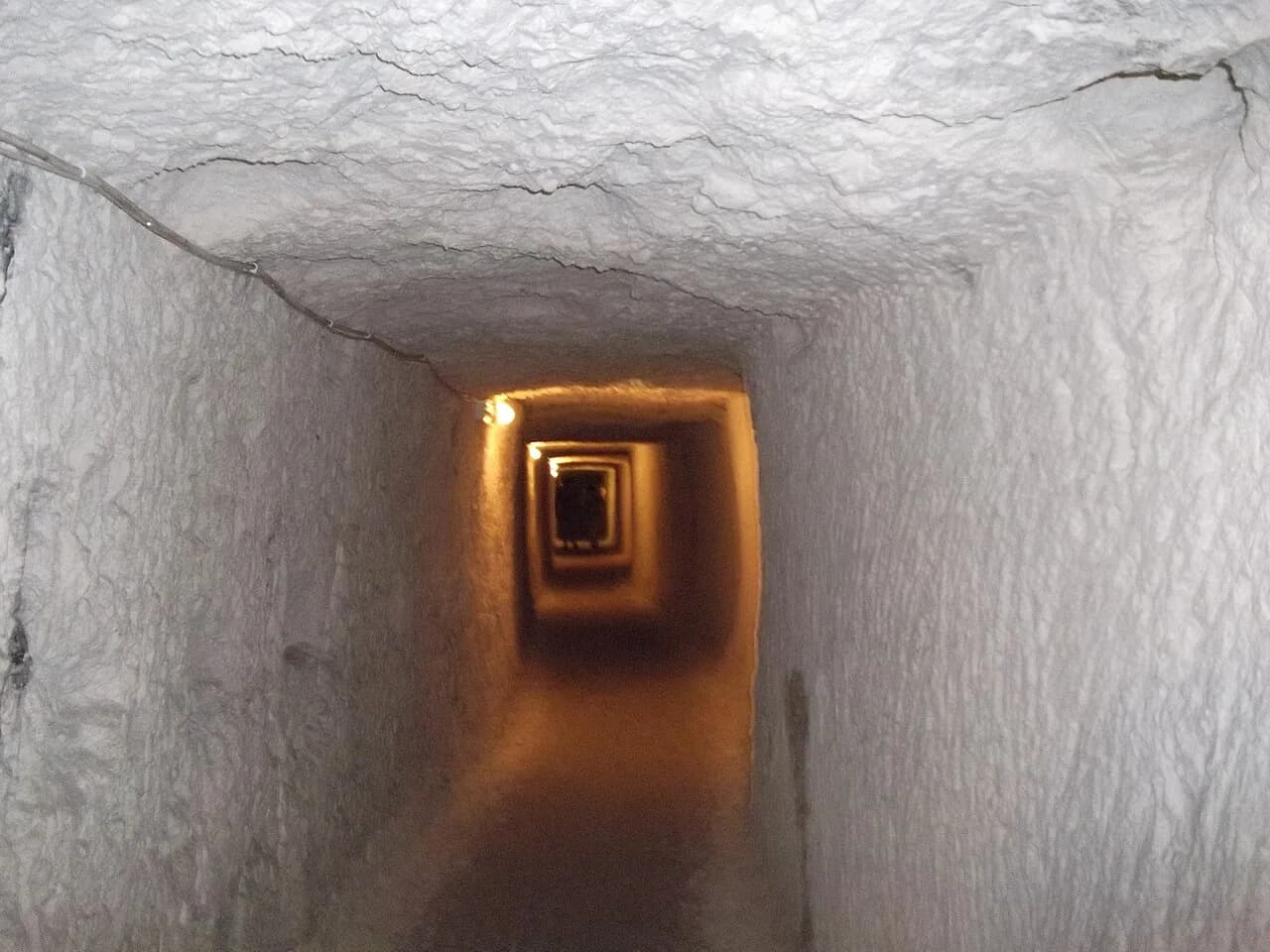
Of the 46 shelters dug in Mellieħa during the Second World War, this is the largest, with a length of more than 500 metres. That scale is what separates it from a roadside bunker: you are committing to a proper underground walk rather than a single room.
Accounts from people who sheltered there record that it held around 700 people during the war. Keep that figure in mind as you walk: the corridors were designed for crowds waiting out raids, not for a display case's worth of visitors.

Where it sits in Mellieħa and how to reach it
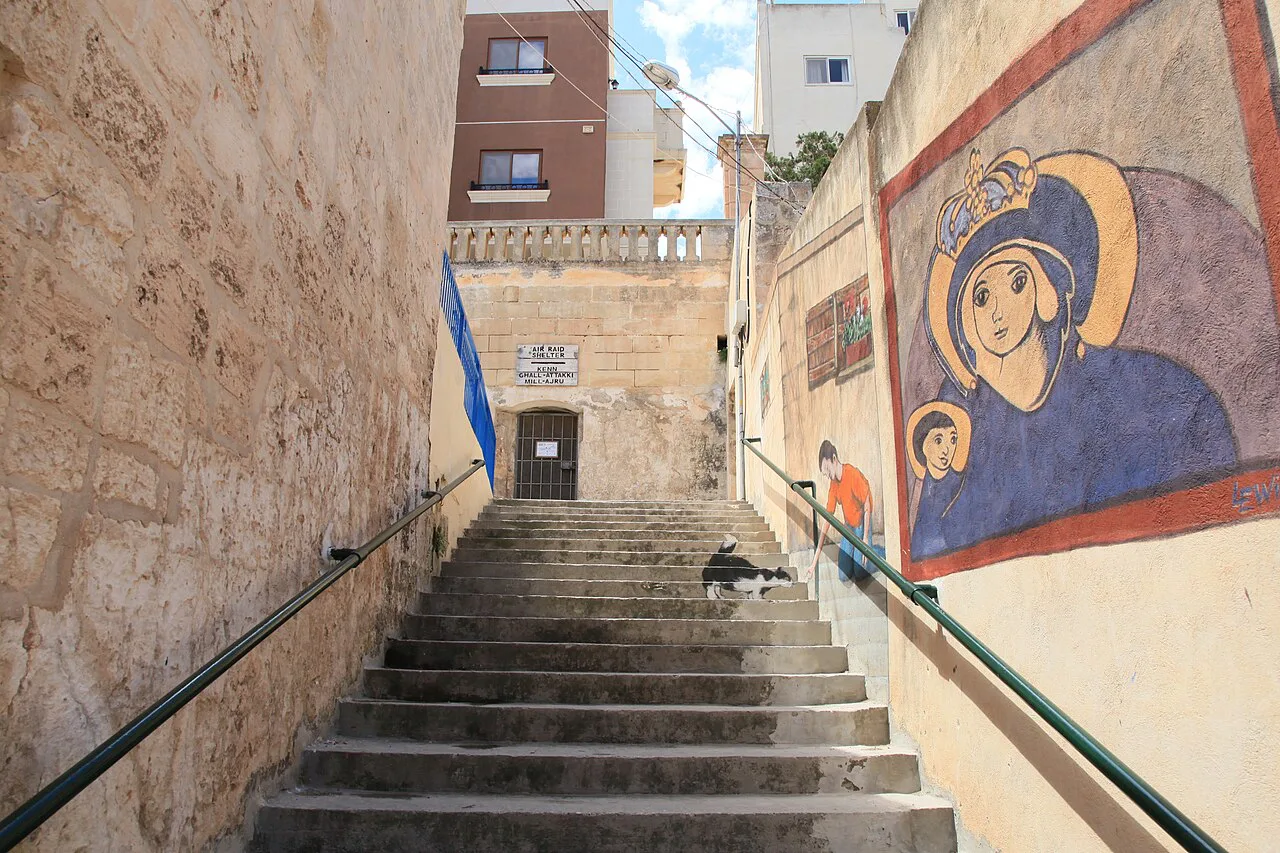
The tunnels run beneath Mellieħa's centre, within walking distance of the parish church and the main streets of the village. If you are staying in Mellieħa or Buġibba, you can reach the entrance on foot or with a short bus ride; from Sliema or Valletta it is a longer journey north.
Mellieħa is served by Malta's public bus network, with stops spread through the town, and the village has supermarkets, pharmacies and cafés for practical stops before or after the tunnels. The town is hilly and somewhat isolated from the harbour district's commerce, which is why many visitors treat the north as a day out rather than an evening add-on.
Driving gives you the most flexibility, because Mellieħa's sights are spread across the hilltop village, the ridge above and the coast below. Park in the village and walk to the shelter rather than trying to park at each stop in turn.
What you walk through: the tunnel network
The core of the visit is the corridor walk itself, running through hand-cut limestone for over 500 metres. Tool marks and the raw shape of the rock are the most striking part of the experience, and the tunnels stay cool and enclosed even when the town above is hot.
The passages are narrow and the floors are uneven, so wear shoes with grip and watch your footing rather than looking at the displays as you move. If you dislike enclosed spaces or low ceilings, this is the moment to judge whether the walk suits you before you commit.
What is on display inside
Along the route you pass small rooms set up to show how people lived in the shelter, with recreations and figures depicting wartime shelter life. Some of the figures are deliberately unsettling, which many visitors find effective and some find too much, particularly with younger children.
The honest trade-off is between the atmosphere the reconstructions create and the authentic fabric of the tunnels. If you want only original rock and quiet, the set pieces may feel theatrical; if you want the story told plainly, they do the work of explaining daily life underground.
How long to allow
Budget around an hour for the tunnels, which covers the corridor walk and the display rooms without rushing. Add time if you read every panel, and add more if you are visiting with children who want to linger at the figures.
The shelter works best as one part of a half-day in Mellieħa rather than the reason for the trip on its own. Pair it with the parish church in the village and one outdoor stop on the ridge or the coast, so the day is not spent entirely underground.
Tickets, opening hours and booking
No prices or opening hours are given here; confirm times, any entry charge and last entry with the shelter before you travel. Seasonal hours can change, so check the week you plan to visit rather than relying on an old listing.
If you would rather have a guided wartime context, Malta's commercial operators also run underground shelter and war-history tours, though those commonly cover other sites such as the Mosta shelters rather than Mellieħa; check what each one includes before booking so you know whether the Mellieħa tunnels are on the route.
Practical points for the tunnels
The floors are cut limestone and uneven, with low sections in places, so closed shoes and a careful pace matter more here than at open-air sites. Carry a light layer too: the tunnels are cool and enclosed compared with the street above, even in high summer.
Anyone who finds tight spaces difficult should decide before entering, because turning back mid-corridor is not always straightforward in a group. Travellers with pushchairs or mobility aids should ask at the entrance what the route allows before buying a ticket.
Nearby in Mellieħa
The Mellieħa Sanctuary, the village's large parish church with its dome and baroque façade, is close enough to visit on the same walk through town. It makes a natural contrast to the tunnels: bright, ornamented and above ground after an hour in the rock.
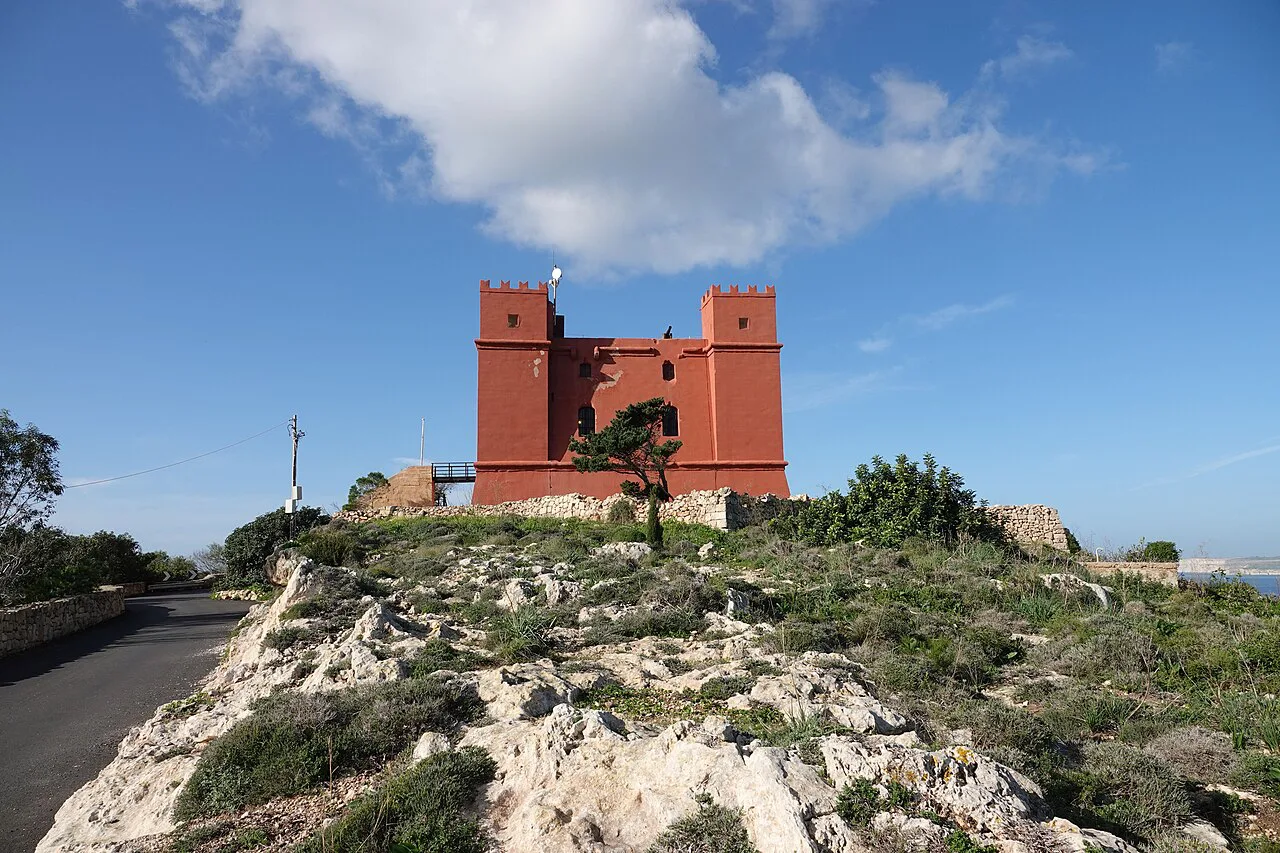
On the ridge above the coast, Saint Agatha's Tower, also known as the Red Tower, is a short drive from the village and gives wide views over the sea towards Comino and Gozo. The tower was built in 1649 to defend the straits, and it is worth confirming current entry details when you arrive.
Down on the coast road, Għadira Nature Reserve is a small wetland managed by BirdLife volunteers, and Għadira Bay below it is the family beach end of Mellieħa. Both fit an afternoon after a morning in the tunnels, with the reserve offering a flat, open walk in contrast to the corridors.
Further along the northern coast, Anchor Bay holds Popeye Village, the wooden film set built for the 1980s Popeye film, which now runs as a family attraction with shows, boat rides and a small museum. It is a very different kind of outing, useful if you are travelling with children who need a reward after the war tunnels.
Inland of the village, Selmun Palace stands above Mistra Valley, and the White Tower sits on the coast beyond Mellieħa, both giving quieter alternatives to the busy village centre. For an overview of everything worth seeing in the area, the Mellieha Attractions guide collects the stops into one place.

Is the air raid shelter worth an hour of your day?
Yes, if you want a small, atmospheric piece of wartime history told through the rock itself, and you are happy to spend an hour in cool, uneven tunnels. Skip it if enclosed spaces bother you or if your group needs open air and easy walking.
Build the visit into a Mellieħa half-day: tunnels first, then the sanctuary and a ridge or coast stop, checking opening hours and entry with the shelter before you set out.
Explore more Mellieha guides
Frequently Asked Questions
How long are the Mellieħa air raid shelter tunnels?
The shelter runs for more than 500 metres and is the largest of the 46 shelters dug in Mellieħa during the Second World War. Visitors walk the corridors on foot, so allow around an hour to cover the route and the display rooms.
Do I need to book the Mellieħa air raid shelter in advance?
Entry arrangements should be confirmed with the shelter itself before you travel, along with prices and opening days, since opening hours can change seasonally. Check these for the week you plan to visit rather than relying on an older listing.
What should I wear for the war tunnels?
Wear closed shoes with grip for the uneven limestone floors and carry a light layer, because the tunnels are cool and enclosed compared with the street above. Anyone uncomfortable in tight spaces should judge the corridors before committing to the walk.
Sources
- Things to do and see in Mellieha Malta - Passporter Blog
- Popeye Village: Malta’s Most Unique Fun Park | Destination Guides | Corinthia Hotels | Corinthia
- Guide to Mellieħa, Malta: The Quieter Side of Life on the Island
- War tunnels - Review of WWII Shelters, Mellieha, Malta
- World War 2 underground shelters in Melieha