
Mellieħa Sanctuary: What to See at the Shrine of Our Lady

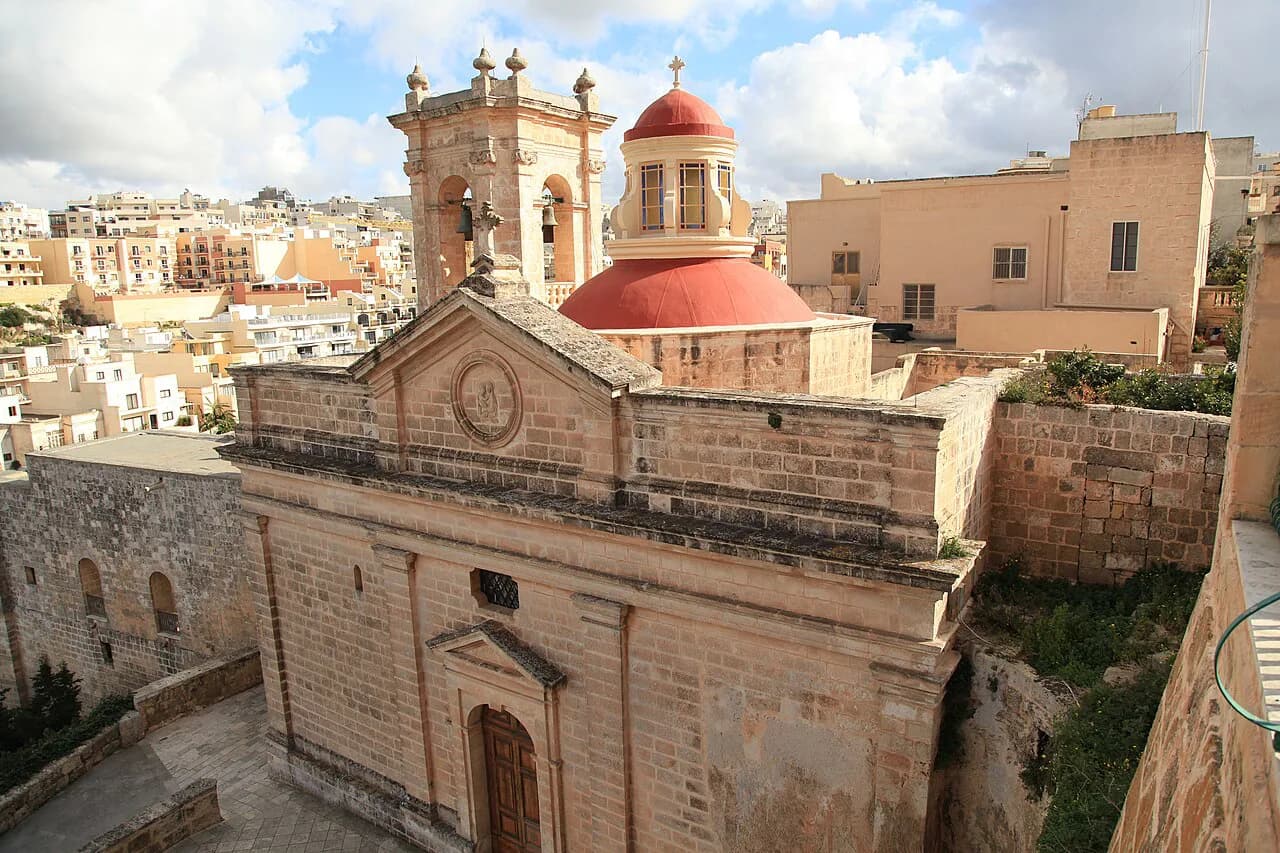
The Mellieħa Sanctuary is a Marian shrine built around a grotto above Mellieħa Bay, and the painted image of Our Lady on the rock face is the reason to make the climb. The church that encloses the cave is the Sanctuary of Our Lady of Mellieħa, known in Maltese as Santwarju tal-Mellieħa, and it sits on the ridge between the bay and the village. This guide covers where it is, how to get up there, what you actually see inside, how long to allow and how to behave in an active place of worship.
Be clear about one thing before you go: the sanctuary and the Mellieħa parish church are separate buildings. The shrine is the cave church on the heights; the parish church is the landmark with the red dome that overlooks the bay from the village side. Visitors regularly merge the two, so check which door you are heading for.
What the Mellieħa Sanctuary is and where it sits
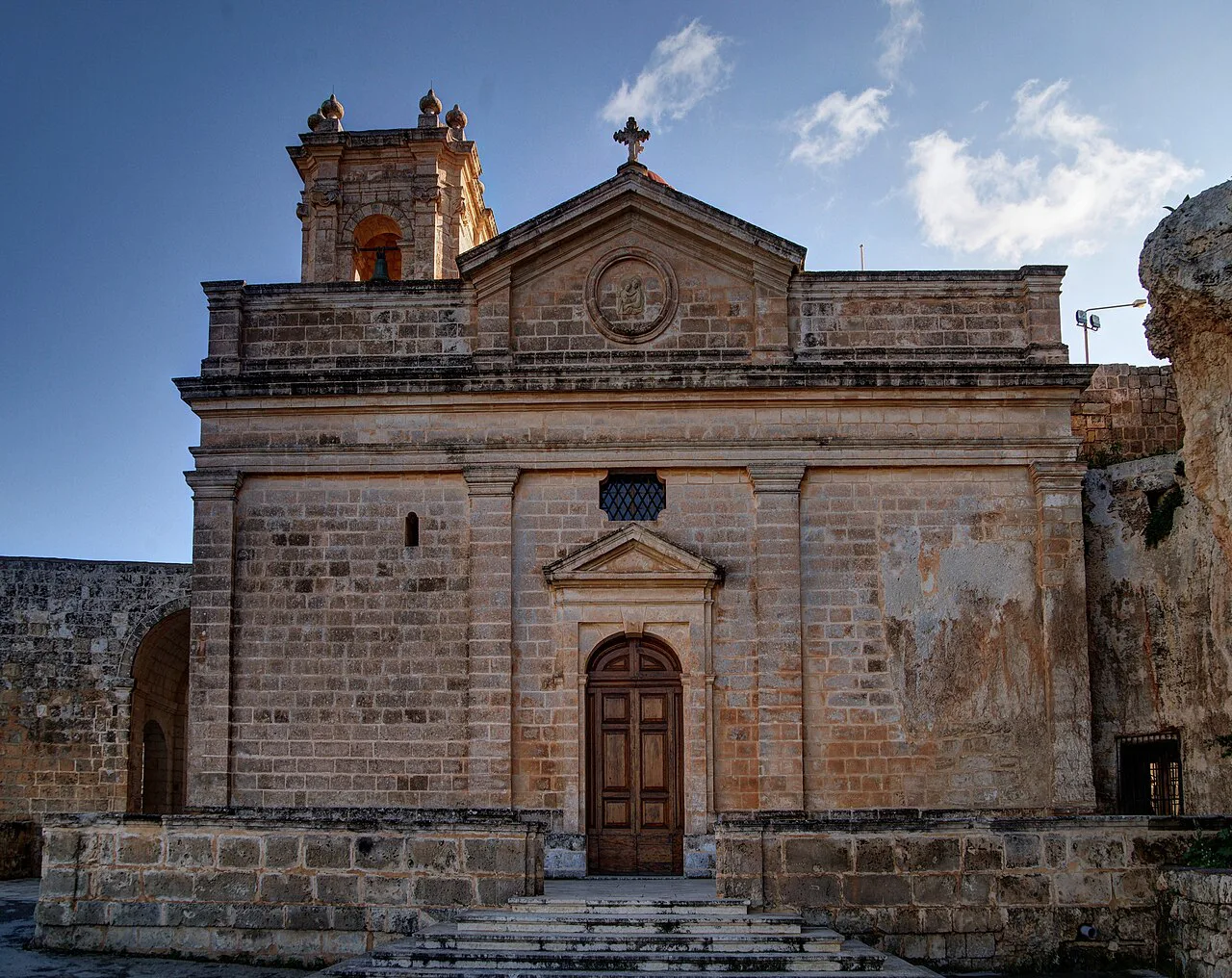
The sanctuary is a Marian shrine built around a cave, not a purpose-built basilica: the grotto is the heart of the building and the church has grown around it. It stands on the high ground above Mellieħa Bay in the north of Malta, within sight of the water and the village. Treat the bay as your orientation point, then look up to the ridge for the shrine.
Devotion here rests on tradition rather than documented fact, and it is worth knowing that before you read the labels inside. One long-standing tradition holds that St Luke painted the image during the time he and St Paul spent in Malta, and another places a group of bishops at the grotto in the early fifth century. The icon now visible is described as a later Siculo-Byzantine work, probably painted in the thirteenth century, so the painting and the tradition are two different things.
The shrine's standing is long established: a pastoral visit by Bishop Senatore de Mello in 1436 records it among the main parishes of Malta. Pope John Paul II prayed before the Madonna and Child during his visit on 26 May 1990, which is why you will see that visit referred to around the site.

How to reach the sanctuary: walking up from the bay or by bus
From Mellieħa Bay the shrine is uphill, and the climb is the main practical decision of the visit. The road rises steadily from the bay area towards the ridge, so wear shoes you can walk in and carry water in warm weather. If anyone in your group struggles with sustained uphill walking, take a bus or a taxi up and walk back down instead.
Buses serve Mellieħa from elsewhere on the island, and the village centre and the bay both have stops, but route numbers and timetables change and none are worth quoting from memory. Check the current route and stop with the operator before you travel, and note that the sanctuary is not on the waterfront, so the last stretch is on foot either way.
If you are driving, park in the village or near the bay and finish on foot; the streets around the shrine are narrow and residential rather than built for visitor parking.

The grotto and the painted image of Our Lady on the rock face
Inside, the focus is the painted figure of the Madonna and Child on the limestone, the image pilgrims have come to venerate for centuries. It is a wall painting in a cave, not a framed panel in a gallery, and the setting is dim and close rather than Grand. Look at it as a devotional object with a long life of its own.
The icon's style is distinctive: a broad round face, large dark eyes and a Blue veil wrapping the child. A conservation and restoration project begun in 2013 found the painting badly damaged by underground damp, which explains why the cave environment is managed carefully and why you may find barriers or lighting in place.
Votive objects and ex voto donations left by pilgrims over the centuries are part of what you see around the shrine, and they carry as much of the atmosphere as the painting itself. Expect a working devotional space rather than a museum display.
The church itself: the decorated sanctuary and its votive objects
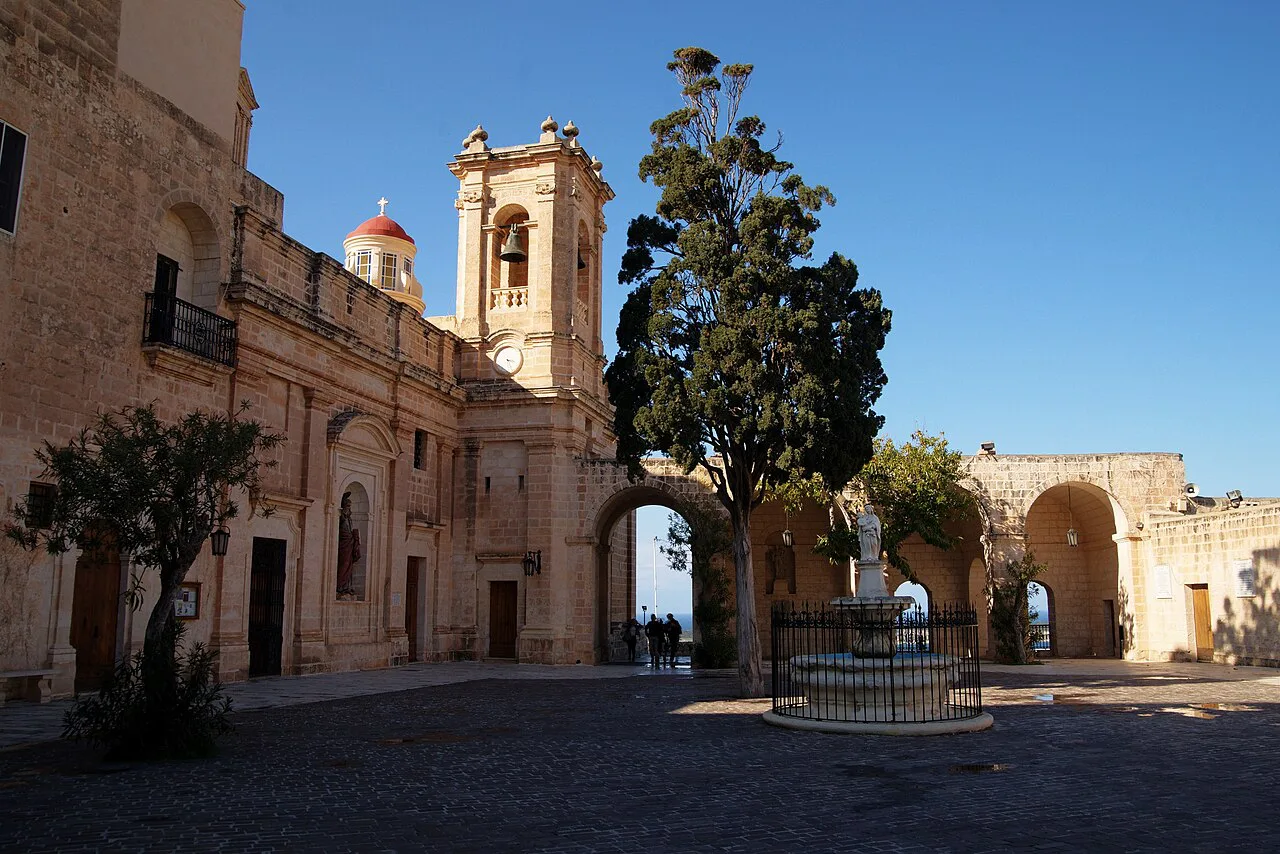
The church around the grotto is richly decorated with sacred and votive objects, small icons and burning candles, so the interior reads as a lived-in shrine rather than a spare cave. Give your eyes time to adjust from the bright Maltese daylight outside. The building is limestone, with a bell gable rather than the red dome of the parish church.
Read the interior as layers: the cave at the centre, the church built over and around it, and the accumulated gifts of pilgrims on the walls and in the sacristy. That layering is the point of the visit, and it rewards a slower pass than a quick photograph at the door.
How much time to allow and when to go to avoid midday heat
Allow under an hour inside the sanctuary itself; the building is compact and the grotto is the centre of it. Add the climb from the bay and you have a half-day outing if you walk both ways.
Go early or late in the day to avoid the midday heat, which is the real constraint here rather than crowds. The uphill walk from the bay is exposed, and the limestone around the shrine holds warmth into the afternoon. Carry water and plan the climb for the cooler ends of the day.
Dress code and behaviour inside an active place of worship
This is an active place of worship, so dress as you would for a church at home: covered shoulders and knees, and no swimwear carried over from the bay. Keep voices low, do not use flash photography and stay out of any area cordoned off for prayer or conservation.
If a service is under way when you arrive, wait at the back or come back later rather than walking through the congregation. That single rule covers most of what visitors get wrong here.
Nearby: Mellieħa parish church, the bay and the village centre
The Mellieħa parish church is the other building visitors confuse with the sanctuary, and it is worth a look in its own right for its position over the bay and its surrounding area. It sits among the many churches that dot Malta. Pair the two in one outing, but give each its own time.
The White Tower (Torri l-Abjad), Mellieħa sits on the same northern ridge and makes a natural second stop if you have a car or are happy to keep walking. Selmun Palace is another short drive away, out towards Mistra Valley. Both are separate visits rather than add-ons to the shrine itself.
For a quieter stop in the village, the Immaculate Conception Chapel in Mellieħa is a small counterpart to the big shrine, and the Għadira Nature Reserve lies towards the bay end of the same stretch.
Where to check current opening hours and Mass times
Opening hours and Mass times are set locally and are not fixed for visitors, so confirm them with the parish before you make the climb. The parish is the authority for services at the shrine, and any published times you find elsewhere should be checked against it.
If you are building a day around Mellieħa, the air raid shelter and the wider Mellieħa Attractions listings give you options for the hours either side of your sanctuary visit.
Is the shrine worth the climb?
Yes, if you want the painted image and the cave it sits in rather than a polished museum experience. The sanctuary is compact, the interior is dim and devotional, and the reward is the thing itself: a worn wall painting that has drawn pilgrims for centuries.
Build the visit around the climb and the heat rather than around a schedule, keep it to under an hour once inside, and confirm service times with the parish so you do not arrive mid-Mass.
Explore more Mellieha guides
Frequently Asked Questions
What is the historical significance of the Mellieħa Grotto?
The grotto is the cave at the centre of the shrine, and devotion to the painted image on its rock face has drawn pilgrims for centuries. Tradition links the image to St Luke, who is said to have painted it during his time in Malta with St Paul, while the icon now visible is described as a later Siculo-Byzantine work, probably of the thirteenth century.
Is the Mellieħa Sanctuary the same as the Mellieħa parish church?
No. The sanctuary is the grotto church on the heights above Mellieħa Bay; the parish church is the separate building with the red dome overlooking the bay from the village side. Visit both if you have time, but plan them as two stops.