Mdina Glass: What It Is and How to Buy It
Mdina Glass is hand-blown art glass made in Malta from 1968. Learn how to spot a genuine piece, what vintage examples have sold for and what to check first.
On this page
Mdina Glass is hand-blown decorative glass made in Malta, and if you are weighing up a vintage vase or bowl, the value is in the maker's mark, the condition and the colourway, not in a fixed price list. This guide separates the question of identifying a piece from the question of what it is worth, then sets out what to inspect on the base before you hand over any money.
What Mdina Glass is
Mdina Glass is the trading name of a Maltese studio that makes free-blown decorative glass: vases, bowls, bottle and attenuated flask shapes, paperweights and sculptural pieces, often in swirling blues and ambers. It is sold as art glass rather than household glassware, and a good piece shows an irregular, deliberately loose outline rather than a mould-perfect one. New stock is made in Malta today, while most of what circulates in UK antiques shops is vintage.
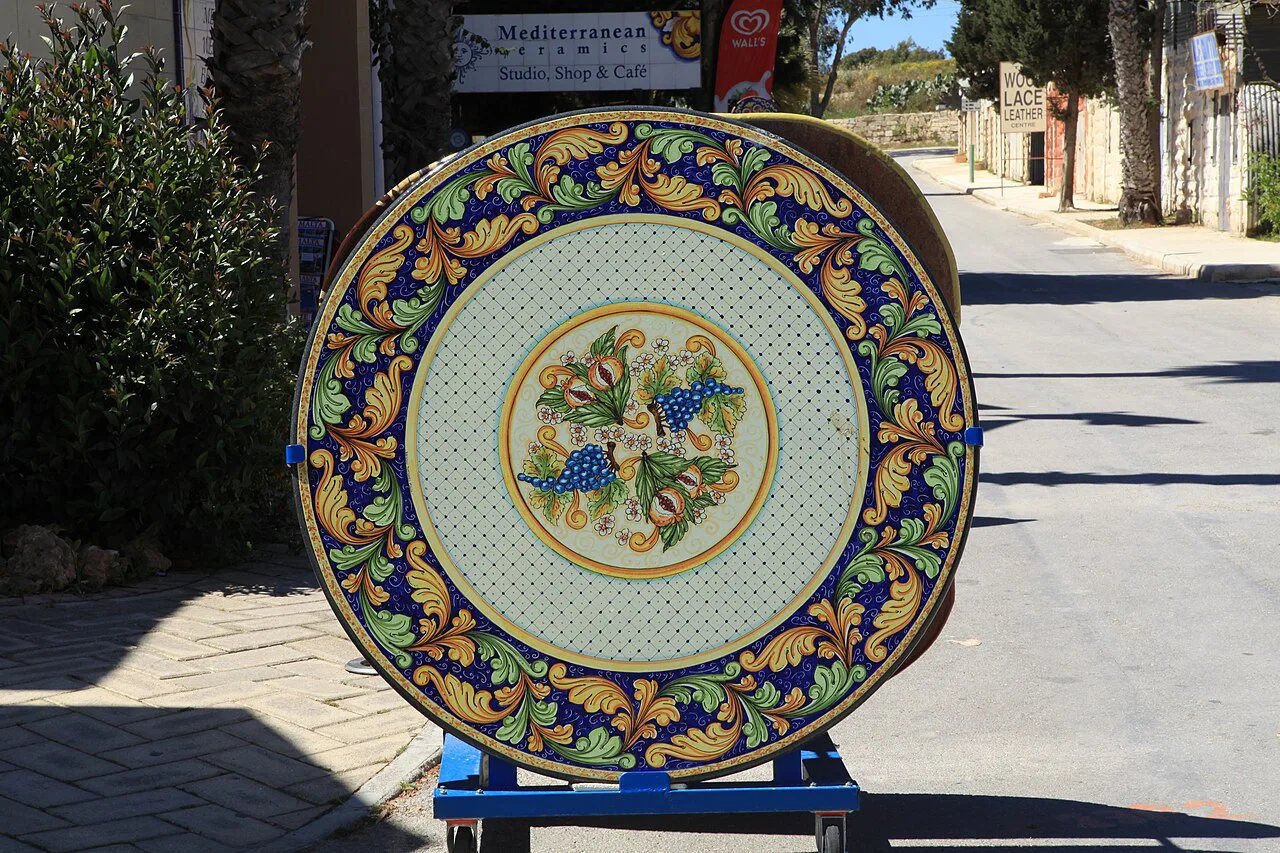
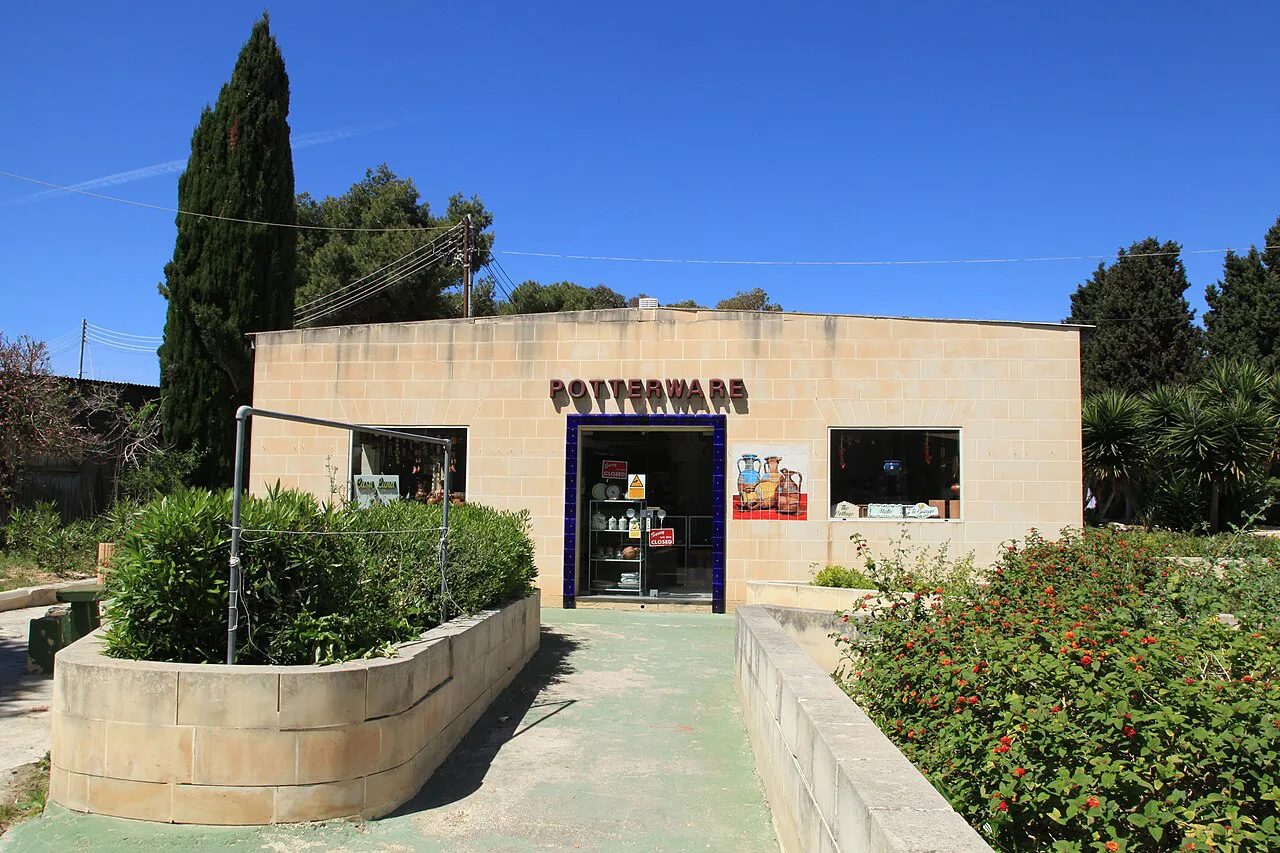
Mdina Glass is made in central Malta, and the workshop is associated with the Ta' Qali crafts village. If you are using Mosta as a base, it fits into a wider day of central-Malta sightseeing; see things to do in Mosta and the surrounding villages, and use the Mosta map to fix your bearings between the two.
How the workshop began and who runs it now
The story starts with Michael Harris, a lecturer in industrial glass design at the Royal College of Art, who wanted to produce free-formed hot glass commercially in the way Scandinavian studio makers had been doing. With Eric Dobson, a colleague with marketing experience and finance behind him, he moved the equipment to Malta at the end of 1967, and in 1968 set up Maltese Glass Industries, which became known as Mdina Glass. The Maltese government at the time was actively courting new skills and entrepreneurs, offering a ten-year tax holiday, and Harris trained local staff from scratch.
Harris was pressured to leave Malta after the studio's early success under the changing political climate, but his designs stayed in production. The workshop is now run by Joseph Said, his first trainee; two glassmakers from Whitefriars, Vincente and Ettore Boffo, were also seconded to the studio in its early years. That lineage matters to buyers: the name on a faded label refers to an ongoing workshop, not one man's signed limited output.
What makes a piece recognisable
The identification markers are colour and form rather than a single logo. Harris's pieces were largely free-formed with intuitive layered colours, so you get translucent glass with swirls and trailed threads that sit inside the body rather than printed on the outside. Mdina trailed and signed pieces turn up as vases, bowls and even seahorse paperweights, and signed examples carry the Mdina name, often to the base.
Signed and dated examples exist, and a date fixes the piece to a period. A turquoise Mdina sculpture listed at Hemswell Antique Centres, for instance, is signed and dated 1973, placing it in the Harris era, and the dealer notes that a piece of this size is rare to find. Where a piece does carry a signature and a year on the base, that is the clearest evidence of when it was made.
Why designs and shapes keep recurring
Buyers often worry when they see two near-identical vases, but repetition is part of how Mdina worked. After 1973 the designs, colours and shapes were repeated many thousands of times on the logic that a shape which sells does not need changing, and the studio continued without much new artistic input once Harris had gone. A familiar profile is therefore not a warning sign: it is a normal production piece, and rarity should be judged piece by piece, not by how unusual the shape looks.
What vintage Mdina Glass sells for
Listed dealer prices are the most concrete reference points available, but each one reflects a single seller's view of a single piece rather than a price guide. The Mdina listings on Antiques Atlas have included a signed seahorse paperweight, a Ming blue-and-amber signed vase and a globe vase, with small paperweights and eggs among the more modest lots. Compare several listings for similar size and colour before you form a view of value.
Condition and size move the price more than the label alone. The signed 1973 turquoise sculpture at Hemswell Antique Centres carries one small chip to the base, and the dealer grades it as good condition overall. A base chip is repairable but it is also a bargaining point: ask any seller for a clear photograph of the foot of the piece, including the rim of the base, before agreeing a figure.
Is Mdina Glass worth anything today?
There is an active second-hand market for it, and the spread of asking prices is wide. Signed early pieces with a date inside the Harris years, and large sculptural forms, are the ones dealers present as the stronger lots, while unsigned small paperweights are priced lower. Colourway also matters to collectors - deep blues and ambers with good internal swirl are what they look for, and faded or cloudy glass is less desirable. A piece's worth is what a buyer will pay on the day, so use dealer listings as comparisons rather than a valuation.
Buying a piece: what to check first
Start with the base. Turn the piece over and look for a signature, a date, a worn factory label or a polished pontil mark, and check the foot for chips, hairline cracks and bruising, since the foot is the part that takes knocks. Then look through the body against a plain background for cracks that run from the rim, and check that the trailing and colour sit inside the glass. Ask the seller directly whether the piece is signed, whether the date is legible and whether the foot has any damage, and get those answers in writing before you pay.
If you are browsing in person, take a small torch and a soft cloth so you can look through the glass properly. In the central villages around Mosta, a morning at Ta' Qali's glass workshop pairs well with a look around the sanctuary at Mosta and a stop for lunch; if you are planning a day out, pick restaurants in Mosta before you set off so the glass stop does not eat your whole afternoon.
New glass versus vintage
New glass from the workshop is made by hand to the same broad range of shapes and colourways, so buying new gives you a clean, undamaged piece rather than a signed piece with history. Vintage glass carries the risk of chips and hairline cracks, and its price depends on signature, date and condition, so decide which you want before you start comparing prices. Neither route guarantees a rise in value, and a new vase bought as a souvenir should be chosen for how it looks rather than as an investment.
Which piece should you buy?
If you want a piece with a story attached, look for a signed or dated base and a clean foot, and compare at least a few dealer listings before you commit. If you want something to use every day, buy new from the workshop and save your attention for the colour. Either way, check the base first and ask about chips before you agree a price.
Explore more Mosta guides
Frequently Asked Questions
Is Mdina Glass still made in Malta?
Yes. Mdina Glass is still made in Malta. Much of what circulates in UK antiques shops is vintage, so if you are buying to use rather than to collect, look at new stock as well as second-hand listings.
How can I tell if a piece of Mdina Glass is signed?
Look at the base with a torch and check for the Mdina name, a year or a factory label. Signed and dated examples exist, and a date inside the Harris years is the clearest evidence of an early piece. If the base is unmarked, the colour and free-formed shape are what you have to go on.
Does a base chip affect what a piece of Mdina Glass is worth?
Yes. Chips, hairline cracks and bruising at the foot are common condition issues, and dealers price them in. Ask for a clear photograph of the base and the foot before you agree a figure, and treat any chip as a reason to negotiate rather than a reason to walk away.
Sources
Notes for your Malta trip
Optional updates when we add or correct a Malta or Gozo guide.
You might also like



Continue reading
More guides you'll find useful