Mellieħa Old Town: What to See in the Hilltop Village
What to see in Mellieħa old town, from the hilltop parish church and its terrace viewpoint to the wartime shelters and the walk down to Mellieħa Bay.
On this page
Mellieħa old town is the village on the ridge, not the beach below it, and it repays a half-day on foot: the Baroque parish church on the skyline, a terrace with long views over the bay towards Comino and Gozo, and lanes that feel more village than resort. Just be ready for the gradient, because the town sits on top of a hill and the streets climb.
This guide covers where the village sits, the named stops worth your time, how long a walking visit takes, and the trade-offs of arriving by bus, car or on foot from Mellieħa Bay. It treats the village and the bay as two separate places, because that split is the main thing to grasp before you plan a day here.
What 'old town' means in Mellieħa
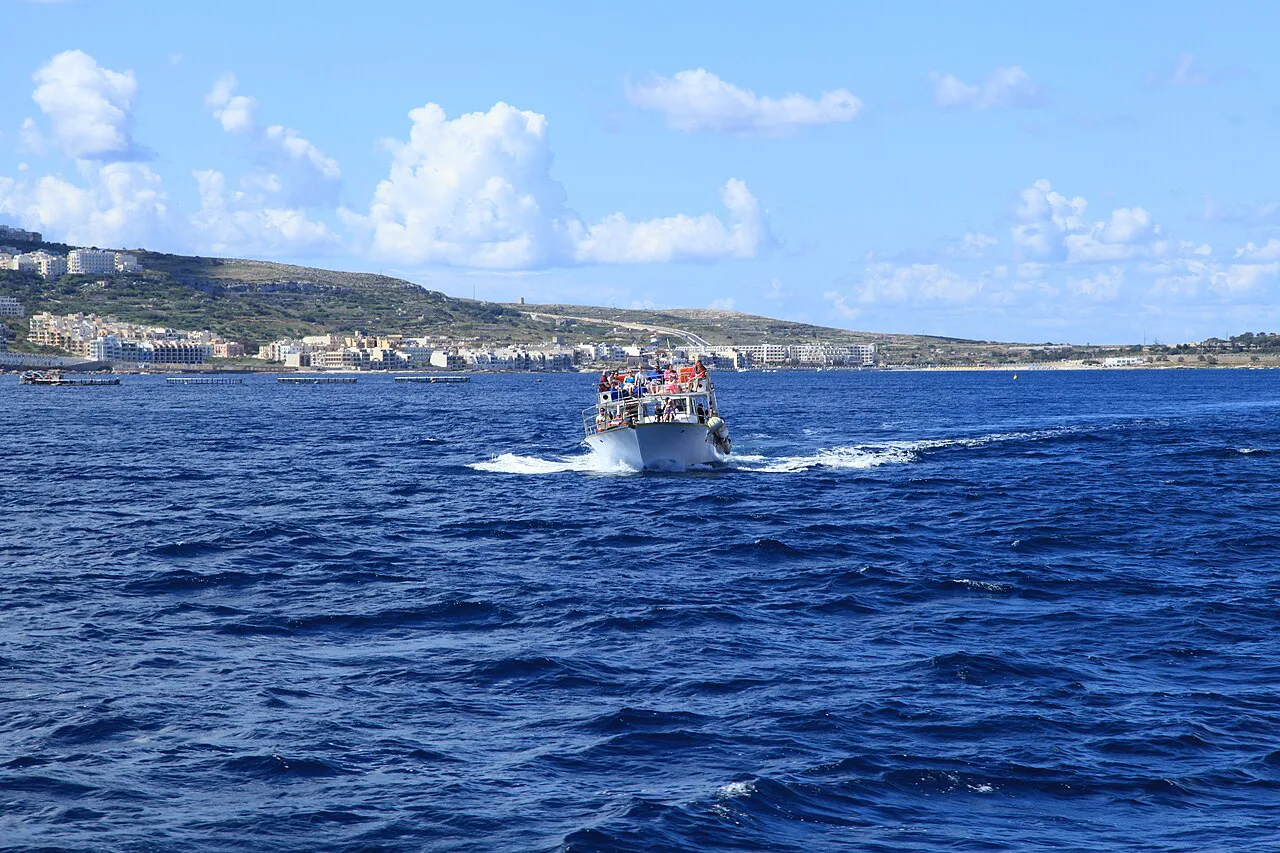
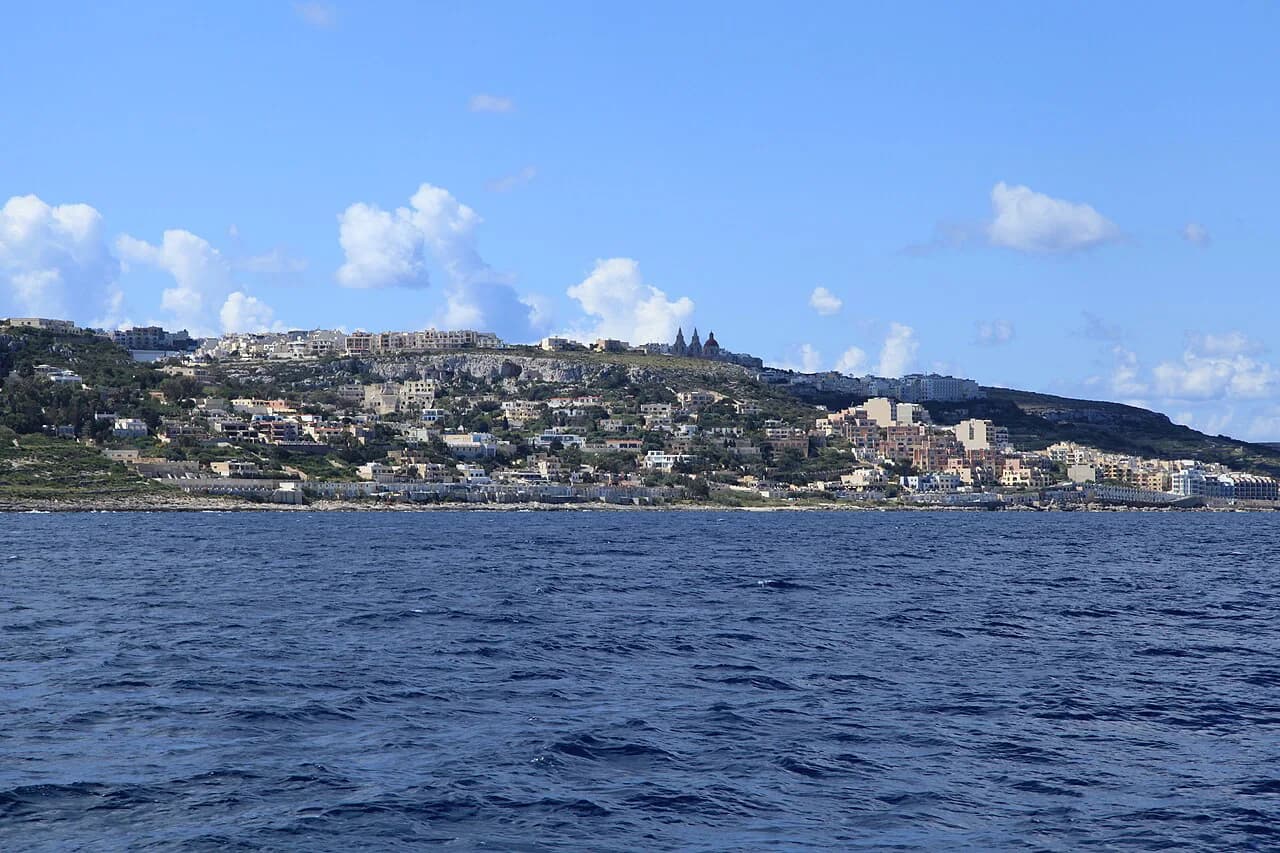
Mellieħa is one of the northernmost villages on Malta's main island, built along a ridge above Mellieħa Bay. The bay, known locally as Għadira, sits below the town, so 'Mellieħa' on a map covers both a hilltop settlement and a long sandy shoreline roughly a 15-minute walk apart.
When people say Mellieħa old town they generally mean the upper village: the church, the square in front of it, the surrounding lanes and the older core rather than the beach road. It is a quiet, residential place with a population of roughly 11,000 across the wider town, restaurants and a few small shops rather than a museum-lined historic quarter.
Where the village sits and how steep it is
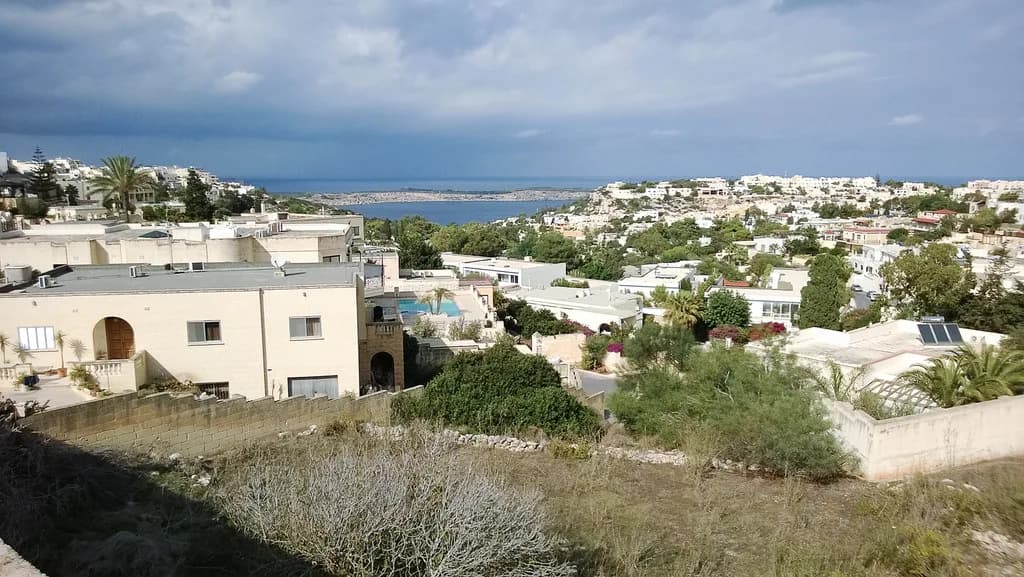
The village is spread across a ridge of hills about 150 metres above sea level, and the streets reflect that. Expect steps, sloping lanes and uphill walks between the church, the viewpoints and the roads where buses stop, so anyone with limited mobility should plan their drop-off point carefully.
The gradient cuts both ways. Walking down from the village to the bay is straightforward; walking back up at the end of a hot day is the part people underestimate. If you are staying in the village itself, ask your accommodation about parking before you arrive, since the older streets were not laid out for cars.
The parish church and its terrace viewpoint
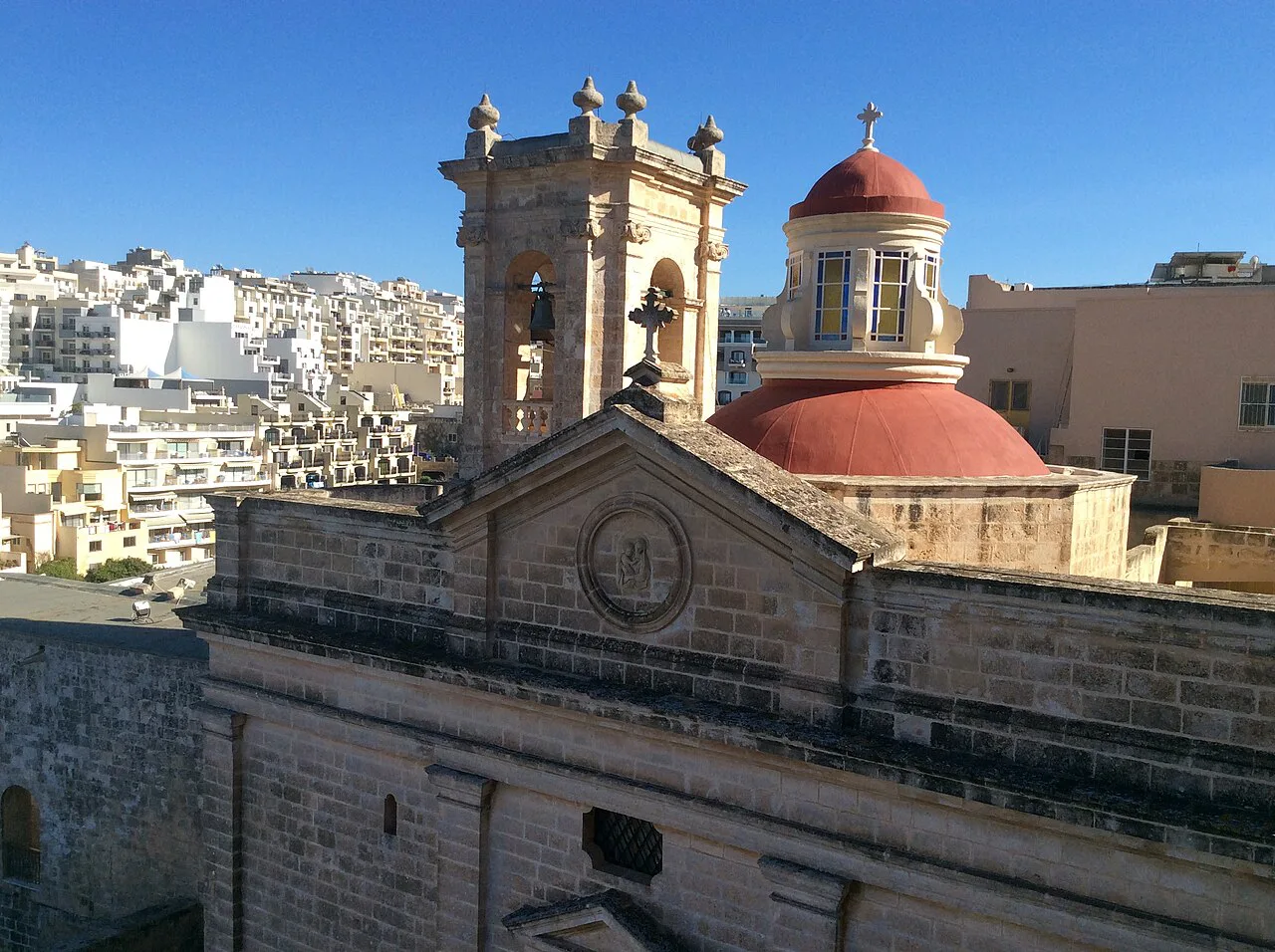
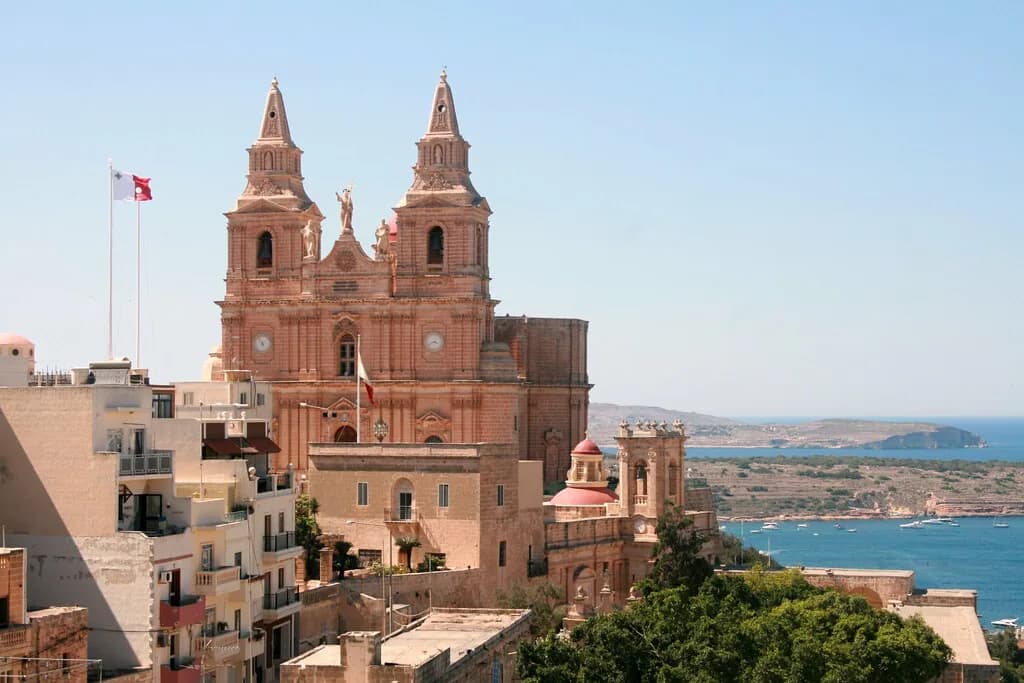
The landmark you cannot miss is the Mellieħa parish church, a large Baroque building completed in the late 1890s and dedicated to the Nativity of Our Lady. It dominates the skyline from both the village and the bay, and the public terrace in front of it is a free viewpoint over Mellieħa Bay.
From that terrace the view runs down over Mellieħa Bay and out towards Comino and Gozo on the horizon. Come in the late afternoon for the softest light on the bay, and treat the church square as your orientation point before wandering the lanes: most of the village's older streets run off around it.
Other named stops in the village
Beyond the church, the village holds a Sanctuary and grotto and a set of wartime tunnels and shelters beneath the streets. These are the stops that give the old town its substance, so check locally for current access before you build a day around them, as arrangement for visiting can change.
The shelters are a useful reminder that the village has a history beyond its holiday reputation, and they pair naturally with a church visit since both sit in the same compact core. The wider set of Mellieħa attractions, from the bay to the headland, is worth mapping before you commit your time.
How long the old town takes
Plan around two to three hours on foot for the village core: the church, the terrace, a loop through the lanes and a look at the shelters if they are open. That leaves time for a slow lunch and still gets you down to the bay before the afternoon heat peaks.
The village is compact enough that you will not spend long covering distance, so the real variable is how much time you give the viewpoints and the church itself. If you are combining the old town with the bay, budget the walk down and back up separately rather than folding it into the walking tour.
Getting there from Sliema and elsewhere
Mellieħa is reachable from most parts of Malta by car or local bus, and from Sliema the journey takes roughly 45 to 60 minutes. That makes it a day trip from the south rather than a quick hop, so give yourself a full morning or afternoon rather than squeezing it between other stops.
The village also sits a short drive from Ċirkewwa, the northern ferry point for Gozo and Comino, which is why some visitors pair the old town with an onward crossing. If you are relying on public transport, the uphill walk from the bay to the village is the part to plan for, particularly with luggage or in summer heat.
Parking and driving around the village
Driving in this part of Malta is calmer than in the busy central towns, but the old village streets are narrow and the parking is limited. Confirm with your accommodation whether a space is included before you book, and expect to walk the last stretch into the core from wherever you leave the car.
For a day visit, arriving by car gives you the flexibility to see the village and then drop down to the bay or continue to the headland without waiting for a bus. The trade-off is that the most convenient parking fills first on summer weekends, so an early start solves both problems at once.
What the village is like to visit
The upper village keeps a laid-back, village feel that is hard to find in the resort strips further south. You will find a good choice of restaurants, supermarkets and a handful of small shops, plus a mix of locals and visitors going about ordinary days rather than a purpose-built tourist quarter.
It is also quiet in the evenings, with little in the way of nightlife, so the old town suits a daytime visit and an early dinner rather than a late night out. If you want bustle after dark you will be heading back towards Sliema or St Julian's, which is worth weighing before you choose where to base yourself.
Views from the ridge
The ridge position is the village's best free asset. From the centre you get long views down over the bay and across to Comino and Gozo, and the church terrace is a free public viewpoint that takes minutes to reach.
The area around the town is greener than much of Malta, with fertile valleys and a more rural feel that shows up well from the higher lanes. Bring a camera for the late-afternoon view rather than the midday one, when haze and heat flatten the contrast across the water.
Church dress code and visiting etiquette
The parish church is an active place of worship, so dress respectfully when you go inside: covered shoulders and knees are the sensible default for churches across Malta. Keep voices low and avoid wandering into areas set aside for services, particularly if a Mass is under way.
If you arrive during a service, visit the terrace and lanes first and return to the interior later. The terrace viewpoint is outdoors and part of the public square, so the view does not depend on the church being open.
What to skip and what pairs well
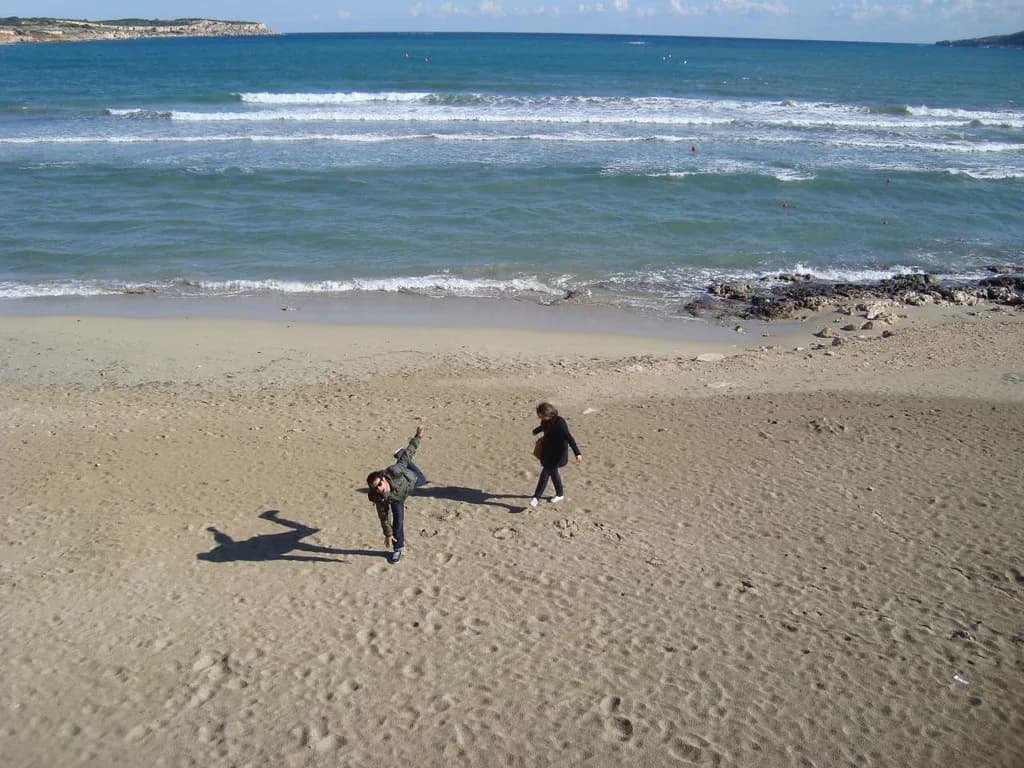
If the old town is your focus, you can leave the beach for another day; Mellieħa Bay is a fine stretch of sand but it pulls you downhill and eats the hours you would spend in the village. The same goes for the headland attractions, which deserve their own slot rather than a rushed add-on.
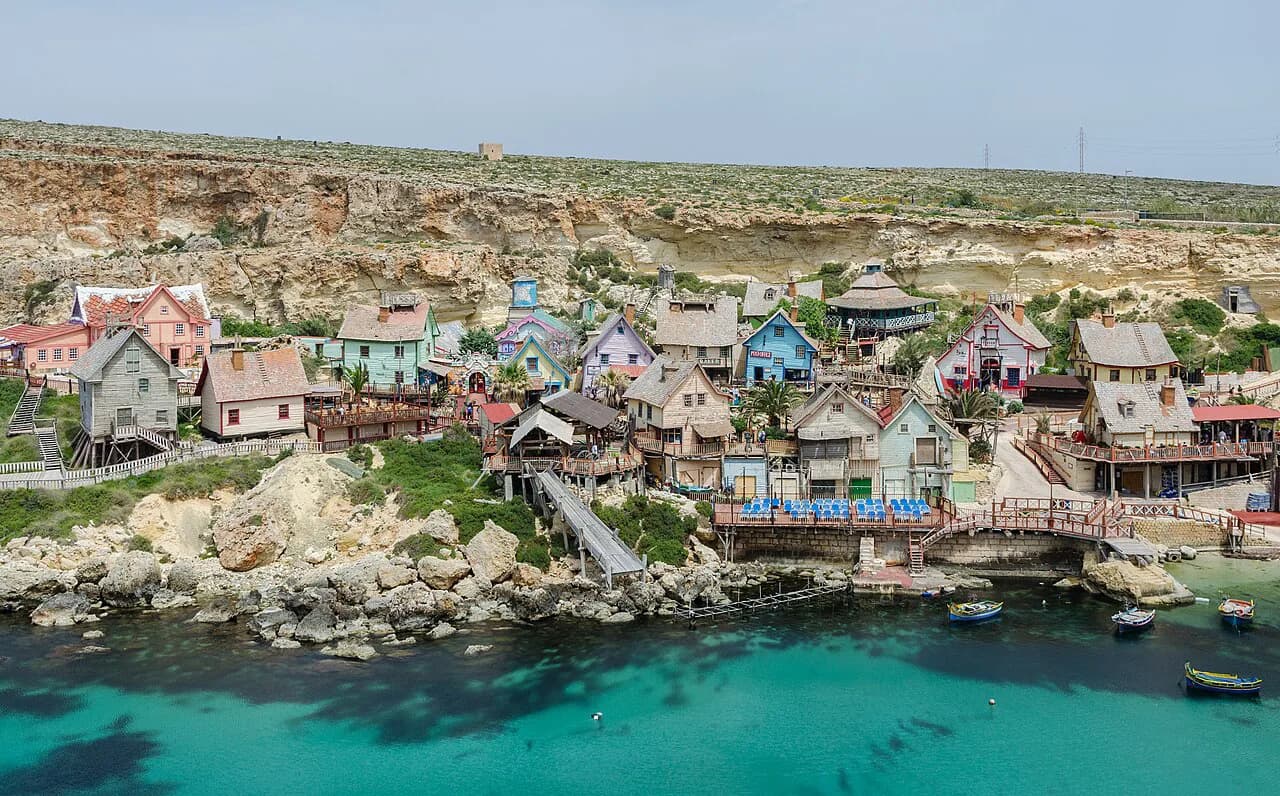
Popeye Village at Anchor Bay is the obvious pairing for families, and it works best as a separate half-day rather than something bolted onto a church visit. Just behind the bay, the Għadira Nature Reserve gives you a gentle wetland stop if you want a quieter counterpoint to the village lanes.
Is the hilltop village worth the climb?
Yes, if you want a couple of unhurried hours in a real Maltese village rather than a beach resort, and you are willing to tackle the gradient. The church, its terrace view and the lanes are the core, with the shelters as a bonus when access allows.
Skip it if steps and uphill streets are a problem, or if your day is already stretched by the bay and the headland. Build the village in as its own block of time, arrive with the legs for a climb, and the old town delivers the view that the beachfront cannot.
Explore more Mellieha guides
Frequently Asked Questions
Is there a town centre in Mellieħa?
Yes. The centre is the ridge-top village around the parish church and its square, with lanes of steps and sloping streets running off it. Below sits Mellieħa Bay, a separate place reached on foot by a downhill walk, so treat the two as different stops when you plan your day.
Is Mellieħa town worth visiting?
It is worth a half-day if you want a quieter village atmosphere, a Baroque church and a free terrace view over the bay towards Comino and Gozo. It is not a town of ticketed sights, so go for the walk, the viewpoint and a meal rather than a packed itinerary.
Is there much to do in Mellieħa?
The village itself is compact, with the church, the terrace and the lanes taking two to three hours at an easy pace. Beyond that, the bay, the wartime shelters and the headland attractions such as Popeye Village are separate outings that each need their own time.
How do I reach the old town without a car?
Local buses serve Mellieħa from elsewhere on the island, and the journey from Sliema takes roughly 45 to 60 minutes by bus or car. Expect an uphill walk from the bay to the village, so plan your arrival point and allow for the climb.
Sources
Notes for your Malta trip
Optional updates when we add or correct a Malta or Gozo guide.
You might also like
Continue reading
More guides you'll find useful