Mellieħa History: What to Look For in the Village
A short guide to Mellieħa's history for visitors, covering the parish church, the Sanctuary of Our Lady of Mellieħa, the Red Tower and wartime sites.
On this page
Mellieħa's history for a visitor comes down to four places: the Sanctuary of Our Lady of Mellieħa and its grotto, the parish church above the village, It-Torri l-Aħmar (the Red Tower, also called St Agatha's Tower) on the ridge, and the World War II gun posts and air raid shelters scattered around the northern hills. Each belongs to a different period, and together they give you a walk through the village and its outskirts rather than a single museum stop.
This guide treats Mellieħa as a hilly northern village whose story sits in its buildings, so you can order a visit sensibly: sanctuary first, then the climb to the church, then the tower and wartime remains if you have a car or a long afternoon. Dates appear only where a published account gives one. Opening times and entry arrangements are best confirmed with the site or the local council before you set out. For the wider set of stops, see Things to Do in Mellieħa, and for a break between them, Restaurants in Mellieħa.
What Mellieħa's history means for a visit today
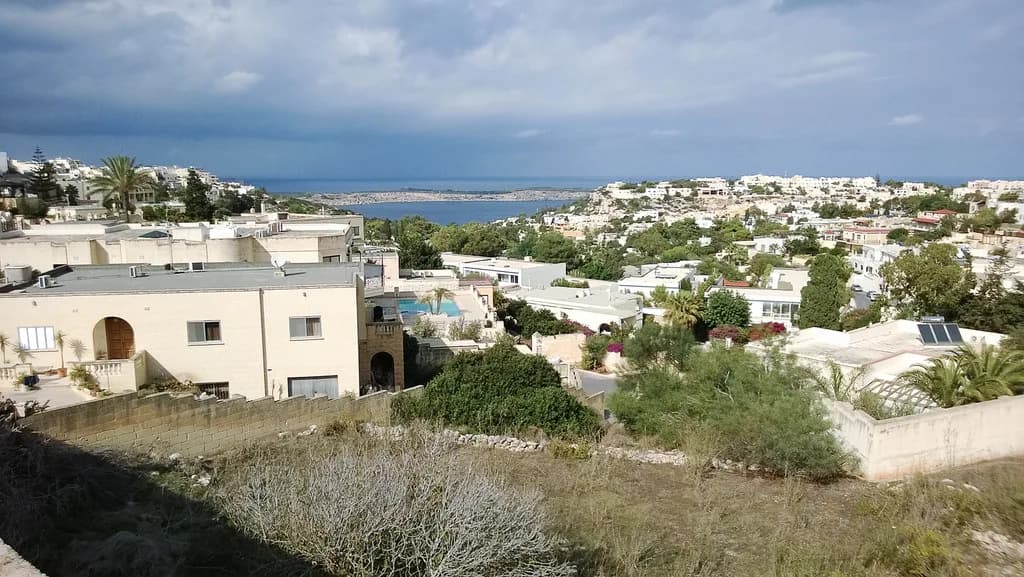
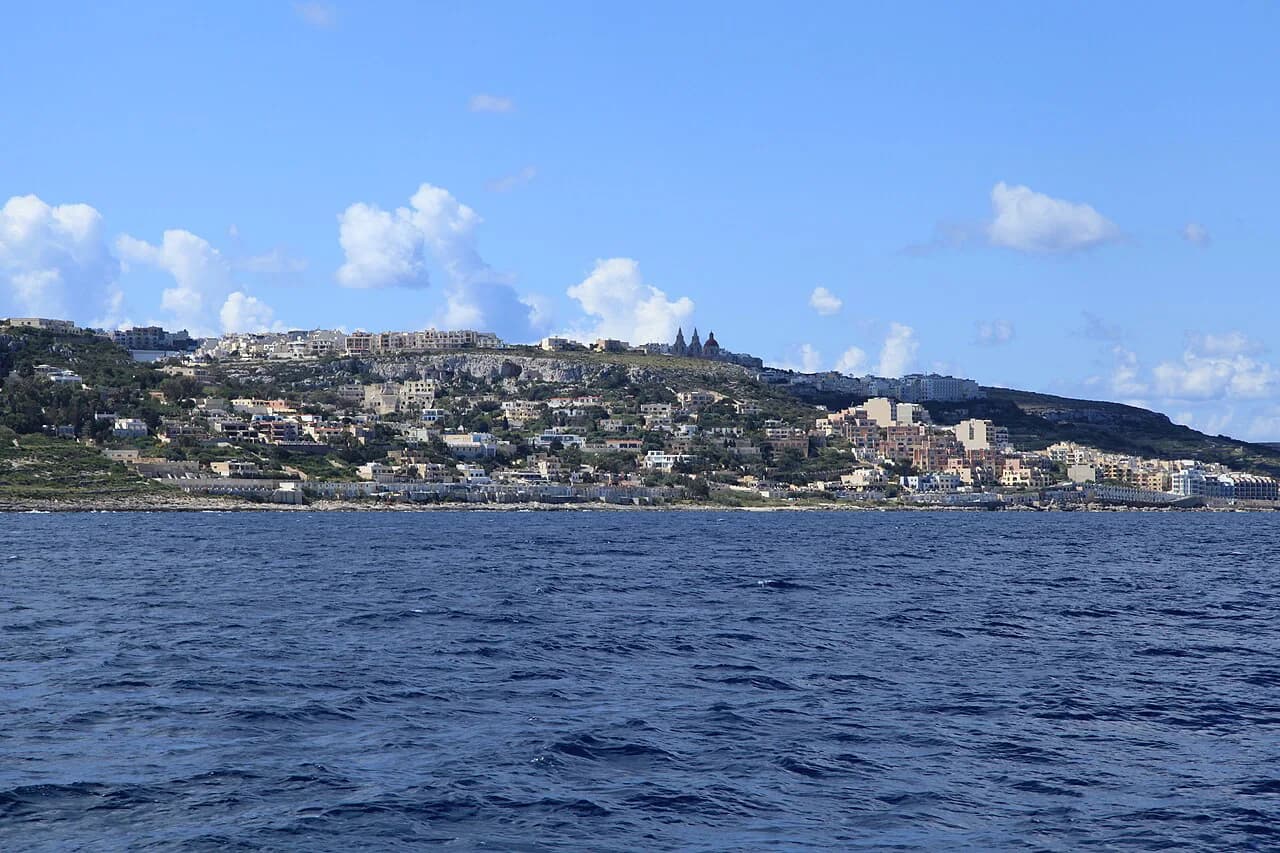
Mellieħa sits on a group of hills on Malta's northwest coast, well away from the Inner Harbour district around Valletta, Sliema and St Julian's, and its built-up area spreads across Mellieħa Heights, Santa Maria Estate, il-Qortin, Ta' Pennellu, Ta' Masrija and Tal-Ibraġ, with Manikata and Selmun falling under it. That scattered, hilly shape matters for history hunting: the sanctuary, the parish church and the tower are not on one flat circuit, and the climbs between them take time.
The same account notes the village is hilly and somewhat isolated from major commerce, with buses serving many stops but a vehicle useful for reaching the outer sites. For a history-focused day, that argues for basing yourself in the village centre, walking the sanctuary and church, and treating the Red Tower and wartime remains as a separate drive or a long walk.
Mellieħa's name and what it tells you
The name is often assumed to be exotic, but it comes from a Semitic root meaning salt, which is the kind of detail worth carrying with you as you look down towards the bays and salt pans of the northern coast. It is a reminder that this was a working landscape long before it became a resort.
The Maltese letters in place names are not decoration, so keep the ħ when you type Mellieħa into a map app if you want the right result. The same applies to the sanctuary's full name, which you will see written with the ħ on signs around the village.
Neolithic and later remains around the village
Mellieħa was first inhabited in around 3000 BC, during the Neolithic period, and several megalithic remains have been found in the area, including the temple of Għajn Żejtuna. These are scattered fragments rather than a reconstructed site you tour, so treat them as context for the village's long occupation rather than a stop with a gate and a ticket desk.
The area's occupation runs from Neolithic times through to the Byzantine era, according to the local history society, which is the frame to hold in mind when you see how many layers of building sit above one another in the village. For a visitor, that means the parish church, sanctuary and tower you can actually enter carry the story more clearly than the buried remains do.
The Sanctuary of Our Lady of Mellieħa and the grotto
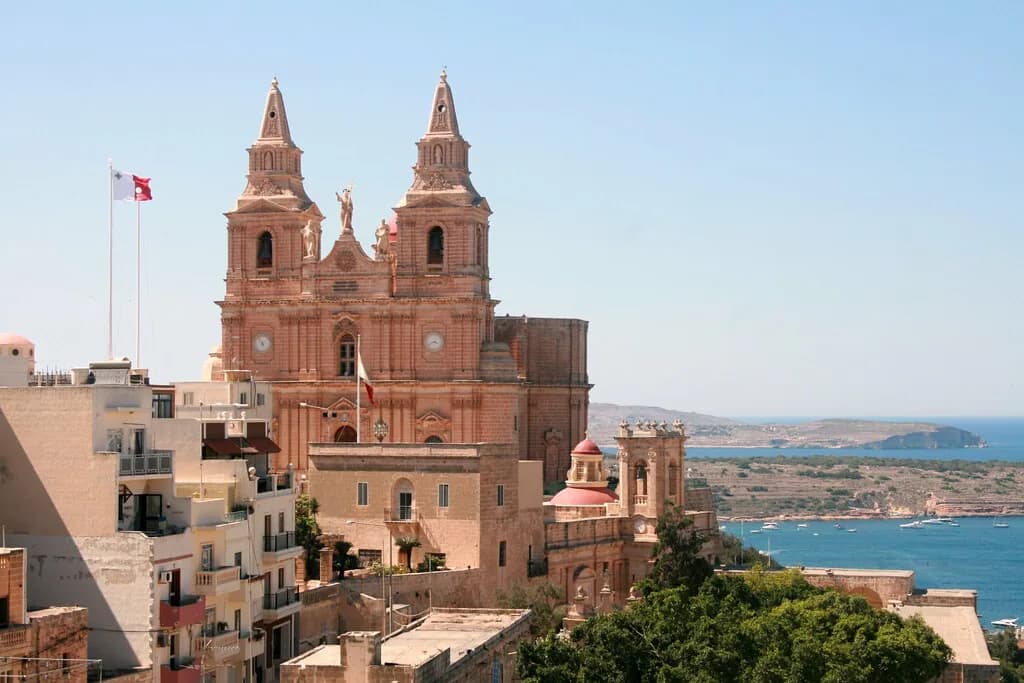
The Sanctuary of Our Lady of Mellieħa is the historical anchor of the village. Its church was built in the late sixteenth century and was blessed by Pope John Paul II in May 1990, and the sanctuary is reached by a long flight of steps that gives the approach its character. Treat the sanctuary and its grotto as two parts of one stop: the church above, the cave below.
The grotto is the reason the sanctuary matters to visitors with an interest in the site's history: it is the cave that gave the church its setting, and it sits at the bottom of the steps rather than in a separate building. Dress respectfully, as you would at any Maltese church, and allow time for the descent and the climb back up.
The parish church above the village
Mellieħa's parish church complex sits on high ground and is lit up each night, which makes it the easiest landmark to navigate by when you arrive. Its position above the main street is the practical reason the village feels vertical: you climb to the church, then descend to the shops and restaurants.
Visitors who want the church's own history rather than its outline should read the interpretation inside rather than rely on a glance from the square, and the parish church is also the natural starting point for a wander through the older streets below it.
It-Torri l-Aħmar and the Knights' watchtowers
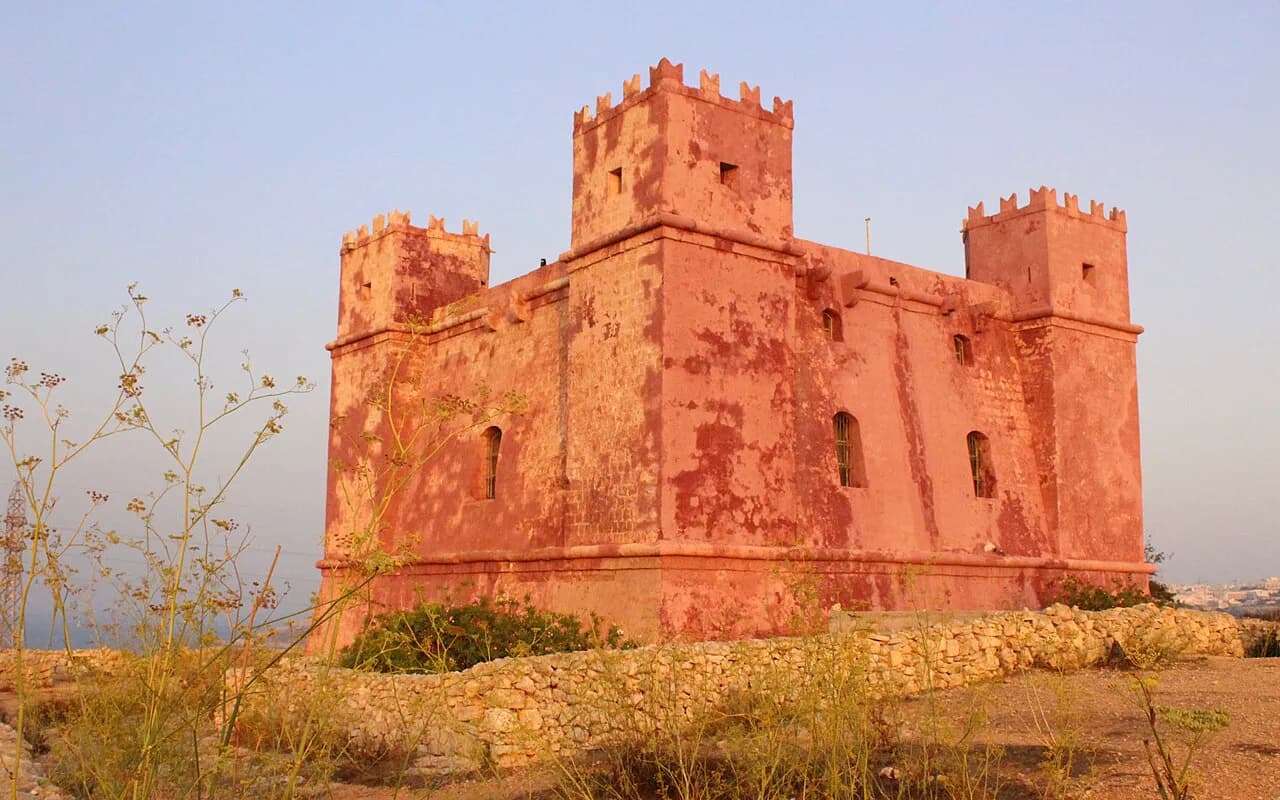
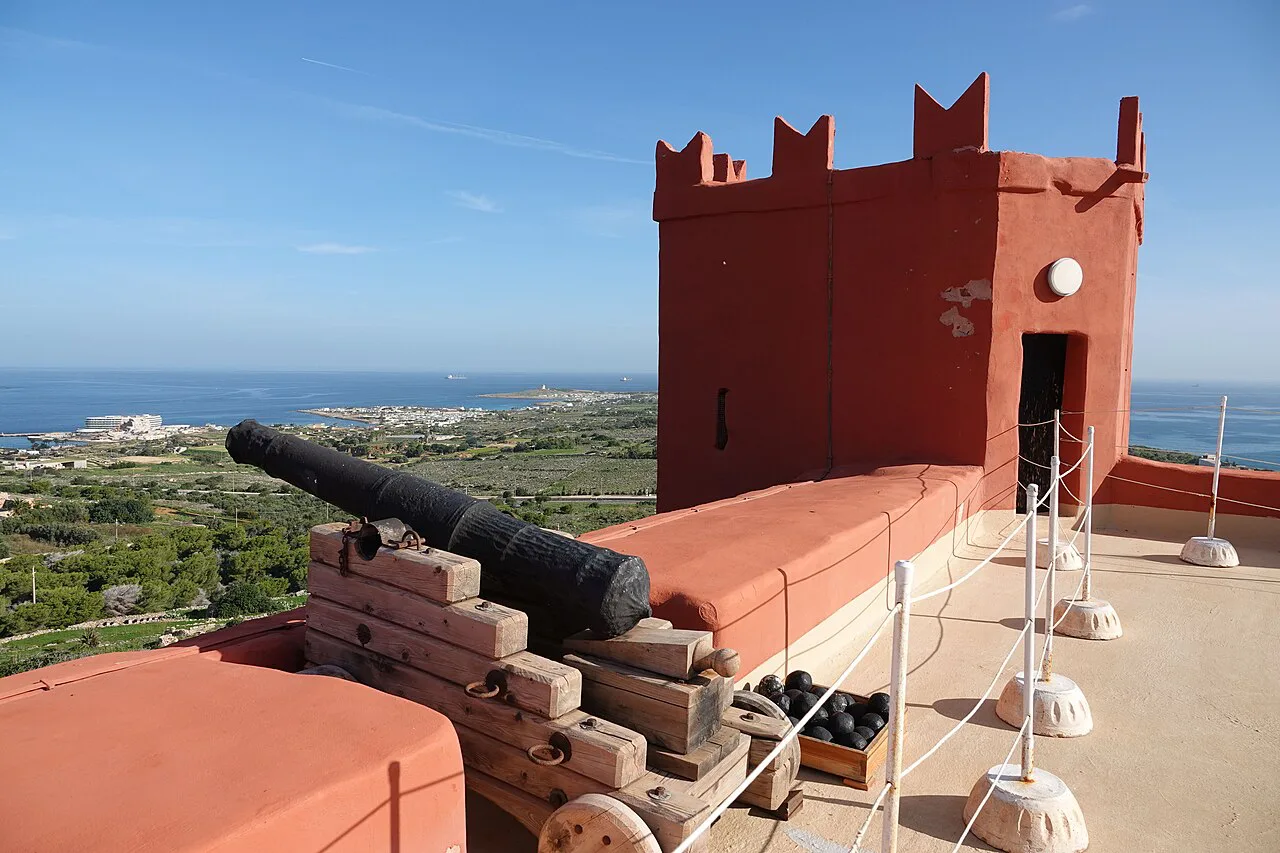
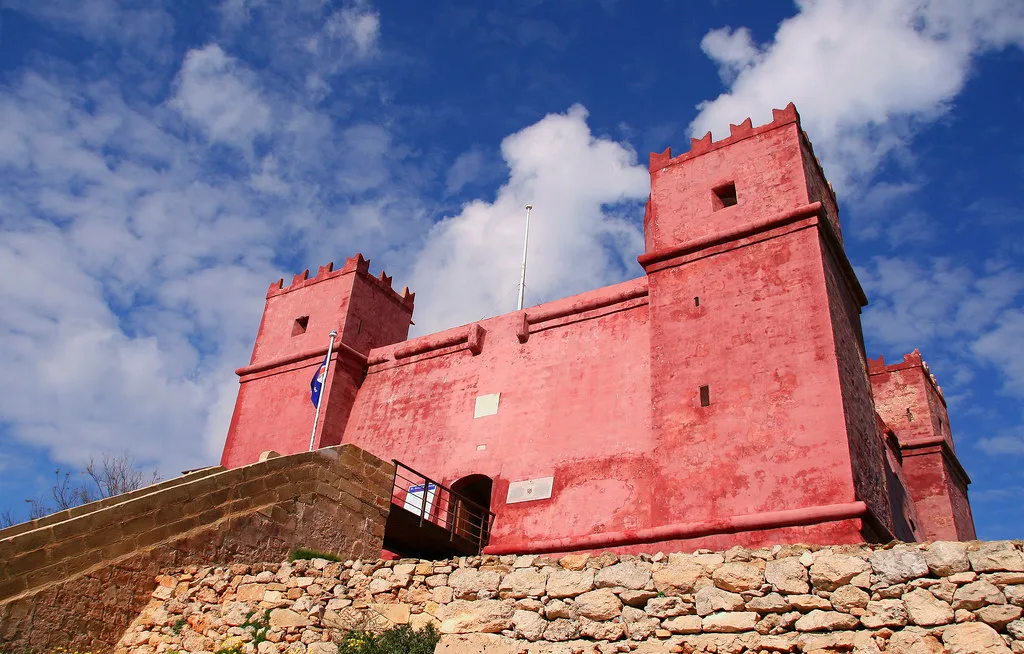
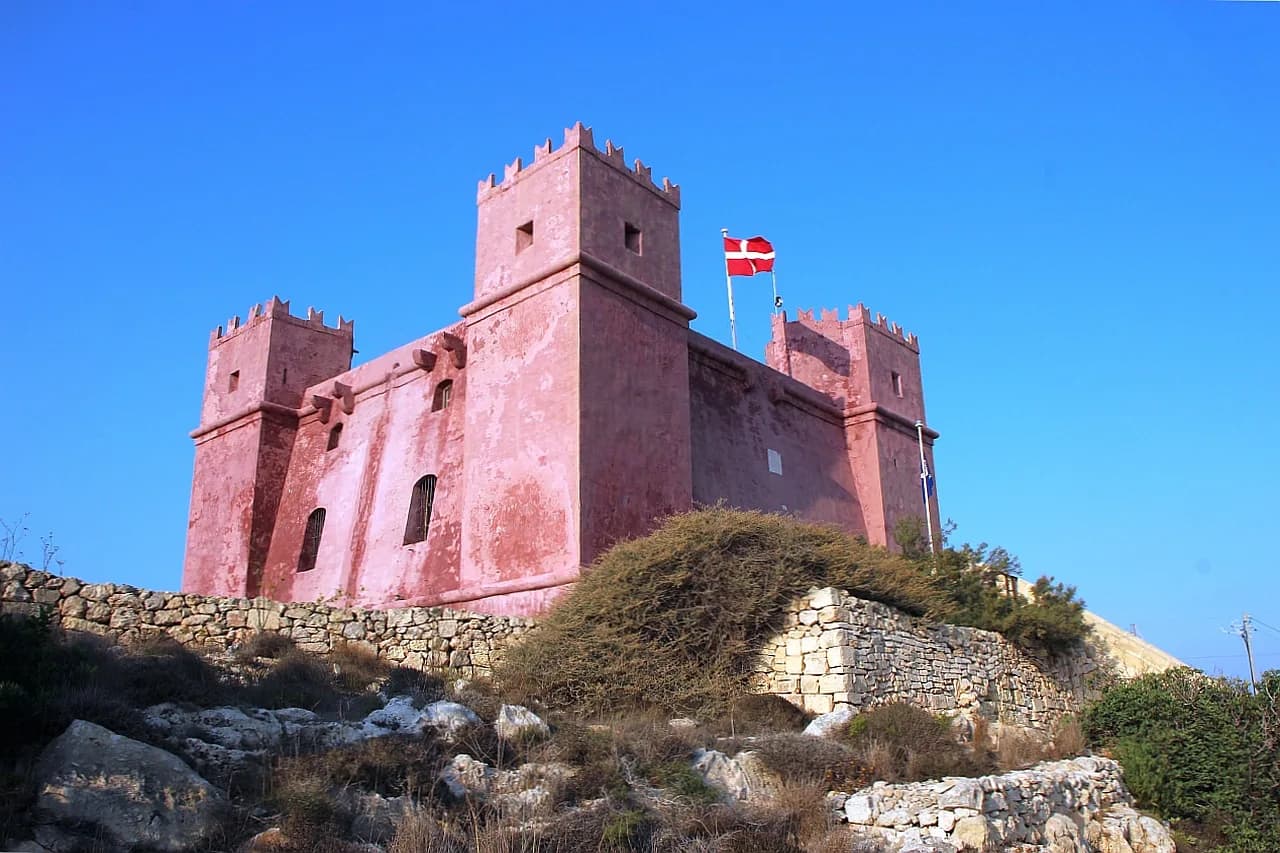
It-Torri l-Aħmar, the Red Tower, also known as St Agatha's Tower, stands on the high ground above the village and is the clearest single piece of fortified history in the area; the tower is one of the stops worth building a northern afternoon around. The climb to it is exposed, so go early or late rather than at midday, and carry water.
The tower pairs naturally with the sanctuary and the parish church in a single day if you have a car, because the distances between them are short but the hills are real. Check the tower's current opening arrangements before you commit to the climb, since the tower interior is not guaranteed to be open.
World War II gun posts and air raid shelters
The northern hills around Mellieħa carry World War II gun posts and air raid shelters, and these are the sites that reward a slower walk rather than a tick-list approach. They sit in the landscape rather than behind a ticket desk, so the visit is about finding them and reading the ground.
Combine them with the tower on the same outing, since they occupy the same high ground and the same exposed walking conditions. Sturdy shoes matter more here than anywhere else on this list.
How the village is laid out around the church
Think of Mellieħa as a set of layers: the sanctuary and grotto low in the village, the parish church complex on the ridge above the main street, and the tower and wartime remains out on the surrounding hills. Ordering a walk from the sanctuary upwards, then driving out to the tower, avoids climbing the same hill twice.
Supermarkets, restaurants, pharmacies and small clinics sit in the village itself, so you can break the walk for lunch without leaving the centre.
Which sites you can visit and which you see from outside
The sanctuary, its grotto and the parish church are the stops to plan around; the tower is the one to check opening arrangements for before climbing, and the Neolithic remains and wartime posts are landscape features you find rather than tour. Plan the day around the first group and treat the second as a bonus if the weather and your legs hold.
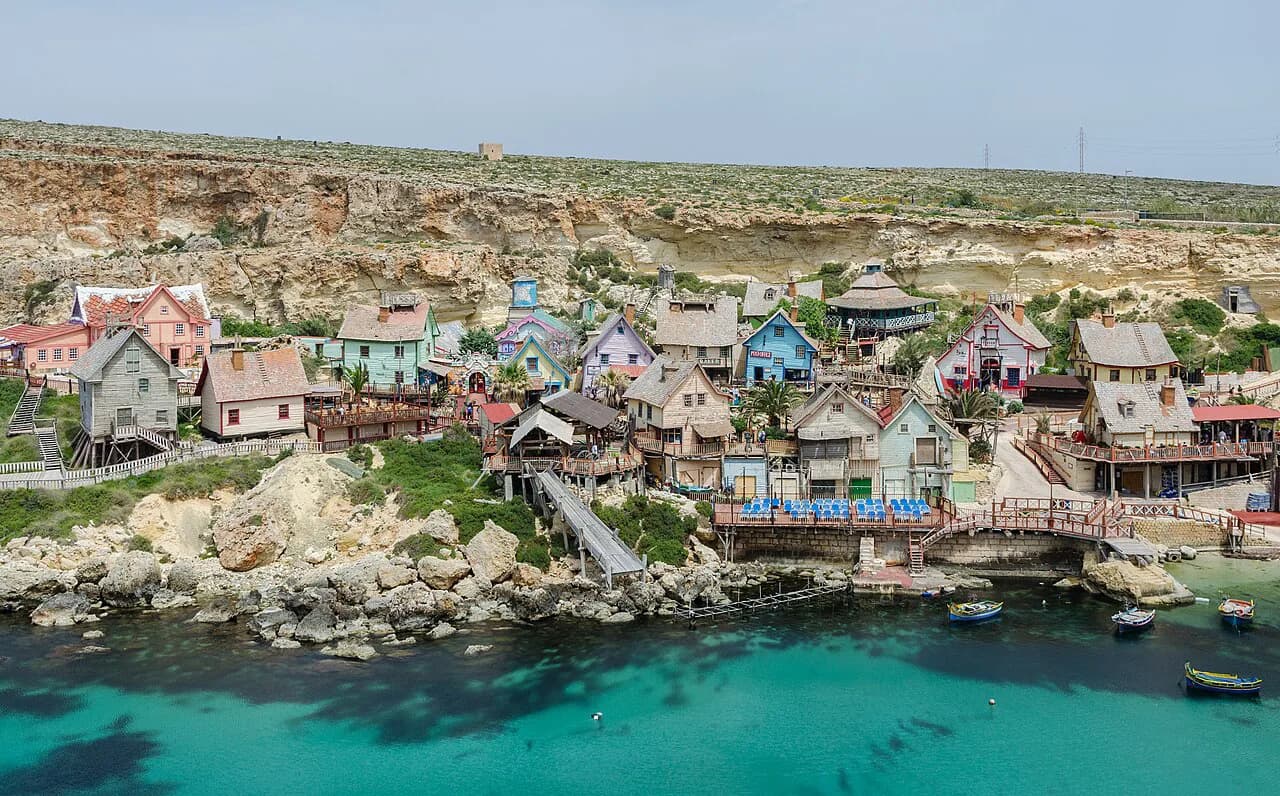
Popeye Village at Anchor Bay is a twentieth-century addition to the area's story and sits separately from the historic core, so it works as an optional extra rather than part of a history circuit.
Which Mellieħa history stop should you do first?
Start at the Sanctuary of Our Lady of Mellieħa and its grotto, climb to the parish church, and only then decide whether the Red Tower and the wartime remains fit the rest of your day. That order keeps the walking logical and puts the two interiors you can actually enter at the front of the visit.
If you have a car and a clear afternoon, the tower and the gun posts make a good second half; if you are on foot or bus, keep to the village and leave the ridge for another trip. Confirm current opening arrangements with the sites themselves before you travel.
Explore more Mellieha guides
Frequently Asked Questions
Is there much to do in Mellieħa if you are interested in history?
Yes, if you treat it as a walk rather than a single attraction. The Sanctuary of Our Lady of Mellieħa and its grotto, the parish church above the village, It-Torri l-Aħmar and the World War II gun posts and air raid shelters each belong to a different period, and together they fill a day, especially if you have a car for the outer sites.
What is the historical significance of the Mellieħa Grotto?
The grotto is the cave beneath the Sanctuary of Our Lady of Mellieħa, and it is the reason the sanctuary sits where it does rather than a separate attraction. Visit the two together: the church above is late sixteenth century, and the cave below is reached by steps, so allow time for the descent and the climb back.
Sources
Notes for your Malta trip
Optional updates when we add or correct a Malta or Gozo guide.
You might also like
Continue reading
More guides you'll find useful