Mdina Walking Tour: A Self-Guided Route Through the Silent City
A self-guided Mdina walking tour in order, from Mdina Gate to Bastion Square and Pjazza Mesquita, with how long it takes and when to walk it.
On this page
A self-guided Mdina walking tour takes two to three hours at a relaxed pace, or half a day if you add Rabat. The route below runs in walking order from the main gate to Greek's Gate, so you can follow it without doubling back, and it covers the lanes, squares, palaces, cathedral and bastion views that make up the city.
The one decision that shapes the day is timing. You need daylight hours for the cathedral and museums, but the city empties in the evening. This route is built so you can do both: walk the indoor stops first, then finish on the bastions as the light drops.
What a Mdina walking tour covers
Mdina is a walled city of winding lanes, opulent palaces and fortifications, with medieval and Baroque architecture layered together. Almost everything a visitor comes for sits inside the walls, which is why one continuous walk works better than a checklist of separate sights. A GPS-triggered audio walk marketed for the city lists 17 stops, running from the gate through the main squares to the bastions and gardens, which gives a fair idea of how much ground there is to cover.
The route below strings those stops into an order you can walk. Keep the Mdina map to hand for the small lanes, where signage is sparse and several streets look alike.
Mdina Gate: the Baroque entrance and the bridge over the ditch
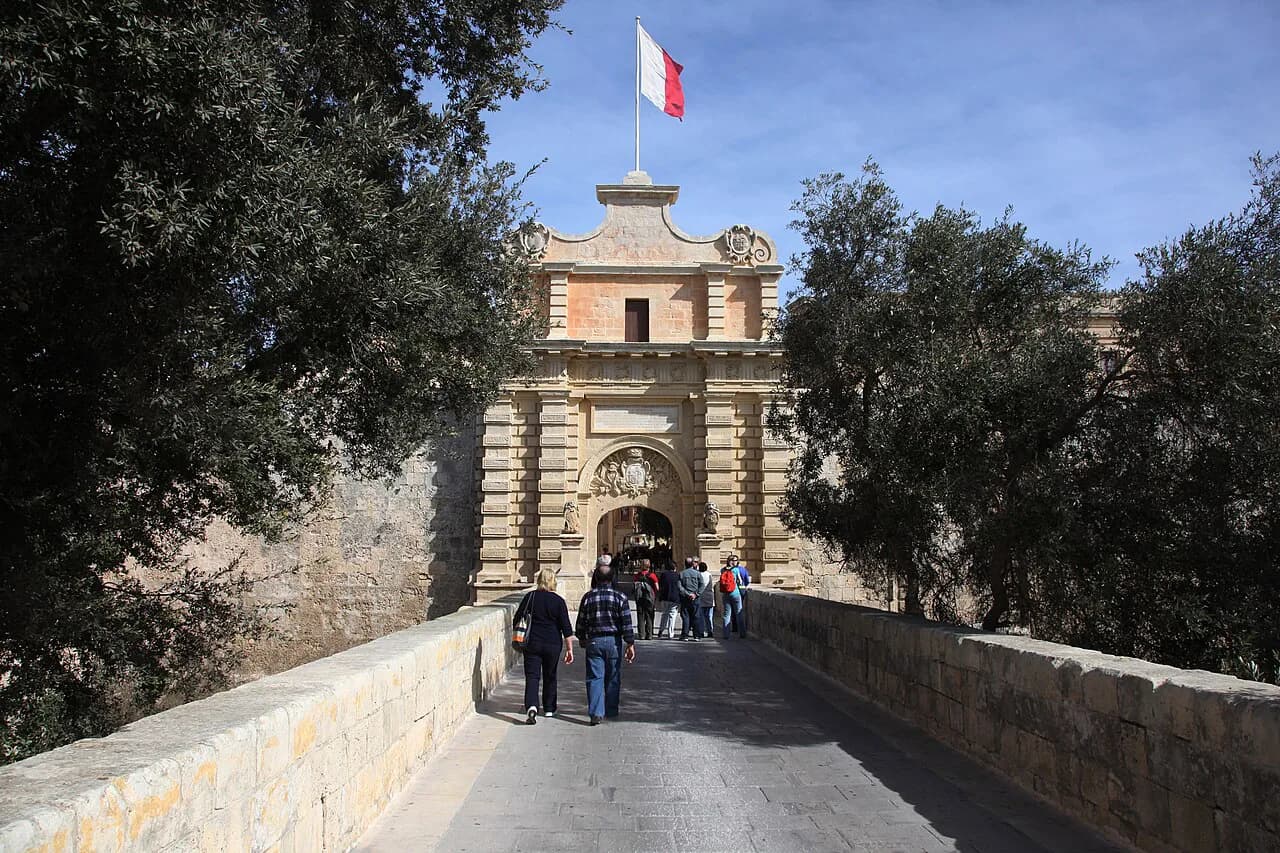
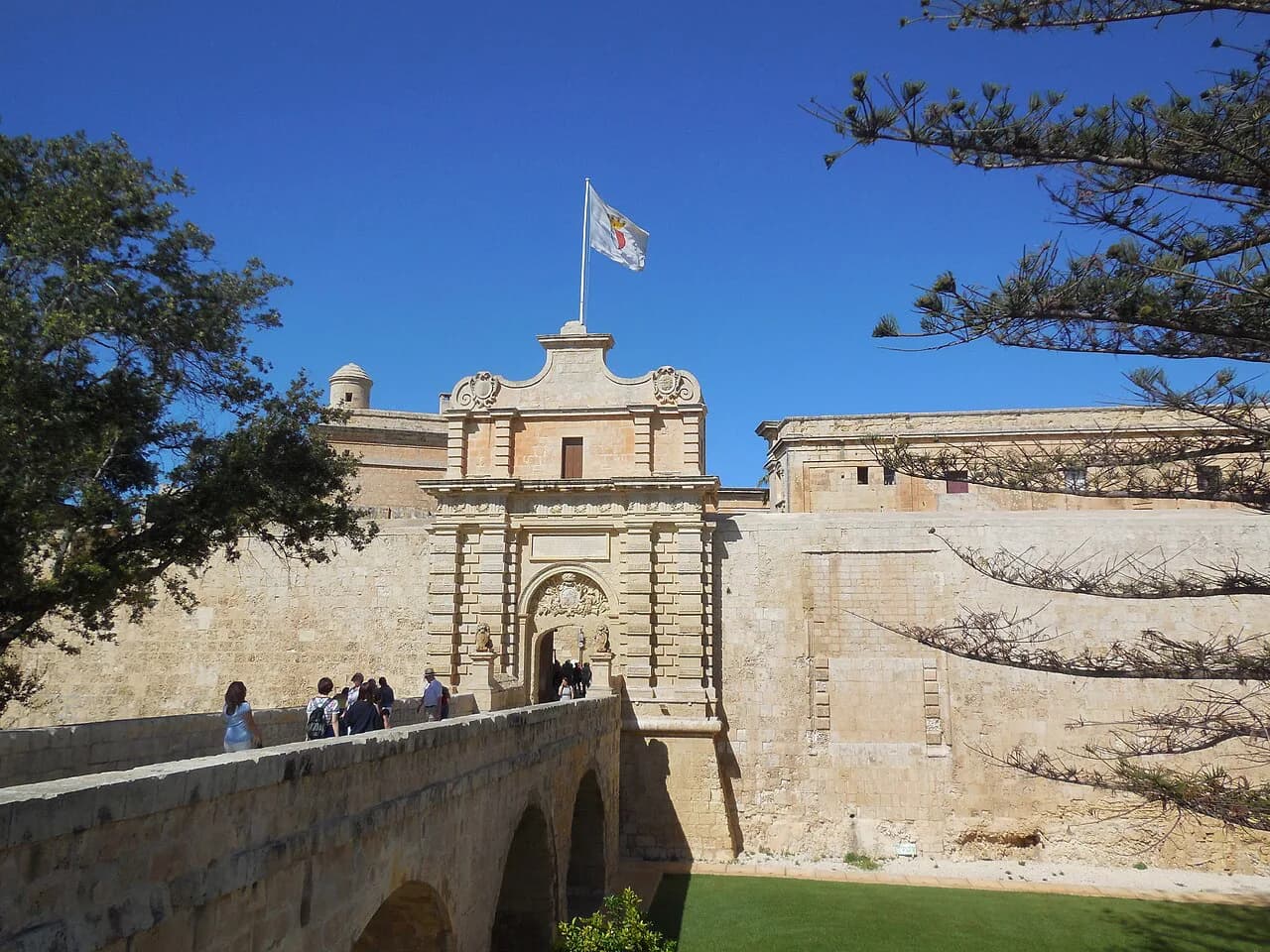
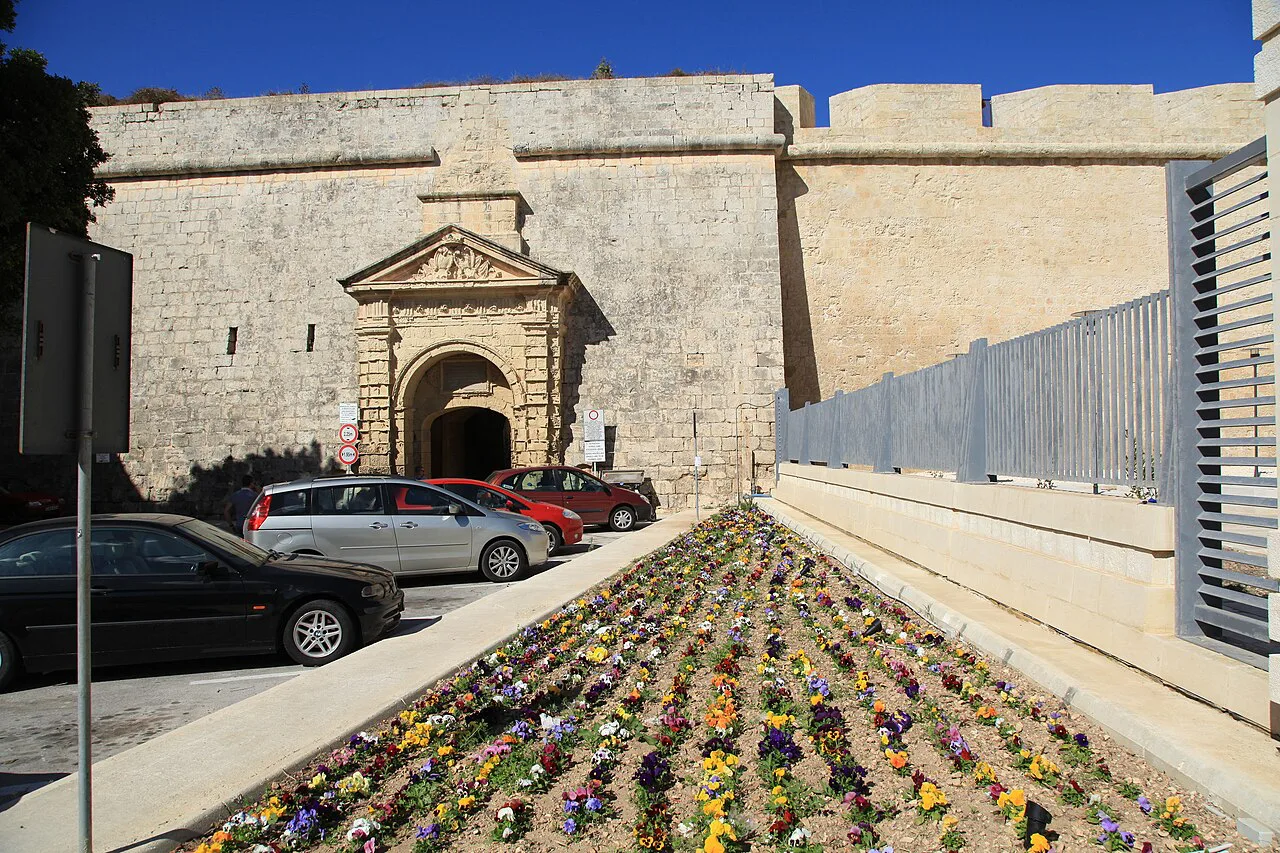
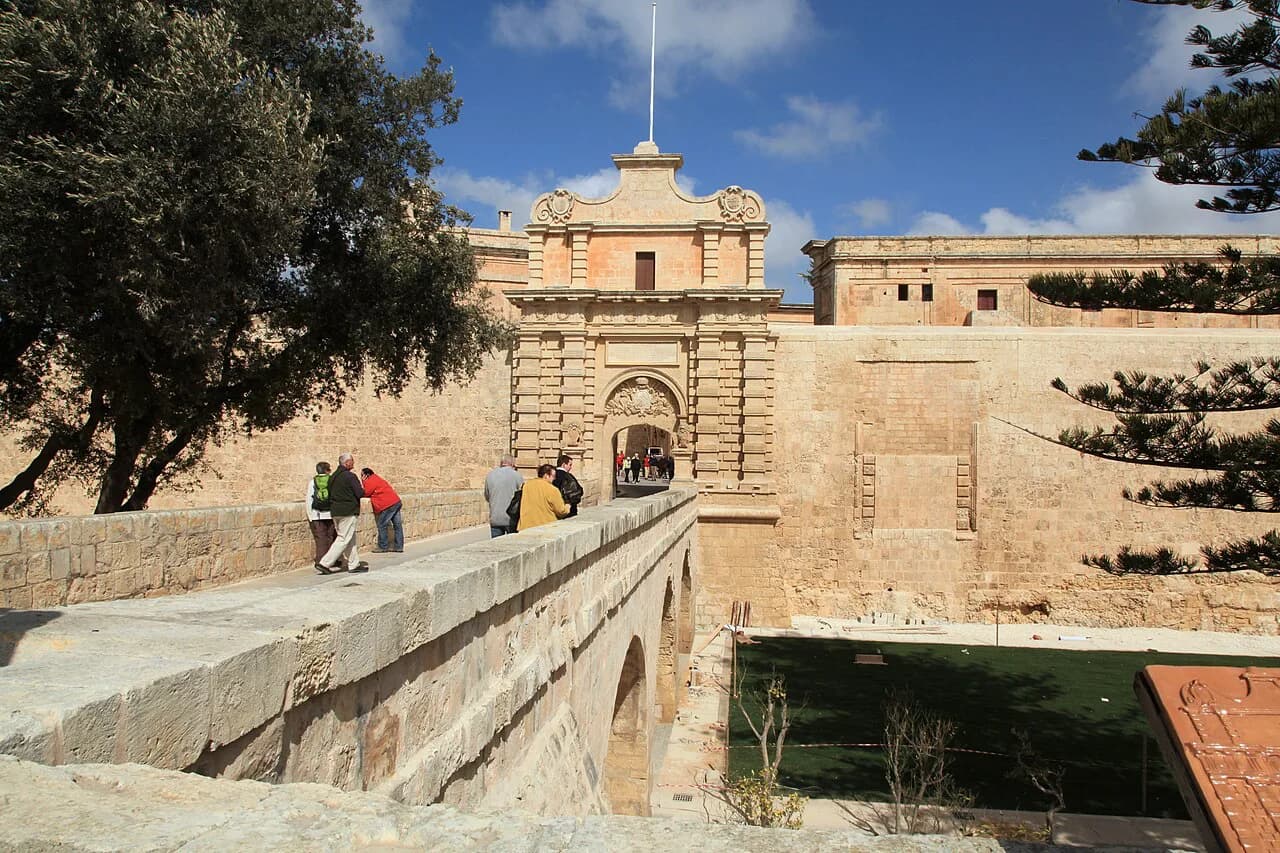
Start at the main gate, the Baroque entrance that most visitors photograph before they have seen anything else. You cross a bridge over the ditch to reach it, and the gate opens directly into the city rather than onto a wide approach. Walk through slowly: the first stretch inside is where the scale of the walls and the height of the buildings register.
If you are arriving by bus, the stop sits just outside the main gate, so the walk begins the moment you step off. Drivers use the public car park at the Mdina entrance or Il-Foss, the ditch, and should keep small coins ready for parking attendants.
St Publius Square and the lanes inside the walls
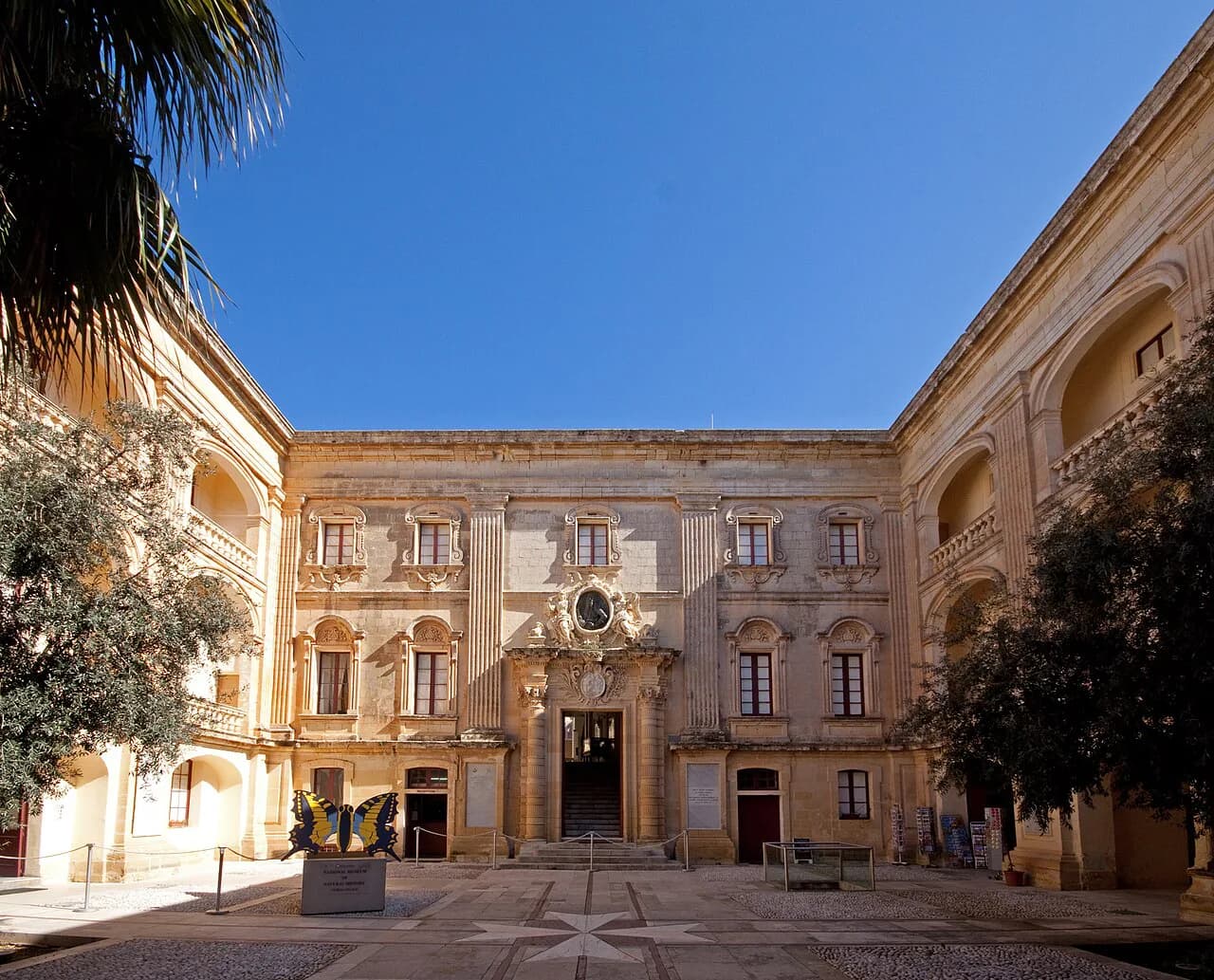
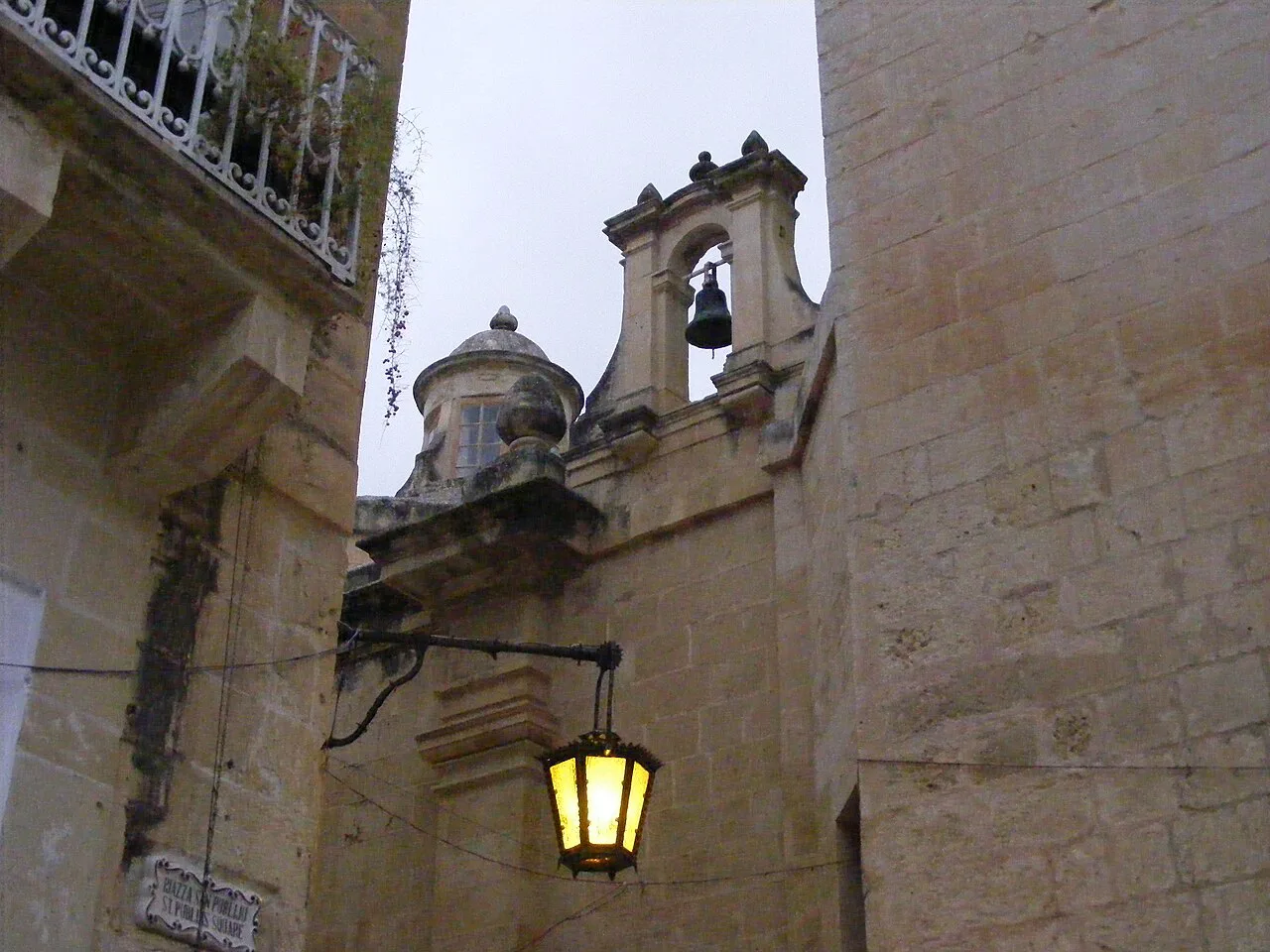
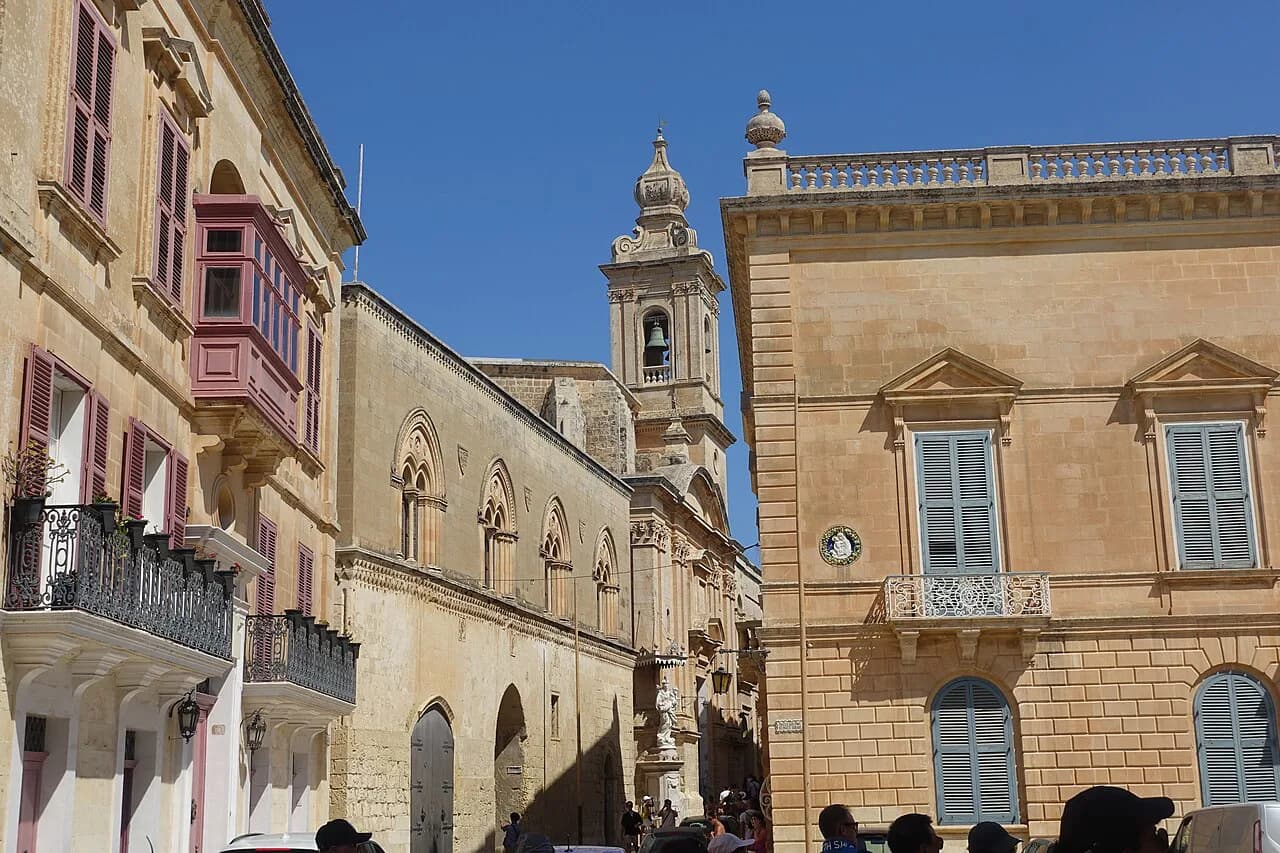
Past the gate, the first open space is St Publius Square, a good place to pause and set your bearings before the streets narrow. From here the route threads between palazzi such as Palazzo Santa Sofija and Palazzo Costanzi, with chapels tucked into corners. Look at the doors and windows as you go: they are painted in strong blues, reds, yellows and greens, and no two frontages quite match. The lanes are so tight in places that you can nearly touch both walls.
This is the stretch to slow down on rather than rush. The architecture mixes medieval and Baroque styles within a few paces, and the detail is at eye level: carved stone balconies, painted timber balconies, chapels marked only by a small sign.
St Paul's Square and St Paul's Cathedral
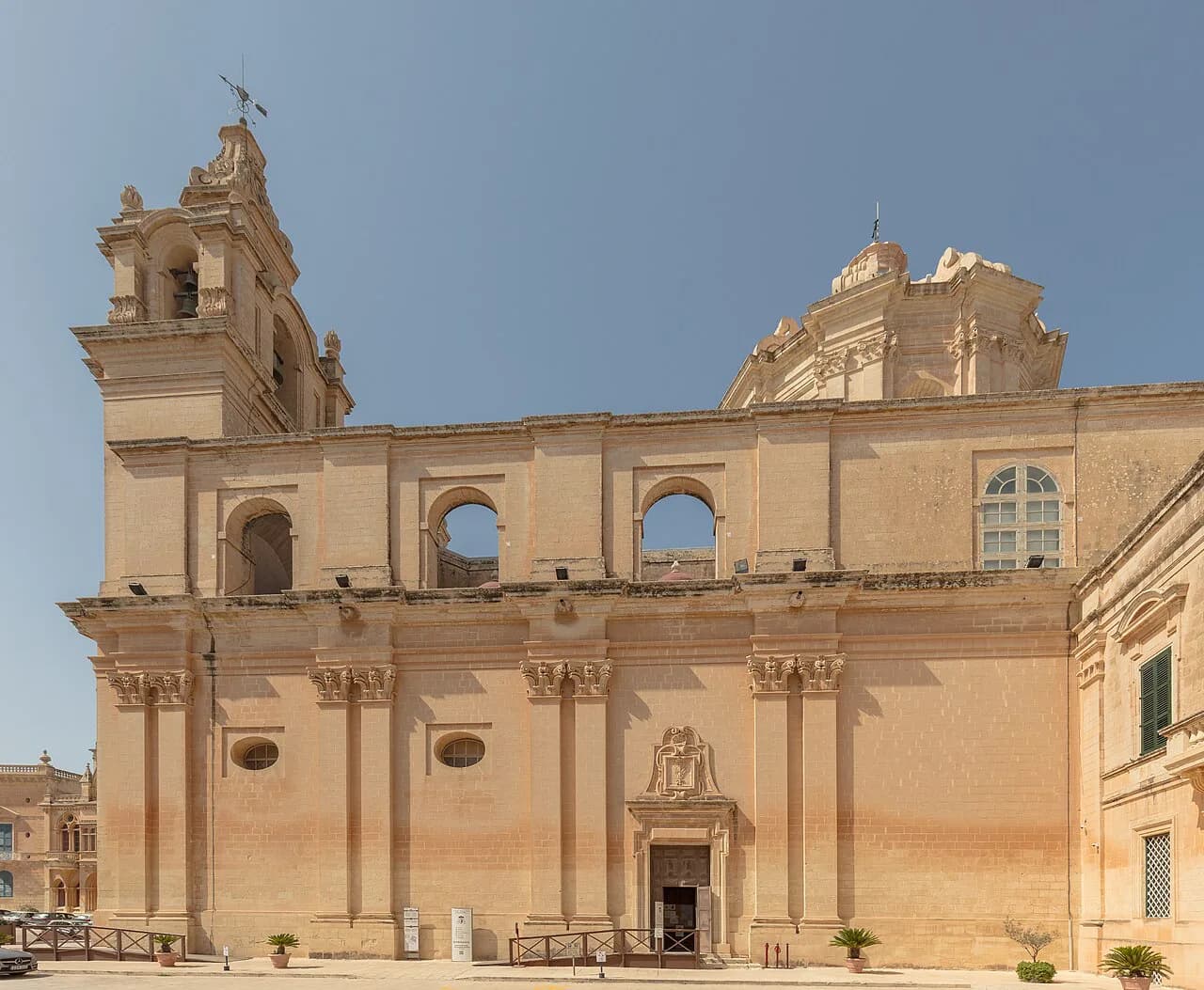
St Paul's Square is the civic heart of the walk, flanked by the cathedral and the buildings around it. The cathedral and its museum are the indoor stops that anchor the middle of the route, so plan to reach this point with daylight to spare. Guided walks and the audio tour both route through here, which means it is rarely empty at midday.
Set your day around the stated closing time for the indoor sights. Museums and the cathedral are described as closing at 4.30pm, so a 2pm arrival gives you time for one or two of them before you carry on to the walls.
Mdina Cathedral Museum
The cathedral museum sits beside St Paul's Cathedral and is the natural companion stop: see the church, then the collection. It is one of the two indoor attractions most walkers choose, the other being Palazzo Falson, and doing both in one afternoon is tight rather than impossible.
A combination ticket covers the cathedral and museum. If you only have time for one indoor stop, choose based on whether you want church interiors or a lived-in collection, then spend the rest of the walk outdoors.
Palazzo Falson and its rooftop
Palazzo Falson is the other indoor stop worth your time, and its rooftop gives a higher view over the surrounding roofs than you get from street level. Entry includes an audio guide, which makes it a self-guided visit inside a self-guided walk. Allow about an hour if you want to see the rooms properly.
There is also a rooftop café, which makes this a sensible halfway pause rather than a stop at the very start or end. Take the stairs, look across the rooftops, then come back down into the lanes refreshed.
Bastion Square and the viewpoint over Malta
Bastion Square is where the walk opens out. The high bastion walls give panoramas across the island, and this is the point to stop walking and simply look. Arrive late in the afternoon and the light does most of the work for you.
This is also where the timing trade-off pays off. Tour groups move through the city during the day and clear out by early evening, so walkers who stay on after the indoor sights close get the bastions and lanes close to empty. If you can only manage one visit, come for the late slot and accept that the museums will be shut.
Pjazza Mesquita and the back lanes
From the bastions, drop back into the lanes and aim for Pjazza Mesquita, a small square that appears on the main walking routes but feels tucked away. The streets around it are the quietest part of the loop, with long stone walls and few openings. This is the section to wander without a fixed plan.
Tea and cake stops cluster near this end of the city, with Fontanella Tea Garden among the named stops on the audio route. Treat it as a pause rather than a destination; you are still only minutes from the walls.
Greek's Gate and Howard Gardens
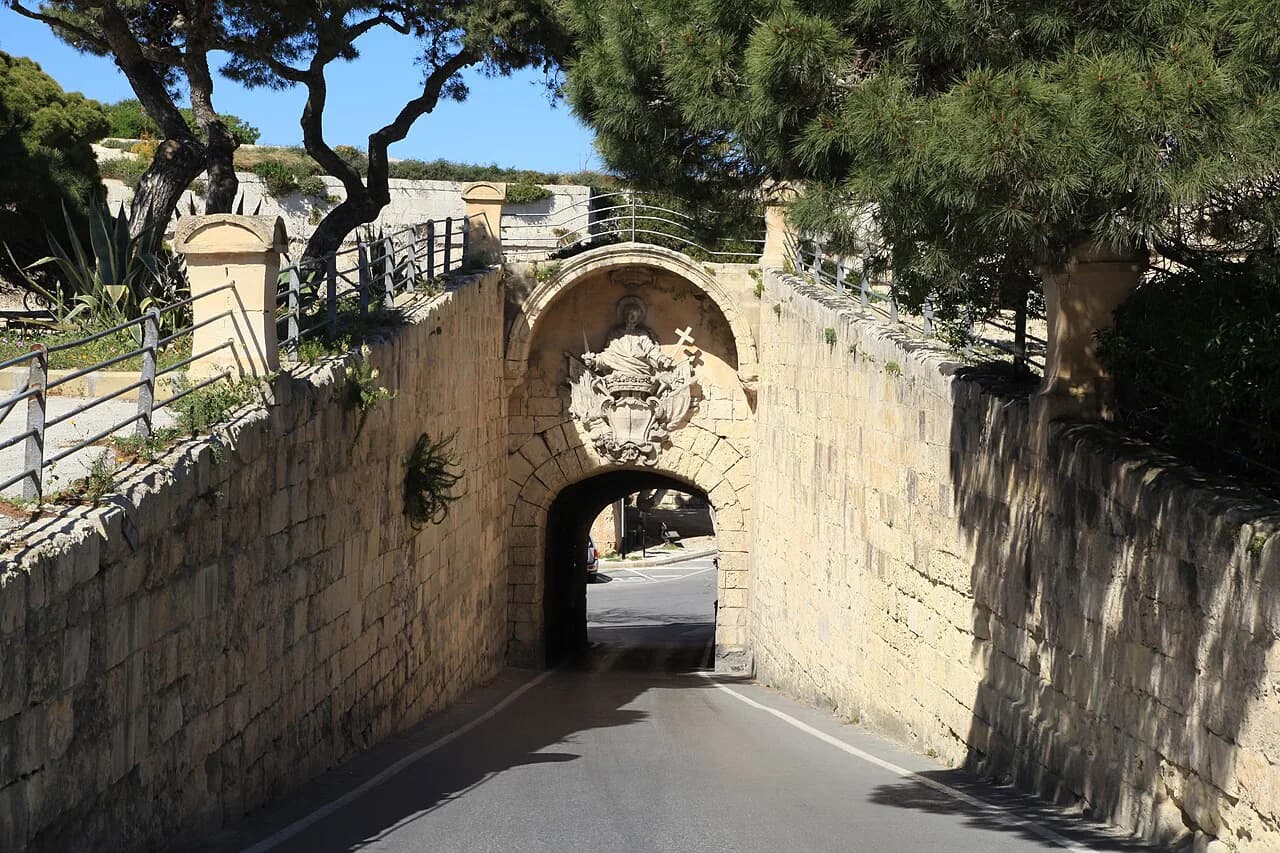
Finish the loop at Greek's Gate, which leads out towards Howard Gardens and the edge of the city. Howard Gardens is the open green space just beyond the walls, useful for a shaded sit-down or a last look back at the fortifications.
If you are walking back to the bus stop, this exit puts you on the right side of the city for the main gate and Rabat. It also means you end on open ground rather than in the middle of the lanes, which is easier on tired legs.
Adding Rabat: Għarreqin Gate and St Agatha's Chapel
With a half day in hand, extend the walk through Għarreqin Gate and down into Rabat. The audio route already links Mdina and Rabat as one continuous walk, and several guided options combine the two, so the pairing is well established rather than a detour.
In Rabat, St Agatha's Chapel is a named stop on the audio route. Allow an extra two hours on top of the Mdina loop if you want to see both without rushing.
How long the walk takes
Two to three hours covers the whole route at an unhurried pace; half a day covers it with Rabat attached. The City Explorer audio tour is designed to be done at your own pace, from a couple of hours across the main points of interest up to a full day if you take everything in.
The variable is how many indoor stops you take. Add roughly an hour for Palazzo Falson, plus the cathedral and museum, and a two-hour stroll becomes a four-hour visit. Decide before you arrive whether this is a walk or a museum day.
When to walk: morning, afternoon or after 6pm
Arrive around 2pm to catch the tail end of the tour groups and still have time for one or two indoor sights before they close, then stay on into the evening. Alternatively, come on a weekday morning in the shoulder months of October to November or March to April, when the streets are calmer. In summer, after 6pm is the best slot.
The basis for this advice is straightforward: museums and the cathedral shut in the late afternoon, so anyone arriving at dusk gets the atmosphere but not the interiors. Mdina earns its reputation as the Silent City at dusk, once the groups have gone, so the ideal is a daytime half for interiors and an evening half for the streets.
Guided versus self-guided: free walks, paid walks and GPS audio tours
The cheapest option is a free walking tour that you tip at the end. On listing pages, guided free walks in Mdina and Rabat generally run about two to two and a quarter hours, with options covering history and culture or the more traditional parts of both towns. These are a fair introduction if you want company and conversation rather than a fixed route.
Paid guided walks start at the Mdina Main Gate by the bridge, where the guide holds a sign or a red umbrella, and last around two hours; one option adds entry to the catacombs and grotto and runs two and a half hours. One Mdina and Rabat walk is described as taking two to two and a half hours with a small cash payment collected on the spot.
The GPS audio app is the third route: you download it to your phone and the commentary triggers as you walk, with video content and a 17-stop route. It includes the virtual guide but not admissions to optional sites, drinks or meals, so pair it with your own ticket decisions.
For most readers the choice comes down to price against flexibility. A guided walk costs money and runs to a fixed schedule; the app and a printed route start when you do. Check what entrance fees are excluded before you commit.
Getting there by bus and where to park
Buses 51, 52 and 53 run from Valletta and stop just outside the main gate, with a journey of roughly 30 minutes. Drivers should head for the public car park at the Mdina entrance or Il-Foss, the ditch, and keep small change for the attendants.
Once inside the walls you will not need transport again; the route is entirely on foot. That makes the gate the natural start and Greek's Gate or the main gate the natural finish, depending on whether you are continuing to Rabat.
Cobblestones, shade and midday heat
The route is mostly flat but cobbled, which is hard going for wheelchairs and pushchairs even without steps. Comfortable shoes matter more here than on a smooth town centre walk, and a phone with GPS drains quickly if you are using the audio tour.
Shade is limited on the bastions and in the open squares, so a midday walk in summer means sun protection and water rather than a leisurely stroll. The audio tour's own preparation list is shoes, sun protection and a charged mobile device. Walking earlier or later avoids the worst of it, and the stone lanes give more relief than the walls.
What to skip if you have two hours
With two hours, walk the gate, St Publius Square, St Paul's Square, Bastion Square and Greek's Gate, and take one indoor stop at most. Skip the second museum and the Rabat extension; both are good, but neither fits a two-hour visit without turning it into a rush.
If you would rather eat than queue, plan your stop around the end of the walk. There are restaurants within the walls and in Rabat, and a late lunch after the bastions suits the route better than breaking the loop halfway.
Which Mdina walk suits your day
Choose a self-guided walk if your priority is the streets and the views on your own clock, and add one indoor stop so you are not left looking at closed doors. Take a guided walk if you want the history explained in person and do not mind a fixed start and a fee.
Whichever you pick, start at the gate, finish at the walls or Greek's Gate, and leave the museums for the middle of the afternoon. Confirm current opening times on the day you go, since the 4.30pm closing shapes the whole plan.
Explore more Mdina guides
Frequently Asked Questions
Can you do a Mdina walking tour without a guide?
Yes. Mdina is compact and the main sights sit within the walls, so a self-guided route from the main gate past St Publius Square, St Paul's Square, Palazzo Falson, Bastion Square and Pjazza Mesquita works well on foot. A map and a note of the closing time for the cathedral and museums are the only planning you need.
Sources
Notes for your Malta trip
Optional updates when we add or correct a Malta or Gozo guide.
You might also like
Continue reading
More guides you'll find useful