
Senglea (Isla), Malta: What to See on the Quiet Harbour Peninsula

Senglea is worth a half-day if you want harbour views without the Valletta crush: a narrow fortified peninsula pointing into the Grand Harbour, directly across the water from the capital. Locals call it Isla, and its settled, lived-in character is the reason to come. This guide covers the walk to the Gardjola Gardens, the marina, the churches, where to eat and stay in the area, and how to slot it into a Three Cities day.
Plan the peninsula as a loop on foot: lanes up to the tip, then down to the waterfront, then across the creek to Birgu if you have the legs for it. Everything in Senglea sits within a compact grid, so once you arrive the natural way to see it is on foot, with the lanes doing the work between the water and the ridge.
What Senglea is and where it sits in the Grand Harbour
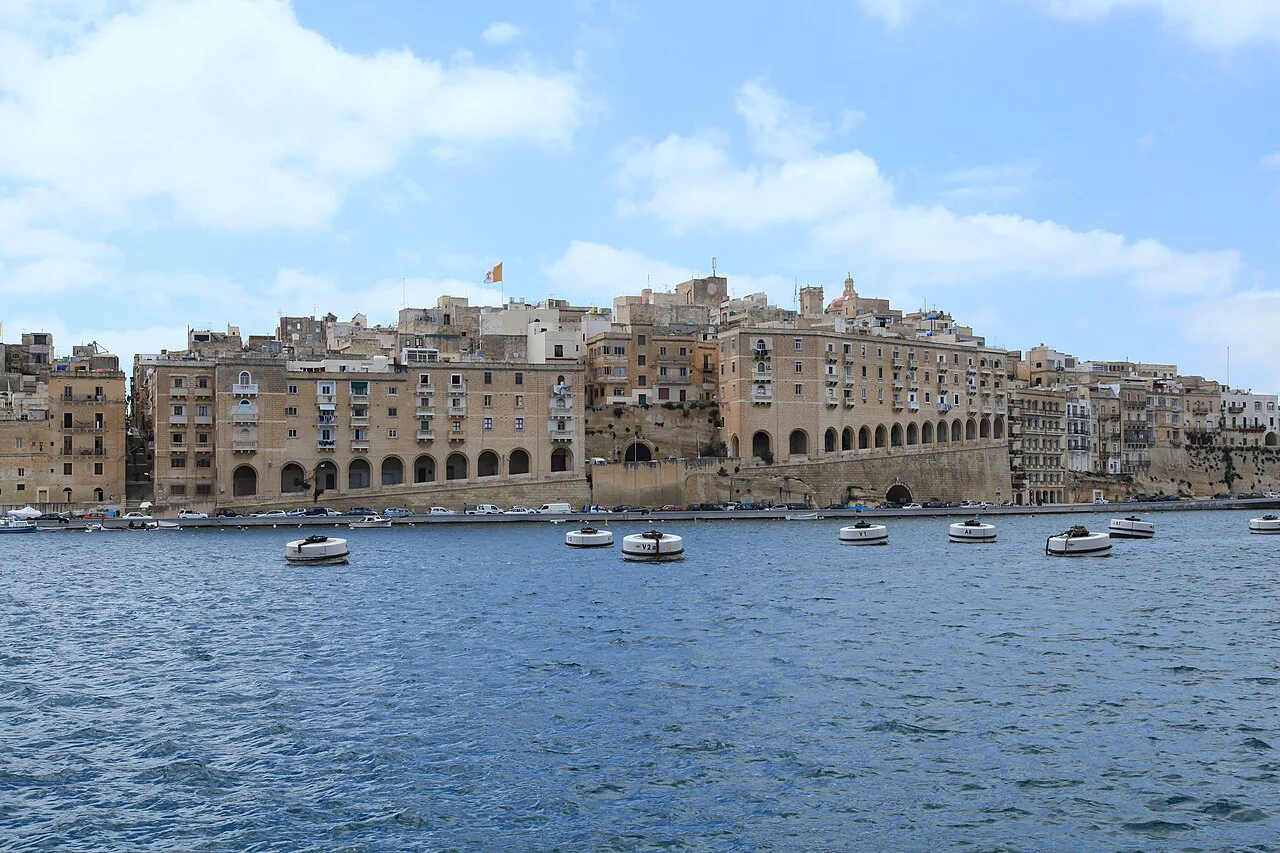
Senglea occupies the slim finger of land that juts into the Grand Harbour opposite Valletta, next to Birgu (Vittoriosa) and Cospicua (Bormla) — together the Three Cities. The peninsula is almost surrounded by water, which is why the everyday Maltese name, Isla, comes from the word for island.
The town was fortified in the 1550s under Grand Master Claude de la Sengle, whose name it carries, and the parish still uses the title Città Invicta, the unconquered city. Fort St Michael once stood at the landward end of the grid. The formal name and the local name both appear on signs and maps, so treat Senglea, Isla and L-Isla as the same place.
Expect a working harbour neighbourhood rather than a museum piece: washing between balconies, boat repairs on the quay and neighbours on doorsteps. The street plan survived the heavy wartime bombing of the dockyard area, and walking the steep lanes still gives a sense of how tightly packed this maritime community has been.

Senglea or Isla: the names you will see on signs, buses and maps
Senglea, Isla, L-Isla and Città Invicta all refer to the same peninsula. Senglea is the formal name from the Knights' Grand Master; Isla is what residents say; L-Isla is the Maltese form you will see on bus fronts and municipal signage. The local council has moved to restore Senglea as the city's official name, so expect both to stay in circulation.
For navigation, search either name and check the map pin rather than the label. If a bus display shows L-Isla, that is your stop. The parish adds a third layer with Città Invicta on its crest, which is decorative rather than an address.

The Gardjola Gardens and the vedette watchtower
The one thing to do in Senglea is the walk to the very tip of the peninsula, where the Gardjola Gardens (Il-Ġnien tal-Gardjola) sit on the old bastion. These compact shaded gardens are crowned by the vedette, a small stone watchtower carved with an eye, an ear and a crane — symbols of a sentry watching and listening over the harbour mouth. Look for the carvings rather than just photographing the tower.
The gardens are free to enter and rarely busy. From the bastion wall you look straight across to Valletta and its fortifications, with Fort St Angelo to your right above Birgu and the full sweep of the harbour between. The local guide recommends late afternoon and sunset, when the light across to Valletta picks out the limestone opposite.
The lanes that climb to the gardens are exposed, so carry water and pace yourself in high summer heat. The gardens themselves, with their shade, are the natural place to pause and sit.
The marina and waterfront: luzzu boats and the shared creek
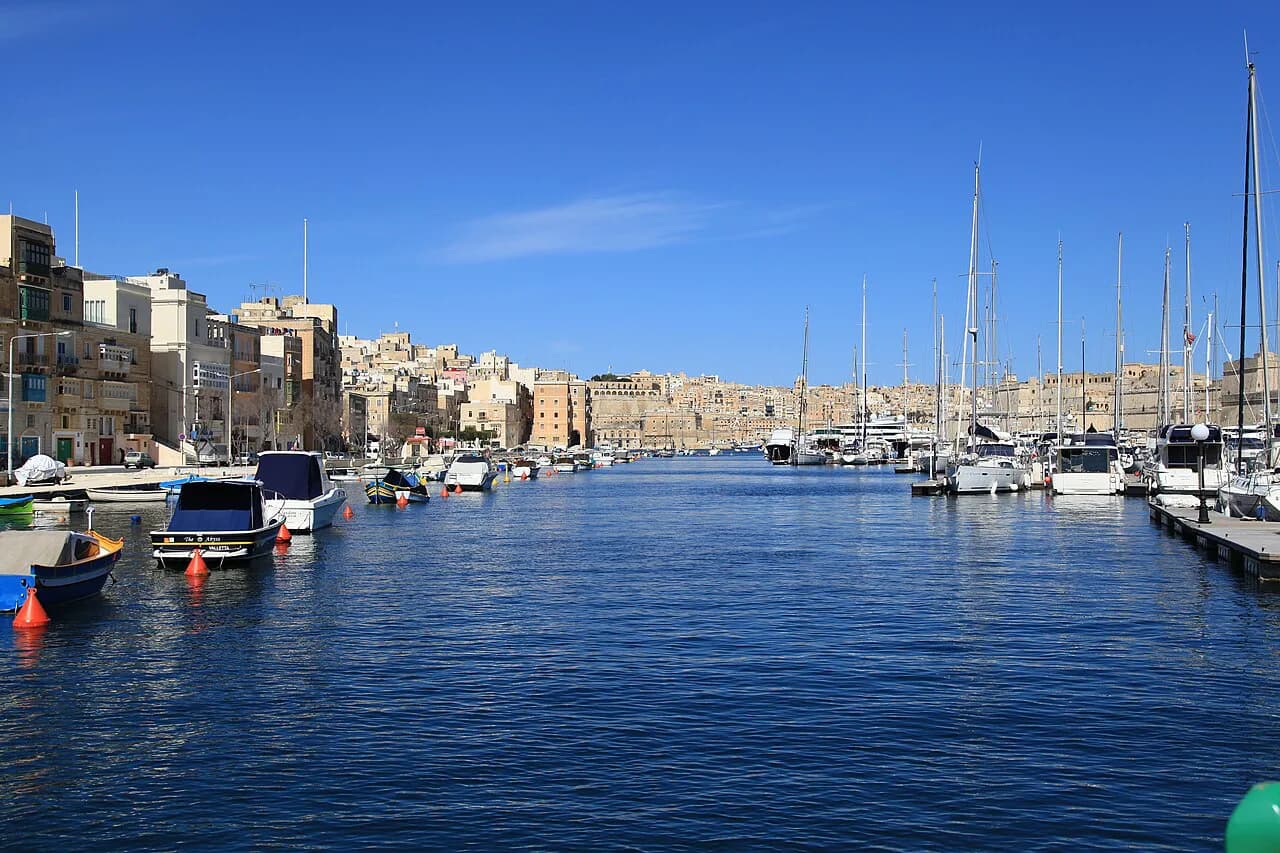
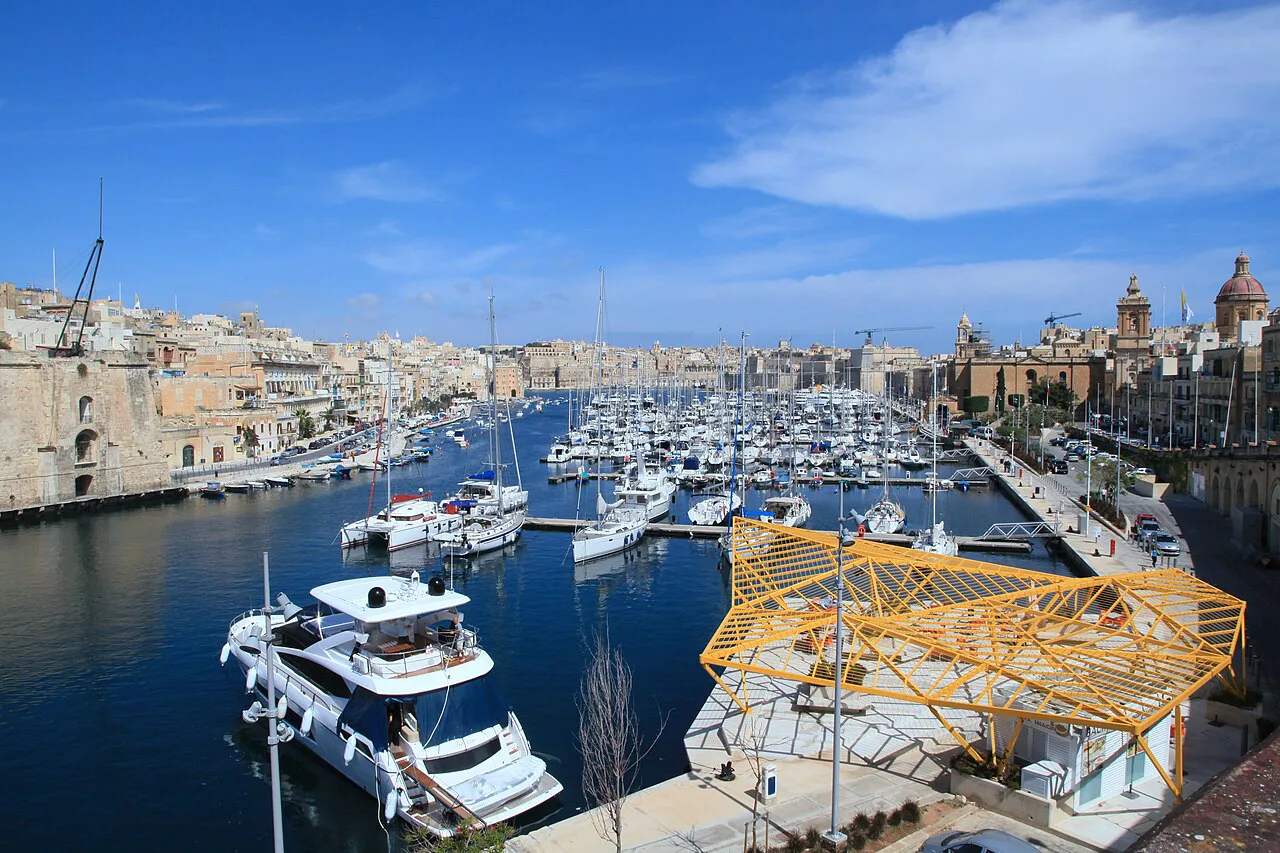
At sea level the Senglea waterfront curls around the inner creek shared with Birgu, lined with a modern marina, yachts and traditional Maltese boats. Look for the painted luzzu with bright hulls and the eye painted on the bow. It is a working quay as much as a promenade, so watch for boat traffic and repair gear underfoot.
The waterfront is the easiest part of Senglea to reach with children or anyone who does not fancy steep alleys, and it links directly towards the Birgu shore. Pair the marina with the lanes above rather than choosing one, since the contrast between quay and hilltop is the point of the peninsula.
The grid of steep lanes and what the walk feels like
Senglea was laid out on a grid adapted to the headland, so the lanes climb and drop in straight flights between the water and the ridge. Expect steps, tight corners, limited through traffic and a lot of up-and-down for a small area. Wear shoes with grip and leave the suitcase at the accommodation until you have checked the access.
A loop from the landward end to the Gardjola Gardens and back via the waterfront covers the peninsula comfortably in an afternoon, with stops for churches and viewpoints. Because the place is small, it rewards slow wandering rather than a checklist. Combine it on foot with the neighbouring towns if you want a full day.
Churches: the Basilica of Our Lady of Victories and the others
The Basilica of Our Lady of Victories, also called the Basilica of the Nativity, was first built in 1581 as a monument to the Victory of 1565 and became the parish church the same year. It was rebuilt in the 1950s after wartime destruction and holds the painted wooden statue of Maria Bambina, the town's focus each September.
The town also has the church of St Julian, first built in 1311 and rebuilt more than once, and the church and monastery of St Philip at the top of Windmill Hill. Several life-size statues of the Passion stand around the streets. Dress respectfully for any church interior: covered shoulders and knees, and quiet inside.
Who Senglea suits and who it does not
Senglea suits travellers who want harbour views, quiet lanes and a genuine residential atmosphere within easy reach of Valletta, and who are happy to walk uphill. The local guide describes it as the smallest and quietest of the Three Cities in character, and far less crowded than Valletta or Birgu even when the capital is busy.
It does not suit anyone wanting a resort base, a beach on the doorstep, or a steady supply of bars and late-night venues; those needs are better served elsewhere on the island. The steep, washing-strung lanes make it hard work for travellers with limited mobility or heavy luggage.
Where to eat and drink in Senglea
Senglea's eating is neighbourhood-scale rather than destination dining: small places around the waterfront and the main streets serving Maltese dishes, with the marina as the natural setting. Numbers are limited, so on a quiet weekday evening check what is actually open before you commit to dinner on the peninsula.
If you want a wider choice, the short hop across the water to Valletta or the walk round to Birgu adds plenty of options. Menus and prices are published by each venue, and they change, so confirm on the door rather than relying on an old figure.
Staying in Senglea: self-catering apartments and town houses
Accommodation here is mostly self-catering: apartments and converted town houses, several with roof terraces looking over the Grand Harbour towards Valletta. Among the listings Expedia shows for Senglea are Stilla San Mikiel on Triq San Giljan and a traditional town house with marina views from its roof terrace.
Rates move with the season and availability, so compare live listings rather than budgeting from a remembered figure. Check the address against the map and ask about steps to the door, because a harbour view usually comes with a climb.
Getting to Senglea and crossing to Valletta
Senglea is reached by road from the airport and the rest of Malta, with local buses serving the Three Cities, and the peninsula is small enough to cover entirely on foot once you arrive. The local guide covers the crossing from the Senglea waterfront to Valletta by ferry, which turns that journey into a short trip across the harbour rather than a drive around the creeks.
Published timetables and fares change with the season, so check the operator's own page on the day you travel instead of planning around an old schedule. Allow extra time on feast days, when the harbour and its crossings draw crowds.
8 September: Maria Bambina and the Grand Harbour regatta
On 8 September the town celebrates the feast of Maria Bambina, the Nativity of Our Lady, which falls on the same day Malta marks Victory Day. The traditional rowing regatta is held in the Grand Harbour, raced in the small dgħajsa, with Senglea among the towns that compete.
This is the day the quiet peninsula fills up, with crowds along the vantage points and the waterfront. If you want a calm visit, come another day; if you want the atmosphere, arrive early and expect the ferry and roads across the harbour to be stretched.
What is within walking distance: Birgu and Cospicua
Senglea shares its inner creek with Birgu, and the two are close enough to walk between, making a natural pairing for a single outing. Birgu's Collachio and its fortifications repay a slow hour, and the fort of St Angelo sits above the water between the two towns.
Cospicua lies just inland from both, with its own docks and squares, and can be folded into the same walk if you have the time. Further round the harbour, Kalkara offers a quieter contrast again, with Fort St Angelo views from the opposite shore.
Should Senglea be your Three Cities base?
Stay in Senglea if you want harbour views, quiet lanes and a short crossing to Valletta, and you are comfortable with steps and self-catering. Base yourself elsewhere if you need a lift to the door, a pool, or a wide choice of restaurants within two minutes.
Either way, give the peninsula an afternoon: climb to the Gardjola Gardens for the vedette and the light across the water, drop to the marina, look inside the basilica, then walk round to Birgu. Check the ferry and bus details with the operators before you set out, and keep the evening free for the tip of the peninsula at sunset.
Explore more Birgu guides
Frequently Asked Questions
Is Senglea the same place as Isla?
Yes. Senglea is the formal name taken from Grand Master Claude de la Sengle, and Isla or L-Isla is the everyday name used by residents and on bus displays and maps. The parish also uses the title Città Invicta. Search either, but check the map pin rather than the label.
How long do you need in Senglea?
An afternoon covers the peninsula: the lanes, the Gardjola Gardens at the tip, the marina and the basilica. Add more time if you plan to eat on the waterfront or walk on to Birgu and Cospicua.
Is the Gardjola Gardens free?
Yes, the gardens at the tip of the peninsula are free to enter and usually quiet. The light across to Valletta is best in late afternoon and at sunset.
When is Senglea busiest?
8 September, when the feast of Maria Bambina and the Grand Harbour regatta bring crowds to the waterfront and the vantage points. On other days the town is notably calmer than Valletta or Birgu.