
Fort St Angelo, Birgu: What to See and How Long to Allow

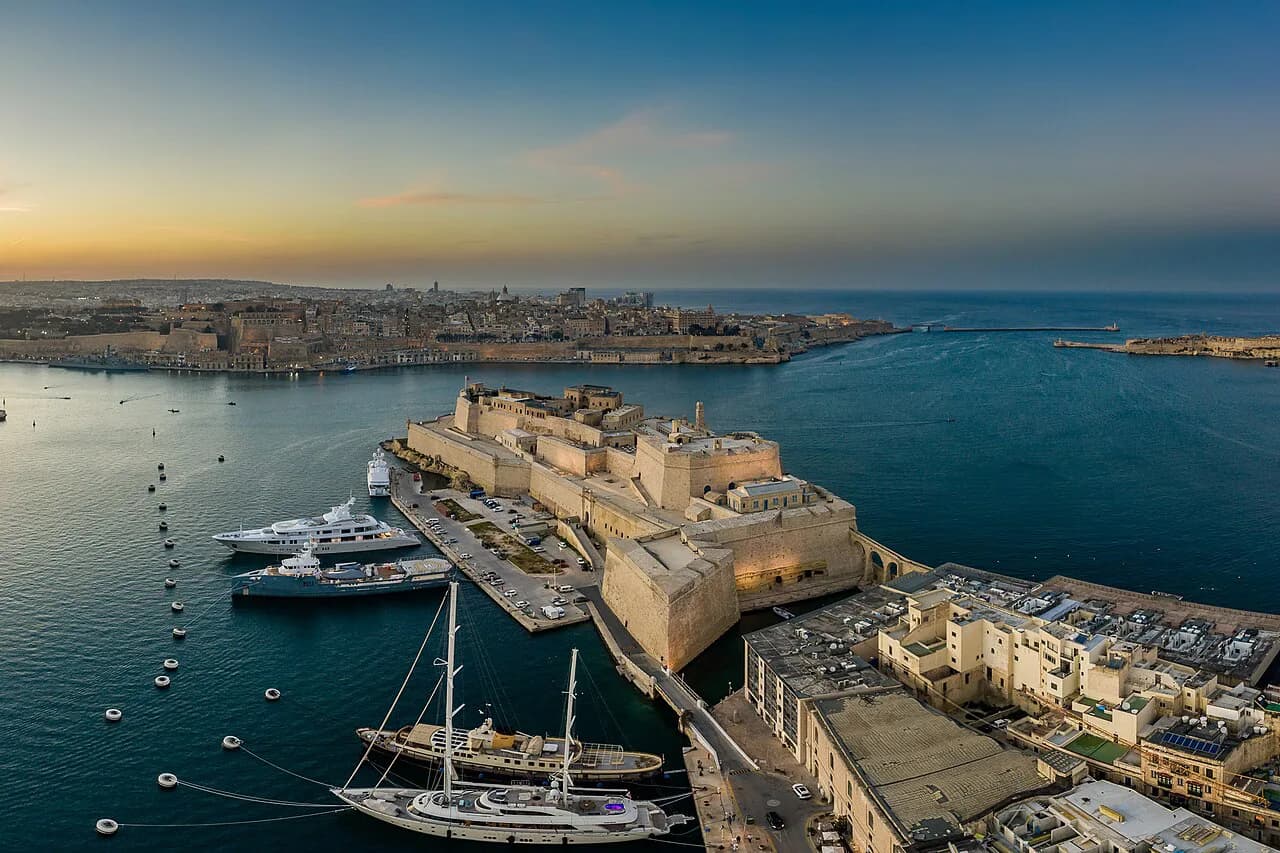
Allow about an hour and a half for Fort St Angelo, the fortress at the tip of the Birgu peninsula that looks straight up the Grand Harbour towards Valletta. The visit works as a single stop rather than a half-day: bastioned walls, a small set of displays and the raised platform with the best water views.
This guide keeps to the fort itself: where it sits, the walk down through Birgu, what the medieval, Hospitaller and British phases left behind, and where the Camino Maltés finishes. The fort is run by Heritage Malta, so check its own page for the current tariff and hours before you travel.
Where Fort St Angelo sits on the Birgu peninsula
The fort occupies the seaward end of the long ridge that forms Birgu, also called Vittoriosa, one of the Three Cities facing Valletta across the water. It stands on a hillock above the Grand Harbour, so the approach from the town is uphill and the return is a gentle descent through stepped lanes.
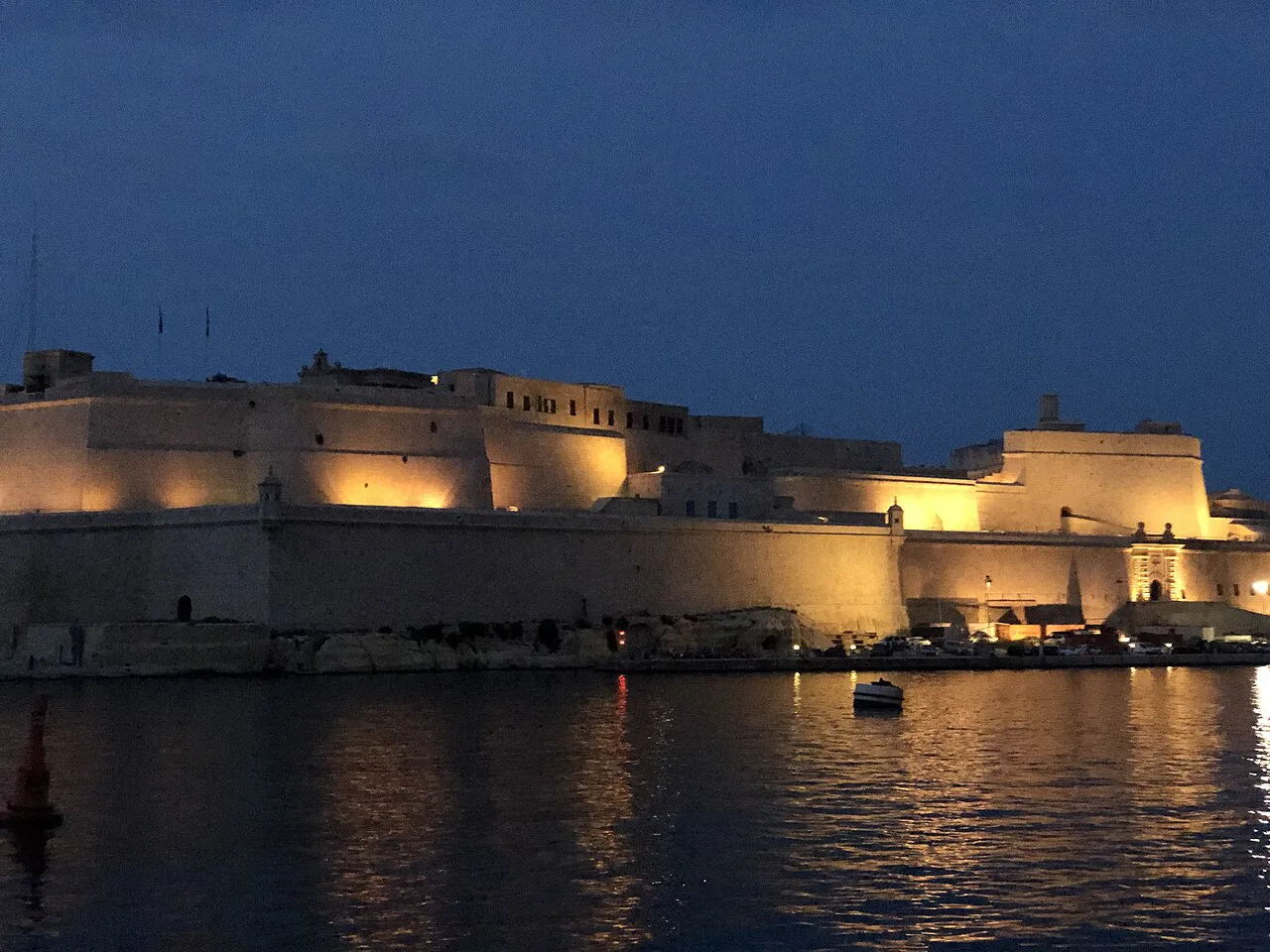
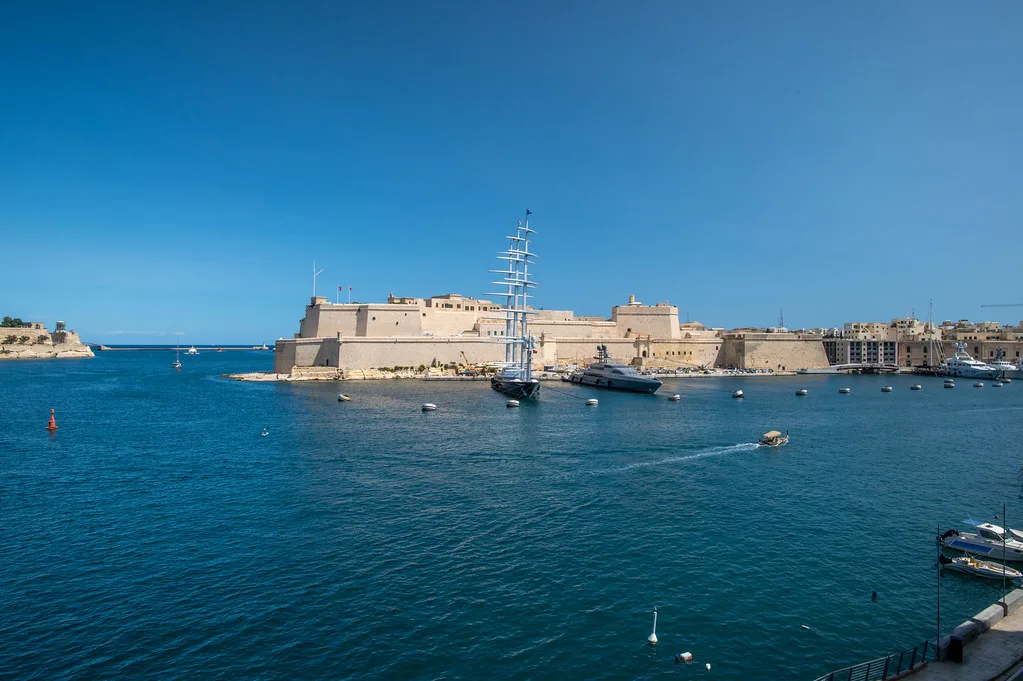
From the water side the fort reads as a continuous line of ramparts with the harbour immediately below. The fort as a whole is a UNESCO World Heritage Site, and the Sovereign Military Order of Malta uses the upper deck.

How to reach the fort from Valletta and the waterfront
Birgu sits across the water from Valletta, and the last stretch to the fort gate is on foot through narrow streets, so wear shoes that cope with uneven paving and shallow steps.
If you are driving, park outside the historic core rather than attempting the lanes, which are pedestrian in practice.
What to see inside: bastions, displays and the upper deck
Inside, the fort offers immersive exhibitions, traditional displays and sweeping panoramic views of the Grand Harbour, and the upper deck takes in the Valletta fortifications on the opposite shore and the creeks between the Three Cities.
The fort also displays traditional military material alongside the immersive exhibits, so the interior rewards slow reading rather than a quick lap. Much of the walking is outdoors and unshaded, which shapes when you should go.
Reading the layers: Castrum Maris, the Knights and Grunenbergh
The site began as Castrum Maris, a castle-by-the-sea guarding the harbour, and was already a fortified structure by 1274 according to the published history. When the Order of St John arrived in 1530 the fort became their headquarters and was rebuilt with bastioned defences in the 1530s, before the Order moved to Valletta.
Grandmasters who ruled before Valletta was built were first buried in the fort's church and later moved to St John's Co-Cathedral, which is why the site carries more weight than its size suggests. A major reconstruction in the 1690s under the architect Carlos de Grunenbergh produced much of the fort you walk through today, including the coastal artillery platforms.
The British era: HMS Egmont, HMS St Angelo and the bombing
During the British period the fort was classed as a stone frigate and named HMS Egmont, later HMS St Angelo, and served as a naval base. It took heavy bombardment in the Second World War, with the published account recording 69 direct hits, and the last foreign troops left in March 1979.
That naval chapter explains the utilitarian buildings inside the walls and the harbour-facing gun positions. It also makes the Malta at War Museum in Birgu a natural companion, since the two sites cover the same period from different angles.
Tickets and opening times for Fort St Angelo
The site is run by Heritage Malta, whose own page for the fort should be your source for the current tariff and hours. One family-activity listing published an adult rate of ten euros with reduced rates for youths, seniors, students and children and free entry for infants, plus daily opening from 09:00 to 19:00, but that listing is secondary, so match it against Heritage Malta before you go.
Opening times republished on third-party sites should be treated as indicative until matched against Heritage Malta's own listing.
How long to allow and how to pace the heat
Budget an hour and a half for the fort proper, and two hours if you read the exhibitions closely and linger on the upper deck. Pair it with a slow wander back through Birgu's lanes rather than adding another ticketed site to the same morning.
The upper deck and much of the rampart walk are exposed, so a morning start or a late-afternoon slot is kinder than midday in high summer. Carry water, and take the shaded interiors as breaks between the outdoor stretches.
The Camino Maltés finish and the final stamp
The Maltese segment of the Camino Maltés ends at Fort St Angelo, and walkers collect the final stamp for their credencial from the Heritage Malta ticketing office at the fort. A marker unveiled in July 2023 at the entrance records the distance to Santiago de Compostela as 3,493 kilometres.
Nearby in Birgu to pair with the fort
The Inquisitor's Palace, Birgu sits in the heart of the old town, a short walk from the fort gate, and makes a strong second stop for anyone following the town's institutional history. The Malta Maritime Museum in Birgu covers the harbour's seafaring side and suits a different half-day.
Closer to the fort, the Auberge d'Angleterre, Birgu and Auberge de France in Birgu sit along the town's main axis, and St Lawrence Church, Birgu anchors the square at the centre. They fill the time between a fort visit and the trip back across the water.
Is Fort St Angelo worth the walk down Birgu?
Yes, if you want the harbour seen from the fort side rather than from Valletta's bastions, and if you accept that the visit is mostly walls, views and a compact set of displays. Skip it only if your time in Birgu is limited to a single waterfront stroll.
The fort rewards those who combine it with the town's lanes and one companion museum, and it fits neatly into a Birgu, Malta day built around the crossing from Valletta. Check Heritage Malta's own page for current hours and rates before a summer visit and start early to avoid the midday heat on the upper deck.
Explore more Birgu guides
Frequently Asked Questions
Do you need to book Fort St Angelo in advance?
Entry to Fort St Angelo is through Heritage Malta, which runs the site; check its own page for current hours, rates and any booking arrangements before you set out.
Can you visit Fort St Angelo without entering Birgu's museums?
Yes. The fort has its own ticket and gate at the end of the peninsula, so it works as a standalone stop. Pair it with the town's streets and waterfront if you want to keep costs down.