
Auberge d'Angleterre (Berġa tal-Ingilterra), Birgu
The Auberge d'Angleterre (Berġa tal-Ingilterra) is worth a short look from the street in Birgu, not a scheduled visit. It is the best-preserved Hospitaller auberge in Birgu, built around 1534 to house knights of the Order of Saint John from the English langue, and it now houses a health centre.
This page covers what the building is, where it stands in Birgu (Vittoriosa), what you can see from outside, how long to allow, the two other surviving auberges nearby and how to reach the town from Valletta.
What the Auberge d'Angleterre is
An auberge was the hostel and headquarters of one of the langues, the national groupings of the Order of Saint John. Each langue built its own, used for accommodation, meetings and dining, and the English langue drew its members from England, Scotland and Ireland. The Birgu auberge was built around 1534, incorporating an earlier building, and it carries the Maltese name Berġa tal-Ingilterra.
Birgu's auberges came first: shortly after the Order arrived in Malta in 1530, each langue began building in Birgu, with Provence and Auvergne sharing one house so that seven went up. Valletta's auberges followed after 1566, and the English langue never built there because it had been disbanded under the Reformation. That makes the Birgu group the earlier layer of auberge building on the islands.
Of the seven Birgu auberges, three survive: the Auberge de France, the Auberge d'Angleterre and the Auberge de Provence and Auvergne. The Angleterre building is the best-preserved of them and is often described as a two-storey palace on a narrow Birgu street.
Where it stands in Birgu and how to find it on foot
The auberge sits among the narrow streets of Birgu's historic core, the tangle of lanes behind the waterfront that visitors walk between the main squares and the fortifications. Visitors regularly describe coming across it while walking Vittoriosa's streets rather than seeking it out as a standalone sight. Use the town's main gate and core as your reference point and work through the lanes on foot.
Birgu is small enough to cross in minutes, so the auberge works as a waypoint on a walk rather than a destination in itself. If you only have time for a quick loop, start from the core and use the auberge as one marker among several. For the wider picture of what fills a Birgu day, the Birgu Attractions: 10 Visitor Guides hub lists the town's other sites.
What you can see from outside
The visit is a street-level one. The facade — a two-storey front with the proportions of a small palace — is the main thing to look at, and the building's survival as the best-preserved auberge in Birgu is what makes it worth the pause. Photography from the lane is the realistic option; treat it as architecture in a residential street, not a monument with an entrance forecourt.
Keep an eye out for the corner treatment on the facade. The Order instructed that the corners of buildings in its new city be decorated, and the architect Gerolamo Cassar used rusticated corner stones on his auberges, a detail rooted in military architecture. The Birgu buildings predate Cassar's Valletta work, but the habit of marking corners is a useful thing to notice as you compare the auberges you pass.
Why you cannot tour the interior
The building is in use as a health centre, so there is no museum circuit inside and no ticket desk to plan around. Approach it as a working building you admire from outside, and do not expect to walk in.
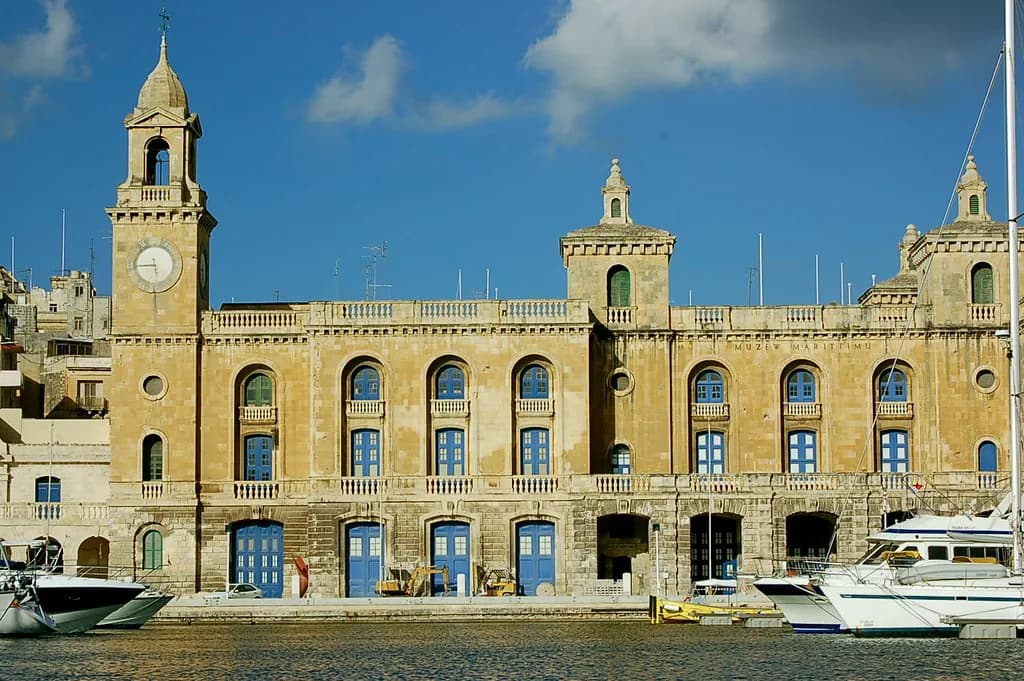
Access arrangements can change with a working building, so confirm locally in Birgu before making a special trip for it, and fold the auberge into a wider walk instead. If you want interiors, Birgu has them elsewhere: the Inquisitor's Palace, Birgu (Il-Palazz tal-Inkwiżitur) is the town's visitable historic house, and the Malta Maritime Museum in Birgu covers the harbour's story in depth.
How long to allow and whether it is worth the stop
Allow five to ten minutes at the facade, and no more, unless you are photographing details. It is worth the stop if you are already walking Birgu and want to see the earliest auberge layer on the islands; it is not worth a detour on its own. Pair it with the two other surviving auberges and the town's waterfront and you have a coherent half-day without rushing.
The honest trade-off is that this is an exterior stop with no interpretation panels confirmed on site. Read up before you go, notice the facade and the street, and spend your time and money on Birgu's museums and fortifications instead.
Nearby: the other surviving Birgu auberges
Walk to the Auberge de France in Birgu, another of the three survivals, and to the shared Auberge d'Auvergne et Provence, which housed knights from both French langues. Seeing two or three auberges in one walk makes the pattern legible: similar scale, similar street placement, different national identities behind them. The Auberge d'Auvergne et Provence has its own entry for orientation.
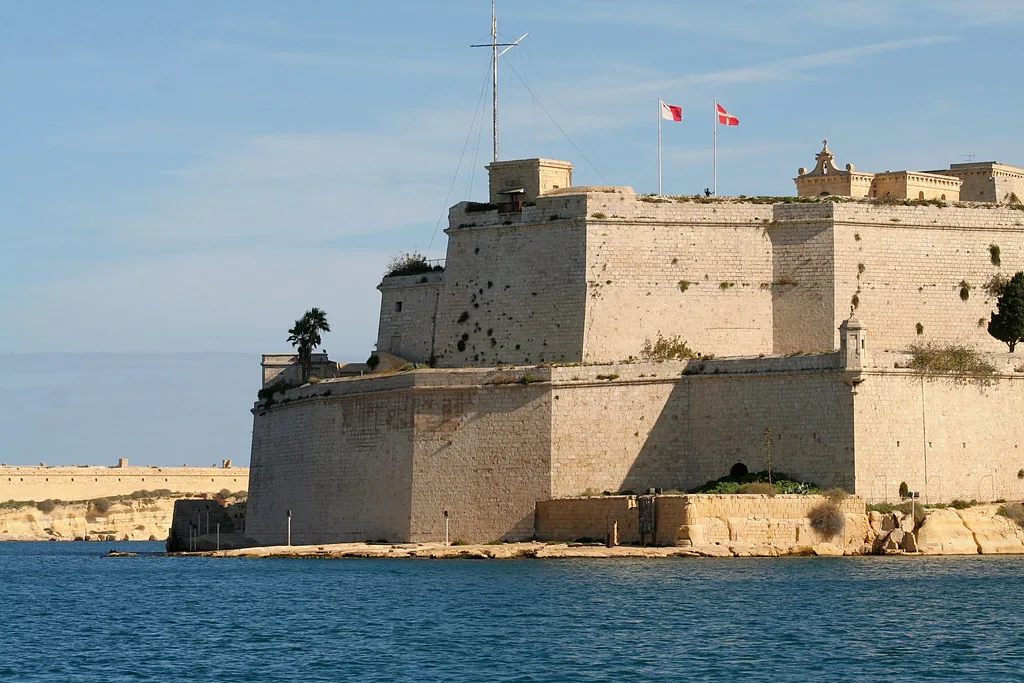
Beyond the auberges, Fort St Angelo Birgu anchors the town's seaward edge and rewards a proper visit, while the Gate of Provence and St Lawrence Church, Birgu (San Lawrenz) sit on the core walking routes. Build a simple loop: gate, church, auberges, fort.
If you want a break from masonry and war history, the Malta at War Museum in Birgu adds a twentieth-century chapter to the same streets. Gardjola Gardens, Senglea gives you a lookout back across the Grand Harbour towards Birgu, a good way to close a Three Cities day.
Getting to Birgu from Valletta
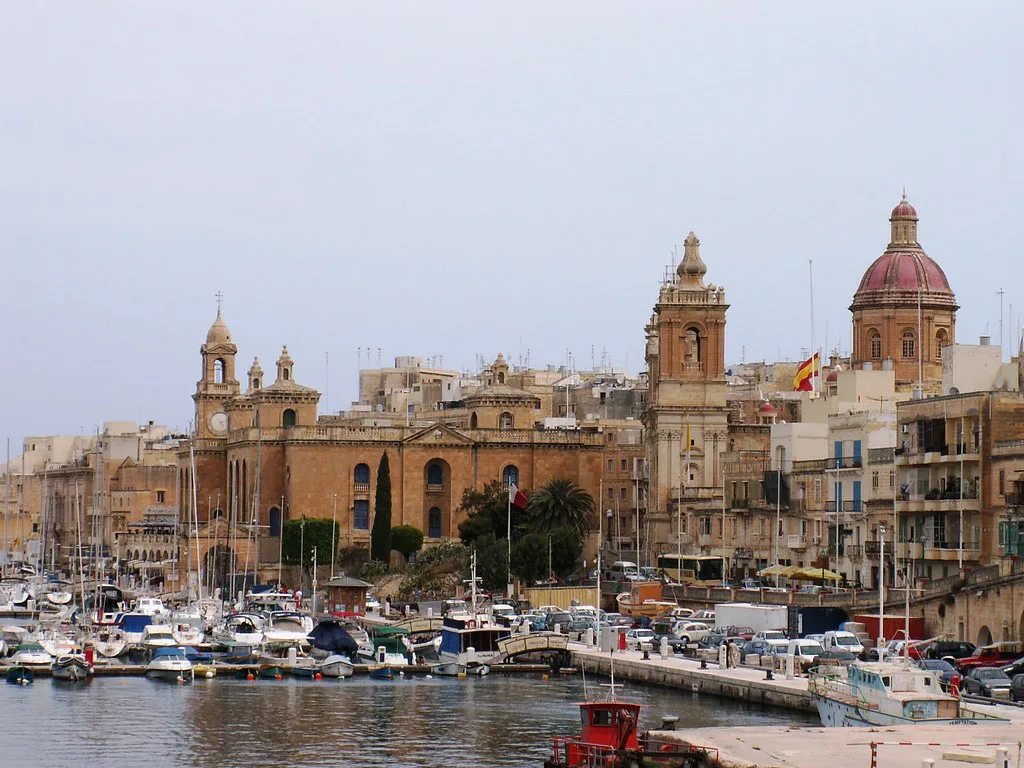
Birgu is one of the Three Cities across the Grand Harbour from Valletta, and the usual approach is by road from the Valletta side or by the short harbour crossing to the Cottonera area. Once in Birgu, everything on this page is walkable, so you do not need a car for the auberges themselves.
Check current routes and crossing times with the operator or the local transport authority before setting out, as these vary by season. If you are combining Birgu with Senglea and Cospicua, allow most of a day and keep your walking shoes on; the lanes are uneven.
Is the Auberge d'Angleterre worth the detour?
Stop for it if you are already in Birgu and interested in the Order's earliest buildings; skip a dedicated trip otherwise. The facade is the visit, the health centre is not, and the two neighbouring auberges are what give it meaning.
Explore more Birgu guides
Frequently Asked Questions
Why is Birgu called Vittoriosa?
Vittoriosa is the honorific name used in English and on many maps for the same town locals call Birgu. Use whichever appears on your map and signs; you are heading to the same place.
Can you go inside the Auberge d'Angleterre?
It is used as a health centre, so there is no visitor route inside. Plan on viewing the facade from the lane and treat any change in access as something to confirm locally when you arrive.