
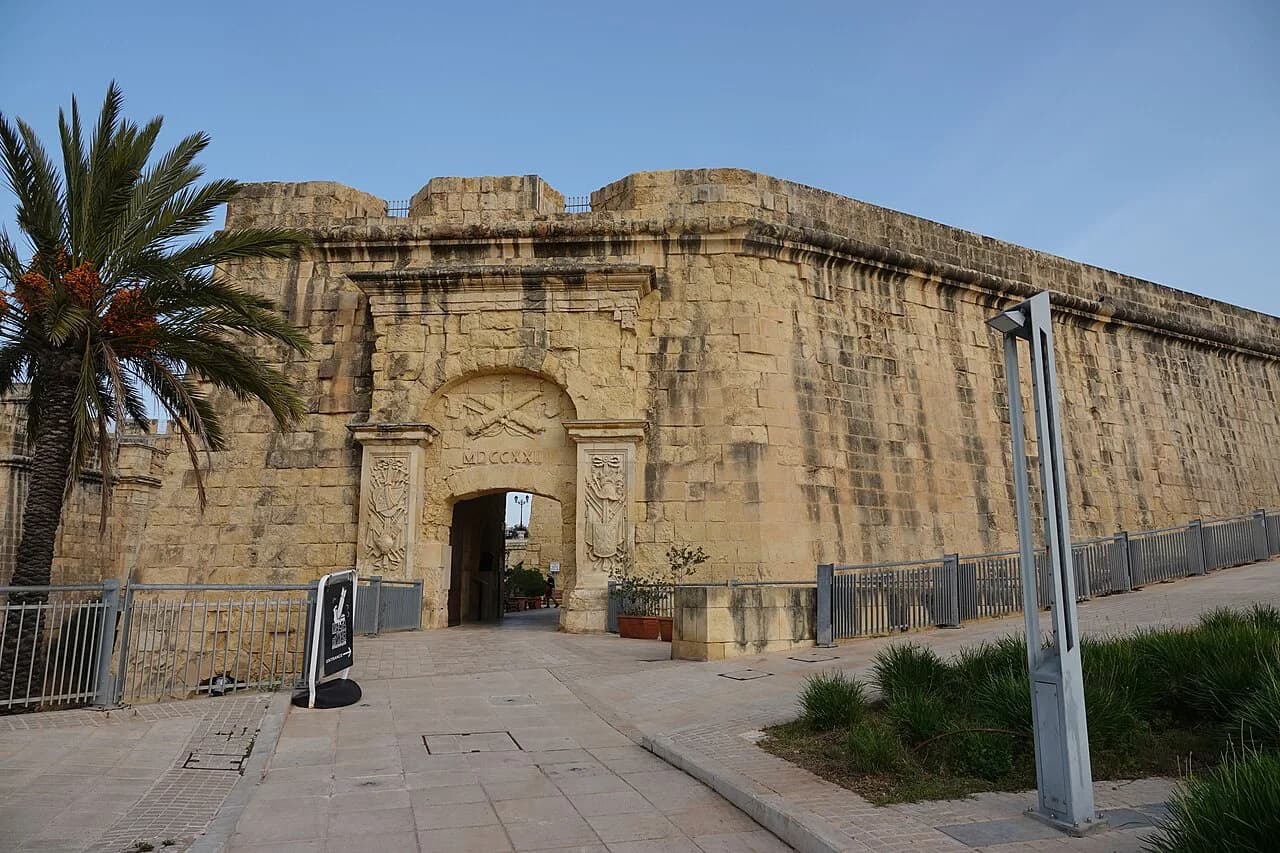
Gate of Provence: Birgu's Main Gate and St John Bastion

The Gate of Provence is the third and final of Birgu's three principal gates, and it sits on the inner side of St John Bastion rather than facing the harbour. Most visitors treat it as a five-minute stop on the walk up from the Birgu waterfront, then carry on to Victory Square. This guide covers how to find it, what to look for at the arch, and which sights slot in before or after.
The gate is also called the Main Gate, which is where the confusion starts: it is not the first opening you meet coming from the ferry or the bus. It stands on the inner side of St John Bastion, a short walk from Victory Square, so aim inland rather than along the harbour edge. The arch reads as part of the street rather than as a fenced monument.
Where the Gate of Provence sits in Birgu
The gate is built into the inner face of St John Bastion, a short walk from Victory Square in the heart of Birgu (Vittoriosa) and a few minutes inland from the waterfront. Because it faces into the town rather than out to sea, you approach it from inside the streets, not from the harbour promenade. That single detail is what most people get wrong when hunting for it on a map.
Treat the gate as one element in a continuous line of fortification rather than a monument in a square. The Birgu land front includes the Couvre Porte Gate and the Advanced Gate alongside the Gate of Provence, and walking the sequence gives you a sense of how the town was layered for defence. If fortification is your interest, plan the whole circuit rather than a single photo stop.

Walking to the gate from the waterfront and Victory Square
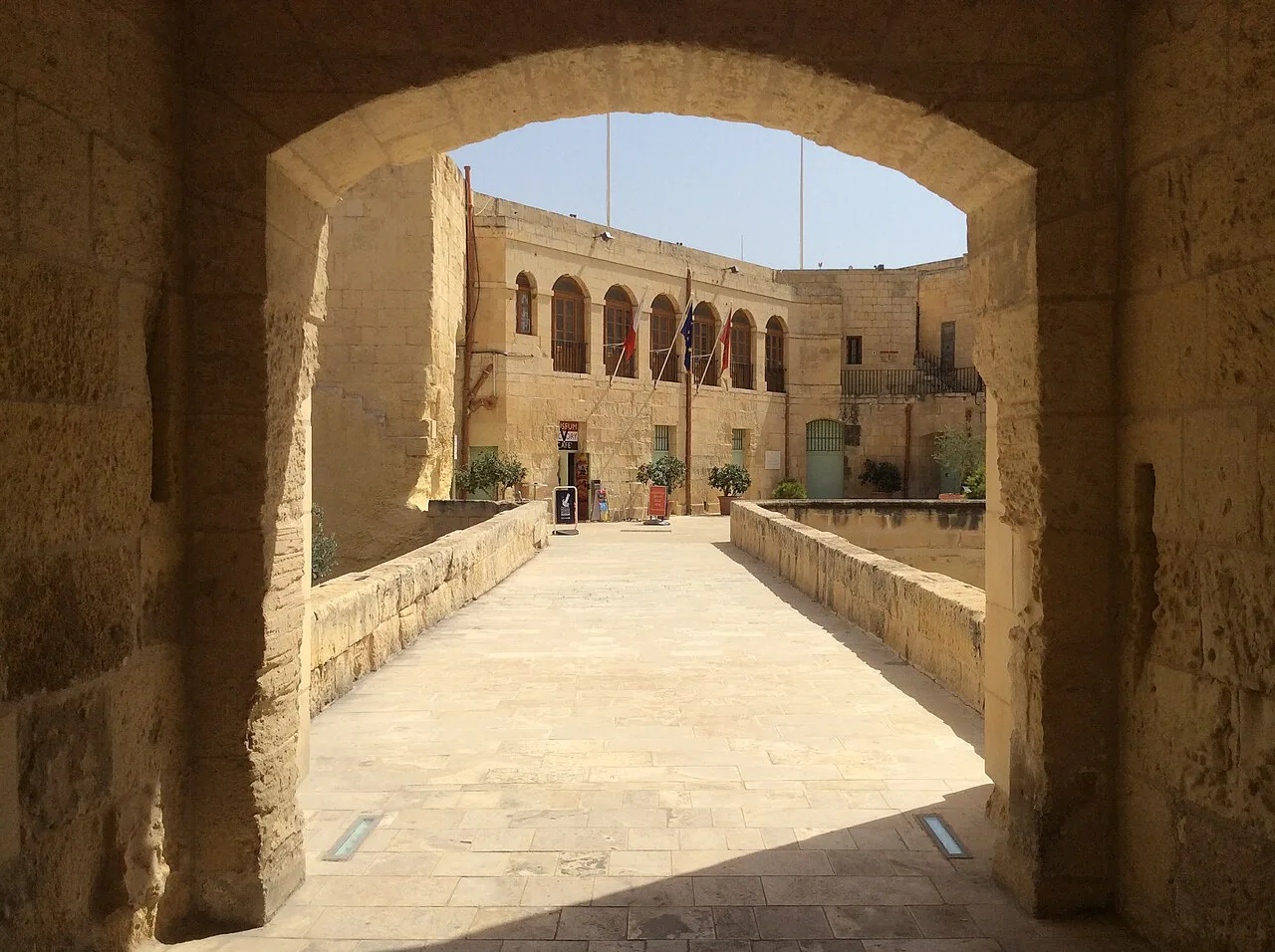
Start at the Birgu waterfront and head inland towards the centre of the town; the gate lies on the inner side of Saint John Bastion, a short walk on from Victory Square. The route is narrow, stepped in places and shaded by tall townhouses, so give it fifteen minutes rather than five if you plan to look at the facades on the way. Wear shoes with grip, because the paving is worn smooth.
Coming the other way, from Victory Square, the gate is the natural next stop from the café-lined centre towards the land front and the Birgu Ditch Gardens. Pair the two directions: see the gate first, then drop back to the square for a coffee once you have looked at the bastion. This keeps the walk in the cooler part of the morning.

Reaching Birgu from Valletta by bus or ferry
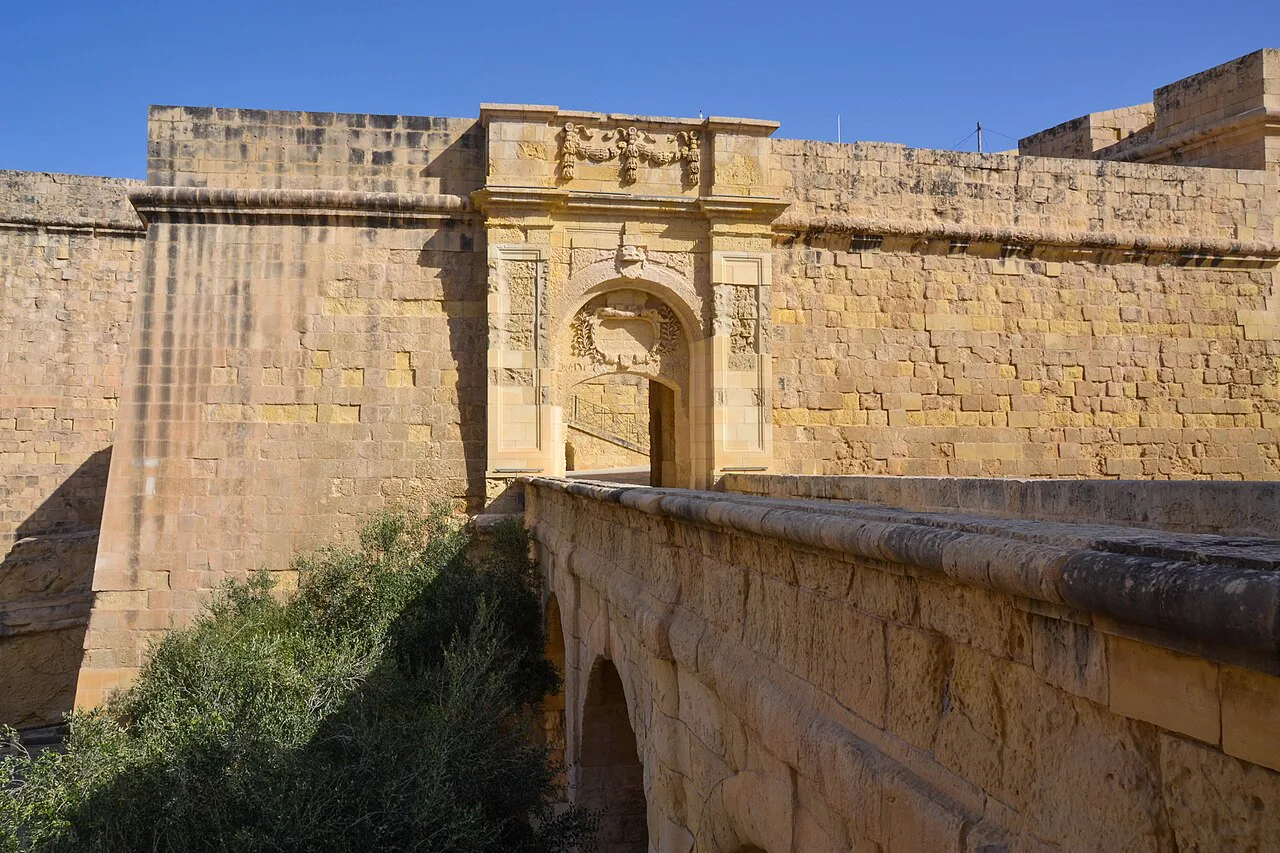
From Valletta, buses 2, 3 and 4 run to Birgu, and you get off at the Riche or Bieb stop, both a short walk from the gate. Check the current fare before you travel rather than assuming an old figure still applies. The bus drops you on the landward side of town, which puts you closer to the gate than the ferry does.
The ferry is the better arrival if you want the harbour views: it leaves Lascaris Wharf in Valletta for Cospicua Dockyard Creek, then you walk along the waterfront and inland into Birgu. Check the current fare before you set out rather than relying on an old figure. The ferry route adds a scenic preamble but a longer walk at the Birgu end, so choose according to whether you want views or a shorter approach.
What to look for at the gate
The gate is a working piece of fortification rather than a triumphal arch, and it was among the last to be constructed in Birgu's line of defences. Look at the proportions of the opening and the way the masonry frames the approach rather than at decorative carving, which is restrained.
A marble tablet near the gate commemorates the construction of the fortifications, and it carries the town's title, Vittoriosa, meaning victorious. The tablet is easy to walk past because it sits at eye level in the stonework rather than on a plinth. Read it before you go through, then look back at the bastion from the far side to see how the gate was set into the wall.
Nearby after the gate
Fort St Angelo, Birgu, the Inquisitor's Palace, Birgu (Il-Palazz tal-Inkwiżitur) and the Malta at War Museum are all within the same compact grid, which is why the gate works best as one link in a half-day walk. The Inquisitor's Palace, Birgu (Il-Palazz tal-Inkwiżitur) and the Maritime Museum are among the nearby attractions in the town. Choose two of them rather than trying to tick every door. For a wider set of stops, see Birgu Attractions: 10 Visitor Guides.
The Malta Maritime Museum in Birgu and the auberges along the main streets fill out a slower afternoon, and the Auberge de France in Birgu is the sort of facade you notice on the way rather than a scheduled stop. From the gate you can also walk down to the water and look across the Grand Harbour towards Senglea (L-Isla). Keep the harbour edge for the end of the day, when the light is on the water rather than in your eyes.
How long to allow and when to go
Allow fifteen to twenty minutes at the gate itself and two to three hours for the surrounding streets, bastion and waterfront. The gate needs no queue time, which makes it an easy filler when a museum slot runs late. Midday heat on the exposed stretches between June and September is the main discomfort, so take the walk before eleven or after four.
Birgu holds an October Candle Night as part of Birgufest, when the town is lit by candles through the evening, and the event is tied to the city's heritage rather than to fixed dates at the gate. Check the event's own announcements for the current year's schedule before you build a trip around it. Weekday mornings are otherwise the calmest time to walk the land front without crowds.
Should the Gate of Provence be on your Birgu walk?
Yes, but as a waypoint rather than a destination: the gate gives you the shape of Birgu's defences in a few minutes and puts you at the right end of town for the Ditch Gardens and the land front. Skip it only if you are pressed for time and prioritising Fort St Angelo or the Inquisitor's Palace. Build the walk around the gate so you approach uphill from the waterfront and leave by Victory Square.
Explore more Birgu guides
Frequently Asked Questions
Is the Gate of Provence the same as Birgu's Main Gate?
Yes. The Gate of Provence is also called the Main Gate, and it is the third and final of the town's three principal gates. It sits on the inner side of St John Bastion, set back from the harbour, so it is not the first opening you meet on arrival from Valletta.
Do I need a ticket for the Gate of Provence?
No visitor hours or ticketing are published for the gate itself, and it reads as part of the street. The museums and palaces nearby are separate sites with their own hours and entry terms, so check each directly before you go.
How do I get to the Gate of Provence from Valletta?
Take bus 2, 3 or 4 to the Riche or Bieb stop in Birgu and walk inland, or take the ferry from Lascaris Wharf to Cospicua Dockyard Creek and walk along the waterfront before heading up. The bus drops you closer to the gate; the ferry trades a longer walk for Grand Harbour views.