
Gozo Salt Pans at Xwejni Bay: A Visitor's Guide

The Gozo salt pans at Xwejni Bay are a working stretch of shallow rock basins on the island's north coast, where seawater evaporates in the sun and wind until salt crystals can be brushed up. They sit just up the coast from Marsalforn in the Żebbuġ area, and you see them from the road rather than by walking among them. This guide covers how to reach them, how the pans work, when the harvest happens and what to combine with a stop.
What the Gozo salt pans are
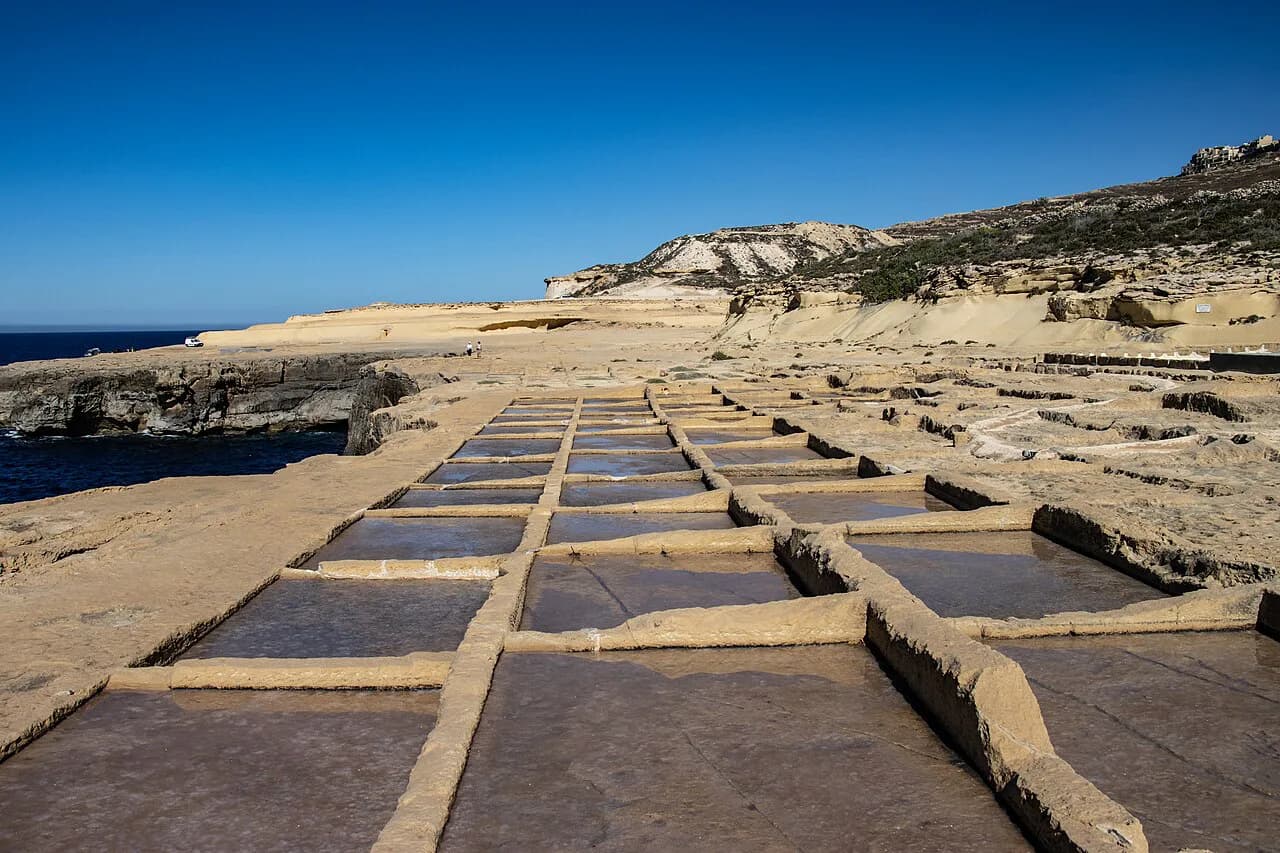
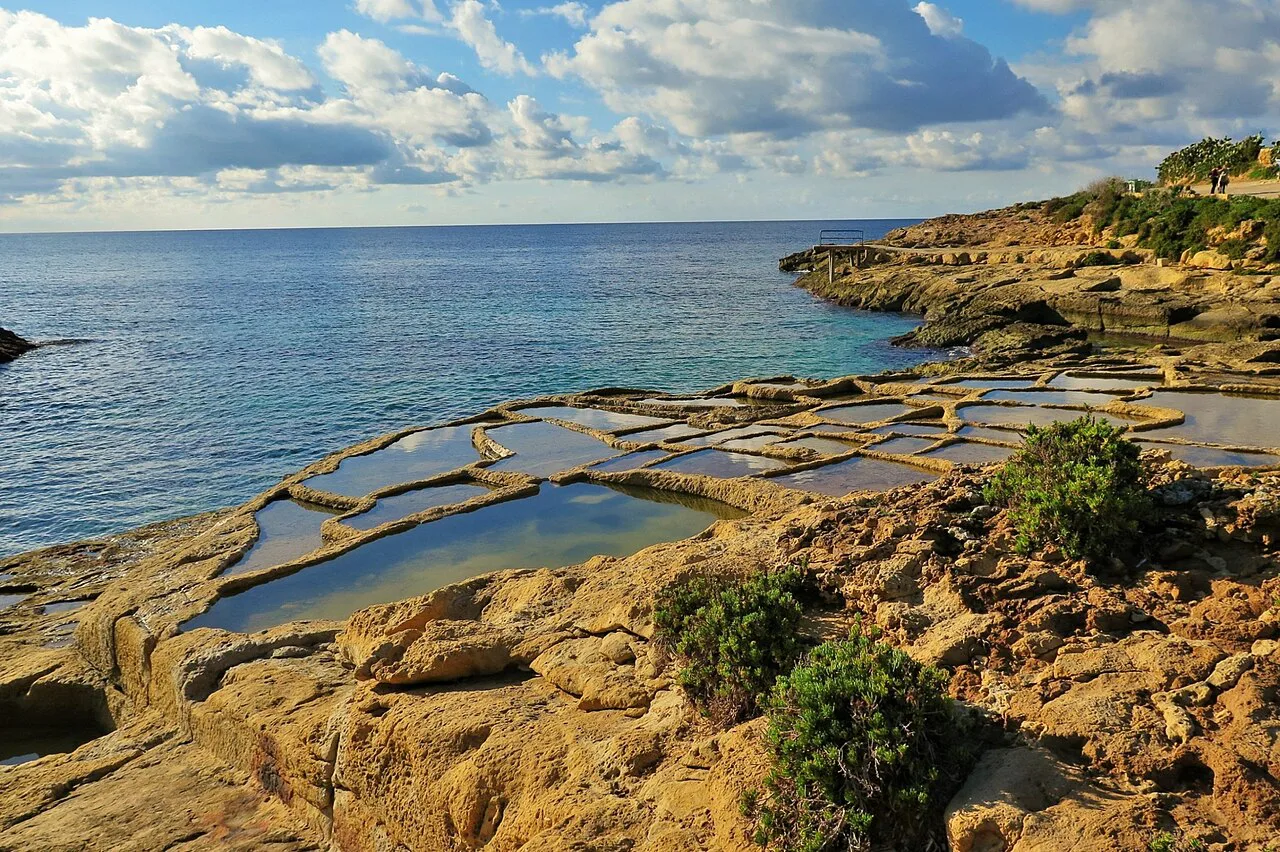
The pans are a coastal network of shallow basins cut into the limestone, lying side by side in rows along the shore. Because the pools sit at different levels and hold water at different stages of evaporation, they catch the light in shifting shades and give the shoreline its chequerboard look.
This is not a museum or a fenced attraction: it is a working site where a small number of families still harvest sea salt by hand, using the same sun-and-wind method their forebears used. The trade is hard physical work and poorly paid, which is why so few people continue it. The pans are one of the stops worth building into a wider day of Gozo Attractions, alongside the island's forts, churches and coastal sights.

Where the pans are and how to reach them
The salt pans lie on Gozo's north coast at Xwejni Bay, in the Żebbuġ area, just up the coast from the small resort town of Marsalforn. Most visitors arrive by the coast road that runs north out of Marsalforn, which passes the pans directly. The road along this coast threads through small villages at the edge of sand-coloured sea cliffs.
Coming by car is the simplest approach: you drive the coast road north from Marsalforn, pull off near the pans and look down on them from the roadside. A circular Saltpans Walk is also published as a route that starts and ends in Victoria, the island's main town, if you want to reach the coast on foot as part of a longer outing. Check the route and its length before setting out, since walking distances on this stretch of coast are not signposted in detail.
By bus, you are heading for the Marsalforn and Żebbuġ side of the island and then covering the last stretch on foot or by taxi, so treat the pans as a stop on a north Gozo circuit rather than a stand-alone destination. Gozo is small enough that a wrong turn usually ends on a rocky path rather than a genuine lost cause, which makes the coast road forgiving if you are driving yourself.

How the pans work
Harvesting starts in the largest feeder basins, where seawater is let in and left to evaporate slowly, raising its salinity over several days. The stronger brine is then run into the smaller basins, where it sits for roughly another week until salt crystals form. That two-stage system explains why the pans come in noticeably different sizes.
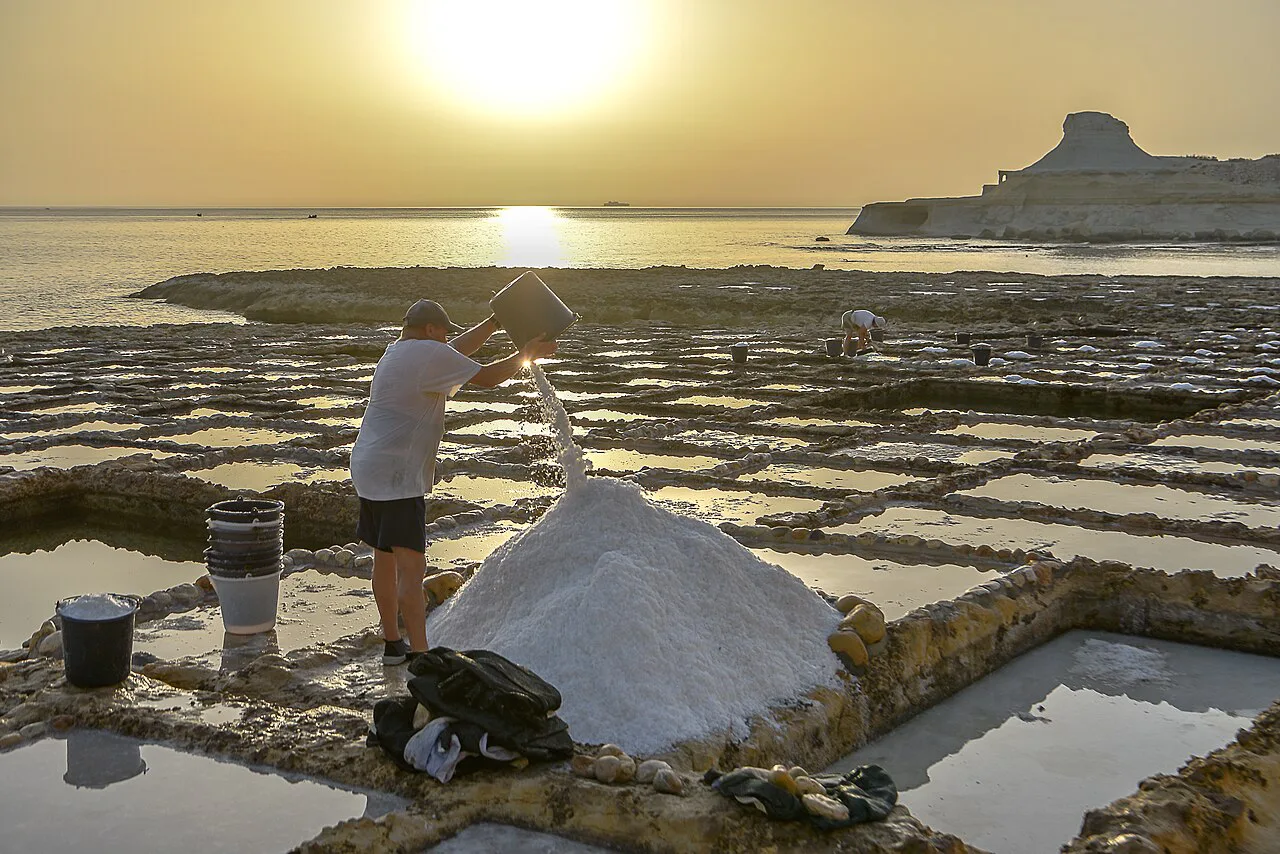
When the crystals are ready, they are swept into heaps with large brushes and buckets, then left to dry before packing. The pans themselves were carved into the rock by the sea and are topped up with seawater; sun and wind do the rest of the work, leaving rock salt behind as the water disappears.
Timing matters more than most visitors expect: the harvest depends on sun and wind, and a sudden change of wind direction can dust a freshly swept heap with sand and undo a morning's work. That is why the salt makers watch the forecast closely through the season.
When the salt is made
The salt season runs from May to August, when the sun is at its hottest and the pans are in full production. Come in those months and you may see growers at work in the early morning, which is when the harvesting tends to happen. Outside that window the pans can stand empty and inactive, so a winter visit is about the landscape rather than the harvest.
If your trip falls outside the season, the grid of basins and the cave workshops still make a worthwhile short stop on a north coast drive, but you will not see salt being collected. Plan the rest of the day around Marsalforn or inland sights rather than building the visit around watching the harvest.
Salt farmers and the caves
Behind coloured wooden doors set into the rock beside the pans are old caves that still serve as stores, and each family keeps a small shop there. During the harvest season you can buy anything from a large bag of salt to a small gift box, straight from the people who harvested it. Gozo sea salt is naturally rich in minerals and is sold to restaurants and shops across Malta as well as directly to visitors.
One of the families working these pans is the Cini family, whose ancestors have harvested at Xwejni and whose salt has long been sold through supermarkets, greengrocers and vegetable sellers as well as direct to customers. Buying a bag at the cave door is the most direct way to support the work you have just been looking at.
What you see from the road
The pans are viewed from the roadside: there is no walking route around the basins, so you look along and down at the grid pattern and the mirror-like pools rather than picking your way between them. In places the cement walls have collapsed and water flows between basins, and repairs wait for the weeks before the season restarts. Stay on the road, keep off the pan walls and give working salt makers room.
The exposed coast means full sun and little shade, so a hat and water make the stop comfortable even when it lasts only twenty minutes. The rock is uneven underfoot at the road edge, so watch your footing if you step closer for a photograph.
How long to allow
Treat the pans as a 20 to 40 minute roadside stop, longer if you linger at the cave shops or wait for the light to change over the pools. It slots naturally into a half-day drive along the north coast rather than filling an afternoon on its own. Morning light during the harvest months gives the best combination of activity and colour.
There is no entrance building or ticket desk, so the visit costs you only the time and transport to reach it. Anything you choose to buy at the caves is sold by the families themselves rather than a central operator, so stock varies with the season.
Nearby on a north Gozo day
Marsalforn is the nearest base, with the coast road to the pans leaving from the town. Inland from the same coast, the Ta' Pinu basilica is an easy add-on for anyone touring the north and west of the island by car.
Continue west and you reach the coast at Wied il-Għasri, a steep-sided inlet worth pairing with the salt pans on the same drive. Further south along the western shore, Dwejra Gozo offers another coastal stop with the island's cliffs and sea stacks.
The same northern shore includes Ramla Bay, a natural rest stop before or after the pans, while inland on this side of the island the Calypso Cave looks out over the coast. If you are building a fuller itinerary, the wider list of things to do in Gozo helps you sequence the coast with Victoria and the villages.
Should the salt pans be on your Gozo route?
Yes, if you are driving the north coast between May and August and want a short roadside stop with something real to look at and buy. Skip the detour in midwinter if your only aim is to watch salt being made, and fold the pans into a Marsalforn or Wied il-Għasri leg instead.
Explore more Gozo guides
Frequently Asked Questions
Do you need tickets for the Gozo salt pans?
No ticket or booking is involved: the pans are an open coastal site viewed from the public road, and the family shops in the caves sell salt directly during the harvest season.
Can you walk among the salt pans at Xwejni?
The pans are working basins cut into the rock, not a visitor trail, so you view them from the roadside rather than walking between the basins.
What is the best month to see salt being harvested?
The harvest runs from May to August, when heat and sun drive evaporation. Early morning in those months gives the best chance of seeing work under way.