
Wied il-Għasri: Gozo's cliff gorge and pebble inlet

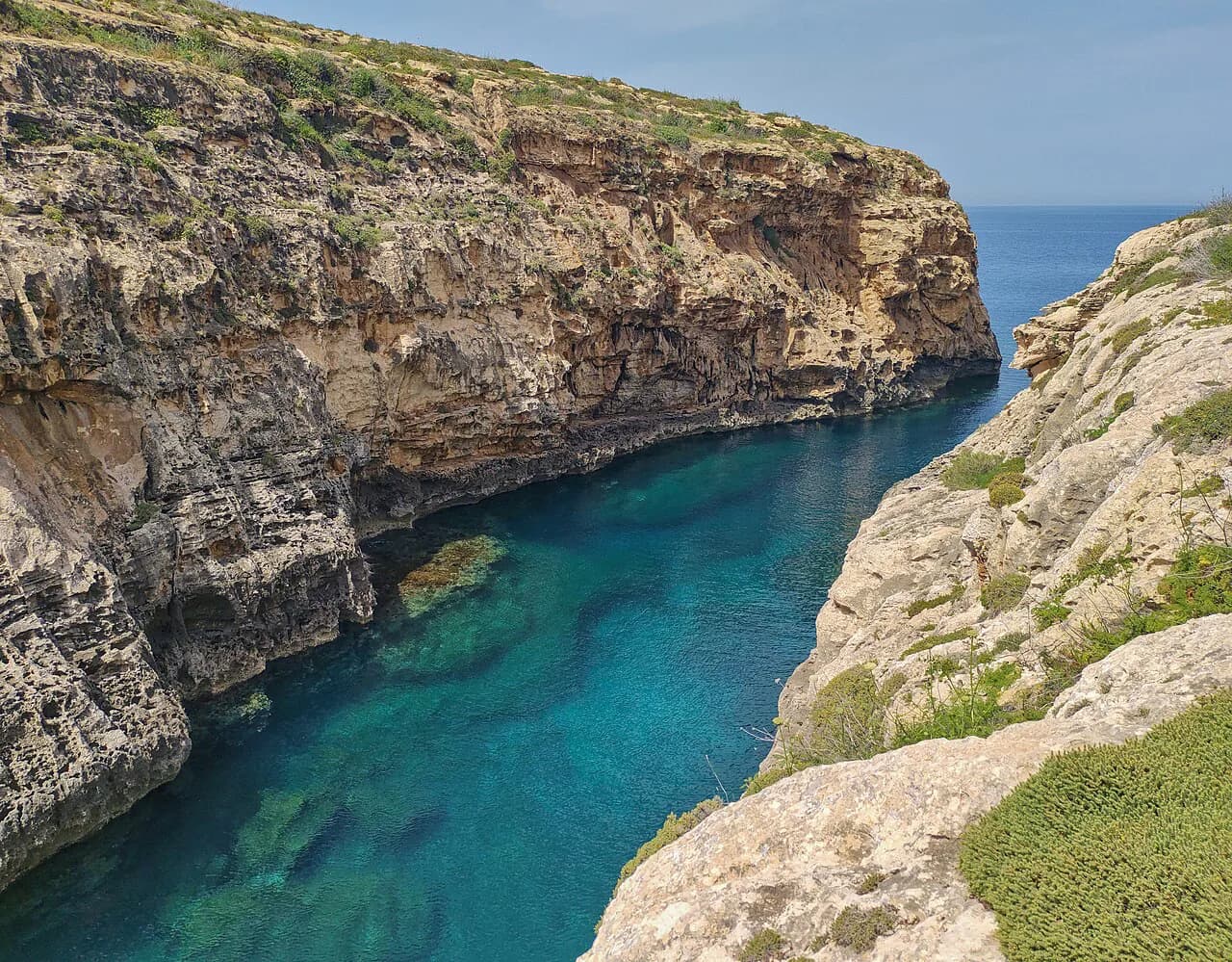
Wied il-Għasri is a narrow, gorge-like valley and coastal inlet at the village of Għasri on Gozo's north coast, where high limestone cliffs close in around a small pebbly bay. It rewards a short stop with a genuine sense of seclusion, but the final descent is rough and the water is not always calm. This guide covers the layout of the valley, the walk to the inlet, the steps down and what to expect at the water's edge.
Tickets are not the issue here: the inlet sits at the end of a valley road rather than behind a gate, and planners should think about access, footwear and sea conditions instead. Gozo's landscape rewards a car or a long day on foot, and this gorge works best as one stop on a circuit of the north coast.
What Wied il-Għasri is
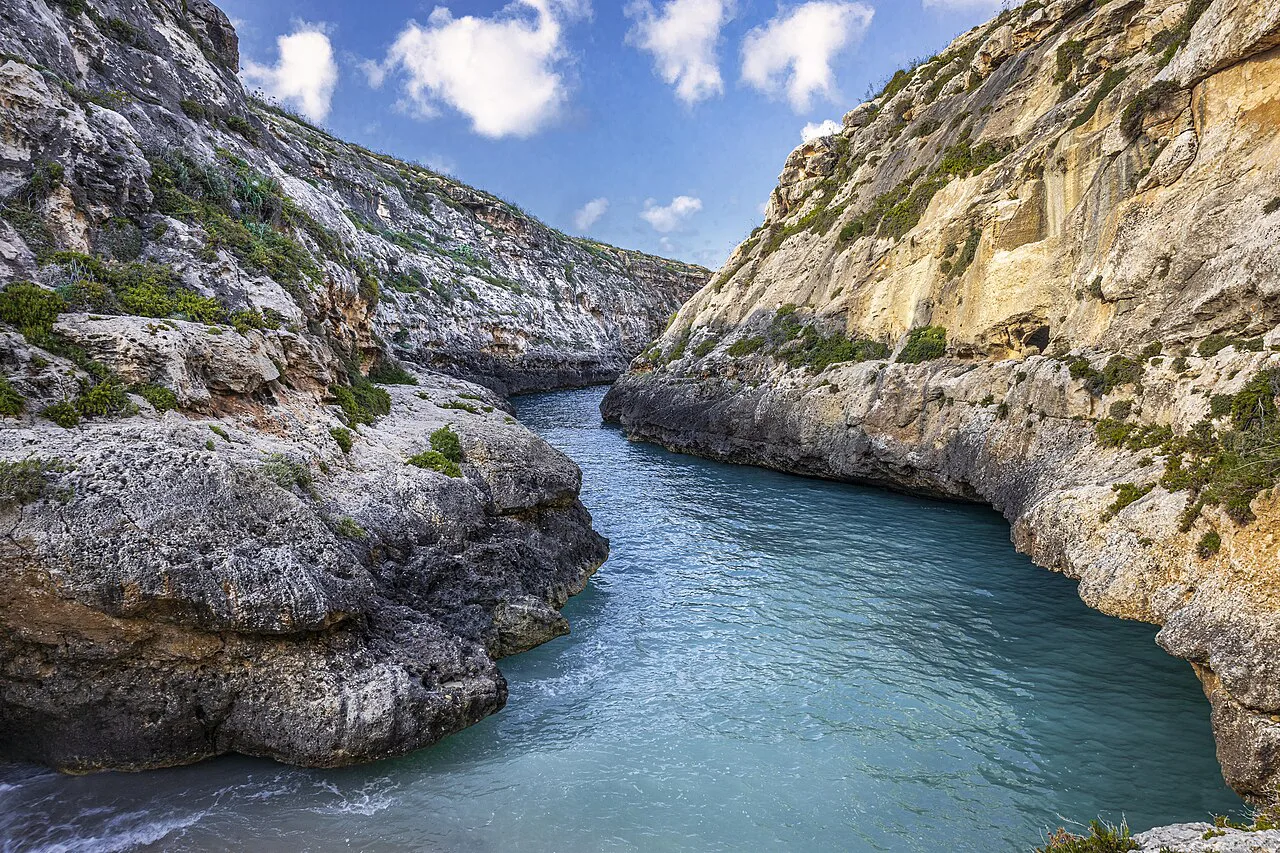
The Għasri Valley (Wied l-Għasri in Maltese) is a deep gorge-like valley with very high cliffs carved into Lower Coralline Limestone and the overlying Globigerina Limestone. Prickly pears and capers grow on and around the dry stone walls in and around the valley, and in late spring the area becomes a carpet of red poppies.
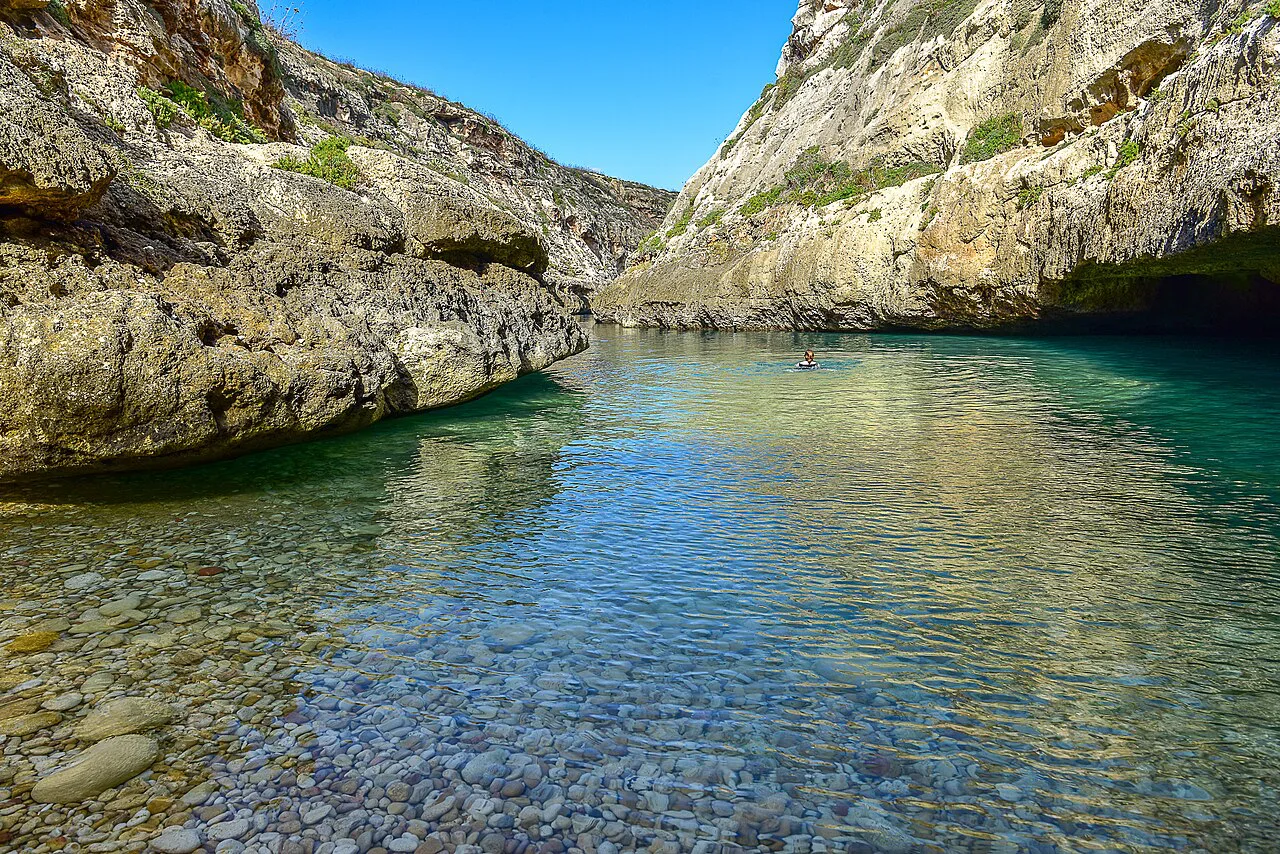
The sea inlet at the mouth of the valley is what most visitors come for: a narrow bay hemmed in by steep cliffs and caves, with a small pebble beach at the head. The valley is also known as a sea canyon, and its quiet beach runs about 300 metres inland from the open sea, which gives you a sense of how enclosed the inlet feels from the shore.

Where the valley sits
The valley begins at Ta' Dbieġi Hill before winding down through the village of l-Għasri, then runs on between iż-Żebbuġ and Ta' Ġurdan Hill to meet the sea between impressive cliffs. That geography is useful for planning: coming from the village you follow the valley downhill, and the sea appears only at the end.
Ta' Ġurdan is the hill above the village, and the Ġordan Lighthouse (Ta' Ġurdan) on its summit makes a sensible pairing with the gorge if you are touring the north of the island by car. Allow the lighthouse its own slot rather than trying to combine the two on foot.
How to get there and where to leave the car
You reach the inlet by road along the valley, and the last stretch of that road is not suited to every hire car. One visitor account describes parking on the side of the main road and walking the few minutes to the end of the road instead, which avoids relying on off-road cover.
In practice that means treating the final approach as a short walk: park where the surface suits a standard car and cover the remaining distance on foot, which also gives you the gorge opening up ahead of you. Bus routes and timetables to Għasri are not something to plan from guesswork, so check the current network before you set out.
Wied l-Għasri is a marvellous place for a country walk or bike ride, especially in winter and spring, so the valley road doubles as a route on foot for anyone staying nearby. If you are building a day around the north coast, the Gozo Attractions: 9 Visitor Guides page sets out the other stops worth adding.
The descent to the inlet
Although the bay looks inaccessible from above, a series of steps has been cut into one side of the cliff face, taking you down to the tiny pebbly beach. The way down is described as about 100 steps carved into the porous rock, with the full view of the inlet opening up as you descend.
The last section of that staircase is the part to watch. The same account notes that steps and railings are missing on the final stretch, with storm damage taking its toll on the fragile stone, so you may need to use your hands and take your time.
Sturdy shoes with grip make more sense than sandals here, and the climb back up is the harder half in the heat of the day. Keep a camera handy on the way down, because the view of the surrounding cliffs is the reward before you even reach the stones.
At the water's edge
Down at the head of the bay there is a small and secluded pebbly beach, with golden stones rattling in the swell. The bay is narrow and enclosed, so the sense of shelter is strong even when the sea is running.
Where the valley meets the sea there is an interesting cave with a shaft dug right up to the top of the steep cliffs above. It used to hold a rig of ropes and buckets for hauling sea water up to fill the neighbouring saltpans, a reminder that this coast was worked as well as admired.
Swimming and sea conditions
Swimming here is not completely uncomplicated: underwater currents and high waves can catch out even experienced swimmers among the rocks. The inlet is a fine place for a dip on a calm day, but it should not be treated as a sheltered bathing spot with services.
On a windy day the gorge is at its most dramatic from a safe distance, with the sea splashing against the cliffs. The very narrow and secluded bay is also a haven for those seeking a quiet bathing area, so pick your moment with the conditions rather than the clock.
Divers and Cathedral Cave
Wied l-Għasri is very popular with divers who come to explore the surrounding underwater caves. The inlet is described as the gateway to Cathedral Cave, the cave beyond the bay that draws divers rather than beachgoers.
For non-divers the interest is above the waterline: the caves and pockets cut into the sides of the gorge are best appreciated from the shore or the steps. If diving is the purpose of your day, arrange it through a qualified operator who knows the site's conditions.
Calypso's Cave in Gozo is another cliff-associated site on the same island, though it sits above Ramla Bay rather than here, so keep them as separate outings.
How long to allow
For the inlet alone, allow a short block of time: the walk from the road end, the descent, a look at the bay and the climb back up. The stairs and the damaged final section are what set the pace, not the distance.
If you are walking or cycling the valley, budget a longer half-day and start from the village of l-Għasri, following the valley down between iż-Żebbuġ and Ta' Ġurdan Hill.
When to go
The valley is at its best for walking in winter and spring, and in late spring the red poppies turn its slopes and dry stone walls into a carpet of colour. The area is great for a swim on a fine day, so a mild spring afternoon can combine both.
In summer, do the descent and the climb in the morning or late afternoon, because the limestone holds the heat and the steps offer little shade. Midday is for the water or for another stop, not for the staircase.
What's nearby
Ramla Bay, Dwejra and Mġarr ix-Xini are the other coastal stops listed alongside Wied il-Għasri, and each works as a separate visit rather than a detour from the stairs. Dwejra, Gozo sits on the west coast and pairs naturally with a north-coast circuit by car.
Inland, the Basilica of the National Shrine of the Blessed Virgin of Ta' Pinu stands near Għarb, a short drive from the Għasri valley and an easy add-on if you are already in this corner of the island.
If you want more of Gozo's green valleys, the Lunzjata Valley (Wied il-Lunzjata), Gozo offers a gentler contrast to this cliff-lined gorge.

Is the descent worth it for you?
Wied il-Għasri suits travellers who are happy to park and walk a few minutes, pick their way down a rough final flight of steps and accept sea conditions as they find them. It is a poor fit for anyone expecting a lifeguarded beach or an easy pushchair route to the water.
Pair it with the Ġordan Lighthouse or the Ta' Pinu basilica for a compact north-west loop, and keep the inlet for a calm, clear day when the climb back up is the only effort you need to worry about.
Explore more Gozo guides
Frequently Asked Questions
How do you get to Wied il-Għasri?
Follow the valley road from the village of l-Għasri towards the sea. The last stretch is rough, so park on the main road and walk the few minutes to the end, then take the steps cut into the cliff face down to the inlet. Check the current bus network before relying on public transport.
Can you swim at Wied il-Għasri?
Yes, on a calm day, but treat it with care. Underwater currents and high waves can catch out even experienced swimmers among the rocks. It is a quiet bathing spot rather than a managed beach.
How many steps are there down to the pebble inlet?
The descent is described as about 100 steps cut into the porous cliff, and the final section is damaged, with some steps and railings missing. Wear shoes with grip and allow extra time for the climb back up.
Is Wied il-Għasri good for walking?
The Għasri Valley is a good country walk or bike ride, especially in winter and spring, when the dry stone walls and slopes are at their most comfortable. In late spring the slopes are covered in red poppies.