
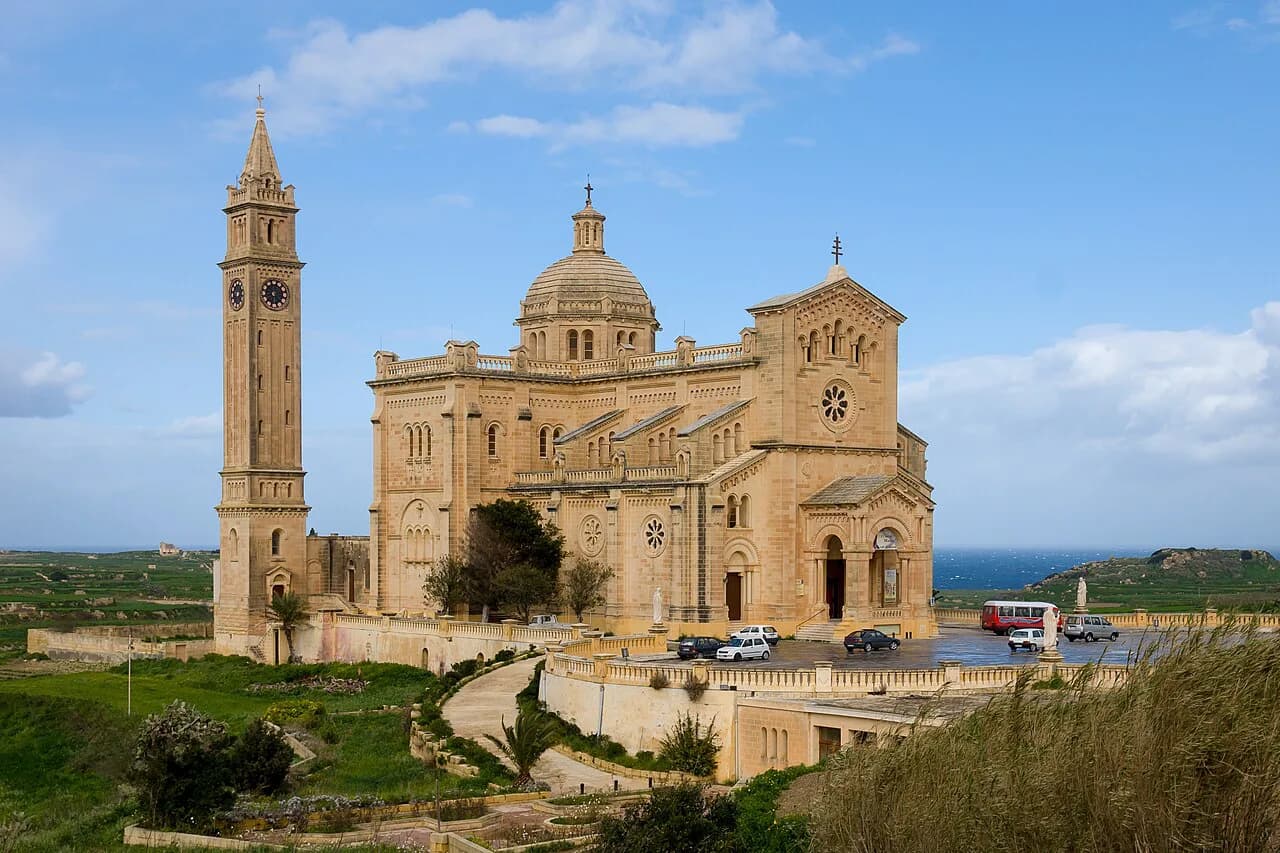
Ta' Pinu Basilica: visiting Gozo's national shrine near Għarb

Ta' Pinu Basilica is worth two to three hours if you want the church, the chapel behind the altar and the museum, and an hour if you only want the interior. It stands in fields on the outskirts of Għarb, at the westernmost point of Gozo, on the road signed Triq ta' Pinu.
This guide covers the practical side of one place: the approach, the bus and car options from Victoria, the features inside worth seeking out, and the tokens room in the museum. Prices and times appear only where a source gives them; otherwise the shrine's own information is the place to confirm.
Where Ta' Pinu is and how it sits in the landscape
The basilica is formally the Basilica of the National Shrine of the Blessed Virgin of Ta' Pinu, and it stands alone in open country rather than inside a village core. Għarb is the nearest village, and Victoria, Gozo's capital, is a short drive east. The name comes from Pinu Gauci, a senior church figure who funded restoration of the original chapel in 1599 and commissioned the Madonna's portrait that still hangs in the church.
The building you see today was put up between 1922 and 1932, deliberately in front of the older chapel so that the original structure survived behind the new altar. Treat those dates as history, not as a statement about what is open now. The wider island has plenty more of this kind of sight, and our guide to Gozo Attractions: 9 Visitor Guides sets out the other places worth slotting into the same day.

What you see as you arrive
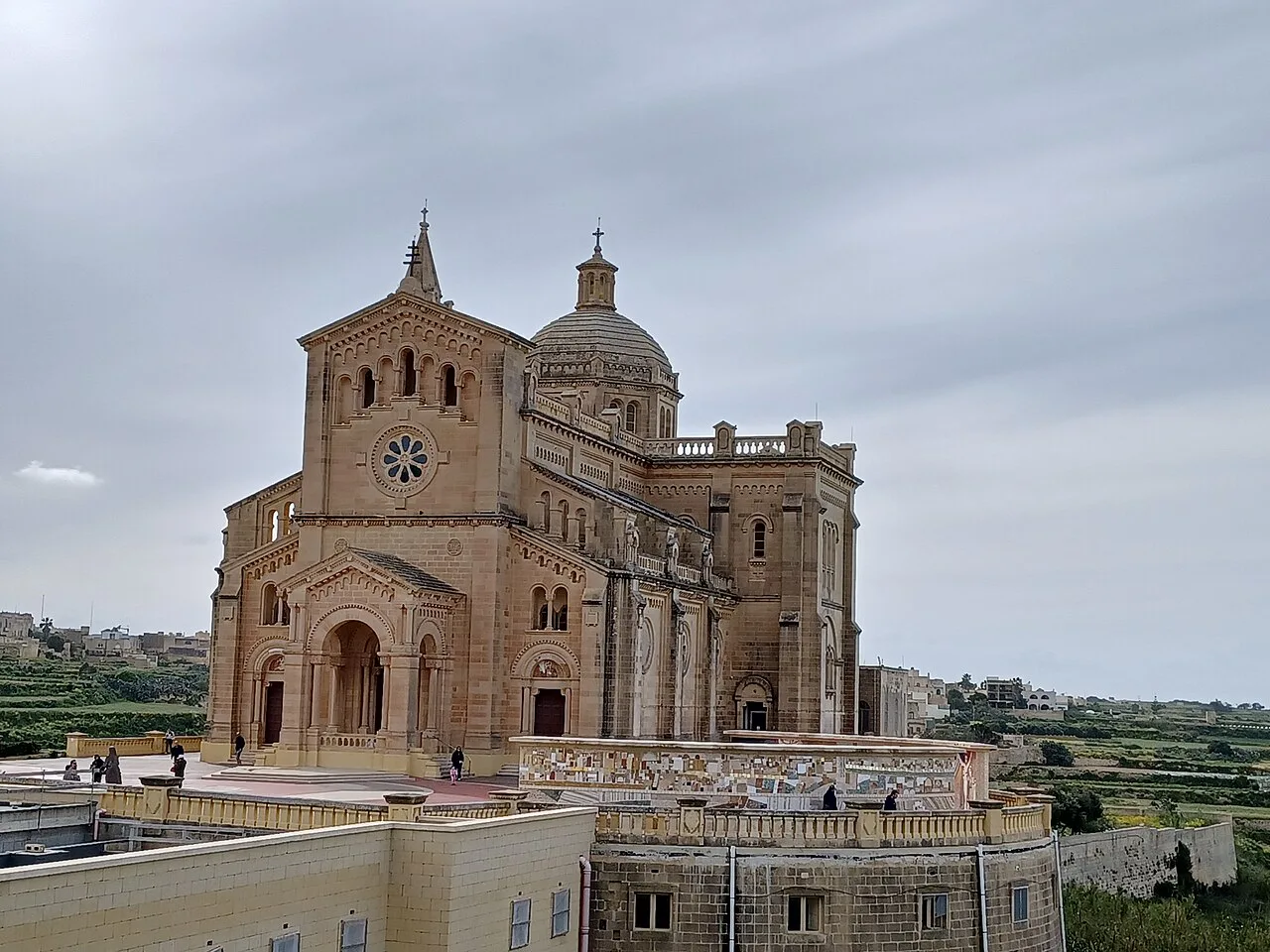
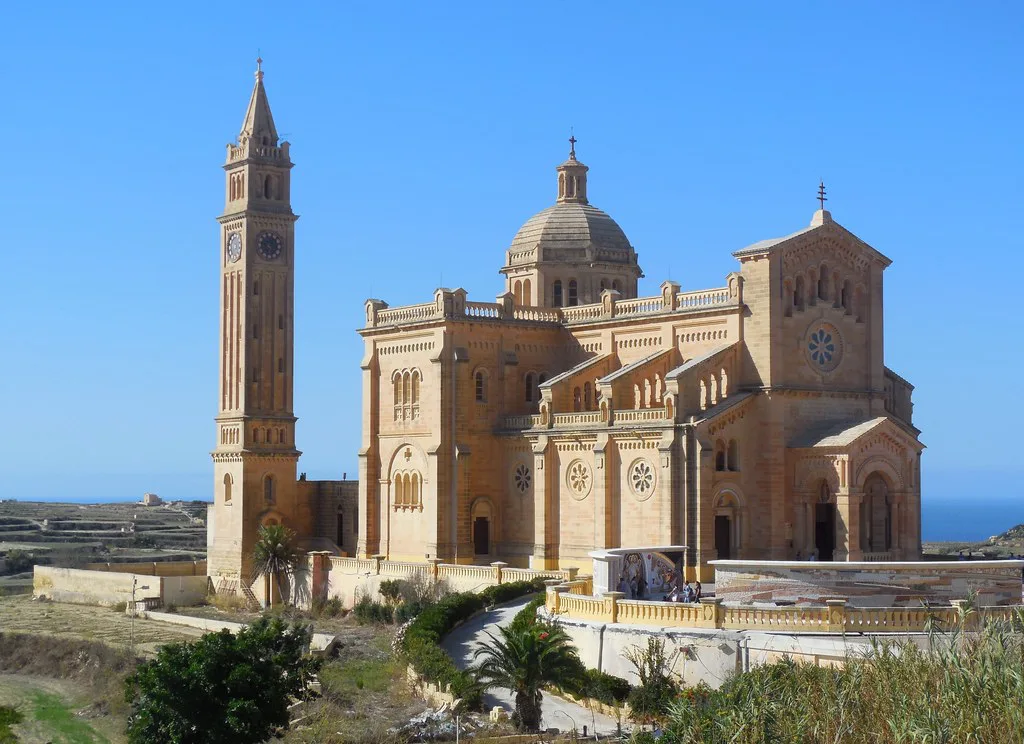
The approach is part of the visit: the basilica appears across open fields, with the car park and forecourt in front of it, so you see the whole facade before you reach the door. There is a designated parking area with plenty of bays and toilets on site, which makes a car stop straightforward.
Look at the exterior stonework before you go in. The church carries sculptures in Maltese stone, and the mosaics on the outside are easy to walk past when you are heading for the entrance.
Inside the basilica
The single detail first-time visitors most often miss is that the original chapel still stands behind the main altar, kept intact when the larger church was built around it. Walk to the front of the nave and look back through the sanctuary rather than turning round at the door.
Give yourself time for the interior itself: six mosaics and more than seventy coloured windows are the specific features to seek out, and the light through the windows changes the feel of the nave as you move around. Services run alongside sightseeing, so if you arrive mid-Mass, wait at the back or come back later rather than walking the aisles.
Admission and timing your visit
Admission to the church is free, so the basilica is one of the easier stops to fit into a day without budgeting for a ticket. The museum is a separate part of the site, so do not assume the same arrangements apply there; ask at the shrine or check ahead if the tokens room is the reason for your visit.
The church is free to enter, but that covers the basilica rather than the museum, so if the tokens room is the reason for your visit, confirm the museum's arrangements at the shrine. Opening times are best checked with the shrine's own information before you build a day around it, particularly on Sundays and feast days. Beyond the sanctuary, the rest of the island's churches and sights are covered in things to do in Gozo if you want to compare options.
The museum and the tokens of gratitude
The small museum bears on Ta' Pinu's nickname, the church of miracles. Its walls are covered with tokens left by people who say they were cured: letters of thanks, hearing aids, walking sticks and artificial limbs. It is a quiet room rather than a conventional display of artefacts, and it rewards ten or fifteen minutes of attention.
The museum sits alongside the church rather than inside the nave, so build it into your time budget as a separate stop. If the museum is closed on the day you visit, the church interior and the exterior mosaics still justify the trip.
Getting there by bus from Victoria
Bus 308 runs from Victoria bus station to the shrine and drops you at the site, with a service roughly every hour. That frequency shapes the day: the ride from the Citadel area takes closer to twenty minutes by bus against about ten by car, and a missed bus can cost you an hour.
Check the return times when you get off, because the same hourly rhythm applies in the other direction. The bus saves money against car hire, but it ties you to a schedule that suits a short visit better than a long one.
Getting there by car
By car the shrine is less than ten minutes from the centre of Victoria, following Triq ta' Pinu; the road in front is asphalted, so a small hire car copes easily. Parking is straightforward and there are toilets on site, which makes this the more comfortable option if you are combining the shrine with other stops in western Gozo.
Driving gives you the flexibility to arrive before a coach group or to stay past the hourly bus. If you are coming over from Malta with a rental car, sort the ferry crossing before the day itself rather than at the port.
How long to allow and what to pair with it
An hour covers the church and a walk round the outside; add the museum and you are looking at two hours, more if you sit with the building. The site is exposed and unshaded on the approach, so the middle of a summer day is the least comfortable time to linger on the forecourt.
Because the basilica sits near the western end of the island, it pairs naturally with the west coast rather than with Victoria's own sights. Wied il-Għasri, the inlet cut between cliffs on the north-west coast, is a short drive away and works well as a second stop on the same loop, and Dwejra, Gozo is another option further round the coast.
Għarb itself is worth half an hour if you have it: the village is the nearest settlement to the shrine, and its lanes make a quiet contrast to the open forecourt. Further east, the Gozo Salt Pans at Xwejni Bay and Calypso's Cave in Gozo sit on routes that can be strung together with the shrine if you start early.
Practical points before you go
This is a working place of worship, so dress as you would for any church in Malta: covered shoulders and knees, and no beachwear. The same applies whether or not a service is in progress, and it is the one rule that catches out visitors arriving straight from a coastal stop.
Bring water and a hat for the forecourt, and keep in mind that the site is a place of pilgrimage first and a sight second. If your day also takes in Victoria, the Xewkija Rotunda and the Ġordan Lighthouse (Ta' Ġurdan), Gozo fit the same western circuit, but each needs its own time slot.
For a different kind of green stop on the same island, the Lunzjata Valley (Wied il-Lunzjata), Gozo is a short detour south of Victoria, and Ta' Kola Windmill in Xagħra, Gozo covers the island's rural craft history on the other side. Neither replaces the shrine, but both fill a day that would otherwise end early.
Is Ta' Pinu worth the detour?
Yes, if you are already heading west. The church is free to enter, the original chapel behind the altar and the mosaics give the interior substance, and the tokens in the museum add a quiet, sobering counterpoint. Allow an hour for the church and two if you add the museum.
Take the 308 from Victoria if you are happy to work around an hourly service, or drive if you want to pair the shrine with Wied il-Għasri or Dwejra in the same afternoon. Either way, confirm the day's hours with the shrine before setting out, and dress for a church rather than a beach.
Frequently Asked Questions
Do you have to pay to get into Ta' Pinu Basilica?
No. Entry to the church is free, so you can walk in and see the nave, the mosaics and the chapel behind the altar without buying a ticket. The museum is a separate part of the site, so check its arrangements at the shrine rather than assuming the church's terms apply.
How do you reach Ta' Pinu without a car?
Take bus 308 from Victoria bus station, which drops you at the shrine and runs roughly once an hour. The journey takes about twenty minutes against ten by car, so note the return times before you walk up to the church.