
Domus Romana in Rabat: What to See and How Long to Allow

Allow about an hour for the Domvs Romana in Rabat, the small museum wrapped around the excavated floor of a Roman townhouse just outside Mdina's fortifications. The site suits a half-day shared with Mdina and Rabat rather than a trip of its own, because little of the house itself survives and the mosaics and artefacts carry the visit. This guide covers what stands inside, how the museum is laid out, how long to spend there and how to reach it by bus or on foot.
Where the Domvs Romana sits in Rabat
The museum stands on the edge of Rabat, directly outside the Mdina fortifications and beside Howard Garden. Heritage Malta dates the townhouse itself to between 50 BC and 50 AD and describes it as the only urban dwelling of its kind on the Maltese islands. That position makes it the natural first or last stop of a Rabat and Mdina day, since the walled city gate is a short walk uphill.
The site takes its name from the Latin word for a townhouse, which is why the spelling Domvs Romana appears on the museum's own material and Domus Romana in most English writing. It is not a country villa: Heritage Malta separates it from rural Roman farmsteads such as San Pawl Milqi and Ta' Kaċċatura, which had plainer interiors. Arriving with that distinction in mind keeps expectations honest, because the surviving decoration is concentrated in a few rooms rather than spread across a large estate.

Opening days and hours
The Domvs Romana currently opens on Tuesdays, Fridays, Saturdays and Sundays from 10:00 to 16:30, according to the schedule published for the site. It closes on 24, 25 and 31 December, 1 January and Good Friday. Treat those days as the working pattern and check them with Heritage Malta before you travel, since a museum of this size can adjust its hours. See also the wider set of Rabat Attractions: 11 Visitor Guides for planning the rest of the day.
Ticket prices are set by Heritage Malta and are listed on its website rather than posted at the gate in advance. A fee is required to enter the site. Check admission on the Heritage Malta site before you set out, particularly if you plan to combine the Domvs Romana with other Heritage Malta sites in Rabat on the same day. The museum is wheelchair accessible, has an audiovisual guide and permits photography inside.

What survives of the Roman house
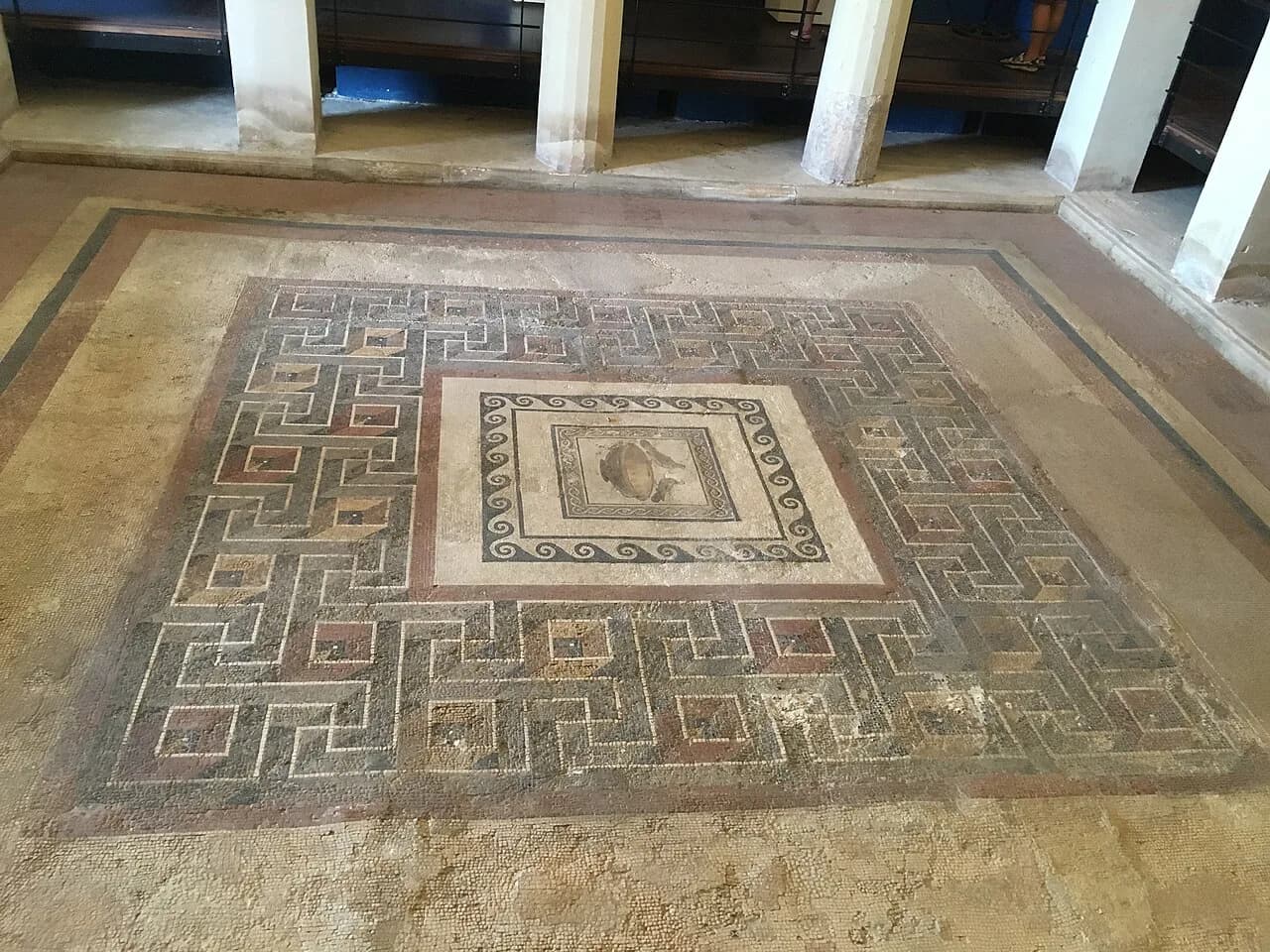
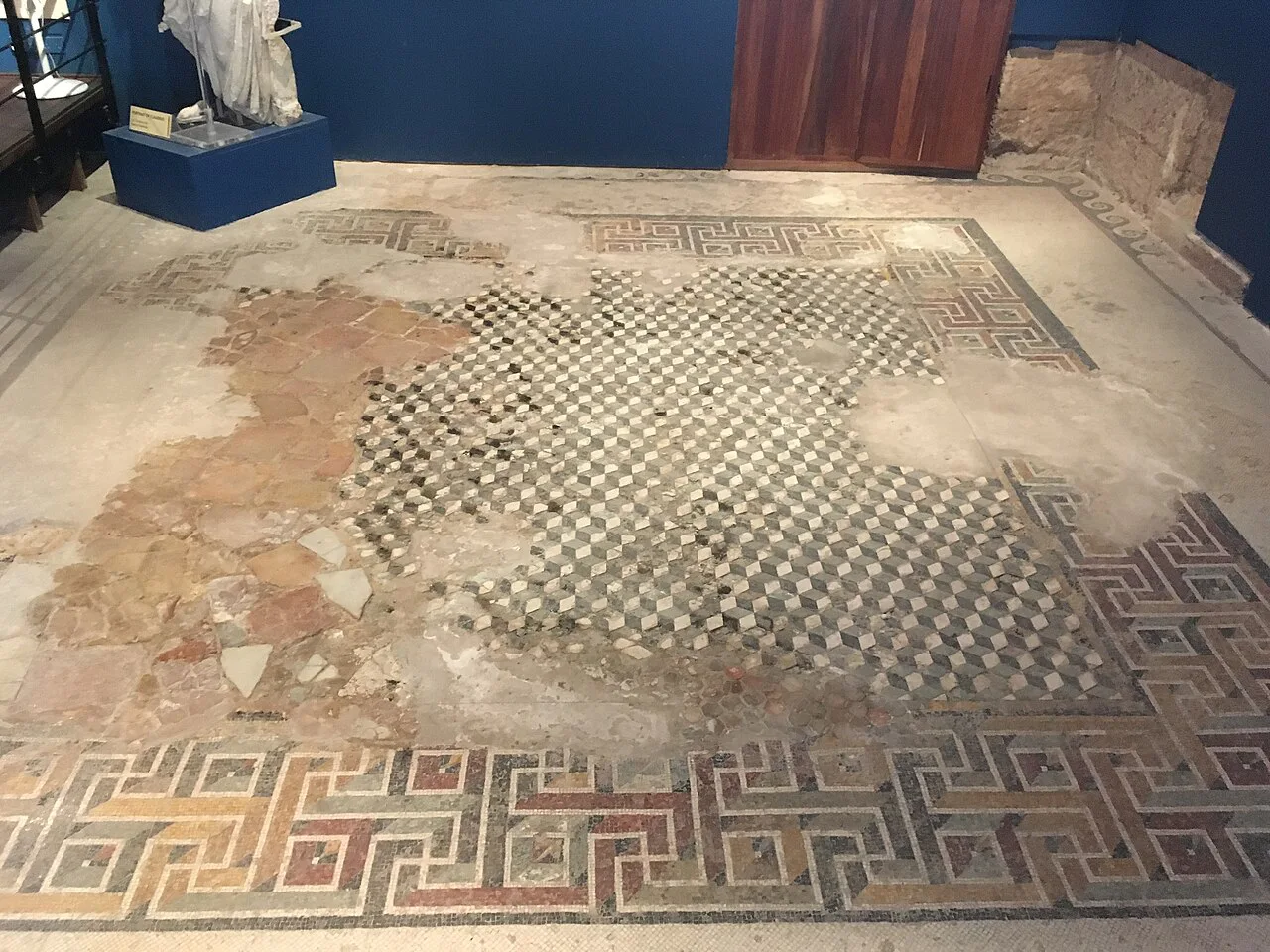
The building you enter was put up partly to protect what the excavations uncovered, making it the first structure in Malta purpose-built to house an archaeological site and collection. The core of the visit is the peristyle, the colonnaded courtyard at the centre of the house, with its sunken pool and mosaic floor still in place. Around it, the museum explains how a Roman household divided its day between business, meals, fashion, education and entertainment.
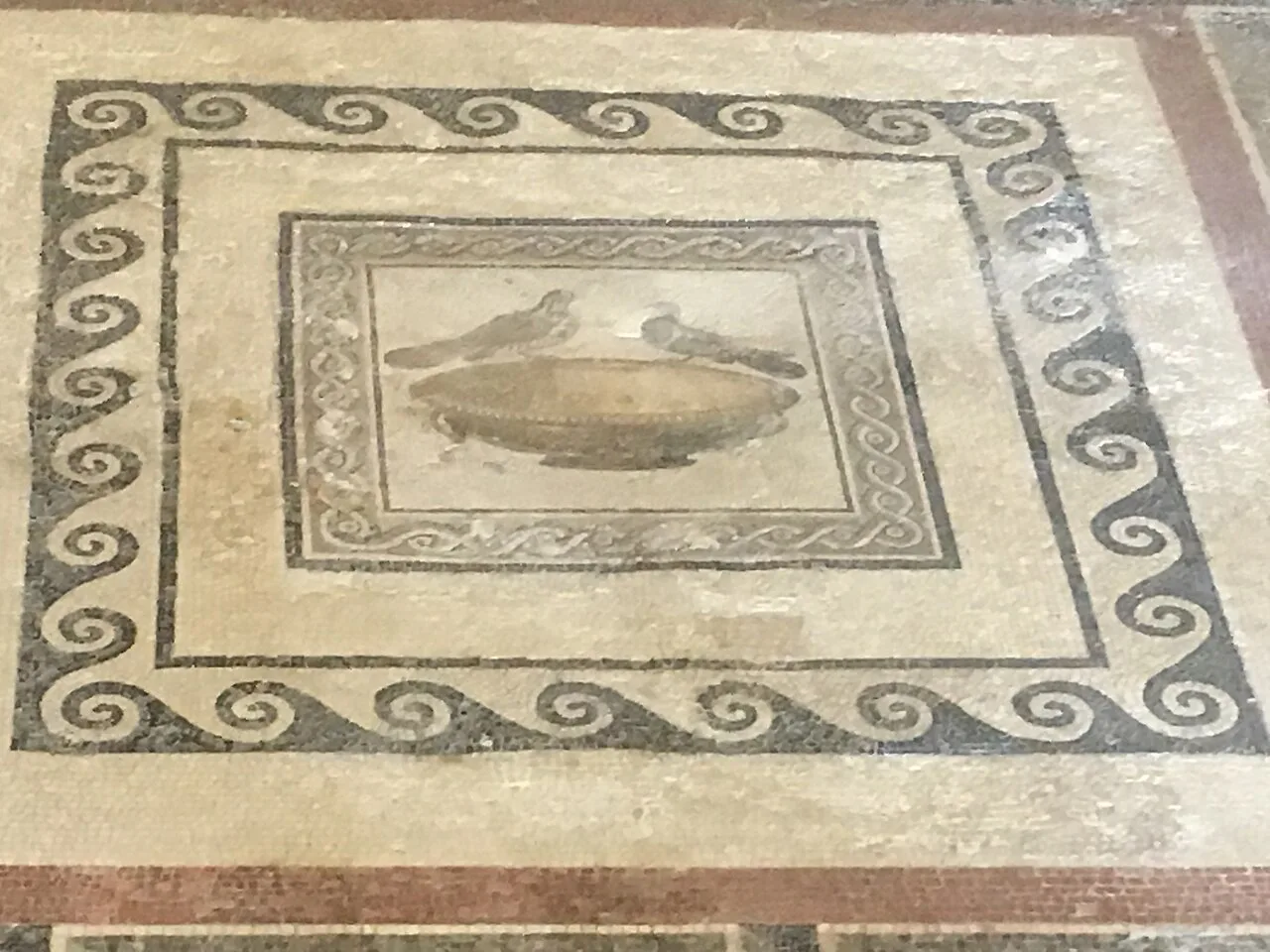
Look for the dove motif at the centre of the peristyle mosaic, a design copied across the Roman world from an original by Sosos of Pergamon. The floors were laid in polychrome mosaic, and the surrounding display sets them beside the wall painting fragments, marble statuary and small personal objects found on the site.
The sculpture includes a group of marble figures linked to the Emperor Claudius and his family, which suggests the owner held public standing in Roman Melite. Jewellery, hair pins and household utensils fill out the cases, and the interpretation panels concentrate on domestic life rather than on dynastic history. Read them in order and the sequence of rooms makes sense as a working house rather than a gallery.
The house was found by accident in 1881, when workers planting trees for Howard Garden struck the mosaics, and excavation under Sir Themistocles Zammit followed from 1920. Because the site lay in the open ground below Mdina's ditch, it had escaped later building and survived intact enough to be read.
How long to allow inside
Plan on roughly 45 minutes to an hour. The museum is compact, with the peristyle and two adjacent mosaics forming the heart of it, so the visit is closer to a single gallery than to a sprawling ruin. Visitors who read every panel and study the statue fragments will stretch towards 90 minutes, and those with a passing interest will be out in half that.
Two things slow a visit usefully. First, the story of the house's rediscovery and the 1920s museum building that now encloses it, which explains why you are looking at mosaics indoors. Second, the objects of daily life, which reward a closer look than the sculpture because they are small and easy to pass. If you are short of time, give the peristyle mosaic the minutes it deserves and skim the cases.
Getting there from the Rabat terminus
Buses stop at the Rabat terminus a short walk from the museum entrance, which makes public transport the simplest approach. Routes 50, 51, 52, 53 and 56 serve Rabat 1 and Rabat 3, while 109, 181, 182, 186, 201, 202 and X3 use Rabat 2 and Rabat 4 at the same cluster. From the terminus the museum is opposite the stop rather than up in the village, so you reach it before climbing towards Mdina.
By car, follow the signs for Rabat or Mdina and park in one of the areas around the museum or the edge of Mdina, which is a few minutes' walk away. On foot, walk out of Mdina through its main gate and down towards Rabat; the museum sits at the bottom of that approach beside Howard Garden. The hop-on hop-off North route also passes here, with a stop directly opposite.
Pairing it with Mdina and Rabat
The strongest half-day runs museum first, then Mdina, then back down through Rabat. Start at opening time, spend an hour with the mosaics, walk up through the Mdina gate and give the walled city a couple of hours before returning to Rabat for its own streets. Doing it in that order puts the quietest site first and leaves the fortified city for when the light is better on its bastions.
Rabat's other Roman and early Christian sites sit within walking distance and are run by Heritage Malta. St Paul's Catacombs, Rabat and St Paul's Grotto in Rabat are the obvious pairings if you want a full day of underground and ancient sites rather than an afternoon in Mdina. Ask about combined tickets when you buy admission, because the pricing structure changes and is not fixed at the gate.
Nearby options after the museum
Inside Mdina, the Vilhena Palace houses the National Museum of Natural History, with collections that run from minerals and birds to shells and fossils. It is a natural next stop if the Roman domestic detail has whetted an appetite for museum cases, and it sits within the same short walk from the Mdina gate.
Back in Rabat itself, St Paul's Church and its associated museum sit near the centre, and Casa Bernard offers a look inside a historic townhouse on a guided visit. Pjazza San Pawl is the obvious place to sit with a coffee between stops. Further out, Buskett Gardens and the wooded valley below Verdala Palace make a green change from stone if you have a car or a longer afternoon.
Is the Domvs Romana worth an hour of your Rabat day?
Yes, if you are already in Rabat or Mdina and want to see Roman domestic life rather than another church interior. The peristyle mosaic, the dove emblem and the Claudius sculpture justify an hour, and the compact layout means you lose little by fitting it in before Mdina. Skip it only if your day is already full of museums.
Explore more Rabat guides
Frequently Asked Questions
Where is the Domus Romana in Malta?
It stands on the edge of Rabat, just outside the Mdina fortifications beside Howard Garden. Buses stop at the Rabat terminus a short walk away, and the museum is reached before the climb up into Mdina.
How long does a visit to the Domvs Romana take?
Allow around 45 minutes to an hour. The museum is small and built around the peristyle and two adjacent mosaics, so a careful reader might stretch to 90 minutes while a quick visit takes half that.