
St Paul's Grotto in Rabat: What You'll See and How Long It Takes

St Paul's Grotto is a cave beneath Rabat's parish church, reached from Pjazza Tal-Parocca (Parish Square) in the centre of Rabat and a short walk from Mdina. It is a compact underground visit rather than a museum, so it works best as one stop in a half-day around Rabat. This guide covers what is inside the cave, how much time to give it, and which nearby sights combine naturally with it.
The grotto is a place of local tradition as much as a monument. Stories about St Paul preaching or being imprisoned here, and about stone scraped from the walls, are told as local belief rather than documented fact, and the site is treated accordingly by the parish.
Where the grotto is and how to reach it
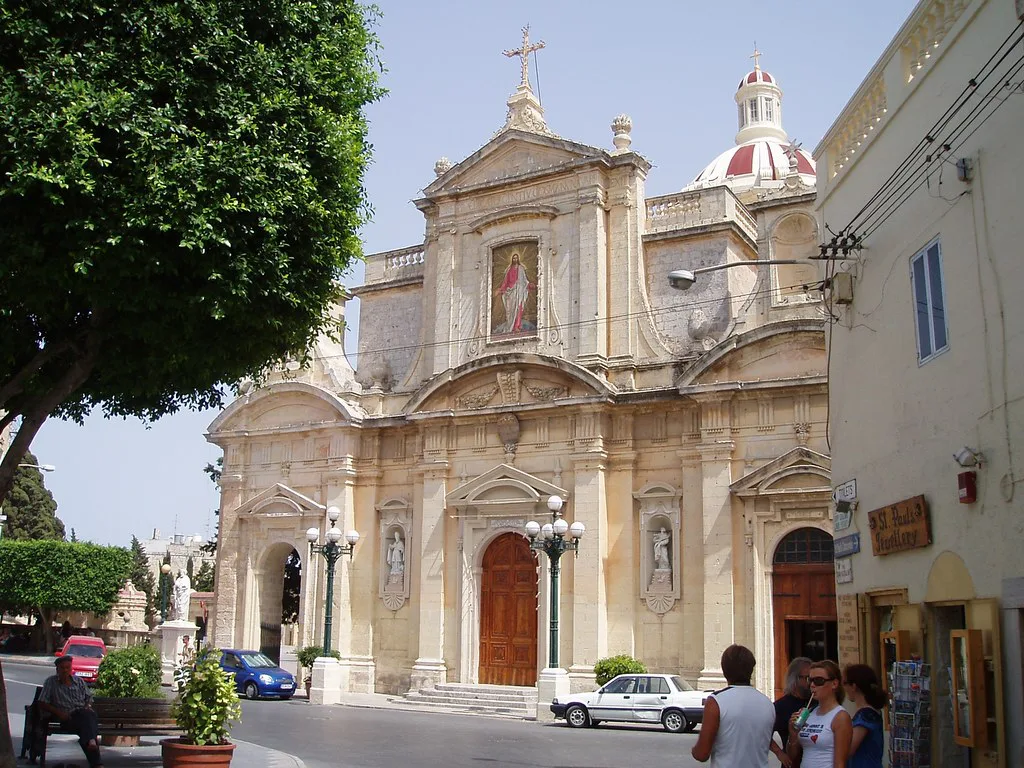
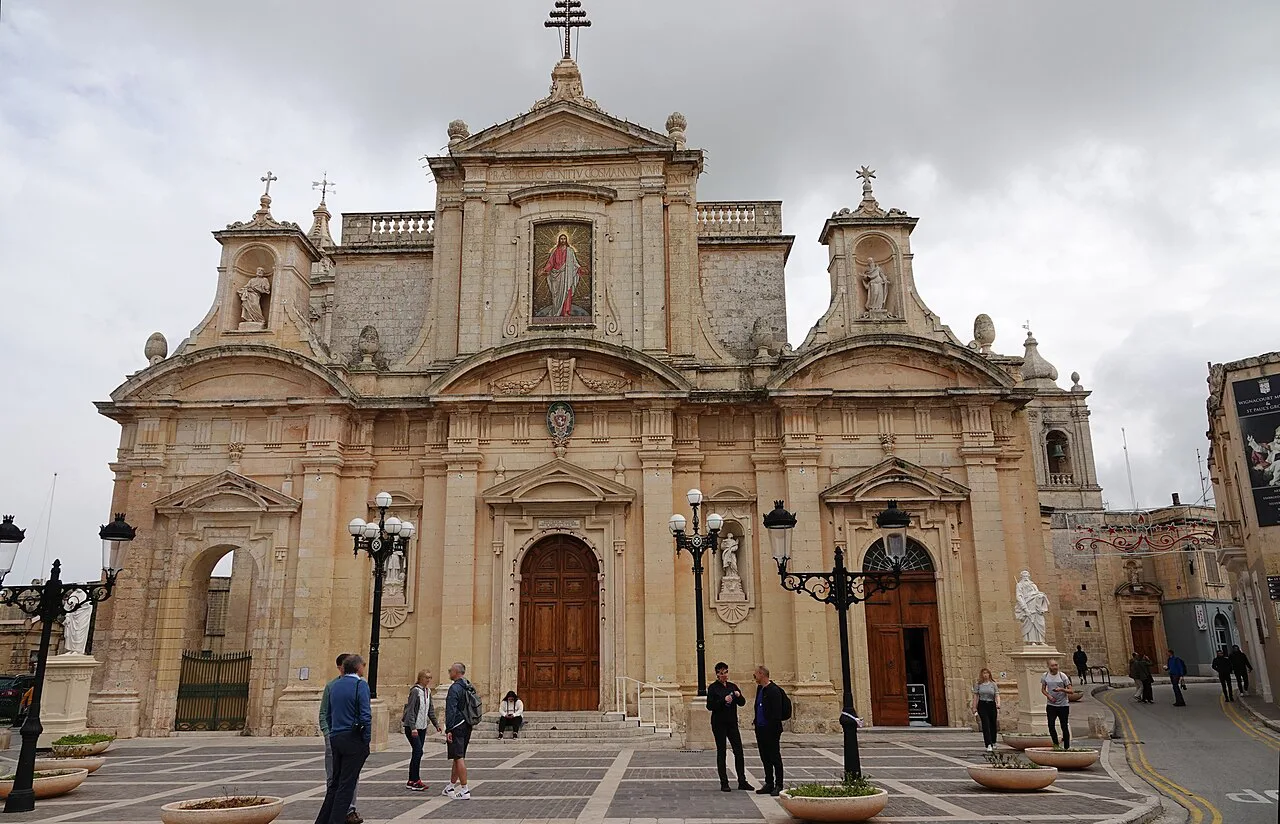
The grotto sits under the parish church of Rabat, with the entrance off Pjazza Tal-Parocca in the main square. If you are coming from Mdina, walk out of the old city and downhill into Rabat; the square and church are straightforward to find on foot. Rabat Attractions: 11 Visitor Guides covers the rest of the town if you want to build a longer circuit.
Buses from Valletta and other parts of Malta stop in Rabat, and the square is a few minutes from the main stops. Because the grotto is inside a working parish church complex, access follows the church's own arrangements rather than a separate attraction desk. Check the parish church's current opening arrangements before you travel, since this is the one detail worth confirming on the day.
What you see inside the cave
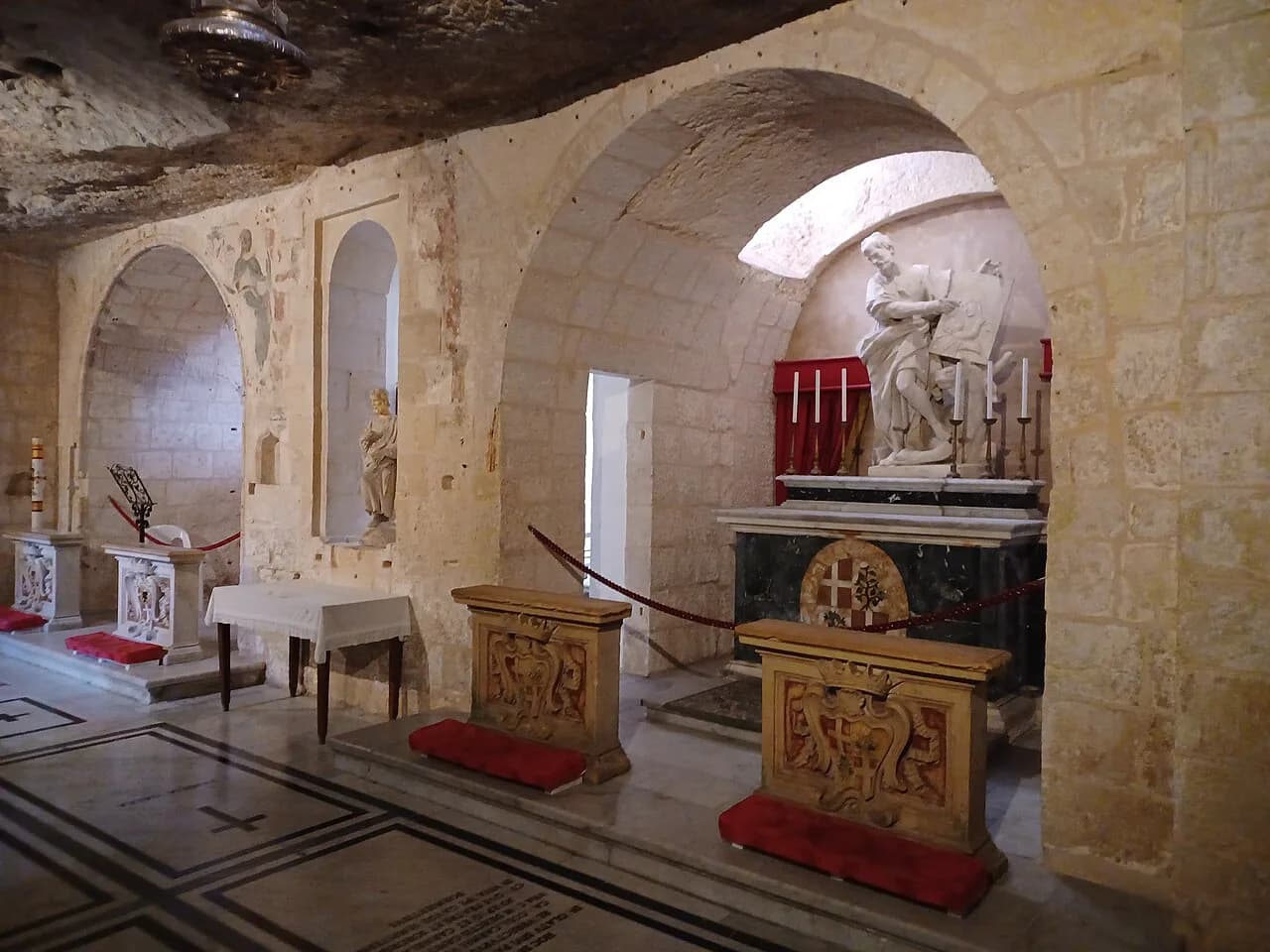
The main feature is a marble statue of St Paul, set in a dimly lit cave below a series of catacombs. Local tradition holds that Paul spent weeks here preaching, and another version says he was imprisoned in the space; the custodian presents the grotto as a former Roman prison and points out holes in the roof said to be where prisoners' chains hung.
Two tiny chapels inside are dedicated to St Paul and St Luke, each with a statue of its apostle. At the far end a further chamber has a small alcove on its far side. The appeal is the closeness of the space and the layered use of the rock, not scale.
The grotto lies below the adjoining Chapel of St Publius, and the church above was founded in 1575 and remodelled in 1692 over one of Malta's early Christian chapels. A plaque on the exterior wall records Pope John Paul II's 1990 visit and prayer.
How long to allow
Give the grotto itself around 20 to 30 minutes. It is a small cave with two chapels and an end chamber, and the visit is slowed by the dim lighting rather than by crowds or long labels. Add time for the church above if you want to see the building it sits beneath.
The cave is cool and poorly lit, so watch your footing on the steps. Because it is a working church, covered shoulders and quiet conduct are the sensible default.
The stairs to the Wignacourt Museum and WWII shelters
From the grotto, a set of stairs leads under the road to the Wignacourt Museum and the Second World War air raid shelters. That connection makes the grotto and the museum one continuous visit rather than two separate errands, and it is the practical reason to keep an extra hour in your plan.
Visitors commonly treat the grotto, the catacombs and the WWII shelters as a trio within a short walk of Mdina. If you only have an afternoon, do the grotto and the museum together and leave the catacombs for a second stop. St Paul's Church and Grotto, Rabat covers the church side in more detail.

Entry, donations and what to check
The grotto was described in 2002 as free to enter, with a donation to the church expected. Treat that as a dated guide rather than a promise: entry arrangements sit with the parish, so confirm the current position with the church before relying on it.
Opening times and any charges for the adjoining Wignacourt Museum and shelters are managed separately from the grotto, so ask at the museum desk when you arrive.
Pairing the grotto with St Paul's Catacombs
St Paul's Catacombs are the obvious second stop in Rabat, a complex of interconnected underground Roman cemeteries in use up to the fourth century. They are a more extended underground visit than the grotto, so allow longer and go earlier in the day if heat or fatigue is a concern. St Paul's Catacombs, Rabat explains what the site contains and how to approach it.
Ticketing for the catacombs is handled separately from the grotto. Buy at each entrance on the day rather than assuming one ticket covers both; St Paul's Catacombs, Rabat explains what that site contains and how to approach it.
Mdina and the rest of Rabat within walking distance
Mdina's walls and gates are a short walk uphill from Pjazza Tal-Parocca, which makes the grotto an easy add-on to a Mdina morning. Walk up, see the silent city, then come down to the grotto and the museum before lunch in Rabat.
For a quieter contrast, Buskett Gardens, Rabat lie beyond the edge of town and suit a later afternoon if you have a car or are happy to take a bus. Casa Bernard, Rabat is another in-town option for a shorter stop, and Verdala Palace, which stands by the Buskett woodland, is visible in the same direction if you want a longer loop out of town.
Should the grotto be on your Rabat list?
Yes, if you are already in Rabat or Mdina and want a short, atmospheric stop that connects directly to the Wignacourt Museum and the WWII shelters. Skip it if you are short of time and saving your underground quota for the catacombs, which need longer and reward it.
Plan the grotto as a 30-minute visit, wear something suitable for a working church, and confirm entry arrangements with the parish before you set out. The rest of the day fits around Mdina's gates and Rabat's squares without any rush.
Explore more Rabat guides
Frequently Asked Questions
Is St Paul's Grotto free to enter?
In 2002 the grotto was described as free to enter, with a donation to the church expected. Entry arrangements sit with Rabat's parish church, so confirm the current position before you rely on it.
Can you visit St Paul's Grotto and the catacombs on the same ticket?
The grotto and St Paul's Catacombs are ticketed at their own entrances, so buy separately on the day. The Wignacourt Museum and WWII shelters also have their own desk; ask there when you arrive.
How long does a visit to St Paul's Grotto take?
Allow around 20 to 30 minutes for the cave, its two chapels and the end chamber. Add time if you continue through the stairs under the road to the Wignacourt Museum and WWII shelters.
What should I wear to St Paul's Grotto?
It is a working church, so covered shoulders and quiet conduct are the sensible default. The cave is poorly lit, so watch your footing on the steps.