
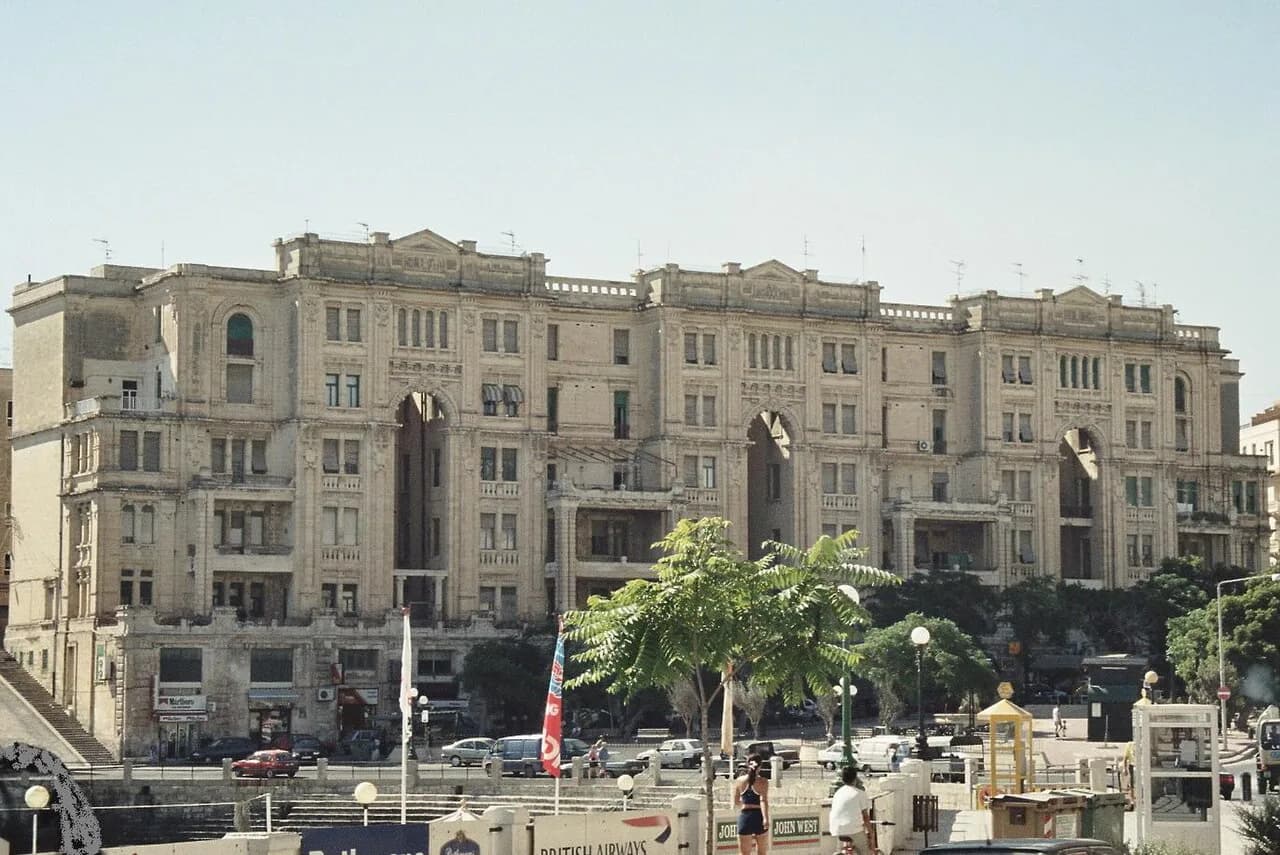
Balluta Buildings: What to See at Balluta Bay

Balluta Buildings is a residential Art Nouveau apartment block built in 1928 on the slopes above Balluta Bay in St Julian's, and it is viewed from outside rather than visited inside. The descent to the waterfront below the building gives the clearest reading of its façade and its position on the side of the Balluta valley. This page covers what the block is, how to read what you see, how to reach it on foot and how long to allow.
What Balluta Buildings is and where it stands
Balluta Buildings is an apartment block overlooking Balluta Bay in St Julian's, on the coastal edge of the built-up area between Sliema and St Julian's. Sources place it at 35.9139°N, 14.4944°E, facing the bay from the valley side. It is a private residence, so treat the promenade and street below as your viewing position rather than looking for a door to enter.
Because the block sits on the slope of the Balluta valley, the bay and the building are seen together from the water's edge, and the building's height is most obvious from below. Walk down towards the shore before judging the façade; from partway up the hill the perspective flattens the vertical lines that give the block its character.
The patron, the architect and the 1928 date
The block was built in 1928 for the Marquis John Scicluna to designs by the Maltese architect Giuseppe Psaila. Psaila worked in the Art Nouveau style elsewhere in the area, including a townhouse on Dingli Street in Sliema that now belongs to Lombard Bank, which makes a useful comparison if you want to see how his façade treatment translates to a smaller building.
The building is classed as a Grade 1 monument and appears on the National Inventory of the Cultural Property of the Maltese Islands, which is the designation behind its protected status. Apartments in the block have been renovated in recent years, with sections of the façade and interiors requiring restoration; some apartments are described as large, high-ceilinged and lit from both the front and rear.
Reading the façade from the promenade
The façade is arranged as three vertical structures, each with an arched opening at the centre and rows of double windows on either side. Long vertical lines run up the block, and a front-facing courtyard is set back behind the façade so the apartments get shade without losing the view out over the bay. Stand back on the promenade to see the three-bay rhythm as a whole, then move closer to pick out the arches and window pairs.
The flowing decorative detail is what marks the block out from the plainer apartment buildings around it, and it is concentrated on the bays facing the water. Look at the shadow line under the arches and around the window frames rather than trying to see into the apartments, which are occupied.
How much time to allow, and when the light is best
Allow around twenty to thirty minutes at Balluta Bay: enough to walk down to the waterfront, look back up at the façade and continue along the shore. There is no interior to tour and no fixed route, so the visit is a pause on a coastal walk rather than a standalone outing.
The building faces the bay, so the façade is most evenly lit when the sun is not directly behind it; morning and later afternoon tend to give clearer detail on the bays than harsh midday light. The waterfront is exposed, so pair the stop with shade and a drink at street level rather than standing in full sun.
Getting there from Sliema and St Julian's
Balluta Buildings sits on the coastal route between Sliema and St Julian's, which makes it an easy addition to a walk in either direction. If you are working through the Sliema seafront, the block comes up as you head north towards St Julian's; if you are starting in St Julian's, approach from the Spinola side and walk south.
Public transport runs along this coastal corridor, and the building is reachable by bus or car as well as on foot, though it is the waterfront promenade below that gives the view. Plan your stop around the walk rather than a timetable, and treat the seafront itself as the destination.
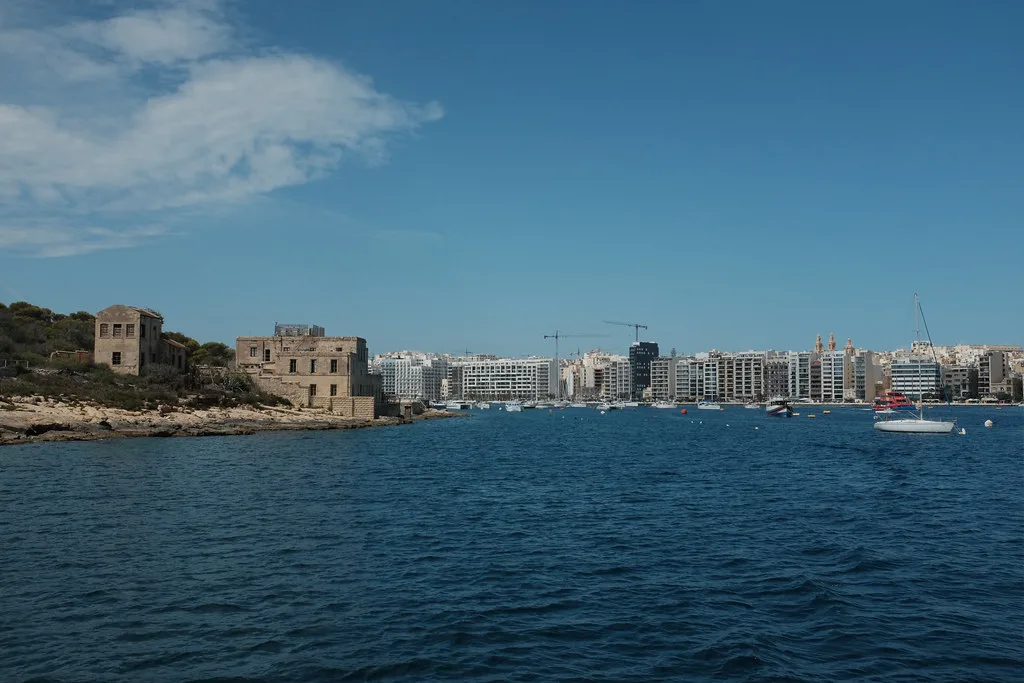
Walkers heading further south-east can carry on towards the Sliema waterfront and the shore facing Marsamxett Harbour and Manoel Island, where the fortifications come into view. That stretch rewards a slower pace than the Balluta stop itself.
Nearby options on the Sliema and St Julian's waterfront
The seafront either side of Balluta Bay strings together the smaller sights of the Sliema and St Julian's coast, so the block works best as one stop among several. Two harbour forts anchor the southern end: Fort Tigné, on the Sliema side, and Fort Manoel out on Manoel Island across the water.
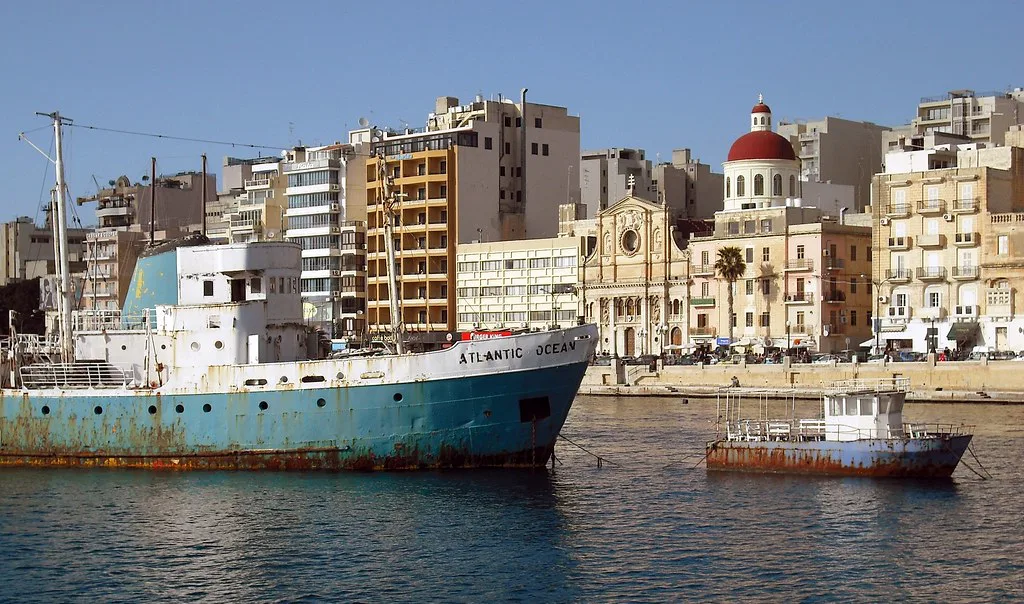
Closer in, the Sliema Point Battery marks the harbour edge, and the town's churches give the seafront its landmarks if you want a route that mixes the coastline with a few interiors. Stella Maris Church and Holy Trinity Church are both within the Sliema street grid behind the shore.
If you want a quieter pause away from the traffic, Independence Garden gives you a green breather inland from the Sliema waterfront, and the Jesus of Nazareth and Sacro Cuor churches sit on the same grid of streets. None of these needs long, but together they fill a half-day on foot.
Cafés at street level and the block's conservation
At the block's street level there are some cafés and restaurants, including L'Antica Pizzeria Da Michele Malta, which opened at street level. Units at this level come and go, so check the unit itself before planning a meal around it rather than relying on the building's name.
Much of the block's visual appeal comes from the apartments' high ceilings, spacious living areas and Maltese tiles, described by those who have seen inside, which is exactly what you cannot see from outside. What you can see from the street is the façade itself and the extent of the restoration work carried out on it in recent years.
Rental listings inside the block confirm that the apartments are let and occupied rather than open to visitors, so keep to the street and promenade. There are no published visitor access terms for the building.
Is Balluta Buildings worth the stop?
Yes, as a twenty-minute pause on a Sliema to St Julian's waterfront walk, not as a destination in its own right. The reward is the façade read from below, with three bays, central arches and rows of double windows set above the bay.
Build the stop into a coastal route that takes in the harbourside forts and the Sliema churches, and keep the block's ground-floor cafés as an optional extra rather than the plan.