
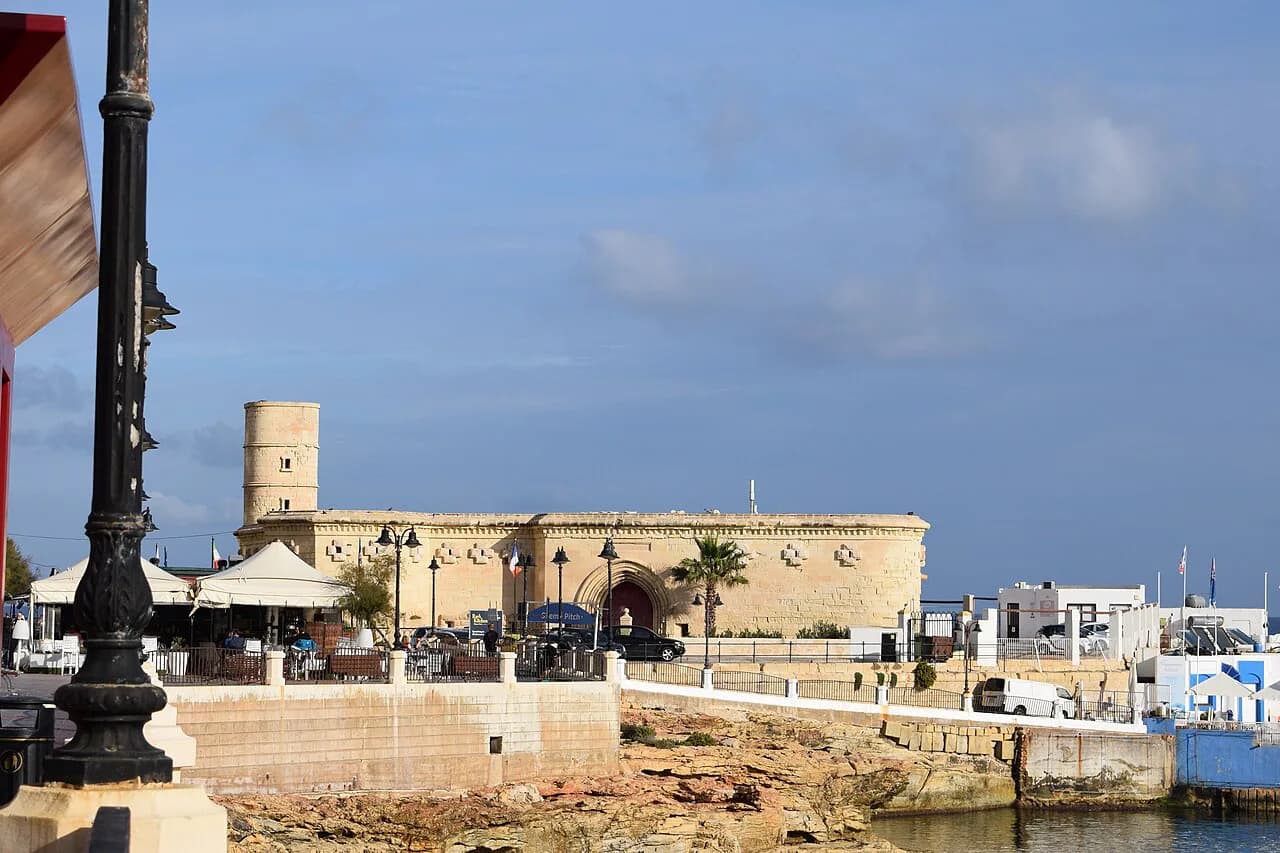
Sliema Point Battery (Fort Sliema): What to See and How Long to Allow

Sliema Point Battery, also known as Fort Sliema, is worth a 20 to 30 minute stop rather than a half-day outing. The draw is the setting as much as the building, because the battery sits on the peninsula that separates Marsamxett Harbour from St Julian's Bay, and the fortification itself now houses the Il-Fortizza restaurant. This guide covers where it stands, how to walk out to it along the seafront, and what you can realistically see on a visit.
What Sliema Point Battery is and where it stands in Sliema
The battery is a British artillery battery, constructed for the defence of the island between 1872 and 1876. It stands at the far end of the Sliema peninsula, at the point where the built-up town gives way to the water on both sides. Its address is given as 71 Tower Road, Sliema, so if you are walking the seafront promenade you are already heading the right way.
Maps mark the spot as an attraction at roughly 35.91411 north, 14.50719 east, with the fort building tagged alongside the site. The Sliema Point Tower triangulation station and the point known as Il Ponta ta' Tas-Sliema sit within a minute's walk, which helps if you are navigating by landmark rather than street number.
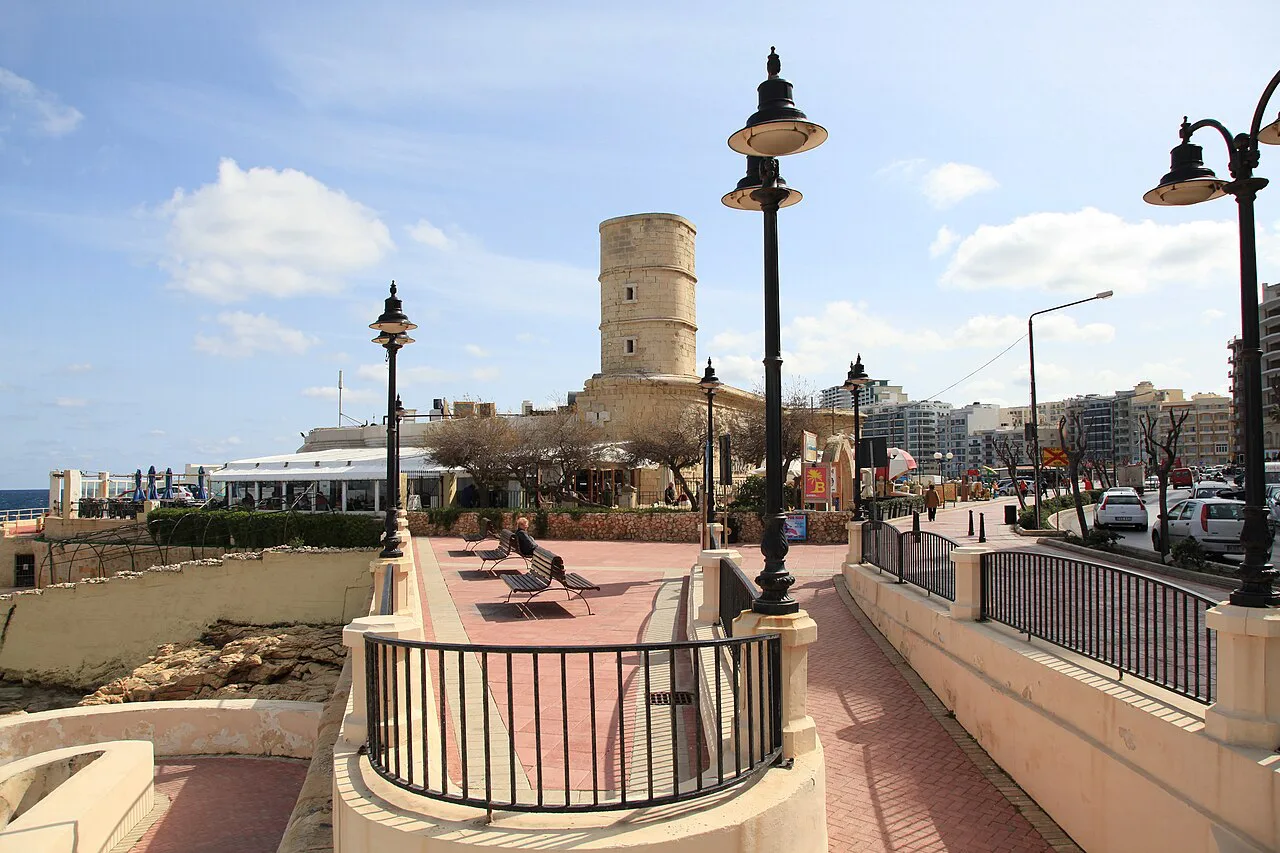

Getting to the battery on foot along the Sliema seafront
Walking is the natural way to arrive. Follow the Sliema promenade out along the peninsula and the battery appears at the end of the built front, with the sea opening up on the Marsamxett side and St Julian's Bay behind you. Since the site sits on the point itself, the final stretch is about the walk rather than the traffic. See also Sliema Attractions: 12 Visitor Guides for the rest of the town.
If you are based elsewhere in town, use the Tower Road address as your target and approach from the promenade rather than from the inland streets, which tend to turn you away from the water. The walk itself is level along the front, though the exposed point catches the sun and the wind depending on the day.
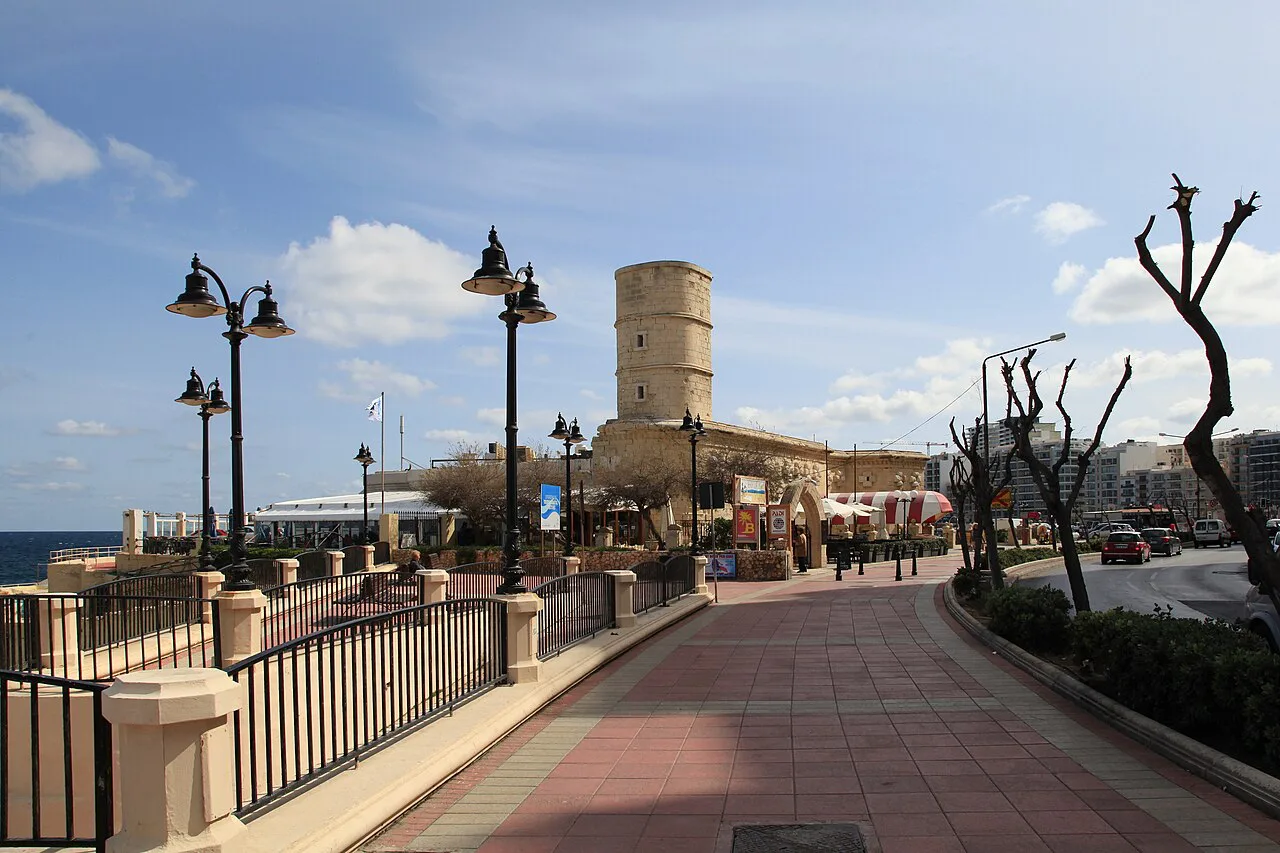

The British artillery battery of 1872–1876: what the fortification was built for
The battery was raised by the British between 1872 and 1876 as an artillery position intended to strengthen the defence of the island. That is the construction period the sources give, and it places the fort squarely in the era of coastal gun batteries rather than earlier fort building. Read the structure as a defensive work first: the massing, the low profile and the position at the tip of the peninsula all follow from its military purpose.
For context on the wider harbour defences, the neighbouring works at Fort Tigné and Fort Manoel, Manoel Island, guarded the same approaches to Marsamxett Harbour. The battery is best understood as one piece of that coastal defence line rather than as a standalone curiosity.
Later use as a searchlight position
After its artillery phase, the battery was used as a searchlight position, a change that reflects the shift from guns to detection in coastal defence. That phase is the second layer of the site's story and the one most easily missed when you are looking at a building that now reads as a restaurant.
What you can see today: the battery building and the peninsula setting
The battery now houses a restaurant called Il-Fortizza, which translates as The Fortress. That is the key expectation to set: you are visiting a historic fortification that has been converted to hospitality use, not a museum with rooms to tour or exhibits to read. The fort building is still the thing to look at from outside, and the conversion is part of what you are seeing.
Treat the visit as an exterior look at the structure and its setting: the fort building, the point and the water on both sides make the stop, and the walk out and back is a fair part of the experience. Check with the restaurant before travelling if you are hoping to see more than the outside.
Views across the Marsamxett and St Julian's side of the peninsula
The reason to walk all the way out is the position. The peninsula separates Marsamxett Harbour from St Julian's Bay, giving water on more than one side and a long look back along the Sliema front. The battery stands on a picturesque peninsula with views over Sliema and the surrounding water, which holds whether or not you go inside.
The setting is also described as rewarding in the evening, when the bay and the town lights come on. If your priority is the view rather than the building, time your walk for late afternoon or dusk and let the light do the work.
Il-Fortizza (The Fortress): the restaurant now housed in the battery
Il-Fortizza occupies the battery building and serves Maltese cooking in the historic setting, which makes it the practical way to spend time at the site rather than simply passing it. Tables with a view are the obvious draw, and advance booking for dinner is advised if you want one. Check the current menu, serving hours and booking terms with the restaurant directly.
If you only want to see the fortification, you do not need to eat there; the building and the point are the visit. If you do book a table, arrive early enough to walk the point before you sit down.
How long to allow and when the light is best
Allow 20 to 30 minutes at the battery if you are looking at the exterior and taking in the views, plus the walk along the promenade in each direction. It is a stop to bolt onto a seafront stroll, not a destination that fills an afternoon.
Late afternoon and dusk give the best combination of light on the water and the town coming on, and the site is described as worth seeing both by day and when lit at night. Midday is the least rewarding time for photographs at an exposed point like this.
Nearby options in Sliema to combine with a stop here
The battery fits naturally into a longer seafront wander. Fort Tigné lies along the same coastal stretch in the other direction, and the two together give you a sense of how the peninsula was defended. Stella Maris Church, Sliema and Holy Trinity Church, Sliema sit inland along the town's main streets if you want to break up the walk with a look at the churches.
Continue south along the front and you reach Balluta Bay and the Balluta buildings, with St Julian's beyond, which extends the walk without adding transport. Inland, Independence Garden, Sliema offers a green pause.
Is the battery worth the walk to the point?
Yes, if you are already on the Sliema front and want a reason to walk to the end of the peninsula. Go for the position, the water on both sides and a look at a British artillery battery of 1872 to 1876 that later served as a searchlight position and now houses a restaurant.
Skip it as a standalone trip if you are hoping to tour a fort interior; the building's current use is as Il-Fortizza, and the visit is an exterior one. Pair it with the promenade and the nearby churches or forts and it earns its half hour easily.
Explore more Sliema guides
Frequently Asked Questions
Can you go inside Sliema Point Battery?
The battery building now houses the Il-Fortizza restaurant, so going inside means eating there rather than touring a museum. If you only want to see the fortification and the point, the exterior and the surrounding views are the visit.
How long does it take to visit Sliema Point Battery?
Plan on 20 to 30 minutes at the point for the building and the views, plus the walk along the Sliema promenade in each direction. It works best as part of a longer seafront stroll rather than a trip on its own.
When was Sliema Point Battery built?
The British built the artillery battery between 1872 and 1876. It was later used as a searchlight position before becoming the restaurant it houses today.