
Spinola Palace, St Julian's: Visiting the Baroque Palace on Spinola Hill

Spinola Palace is a baroque palace on the crest of St Julian's hill, and you cannot go inside it: the building is not open to the public, with the exception of its cellar, which houses a popular local restaurant. Plan it as a short street-level stop for the façade, the clock and the view down to Spinola Bay, not as a museum visit. This page covers what stands there, how to reach it from Sliema and central St Julian's, how long to allow and what to pair it with.
What Spinola Palace is and where it stands
The palace, also called Casa Spinola or Villa Spinola, was built in 1688 for Fra Paolo Raffaele Spinola, Grand Prior of Lombardy, funded by his brother the Marquis. It sits on the crest of St Julian's hill, and the bay below carries the family name as Spinola Bay.
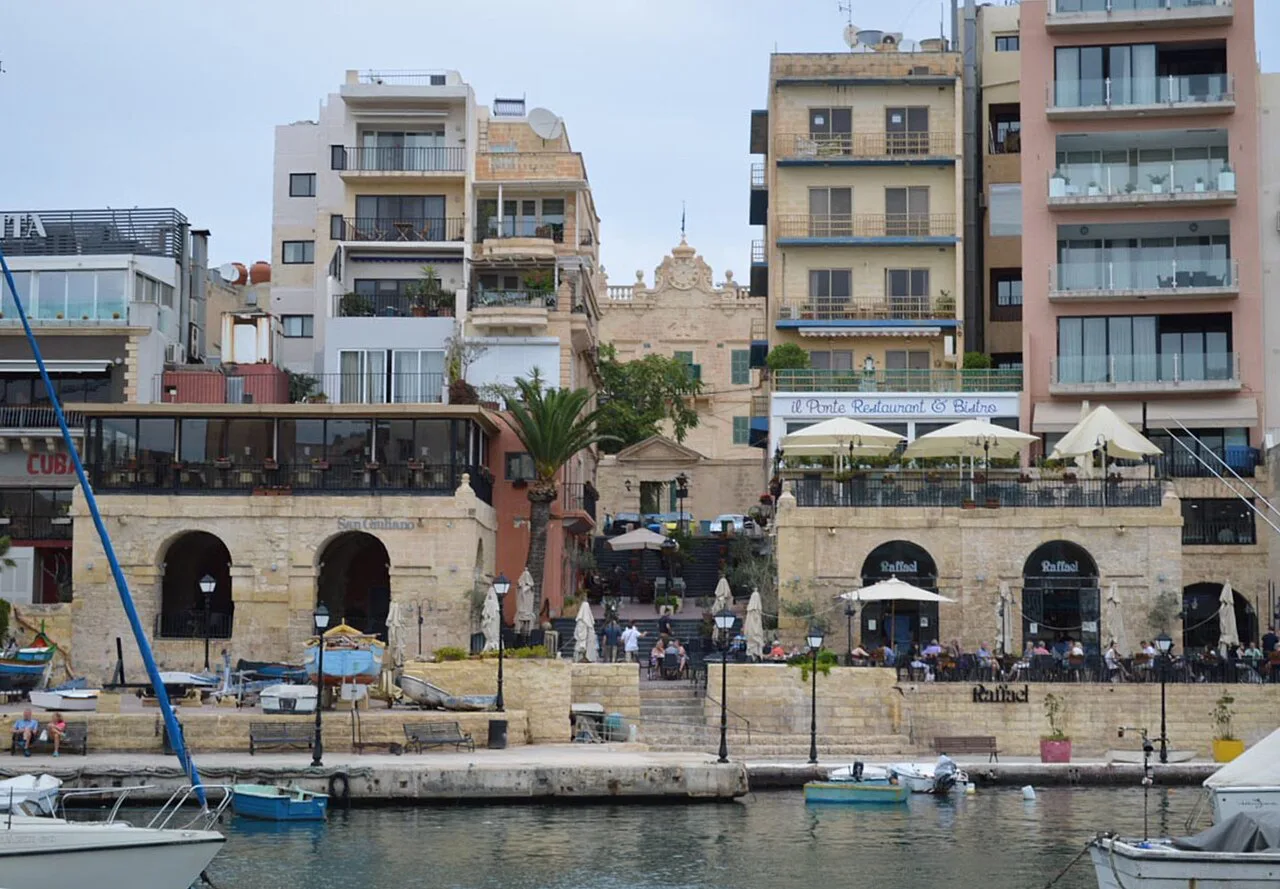
The hilltop position is the point of the visit. The palace once overlooked Spinola Bay, but later building in the area has reduced the view over the water, so the outlook today is partial rather than panoramic. Come for the building itself and the descent to the bay rather than for a viewpoint.
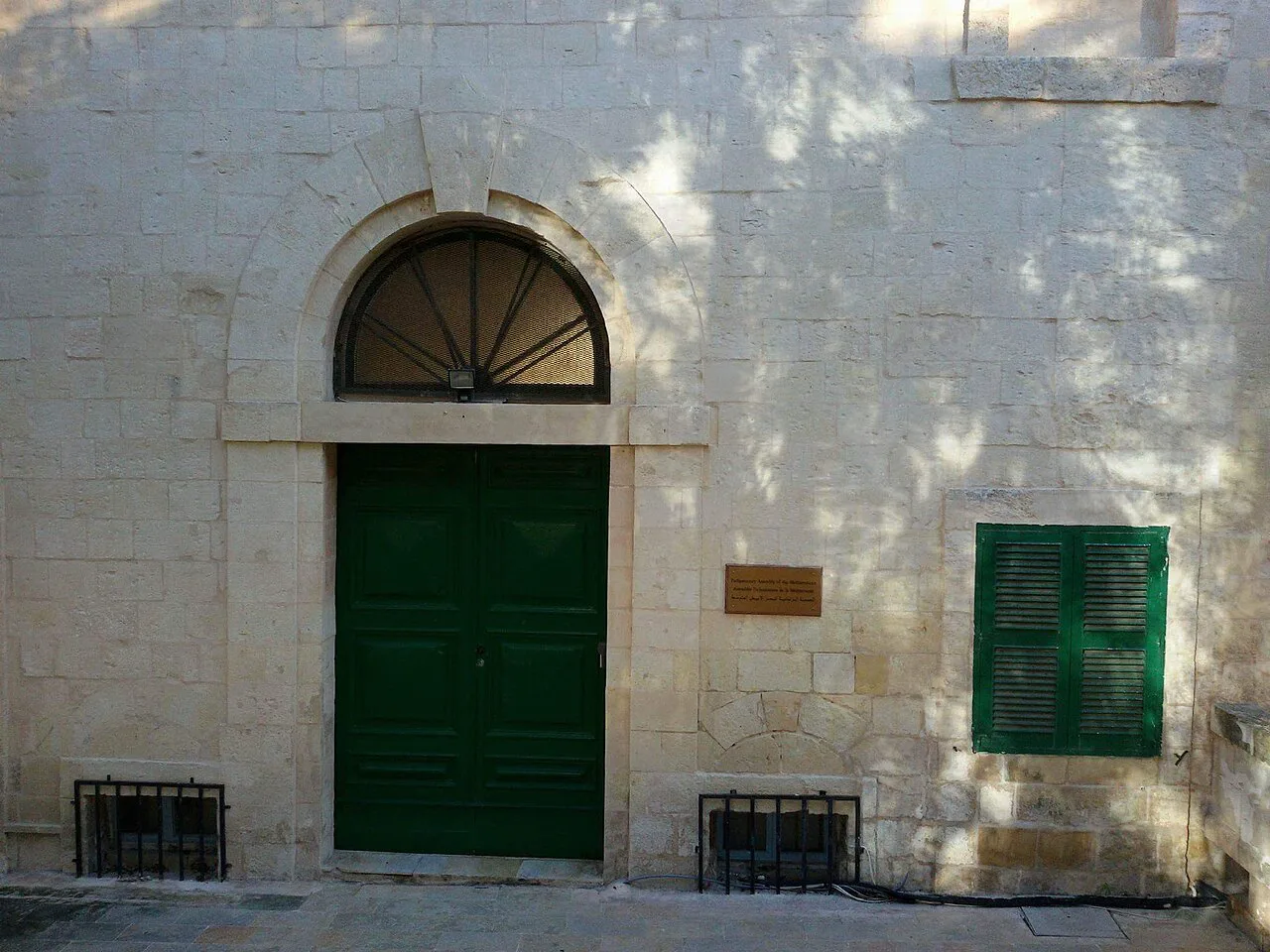
The building now serves as the seat of the Parliamentary Assembly of the Mediterranean, which explains why it is a working address rather than a monument you can wander. Treat the street in front of it as the visitor space.

The façade: Carapecchia's baroque design and the clock
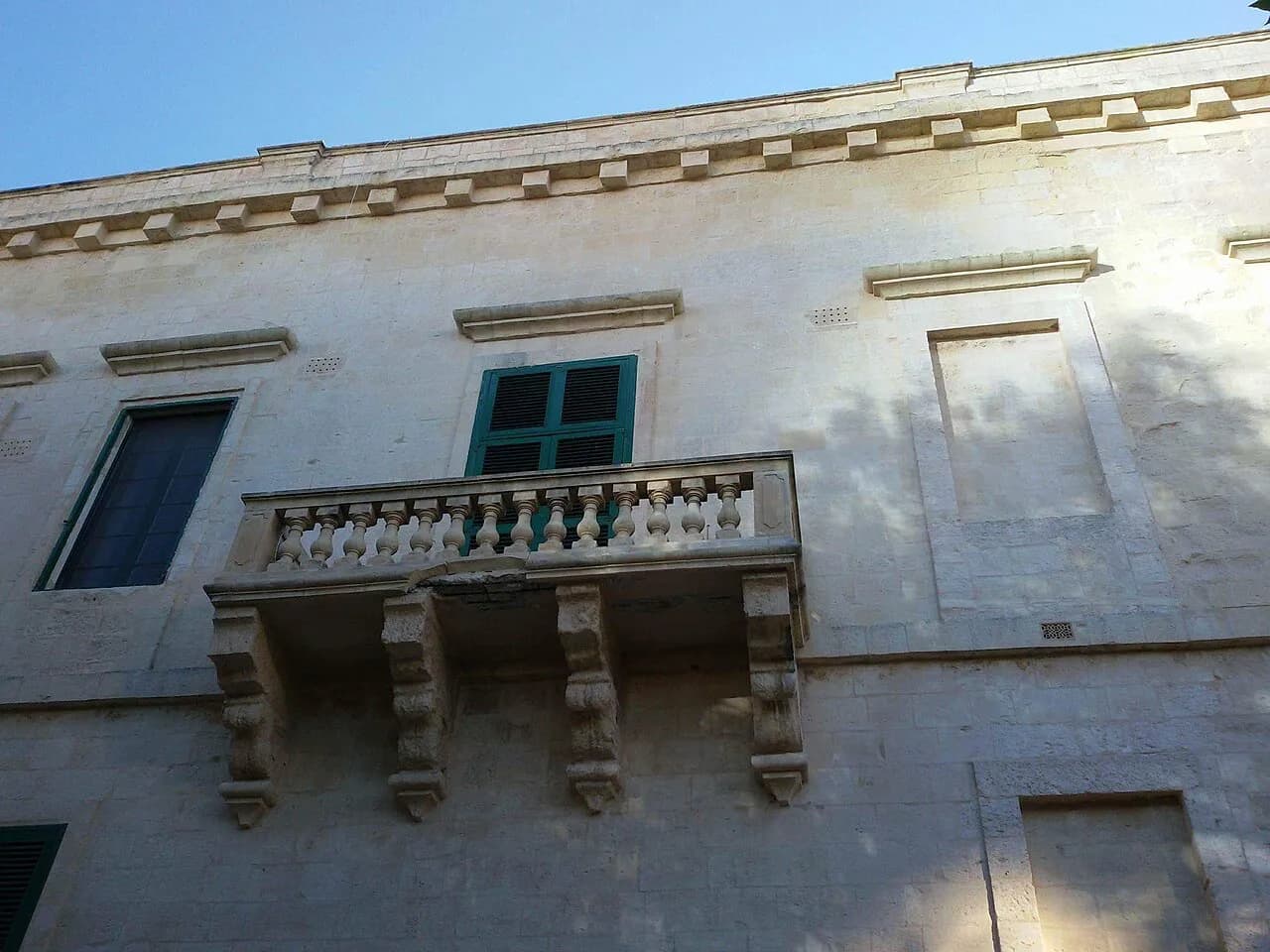
The present appearance dates to a remodelling of 1733, designed by Romano Fortunato Carapecchia and commissioned by Fra Giovanni Battista Spinola, nephew of the first owner. The façade is the reason to stop: the palace is described in the Spinola family archive as a masterpiece of secular baroque architecture in Malta, with an ornate clock above the main entrance.
Look closely at the clock and the stonework around it. The crown that once surmounted the clock was destroyed during the French occupation of 1798, in a gesture that echoed the expulsion of the Order of St John from Malta, and the damaged state is part of what you see today.
A Latin inscription sits above the main entrance, recording that the palace and its gardens were built for public entertainment and cultural use. The extensive baroque gardens and vineyards that once surrounded the building have not survived, so the entrance front is essentially what remains visible to a passer-by.

Opening status: not open to the public, except the cellar restaurant
The palace has been restored but is not open to the public, with the exception of its cellar, which houses a popular local restaurant. That restaurant is the only part of the building you can enter as a visitor.
There is no published entry price, tour schedule or set of opening hours for the palace as an attraction, so do not build a day around going in. If you want to eat in the cellar, contact the restaurant directly for its current service times and to book, since a working restaurant's hours change.
The palace's 19th- and 20th-century history explains the mixed uses attached to the building. It was restored in 1826 and later bought by the Church, was handed to the British Army in 1860 and renamed Forrest Hospital, and was requisitioned again by the Royal Army Medical Corps during the First World War; it is a landmark with a working past rather than a preserved house.
How to get there from Sliema, St Julian's centre and Spinola Bay
From central St Julian's, the palace is a short uphill walk towards the crest of the hill, with the church spire and the Spinola name on the nearby streets as landmarks. There is no need for transport once you are in the town centre. Approach on foot and use the hill as your guide.
From Sliema, walk or take a short taxi ride along the coast towards St Julian's, then climb from Spinola Bay. The route follows the waterfront and then turns uphill, so it suits anyone already spending the day along the Sliema seafront; the same corridor links the tower and fortifications covered in the Sliema Attractions guide, including Fort Tigné, the Sliema point battery and the views back over Sliema Creek.
If you are coming from the Manoel Island side, pair the palace with Fort Manoel, Manoel Island, which lies across the water and makes a natural second stop for anyone following the harbour defences. Both are exterior-focused visits, so the combination works well on a half-day.
How long to allow and when to go
Allow about fifteen to twenty minutes at the palace itself: a walk up the hill, a look at the façade and clock, and a pause before heading down. Because there is nothing to go inside, the stop is short by design.
Time your visit for the morning or late afternoon, when the light falls on the front of the building and the climb uphill is less punishing. The walk down to Spinola Bay afterwards is the reward.
If the palace is the only reason you are coming to St Julian's, it is a thin standalone trip. Treat it as one stop on a walk that takes in the bay and the seafront, which is how most visitors will get value from the climb.
What's nearby: Balluta Bay and the Our Lady of Mount Carmel church
Balluta Bay is a short walk along the coast from Spinola Bay, and the Our Lady of Mount Carmel church stands at the water's edge there. The church was built in 1859, rebuilt in 1877 and again in 1958, when it took over the title of parish church from the smaller Lapsi Church.
The seafront between the two bays also holds the Balluta buildings, which give the walk a landmark to aim for. Between the palace, the two bays and the church, the area fills an easy half-day on foot.
If you want to widen the walk, St Julian's parish church and the Sliema churches, including Stella Maris Church, Sliema, sit along the same stretch of coast. None of them needs long, but they break up the waterfront nicely.
Where to confirm current details before you go
The St Julian's Local Council page on places of interest describes the palace as restored but not open to the public, apart from the cellar restaurant. Re-read it before setting out if you intend to eat there or want to confirm that access has not changed.
The Spinola family archive and the St Julian's Local Council page both cover the building's architectural history, ownership and later uses. Neither gives an entry ticket for the palace, so plan on the street view rather than a paid visit.
Is the palace worth the climb?
Yes, if you are already in St Julian's or walking the coast from Sliema. The façade, the clock and the hilltop position justify the fifteen minutes, and the descent to Spinola Bay and Balluta Bay makes a proper afternoon.
No, if you were hoping for an interior visit. The palace is closed to the public apart from the cellar restaurant, so plan around the street view and the waterfront rather than a ticket.