Free Things to Do in Valletta: Gardens, Bastions and Churches
Free things to do in Valletta, from Upper and Lower Barrakka Gardens to the Saluting Battery cannon firing, City Gate, Hastings Park and the Three Cities crossing.
On this page
Valletta's free sights are concentrated along the bastions and through the grid of streets inside the walls, so a half-day costs nothing but shoe leather. Start high at the Upper Barrakka Gardens, watch the noon cannon across the harbour, then walk down through Hastings Park and the church circuit rather than climbing back up. This guide keeps the genuinely free stops separate from the paid museums and church interiors nearby.
What you can see in Valletta without paying
Almost everything that defines Valletta is public: the city walls, the gardens on the bastions, the main squares and the pedestrian streets. The famous Maltese balconies, known as gallariji, hang over public lanes, and the main gate and fountain are open-air. Paying is optional and mostly buys you interiors, guided tours and the Saluting Battery terrace.
The shortlist that pays off for most visitors combines the Upper and Lower Barrakka Gardens, the Siege Bell War Memorial, the streets around Republic Street, City Gate and Triton Fountain. Add Hastings Park and Victoria Gate to reach the lower edge of the city, then decide whether a harbour crossing or a church interior is worth the extra spend. The full list of things to do in Valletta in the city is deeper than a free half-day can cover.
Upper Barrakka Gardens and the Barrakka Lift
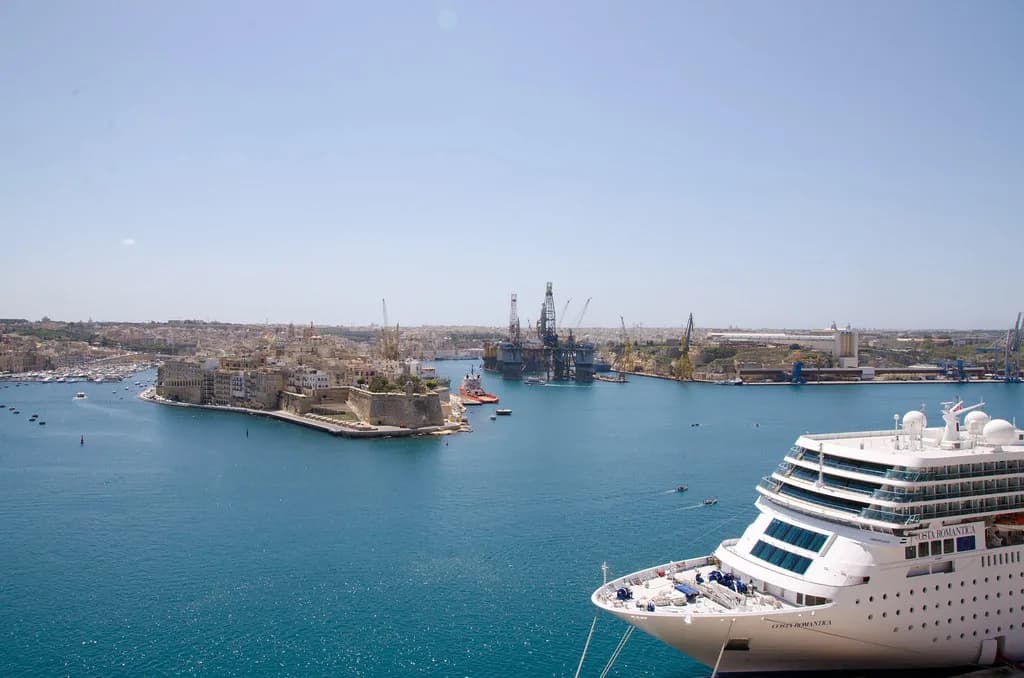
The Upper Barrakka Gardens sit on the bastions above the waterfront, looking across the Grand Harbour to the Three Cities. There is a small café inside the garden, and the Barrakka Lift connects the terrace level to the waterfront below, where you can pick up the ferry or a traditional boat across the water. The free view is the point; the lift is a shortcut when you would rather not walk down and back up.
The gardens are also the free grandstand for the Saluting Battery cannon firing. You can watch from the public garden above the battery rather than paying the donation for the terrace, and the elevated angle gives a wide sweep over the harbour and the Three Cities. Arrive early enough to find a spot along the railing before the crowd gathers.
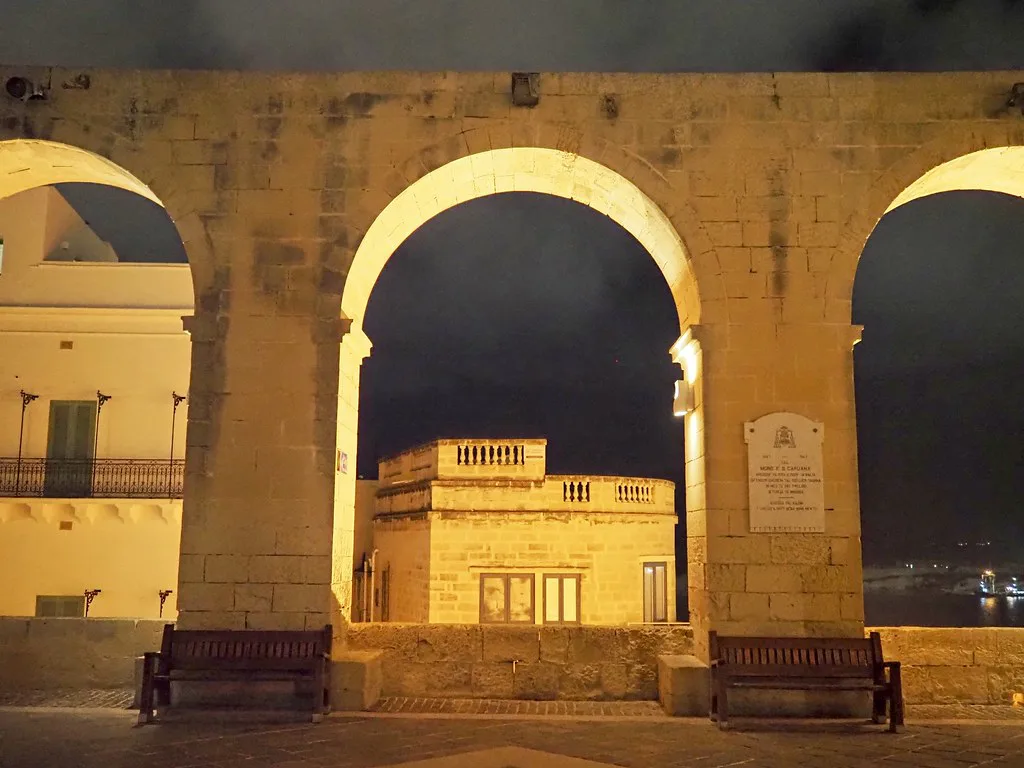
Saluting Battery: what the cannon firing involves
The cannons fire twice a day, at noon and 4 pm, from Monday to Saturday. The tradition is kept by the Malta Heritage Trust, and visitors can go down to the terrace of the Saluting Battery for a donation to see the firing up close and hear how the guns worked. Watching from the Upper Barrakka Gardens above costs nothing.
The timing matters for planning the rest of a free day: a noon firing pairs naturally with the gardens and a harbour view, while the 4 pm firing suits a slower morning in the streets. The Saluting Battery is one of the Valletta attractions that works as a short stop rather than a half-day in itself.
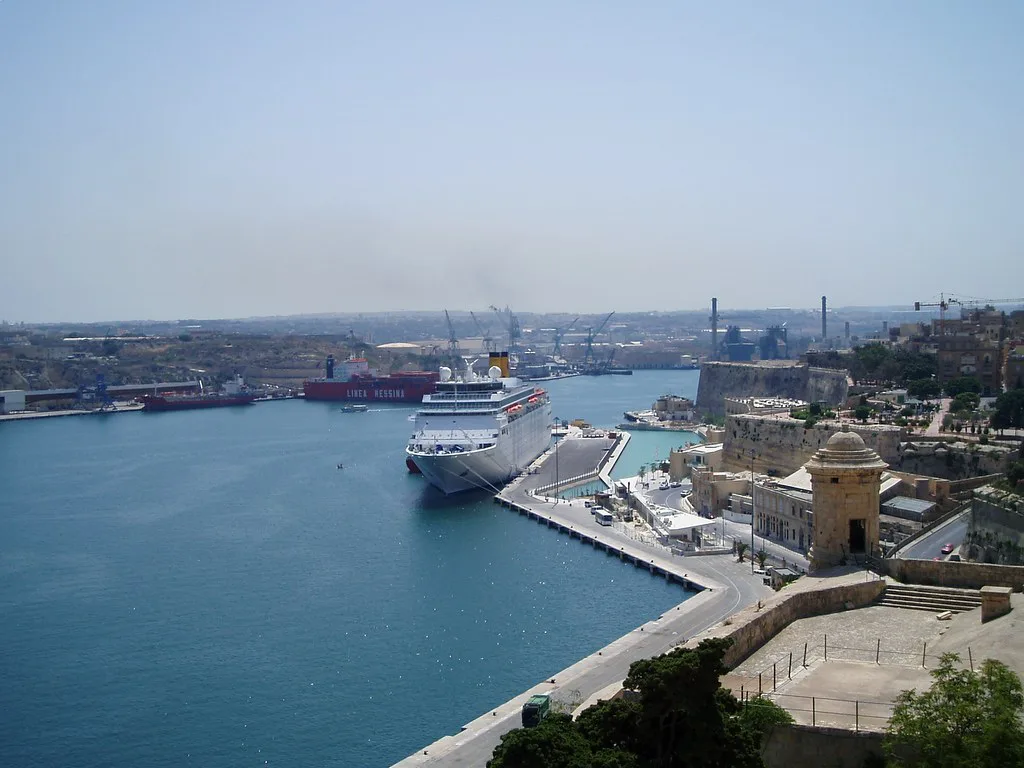
Lower Barrakka Gardens and the Sir Alexander Ball monument
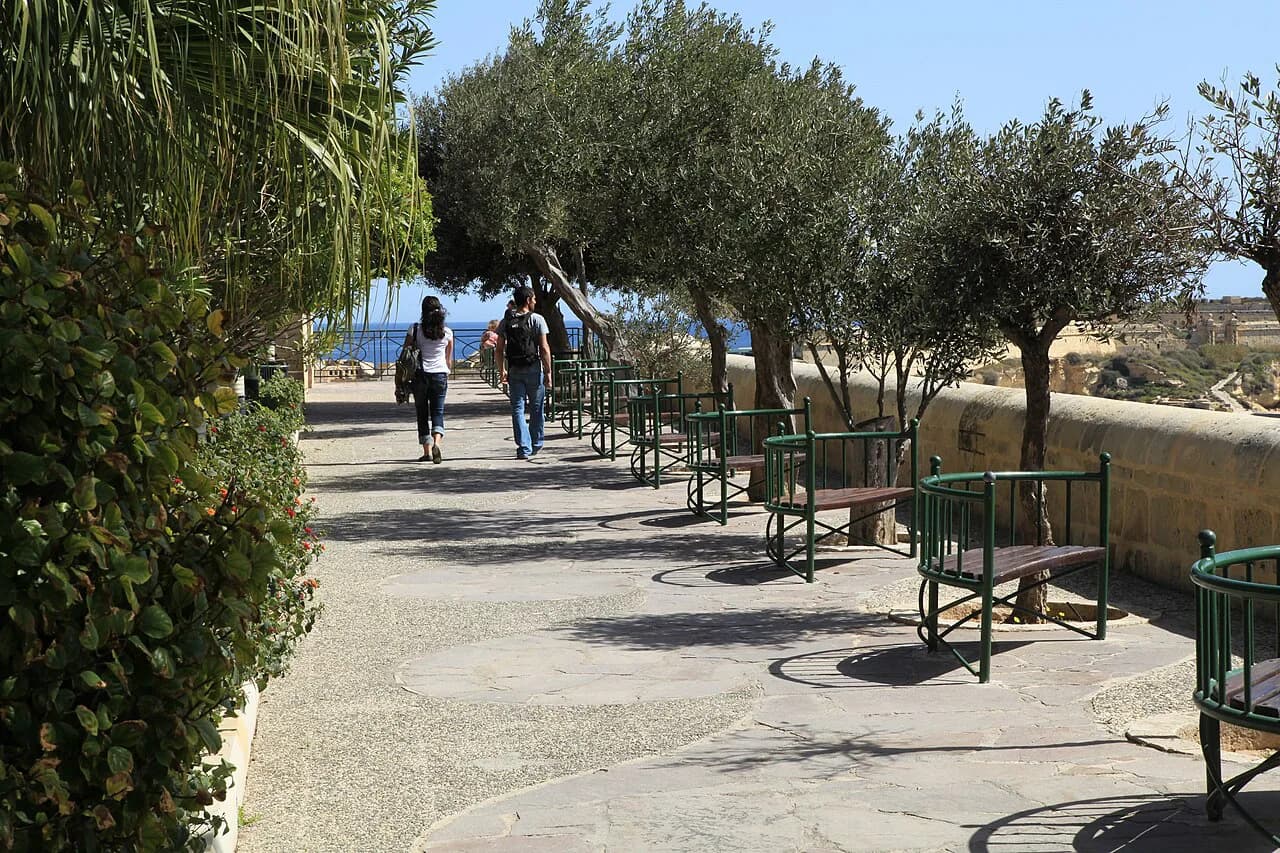
The Lower Barrakka Gardens are smaller than the Upper gardens and usually quieter, with a panorama across the water to the Three Cities. In the centre of the garden stands the monument to Sir Alexander Ball, built to resemble an ancient temple. From the back of the gardens you can see the Siege Bell War Memorial.
This is the better garden for sitting still: fewer tour groups, more shade and a clear line of sight to the harbour. Pair it with the Siege Bell below rather than treating each as a separate trip. Both are free and both fit into the same downhill walk along the bastions.
Siege Bell War Memorial above the Grand Harbour
The Siege Bell War Memorial overlooks the Grand Harbour and commemorates those who died when Malta was heavily bombed during the Second World War. Every day at noon the large bell rings out across the harbour. It is a short stop on foot from the Lower Barrakka Gardens and costs nothing to visit.
The memorial is also a good place to read the harbour itself: the fortifications on the far side, the boats crossing and the scale of the docks. If you are in the city at noon, time the bell with the cannon firing above for a single free set piece. The wider story of the harbour is covered in the Valletta Grand Harbour guide.
Walking Valletta's streets: Republic Street, balconies and doors
The classic Valletta walk is simply the streets themselves: narrow lanes, baroque facades and the closed wooden balconies that give the city its colour. Republic Street is the main spine, and the side lanes off it are where the doors and balconies are worth slowing down for. There is no ticket and no set route.
The balconies are practical as well as decorative, providing shade and privacy to the rooms behind them. Look up rather than straight ahead: the best examples sit above shop level on the quieter lanes. A Valletta map helps you link the lanes without doubling back.
City Gate and Triton Fountain
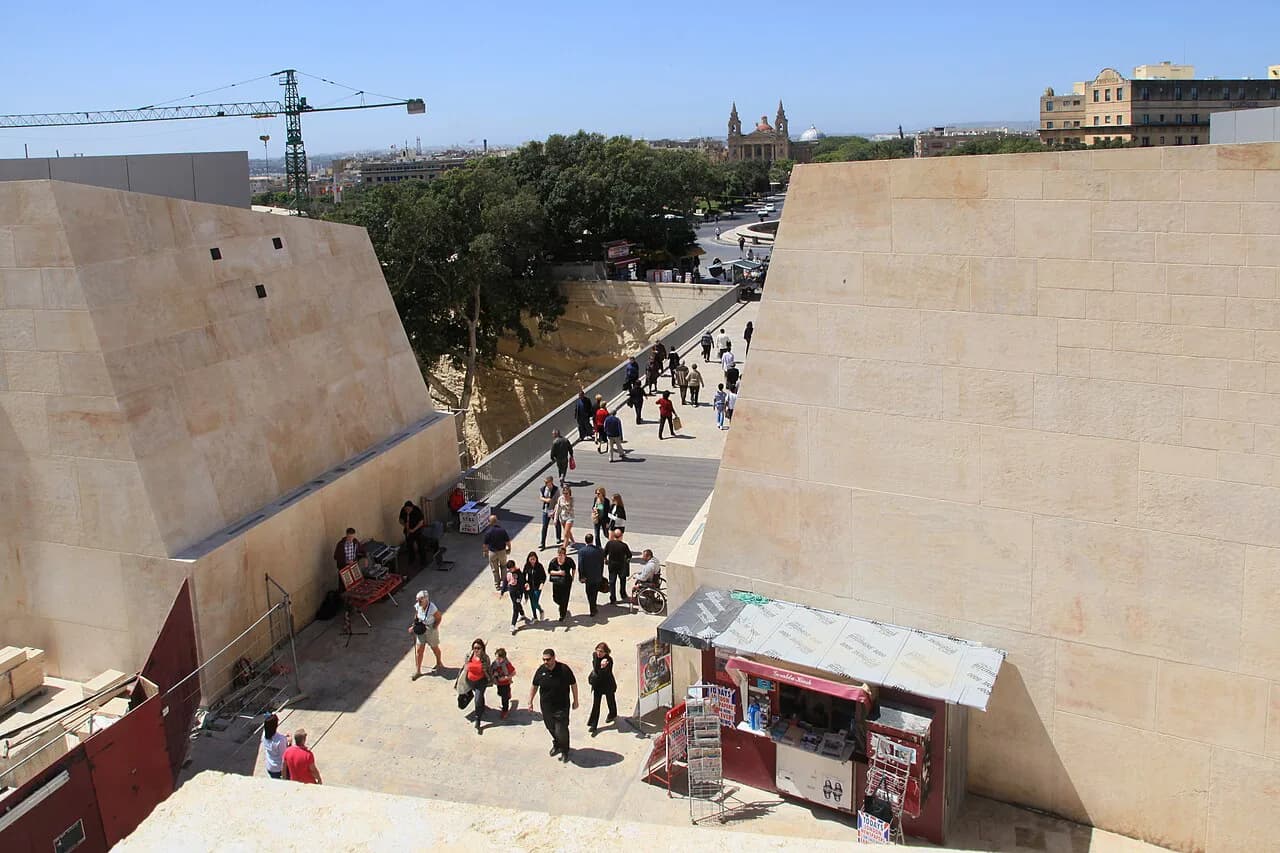
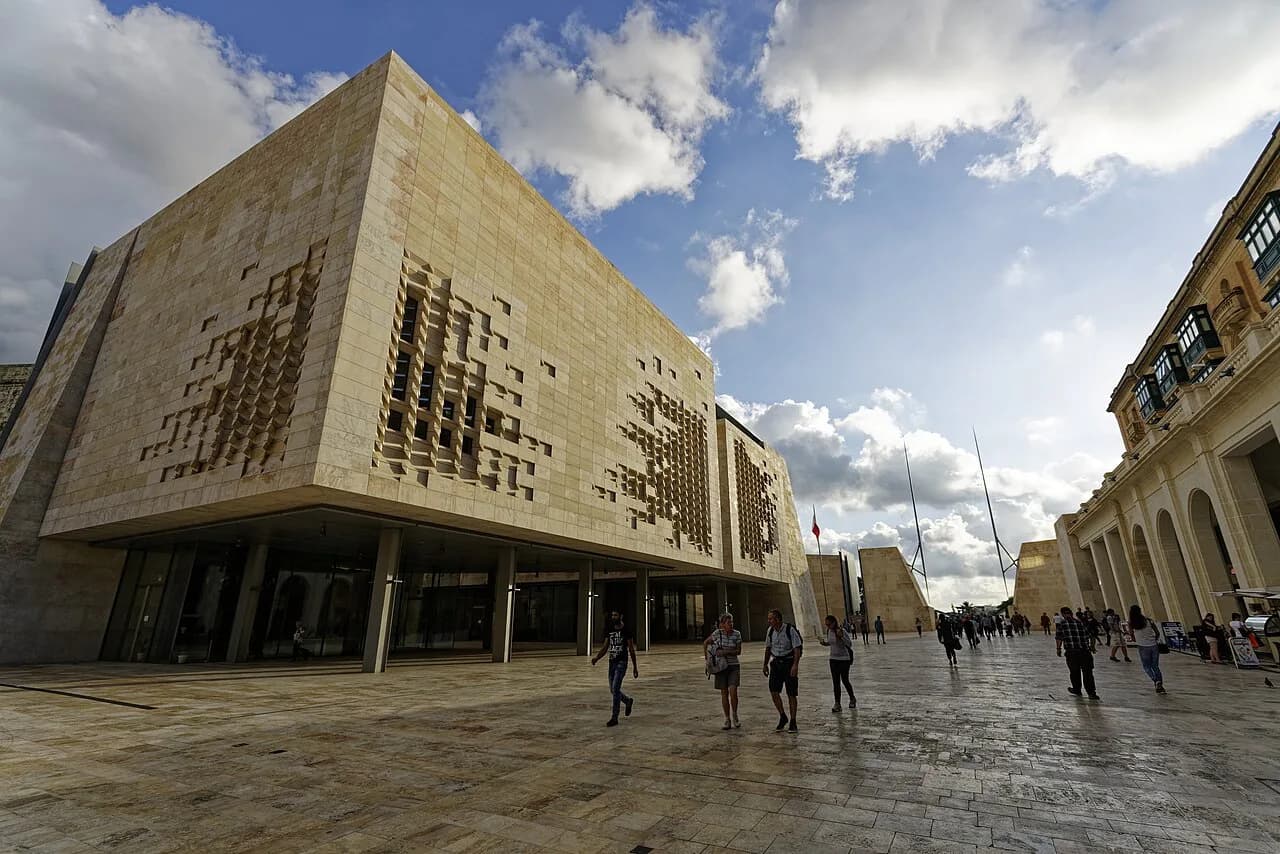
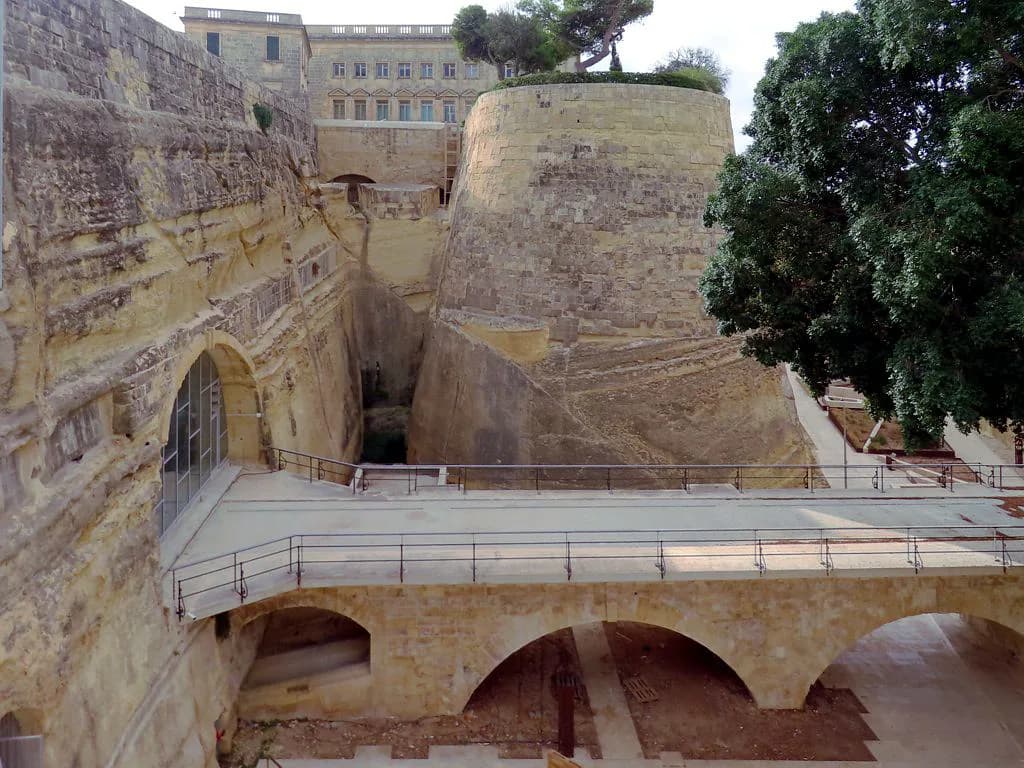
Valletta's City Gate has been rebuilt several times, and the current design by Renzo Piano gives the entrance a modern frame against the old walls. Passing through, you are flanked by the fortifications, which sets up the city nicely before the first square. The gate is free and open to walk through at any time you are in the city.
Just outside the gate, Triton Fountain lights up at night, which makes it a free end to an evening in the city. It is also the practical meeting point before a walking tour or a day of sightseeing inside the walls. If you want structure rather than wandering, the Valletta walking tour covers the same ground with context.
The church circuit on foot
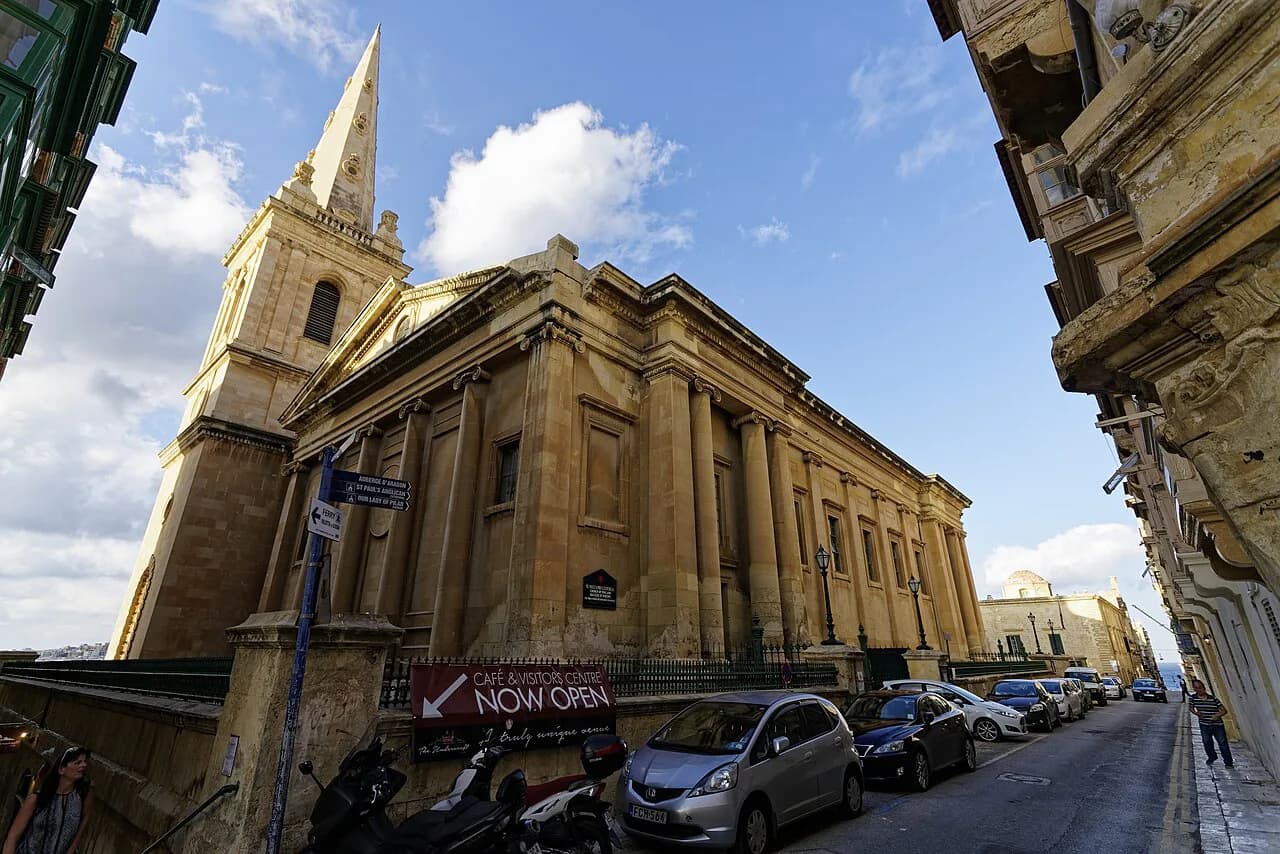
The Church of Our Lady of Victory stands as the first building put up in Valletta, and its plain exterior gives way to a decorated interior with frescoes. The Church of St Paul's Shipwreck is another free stop on the same circuit of streets. Both are working churches, so dress and timing rules apply and should be respected.
St John's Co-Cathedral is the exception: the interior is a paid visit, and it is the one church interior in Valletta most visitors choose to pay for. Treat it as an optional add-on rather than part of the free circuit. The Valletta churches guide sets out which stops are free and which charge.
The interior of St John's Co-Cathedral is widely described as one of the grandest church interiors in the world, with strong links to the Knights of Malta. If you pay for one interior in the city, this is the one to weigh against the free stops. Check the ticket price and any restrictions at the door before committing.
Hastings Park and Victoria Gate
Hastings Park is a free public garden on the lower edge of the city, useful as a breather between the church circuit and the waterfront. Victoria Gate is the old entrance through the walls on that side, and walking through it is the simplest free way to reach the lower part of Valletta. Both fit a short loop rather than a dedicated trip.
Use this end of the city to avoid climbing back up mid-afternoon. From Hastings Park you can drop to the waterfront and the Barrakka Lift for the return, or carry on to the harbour crossing. The Valletta gardens guide covers the full set of open spaces if you want to plan the green stops in one go.
Crossing the harbour to Birgu, Senglea and Cospicua
A traditional Maltese boat, the dgħajsa, crosses from below the Barrakka Lift to the Three Cities, and the ferry does the same run. Birgu (Vittoriosa), Senglea (L-Isla) and Cospicua (Bormla) sit across the Grand Harbour and are best explored on foot once you land. The crossing itself is the paid part; the streets on the other side are free.
In Birgu, head for the Birgu Belvedere, also called Is-Simenta, for a panorama back towards Valletta and across to Kalkara. Fort St Angelo stands guard over the harbour and is the other landmark to orient yourself by. A Valletta boat trip is one way to see the harbour from the water, but the short crossing is the cheapest practical version.
Fort St Angelo and the Three Cities waterfront
Fort St Angelo is the dominant structure on the Birgu waterfront, and the streets around it are free to walk. The Three Cities reward slow wandering more than checklist ticking: narrow lanes, old buildings and fortifications along the water. The free part is the town itself; the fort interior and any guided visits are separate.
Senglea and Cospicua sit a short walk apart along the waterfront, which makes a single loop of all three possible if you keep moving. The return boat or ferry from the same landing keeps the day simple. If you are deciding whether the detour earns its time, the honest verdict on whether Valletta is worth visiting covers the broader case for the city and its harbour.
Where free ends: Hypogeum, museums and war rooms
The Ħal Saflieni Hypogeum is a timed, ticketed visit and reservations are strongly encouraged well in advance, so it does not belong on a free day. The National War Museum at Fort St Elmo and the Lascaris War Rooms are also paid. Treat them as a separate half-day and check current prices and availability before you build a day around them.
The museums in Valletta are worth a day of their own once you have walked the free circuit and know which subjects you want to go deeper on. The Valletta Market (Il-Monti) is free to walk through and works as a lunch stop, and the shops around Republic Street and Merchant Street cost nothing to browse.
Tip-based walking tours are the other common free option, though the guide expects a tip at the end. Budget a modest amount per person if you join one, and check what the tour covers before you set out. They work best as an orientation on your first morning in the city.
How much time each free stop needs, and a walking order
A sensible free day starts at City Gate and Triton Fountain, climbs through the streets to the Upper Barrakka Gardens for the noon cannon, then drops to the Lower Barrakka Gardens and the Siege Bell. Hastings Park and Victoria Gate finish the descent, and the harbour crossing is the optional add-on at the bottom. The order does the climbing once and spends the rest of the day walking down.
Give the gardens and the Siege Bell no more than a short stop each unless you are lingering for the views; the church circuit takes longer because you are walking between them. Leave the museums and the Hypogeum for a separate visit rather than squeezing them into a free day. Two sentences of caution: check current opening times and any restrictions at each site before you go.
Which free Valletta walk suits your day?
For most visitors the best free day is the bastion route: City Gate, the Upper Barrakka Gardens for the cannon, then down through the Lower gardens, the Siege Bell, Hastings Park and Victoria Gate. It needs no tickets and the only optional spend is the Barrakka Lift or the boat across to the Three Cities. If you have a second day, spend it on the paid interiors and museums instead.
Frequently Asked Questions
Is Valletta worth visiting on a budget?
Yes. The gardens, the bastions, the main streets, City Gate and the harbour views cost nothing, and the cannon firing can be watched free from the Upper Barrakka Gardens. Paying is optional and mostly covers church interiors, museums and the Saluting Battery terrace.
What can you do in Valletta on a Sunday?
The public gardens, the streets, City Gate and the harbour viewpoints remain open to walk. The cannon firing runs Monday to Saturday, so a Sunday visit is better built around the streets, the churches and the waterfront rather than the Saluting Battery.
How much should you tip on a free walking tour in Valletta?
Tip-based tours have no official rate; the guide keeps the fee you decide on at the end, and the norm quoted for Valletta is a modest amount per person if you enjoyed it. Check what the specific tour covers before you join.
Sources
Notes for your Malta trip
Optional updates when we add or correct a Malta or Gozo guide.
You might also like
Continue reading
More guides you'll find useful