Valletta Grand Harbour: What to See and How to See It
The Grand Harbour links Valletta's waterfront, the Three Cities and the forts facing them. Here is what sits where, the viewpoints worth the walk and boat cruises.
On this page
The Grand Harbour is a natural harbour, known in Maltese as Il-Port il-Kbir, that Valletta overlooks from its peninsula and that the Three Cities face from the opposite side. A half-day loop of the waterfront, a crossing to Birgu (Vittoriosa) and a stop at a belvedere shows you more than any single sight does. This guide covers what sits where, how to see the harbour from the water, the viewpoints worth the walk and the trade-offs that decide your timing.
If you have time for only one thing inland, pair the harbour with the things to do in Valletta, including St John's Co-Cathedral, whose interior justifies a separate morning rather than an hour squeezed between boat trips.
What the Grand Harbour is and where it sits
The harbour is the body of water between Valletta's fortified peninsula and the three peninsulas opposite, with the open sea beyond the forts at its entrance. Il-Port il-Kbir has served as a naval and trading base for successive powers, and the Valletta Harbour area is recognised as a UNESCO World Heritage Site.
Treat it as a loop of three shores: Valletta on one side, Birgu, L-Isla (Senglea) and Bormla (Cospicua) on the other, and the narrow entrance between Fort St Angelo and Fort Ricasoli. Getting between the two main sides means a water crossing or a road route rather than a continuous walk around the water.
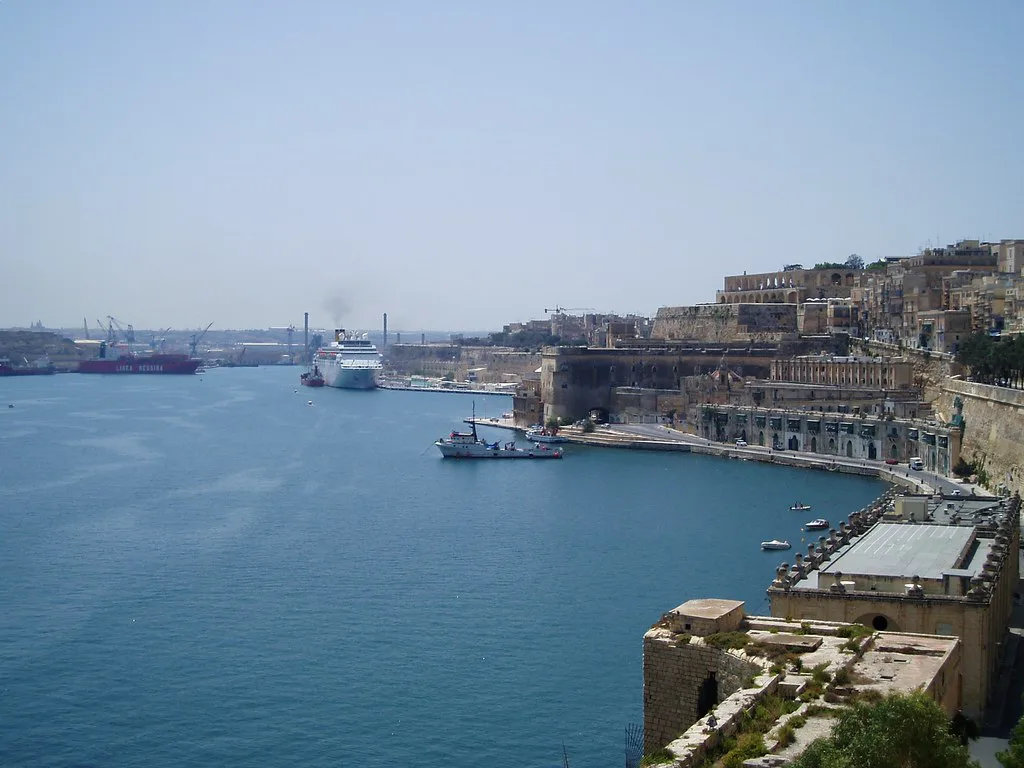
Which places face each other across the water
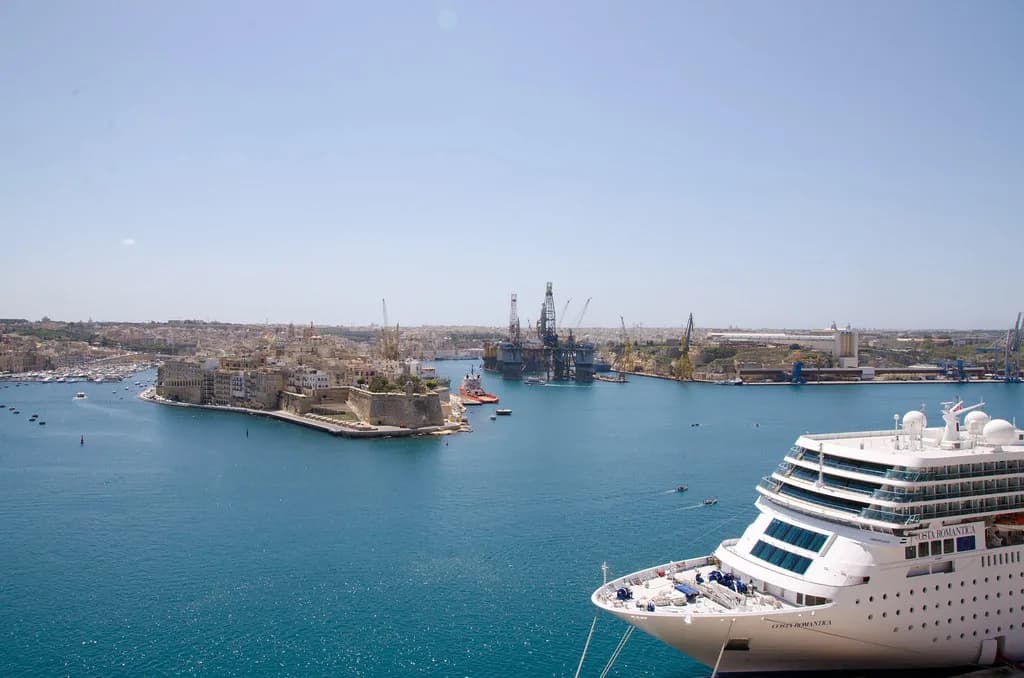
From the water you can pick out Valletta's bastions, the fortified Three Cities of Birgu (Vittoriosa), Senglea (L-Isla) and Cospicua (Bormla), Fort St Angelo at the entrance and Fort Ricasoli on the opposite side of the harbour mouth. The Valletta Waterfront, a modern development along the harbour, holds restaurants, bars, shops and a marina.
Much of this reading of the harbour rewards a boat or a high viewpoint: the bastions and forts read most clearly from the water, as they did to those arriving by sea. The forts at the entrance are best seen from a cruise or a belvedere, so check access for any fort you want to walk before setting out.
Valletta Waterfront: what is there now
The waterfront's signature buildings, known as the Pinto Stores, were commissioned by Grand Master Pinto, designed by Andrea Belli and are still known by that name. The same complex includes the Chapel of the Flight to Egypt by the Holy Family, built in 1752 alongside the stores.
Also on the site is the Child Migrants' Memorial, inaugurated in 2008 to commemorate the 310 Maltese children, mostly boys, who travelled to Australia between 1950 and 1965. Walk the length of the waterfront before choosing where to stop.
Seeing the harbour from the water
A harbour cruise is the simplest way to see the bastions, the Three Cities and the forts in one go, and the Captain Morgan harbour cruise supplies detailed commentary in both English and German. That commentary language applies to this operator; other boats may differ, and you should confirm before booking.
Departure point matters: boats leave from different quays, so pick an operator whose pier you can reach without a rushed transfer. Compare a few Valletta boat trips and confirm the current fare and sailing time with the operator when you book.
For photography, early or late in the day usually gives the best light, when the sun is low over the bastions and the water is calmer; midday flattens the stone. Bring water and a hat if you plan to stand on deck for the full circuit.
Viewpoints on the Birgu side
If you would rather not pay for a boat, the Birgu Belvedere, also known as Is-Simenta, on the Birgu side of the harbour gives a wide view back across to Valletta. It is a good place to sit and watch the traffic for a while.
Before you commit to a day at the waterfront, the Grand Harbour live webcam stream, fed by an AIS vessel tracker, shows which ships are in port and what traffic is due. It is a useful reality check if you want a quiet walk rather than a crowd.
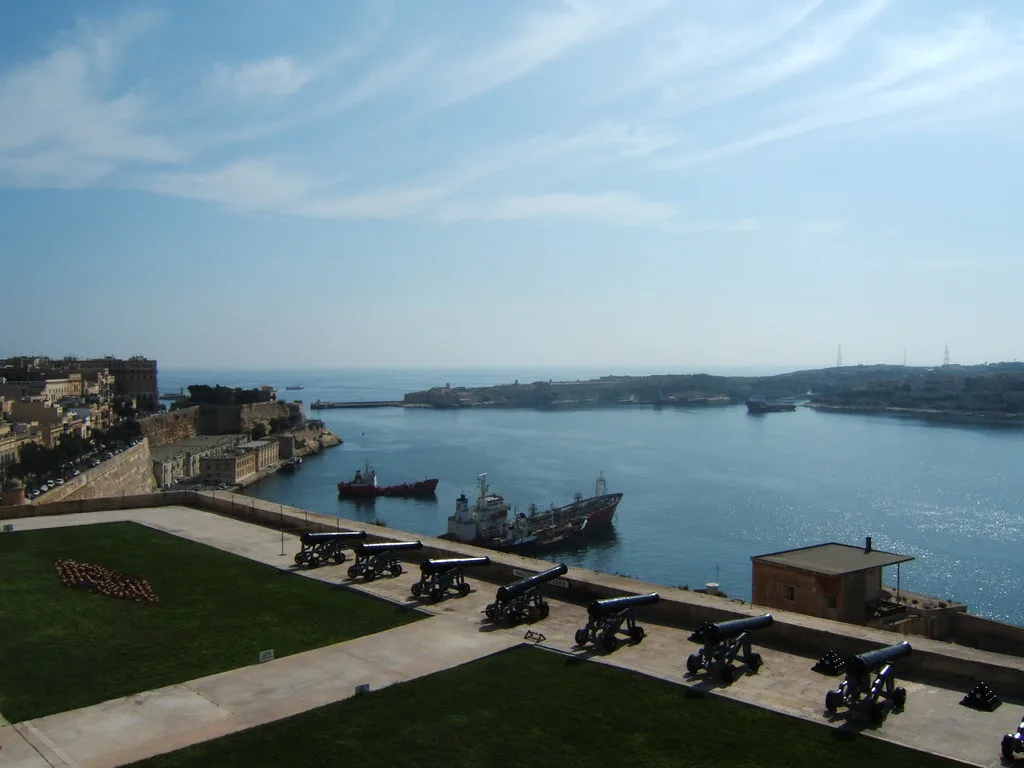
Practical trade-offs worth planning around
Cruise-ship days change the feel of the waterfront: the numbers landing at the quay can swell the restaurants and shops along the Pinto Stores, so check the port schedule before you choose a lunch stop. If you want the promenade to yourself, go early or on a day with less shipping in port.
The walk along the bastions and the waterfront is exposed, so plan your harbour walk for morning or late afternoon and leave the middle of the day for a museum or a shaded café.
Departure point is the trade-off that most affects your day: boats leaving from the Valletta side suit a morning in the city, while those leaving from the Three Cities let you combine a cruise with a Birgu walk. Work out which side you will be on before you buy a ticket.
Where to eat around the waterfront
The waterfront lists a mix of restaurants and bars, including Tribelli, Ta' Detta (a family-run restaurant specialising in Maltese and Mediterranean food), Mamma Mozzarella, Hi Sushi Malta and Nan Yuan.
Menus, hours and prices are set by each venue and change; check the restaurant's own listing before you go rather than relying on a board at the quay. If you would rather eat inland, the Valletta cafes give you more choice within a short walk of the centre.
Getting between Valletta and the Three Cities
The two sides of the harbour connect by water and by road; a short boat crossing is the most direct way to link Valletta with Birgu, L-Isla or Bormla. Check the current timetable on the day rather than assuming a boat will be waiting.
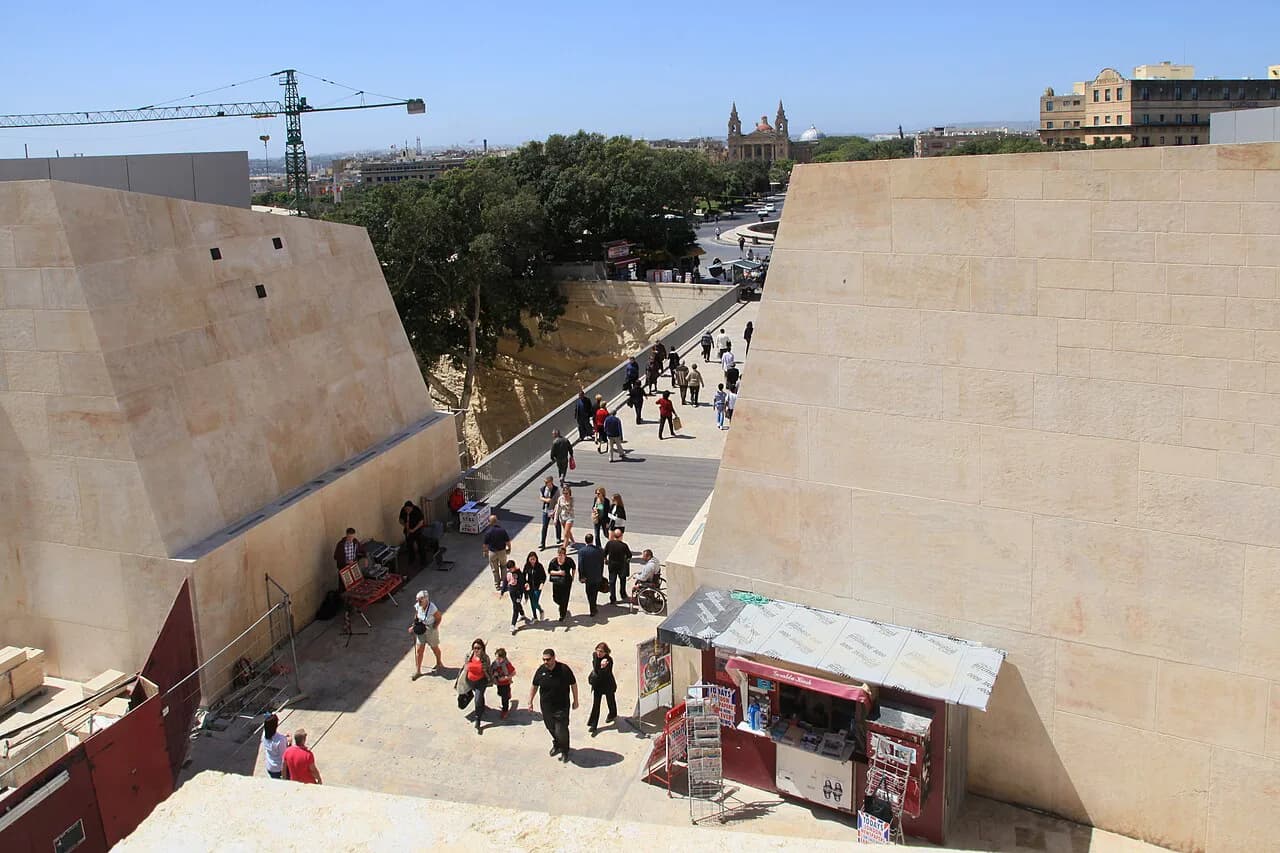
If you are walking Valletta first, orient yourself with a Valletta Map and start from Triton Fountain outside City Gate. From there it is a short walk downhill to the waterfront and the cruise departure points.
What this guide leaves out
This guide covers the harbour itself, the waterfront and the viewpoints on both shores; it does not plan shore excursions or advise on cruise-port logistics. If you are deciding how much of Valletta to see beyond the waterfront, our Valletta attractions guide covers the rest of the city.
Boat, belvedere or both?
Take the boat if you want the forts, the bastions and the Three Cities explained in one circuit, and head for the Birgu Belvedere if you want the view from the other shore with time to sit. Doing both on separate days gives you the harbour from two sides and a calmer pace.
Whichever you choose, check ship traffic on the live webcam, time your walk for the cooler hours and confirm any fare or sailing time with the operator before you set out.
Explore more Valletta guides
Frequently Asked Questions
What are the Malta Three Cities?
Birgu (Vittoriosa), Senglea (L-Isla) and Cospicua (Bormla) are the three fortified cities on the opposite side of the Grand Harbour from Valletta. They face Valletta's bastions across the water and are reached by a short crossing or by road.
Can you walk around the Grand Harbour?
You can walk along the Valletta waterfront and around the Birgu side, but the water itself separates the two shores, so you cross by ferry, boat or road. Plan a loop rather than expecting a continuous waterside path.
Sources
Notes for your Malta trip
Optional updates when we add or correct a Malta or Gozo guide.
You might also like
Continue reading
More guides you'll find useful