Valletta Walking Tour: A Self-Guided Route Through the City
Walk Valletta from City Gate along Republic Street to the Barrakka Gardens, with what to see at each stop and how guided walks compare in euros.
On this page
Walk Valletta on foot and you can cover the walled city from City Gate to the Barrakka Gardens in half a day, because the whole peninsula is short and the main street runs straight through it. This route follows Republic Street to St John's Co-Cathedral, the Grand Master's Palace, St George's Square and the auberges, then drops to the Upper and Lower Barrakka Gardens and loops back via Strait Street. Each stop below names what to look at, and the guided-walk comparison sets out what operators charge in euros.
The shape of the walk suits a first day: enter through the gate, keep to the central spine while the streets are quieter, and save the harbour terraces for the point when you want to sit down. You can cut it short at any stage, since everything sits inside the same grid of streets behind the bastions.
What a Valletta walking tour covers
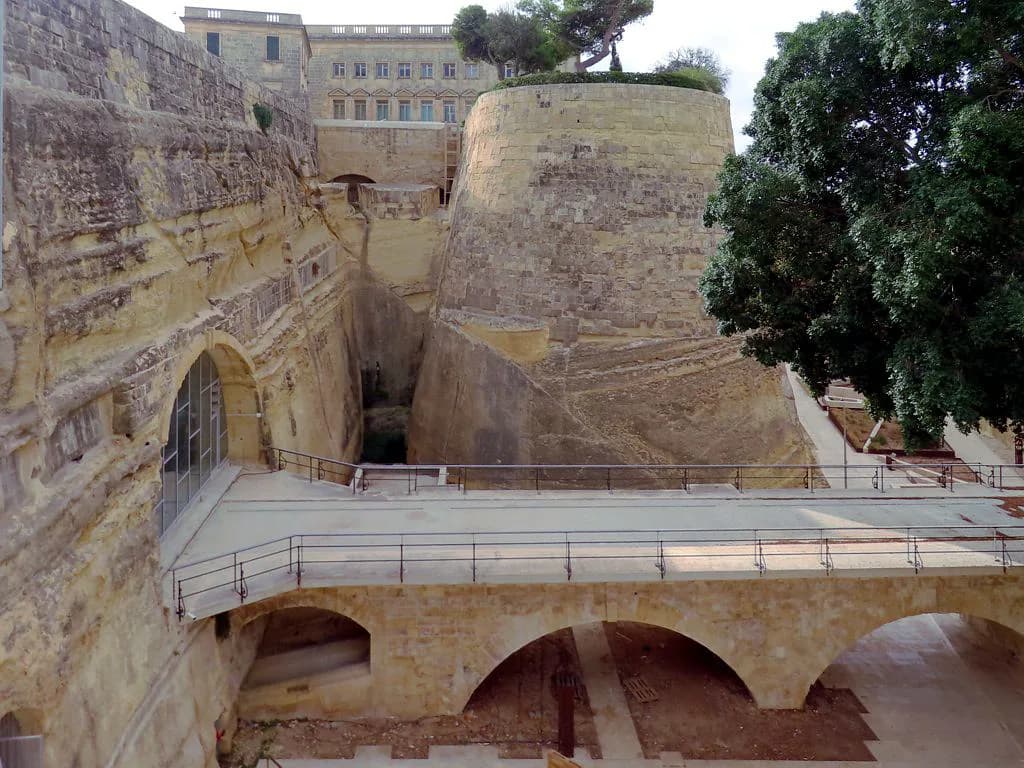
The city is a compact walled grid entered at City Gate, with Republic Street as its central street, and almost every stop on a walking tour sits within a short stroll of that line. A guided walk typically links the Upper Barrakka Gardens with the palaces, the cathedral and the main squares, which gives you a clear spine to copy on your own.
Plan the day as one continuous loop rather than a checklist of separate sights. Start high at the gate, work down the central street, take the harbour gardens at the far end, then return through the side streets so you finish near where you began.
Start at City Gate
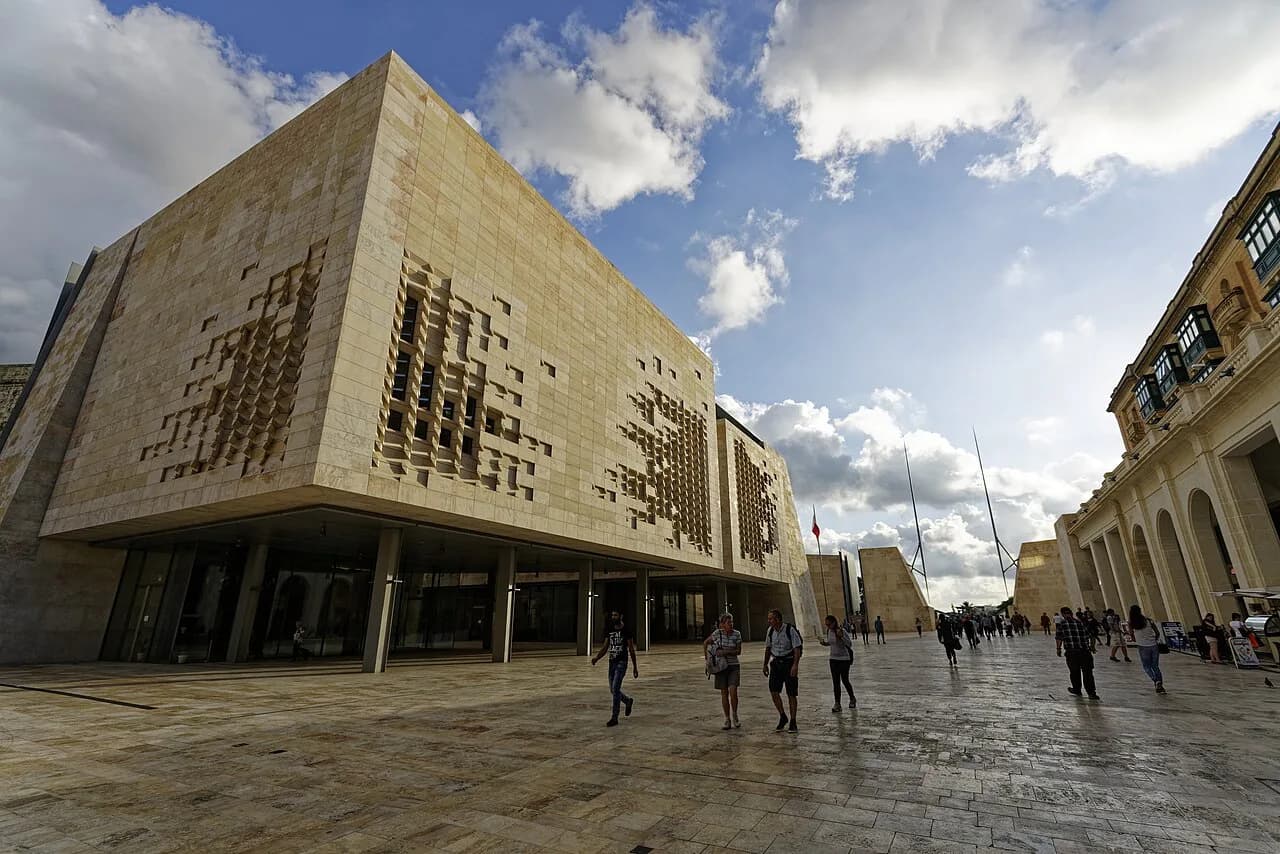
City Gate is both the practical starting line for a self-guided route and the standard meeting point for guided walks. Colour my Travel meets guests at the bottom of the stairs on the right as soon as you enter City Gate, beside the parliament building, with a yellow umbrella as the marker.
From there, walk straight ahead onto Republic Street rather than turning off into the first side lane, so you keep the cathedral and the palaces in a sensible order. The walk to the first major stop is short, and the street itself tells you when you have arrived.
Republic Street on foot: pacing the walk
Republic Street is the central artery through the city, lined with shops, eateries and major historical sites, so it works as the spine of the day rather than a place to rush. Walk it slowly in one direction and treat the side streets as detours you take only when something specific pulls you in.
Pace the morning so the cathedral and palace come before you reach the gardens. Both reward a proper stop, and leaving them until after a long harbour break rarely works, since the temptation is to push on to the views instead.
St John's Co-Cathedral: plain outside, Baroque within
St John's Co-Cathedral is the stop most walking tours build around: the exterior reads as plain, while the interior is elaborately decorated with Baroque works including paintings by Caravaggio. Buying your ticket beforehand can save time at the entrance rather than queueing with the walk-up crowd.
Give this stop real time and go in with an idea of what you want to see, because the interior is dense and easy to skim past. The mosaic floors and the Caravaggio works are the two things to seek out deliberately rather than stumble on.
The Grand Master's Palace and the Armoury
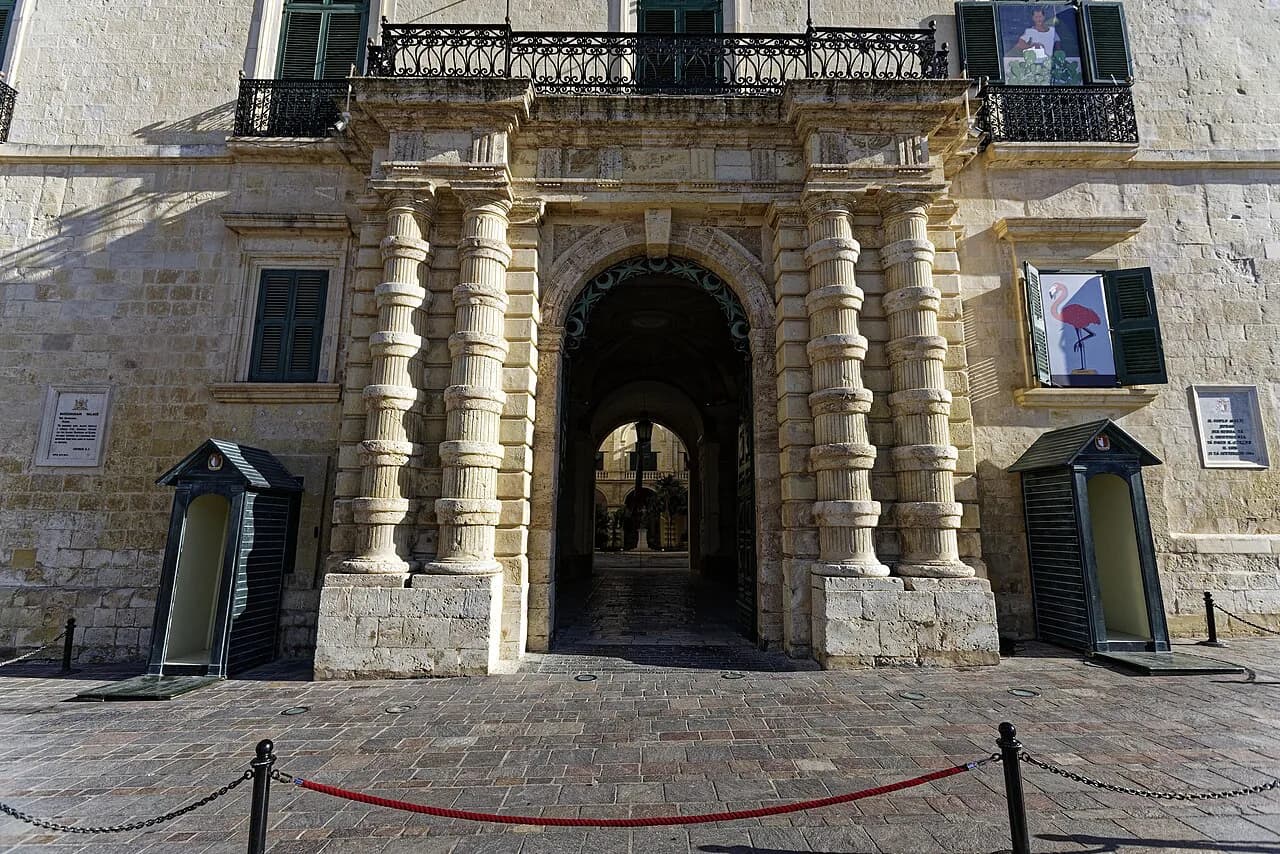
The Grand Master's Palace was the home of Malta's rulers, and its courtyards give a quieter pause from the busy streets outside. The Armoury holds arms and armaments that trace the island's wars, which makes it the natural companion stop to the cathedral.
The palace and the cathedral together carry most of the knights' story on this route, so if you are choosing where to spend a guided fee or an audio guide, spend it here. Treat them as two separate visits with their own arrangements at the door.
St George's Square and the Main Guard
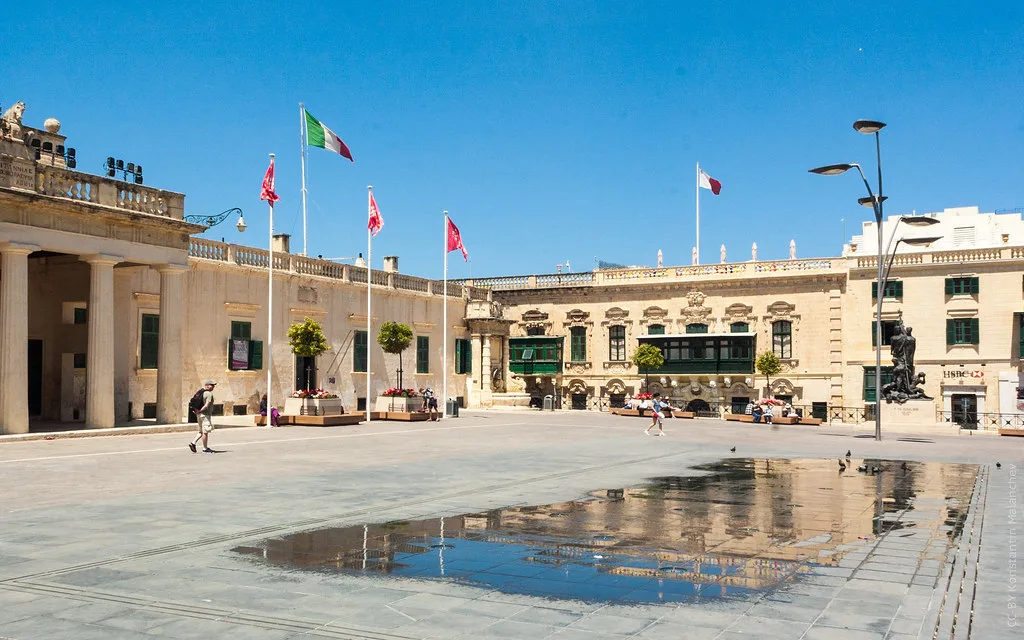
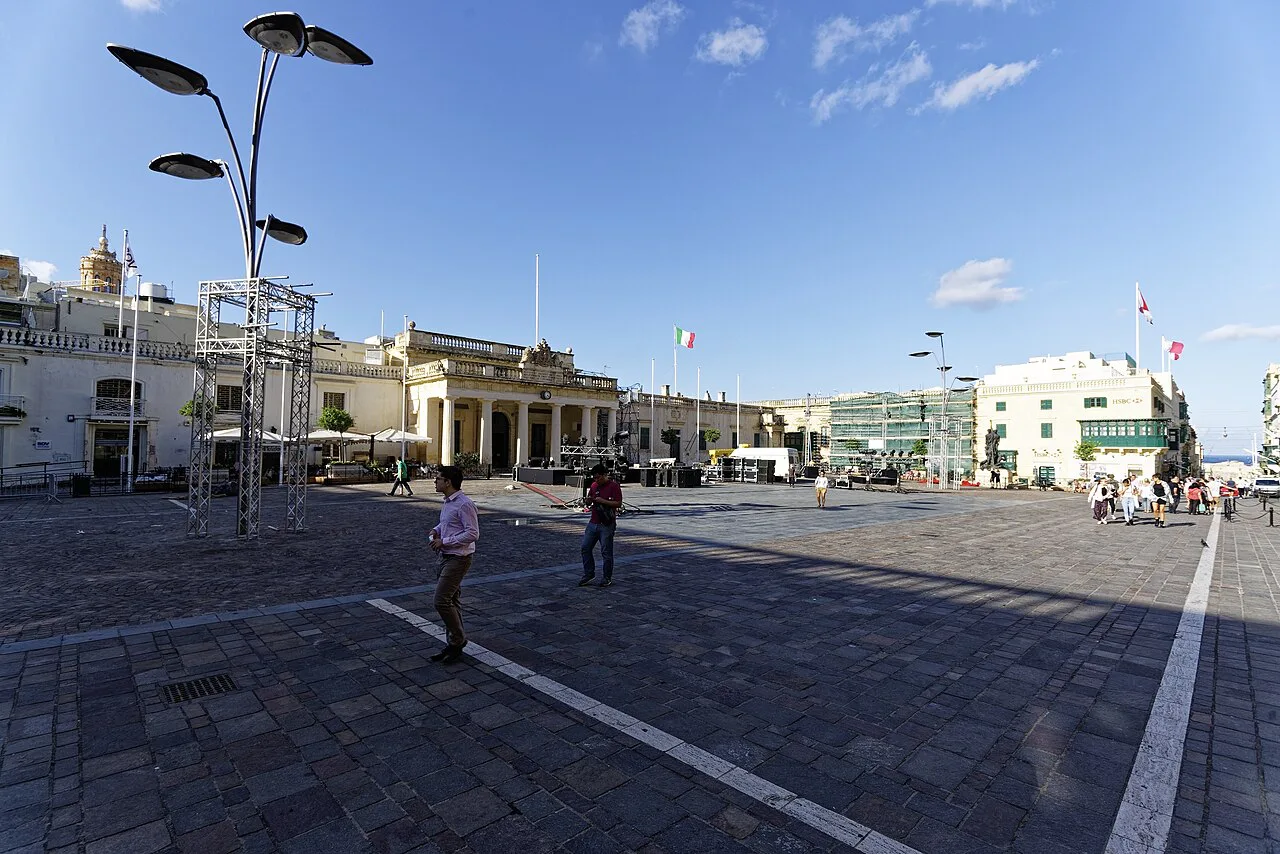
St George's Square and the Main Guard building sit on the guided routes through the centre and give the walk a natural open-air pause between the palace and the auberges. The square is a good place to stop and orient yourself against the grid of streets before continuing.
Look up at the buildings around the square rather than only at street level, because the upper storeys and balconies carry much of the character of this part of the city.
The Auberges, the Castellania and the Courts of Justice
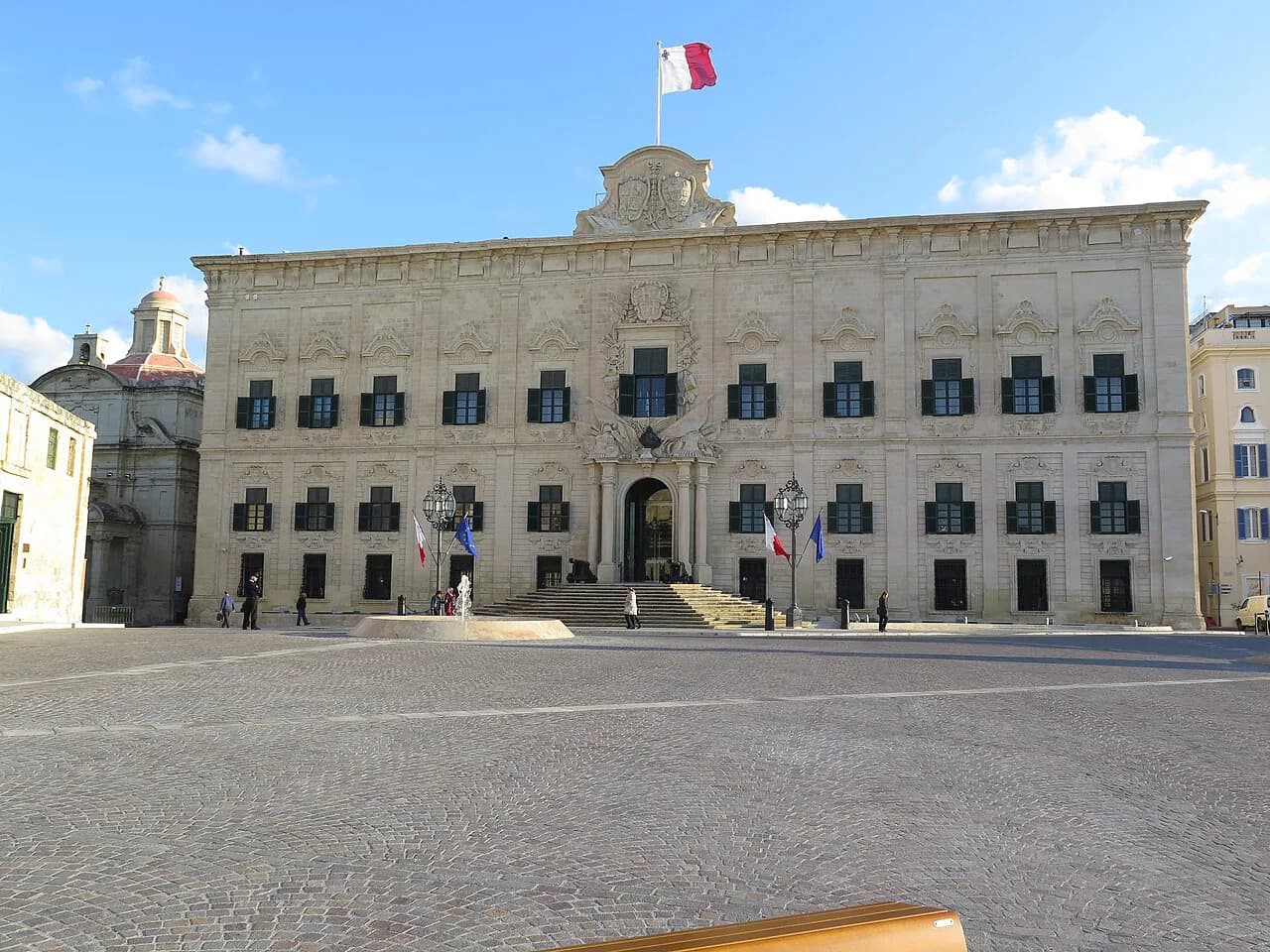
The Auberges of Castille and Italy, the Castellania and the Courts of Justice all appear on the standard walking-tour circuit, which sweeps through the centre past these buildings. Treat them as a sequence of facades and courtyards to read as you pass rather than as separate ticketed stops.
The names on this stretch are not self-explanatory from the pavement, so it is worth reading up on the knights and the auberges before you go, rather than expecting the buildings to explain themselves as you pass.
Upper Barrakka Gardens and the Saluting Battery
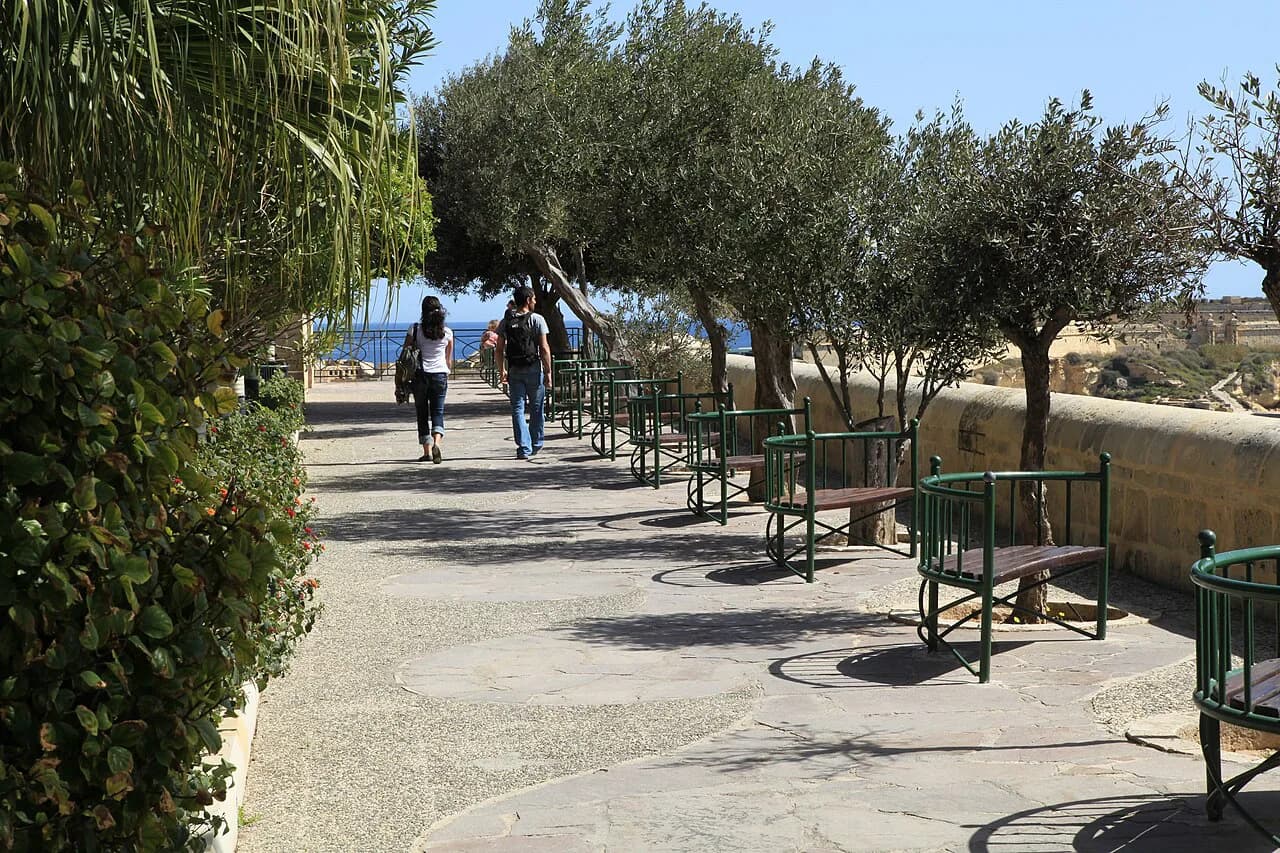
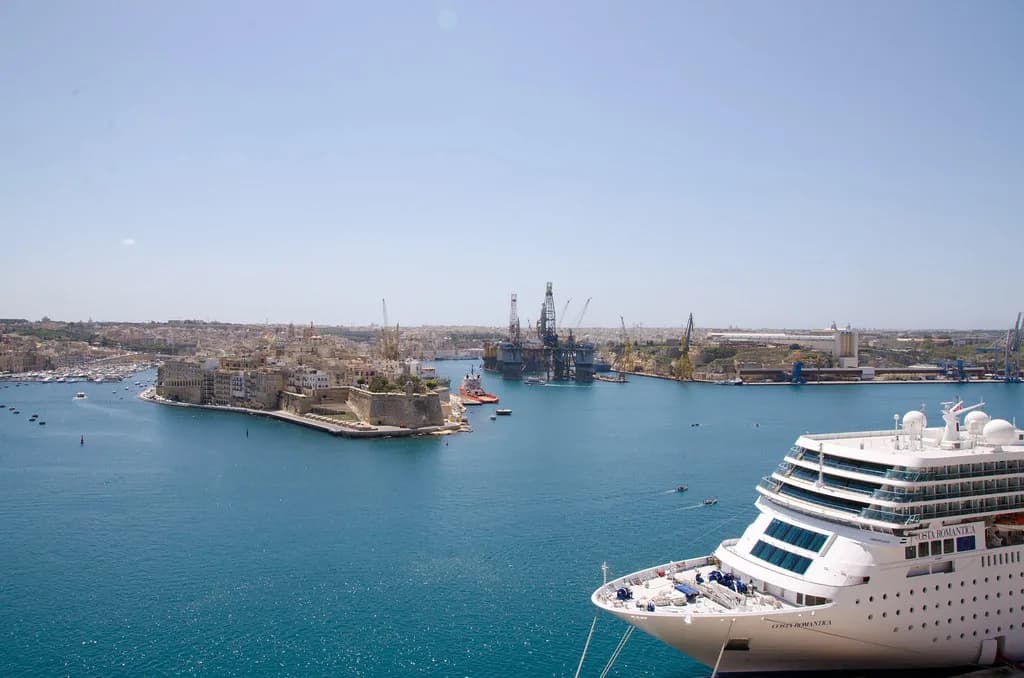
The Upper Barrakka Gardens give you panoramic views over the Grand Harbour and the Three Cities, and they close the first half of the walk with the best outlook on the route. The Saluting Battery sits alongside, and its artillery salute adds a historical frame to the view.
Sit here rather than pressing straight on, because the terraces are the natural midpoint of the day and the second half of the route is downhill and easier. Check the battery's arrangements when you arrive if the salute matters to you, since firing times are set by the site rather than by tour operators.
Lower Barrakka Gardens and the Siege Bell Memorial
Continue from the Upper Barrakka along the harbour edge to the Lower Barrakka Gardens and the Siege Bell Memorial, which give the walk a quieter finish away from the main street. The memorial is the point to pause before turning back into the city.
Walk down rather than back up through the centre if your legs are tiring, since the gardens sit lower than Republic Street and the return leg through the side streets is gentler.
Casa Rocca Piccola: a noble home still lived in
Casa Rocca Piccola has stood for more than 400 years and is still lived in by its family, which makes it a rare view of a Maltese aristocratic home. Visitors see it on a guided tour, with stories of family customs and antique furniture alongside the rooms themselves.
Slot it into the return leg rather than the outward walk, because the house visit is best treated as a fixed appointment you build the rest of the afternoon around. Check the house's own arrangements before you commit, since it operates separately from the cathedral and palace.
Strait Street and the Royal Opera House ruins
Loop back through Strait Street and past the ruins of the Royal Opera House, also called Teatru Rjal, which both feature on the guided circuit and give the return leg its own character. The Opera House ruins in particular are easy to walk past without noticing, so look for them deliberately.
The side streets here are also where you will find the smaller churches and courtyards that fill the gaps between the headline stops. Peek into any that are open as you pass, since they cost nothing and take only a few minutes.
How long the route takes and how to shorten it
A guided version of this circuit runs about 90 minutes on the free tour and two to three hours with a private guide, which gives you a realistic frame for the self-guided version. Add your own time inside the cathedral, the palace and Casa Rocca Piccola on top of that.
To shorten the day, cut the Lower Barrakka extension and the Casa Rocca Piccola tour, keeping City Gate, Republic Street, the cathedral, the palace and the Upper Barrakka Gardens. That gives you the core of the city in a single morning without committing to the return leg.
Guided or self-guided: what each option costs
Prices split into tiers: a private guide offers a two to three hour walking tour for €150 for a group of one to ten, a longer small-group Valletta tour is listed from €22, and the tip-based free tour runs 90 minutes from €0 with no fixed price.
The free tour runs at 5:00 PM on Wednesdays and 10:00 AM on Saturdays, and spaces fill quickly, so book early if those slots suit you. The private tour covers one to ten people and can include attraction tickets and translation services as add-ons.
Small-group walks suit anyone who wants the route explained without paying for exclusivity, and travellers on a tight budget report finding walks around €18. For a couple or a family, the private fee spreads across the group and starts to look reasonable against three individual tickets.
When a guided walk is worth it
Book a guide for your first day if you want the city laid out for you in one go, because 90 minutes with someone who knows the streets saves a lot of back-and-forth later in the trip. The free tour covers the main landmarks and helps you get your bearings, which makes it a sensible opener rather than a luxury.
Pay for a private guide if you want the cathedral, the palace and the knights' context talked through in your own time, since the in-depth stories are what a private guide adds most.
Walk it yourself if you would rather linger in the cathedral and the gardens than keep to someone else's pace, and if you are happy to read up on the knights beforehand.
Which Valletta walk suits your day?
Take the self-guided route if you want the city at your own speed, entering at City Gate, following Republic Street to the cathedral, palace and squares, and finishing at the Barrakka Gardens. Book a guide, private or small-group, if the knights' history and the Caravaggio are why you are here, and choose the tip-based walk if you simply want orientation on day one.
Whichever you pick, confirm the current tour schedules and any site tickets with the operator or the site itself before you travel, since times and prices change between seasons.
Explore more Valletta guides
Frequently Asked Questions
Is Valletta a walkable city?
Yes. The walled city is compact and entered at City Gate, with Republic Street running through the centre, so the main stops on a walking tour sit close together. Guided versions of the circuit run from 90 minutes to two to three hours, which gives you a realistic sense of the scale.
Are there free walking tours in Malta?
Colour my Travel runs a tip-based free tour of Valletta that lasts 90 minutes, with no fixed price and payment left to your judgement at the end. It starts from Valletta City Gate, and spaces fill quickly, so book early.
What should we see in Valletta?
Start with St John's Co-Cathedral and its Caravaggio works, then the Grand Master's Palace and Armoury, St George's Square and the auberges. Finish at the Upper Barrakka Gardens for the Grand Harbour view, and add the Lower Barrakka Gardens and Siege Bell Memorial if you have time.
Sources
Notes for your Malta trip
Optional updates when we add or correct a Malta or Gozo guide.
You might also like
Continue reading
More guides you'll find useful