
Greek's Gate in Mdina: What to See and How to Find It
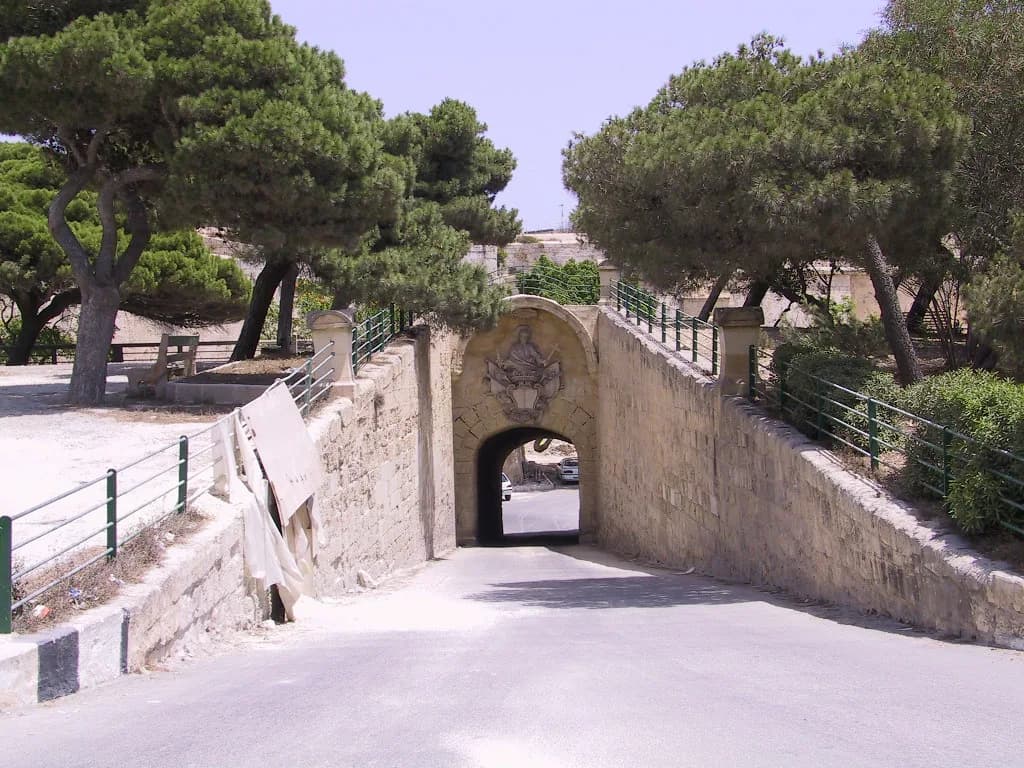
Greek’s Gate is one of the main entrances to Mdina and sits at the southwest corner of the walled city, facing the Domvs Romana in Rabat. It is a short stop on foot: the gate is a double passage, with a medieval inner section and an outer portal rebuilt by Charles François de Mondion in 1724. This guide covers where the gate sits, how to walk or ride to it, which entrance to choose and what to look at on the way through.
Plan on five to ten minutes if you only want to walk through and glance up at the paintings, or slightly longer if you stop to read the inscriptions and look back down the ramp toward Rabat. The gate is a working doorway rather than a museum, so there is no ticket or opening time to work around. Combine it with nearby Mdina or Rabat sights rather than treating it as a destination on its own.
What Greek's Gate is
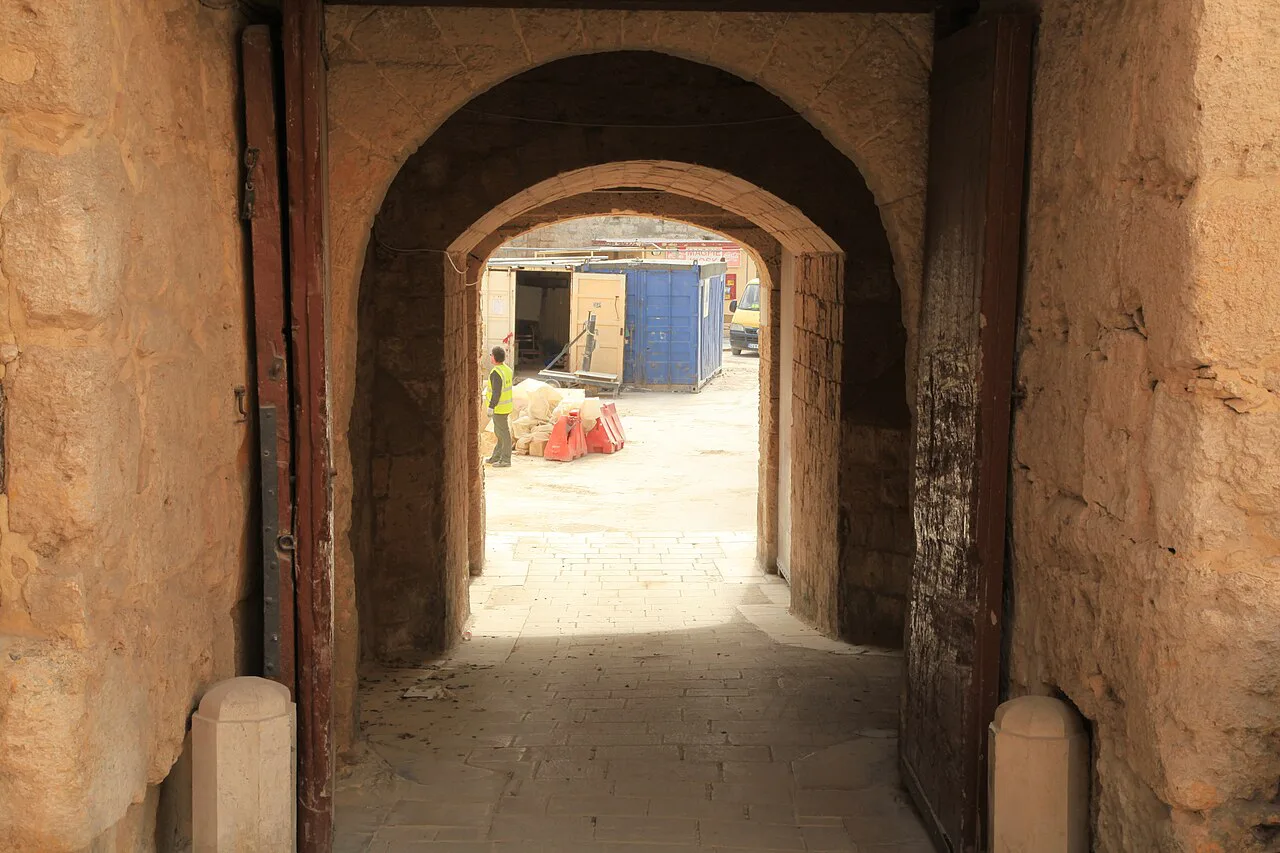
The gate is a layered structure: an inner passage that keeps its medieval form and an outer portal that Charles François de Mondion redesigned in Baroque style in 1724. Around Us describes the inner section as retaining medieval characteristics while the outer portal shows the Baroque work, which is why the gate reads differently depending on whether you are looking into the city or back toward Rabat.
The Maltese name is Il-Bieb tal-Griegi. It sits at the southwest edge of Mdina and connects directly to Piazza dei Greci, so once you are through the passage you are already inside the street layout rather than on a ring road. The gate served as a key passage for people entering the fortified city, and its position makes it the natural approach if you are coming from Rabat on foot.

Where to find Greek's Gate
Look for the gate near St Nicholas Square in Mdina, opposite the Domvs Romana in Rabat. The two sides face each other across the road, so if you can see the Roman house site below the city wall, the gate is directly above and behind you. It is one of three main entrances to Mdina, and the one to choose when your route starts in Rabat rather than on the Mdina approach road.
If you are using a map, the gate is at the southwest corner of the fortified city and the outer Greek’s Gate is at the bottom of the approach, with the inner gate a few metres further up. Treat the pair as one approach: walk through the outer passage, then up the ramp into the inner gate. For a wider look at what to see once you are inside the walls, the guides in Mdina Attractions: 13 Visitor Guides cover the cathedral, palaces and museums around you.
How to get there from Rabat and by bus
On foot from Rabat, the approach is uphill. Lovin Malta describes the ramp as steep and exposed, so the walk through the gate is short but the last stretch is a climb; take it slowly in the middle of the day and carry water. From the centre of Rabat you are only a few minutes from the gate, which makes it an easy add-on to the Domvs Romana or a Rabat café stop.
By bus, Mdina and Rabat are served from Valletta and other parts of the island, but routes and timetables change, so check the operator's site on the day rather than relying on a fixed number. Ask for Mdina or Rabat and walk the last stretch: the gate is on the Rabat side of the city, so a Rabat stop usually puts you closer to it than the main Mdina terminus.
Greek's Gate or the Main Gate?
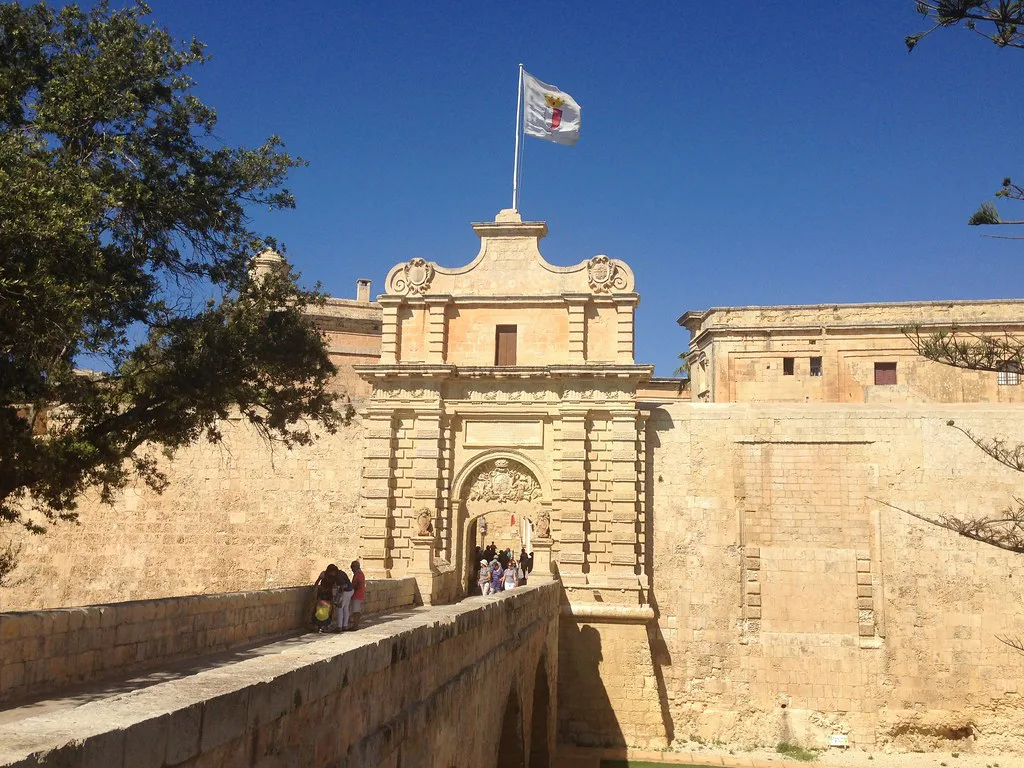
Mdina has three main entrances and people tend to choose the one closest to where they parked or arrived. The Vilhena Gate, also called the Main Gate, is the formal Baroque approach with a stone bridge and the de Vilhena coat of arms; Greek’s Gate is the quieter, older-looking passage on the Rabat side. If you are coming from Rabat, use Greek’s Gate; if you are arriving by car or bus to the main Mdina approach, start at Mdina Gate and loop round to the Greek’s Gate later.
Whichever you choose, you can walk between them inside the city in a few minutes, so it is not an either-or decision. The outer Greek’s Gate passage sits a few metres downhill from the inner gate and is sometimes treated as a separate gate, though it is really the lower approach to the same entrance. Allow a small detour to look back through both passages from the inside, where the contrast between the medieval structure and the later outer portal is clearest.
What to look for at the gate
Start with the inner gate: it keeps its medieval form, which stands out against the Baroque outer portal rebuilt in 1724. Lovin Malta describes the rear part of the gate as retaining its medieval appearance and making it one of the few surviving medieval stretches of wall in Mdina. Look at the stonework on both sides of the passage to see where the older work ends and the later work begins.
Above the inner gate there are mural paintings, including the Madonna and Child with St Anne and the Holy Trinity, and a scene of St Paul baptising St Publius with Luke the Evangelist beside him. The gate also carries coats of arms and a Latin inscription. Look up before you walk through, since the paintings are easy to miss if you are watching your footing on the ramp.
Lovin Malta records that a wooden drawbridge was once part of the entrance, with traces visible today, and that a protective ditch alongside it was eventually removed. The gate sits opposite the Domvs Romana and close to the Mdina Cathedral Museum, so you can step straight from the passage into a museum visit. If you want a larger indoor collection with a view over the walls, Palazzo Falson Historic House Museum in Mdina is a short walk into the city centre.
The name and the Greek community
The gate takes its name from the Greek community that once lived beside it. Around Us links the name to the Greek residents who shaped the area's character, and Lovin Malta says a Greek community lived right next to the gate, hence the name Bieb il-Griegi. The passage connected that neighbourhood to the inside of the fortified city, so the name is a reminder of who used this entrance day to day.
How long to allow and when to go
Allow five to ten minutes at the gate itself, plus whatever time you spend at the Domvs Romana or on St Nicholas Square. The stop is short because there is no interior to tour: you look at the two passages, the paintings and the inscriptions, then move on. Treat the climb as the real time cost if you are walking up from Rabat in the afternoon heat.
Go earlier in the day or later in the afternoon if you want to avoid the strongest sun on the ramp. Because the gate is a thoroughfare rather than a ticketed site, you can pass through at any hour you would normally be walking the streets of Mdina; for anything beyond that, such as access to nearby museums, check the individual site's current hours before you set out. Note that a restoration project for Greek’s Gate was announced in 2023, so parts of the stonework may be covered while work is under way.
What is nearby
Within a few minutes on the Rabat side you have the Domvs Romana, and on the Mdina side St Nicholas Square, the Mdina Cathedral Museum and the Banca Giuratale. The gate sits at the seam between the two towns, so it is easy to pair with a Rabat morning and an Mdina afternoon without doubling back. The Mdina Cathedral Museum is the closest indoor stop if the weather turns.
Inside the walls, the lanes lead quickly to St Paul's Cathedral, Mdina and the surrounding palaces; the cathedral is a natural next stop after entering through Greek’s Gate, and its square gives you a clear orientation point before you wander. From there you can walk to Mdina Gate and out to the Mdina approach road, completing a loop through the city rather than retracing the ramp.
Should you enter Mdina through Greek's Gate?
Yes, if you are coming from Rabat: the gate is directly opposite the Domvs Romana, and it puts you inside Mdina in a few minutes. The trade-off is the uphill ramp in the heat, so start early or late and do not plan a long stop at the gate itself. Use it as the opening move of a Mdina and Rabat day rather than a standalone sight.
Explore more Mdina guides
Frequently Asked Questions
Is entrance to Mdina free?
There is no ticket to walk through Greek’s Gate or into Mdina’s streets; the gate is a public passage. Individual museums and sites inside the city set their own admission, so check the site you plan to visit for current prices.
Is Greek’s Gate the same as the Main Gate of Mdina?
No. Greek’s Gate is on the Rabat side and has a medieval inner structure with a Baroque outer portal. The Main Gate, or Vilhena Gate, is the formal Baroque entrance on the main approach to the city. You can walk between the two inside Mdina in a few minutes.