
Mdina Gate: The Baroque Main Entrance to the Silent City

Mdina Gate is the main entrance to Mdina, the walled city on its hill in central Malta, also called the Vilhena Gate after Grand Master António Manoel de Vilhena. It was built in the Baroque style in 1724 to a design by Charles François de Mondion, and you reach it over an arched stone bridge decorated with carved lions. This guide covers where the gate stands, how to arrive, what is carved on the façade inside and out, and what sits just beyond it, with the full set of Mdina Attractions: 13 Visitor Guides for anything further afield.
Treat the gate as a short stop rather than a sight in its own right: five to ten minutes to read the façade and cross the bridge, then the city opens up in front of you. Mdina itself has three gates, and knowing which one you are at changes what you see.
Mdina Gate: the main entrance to the walled city
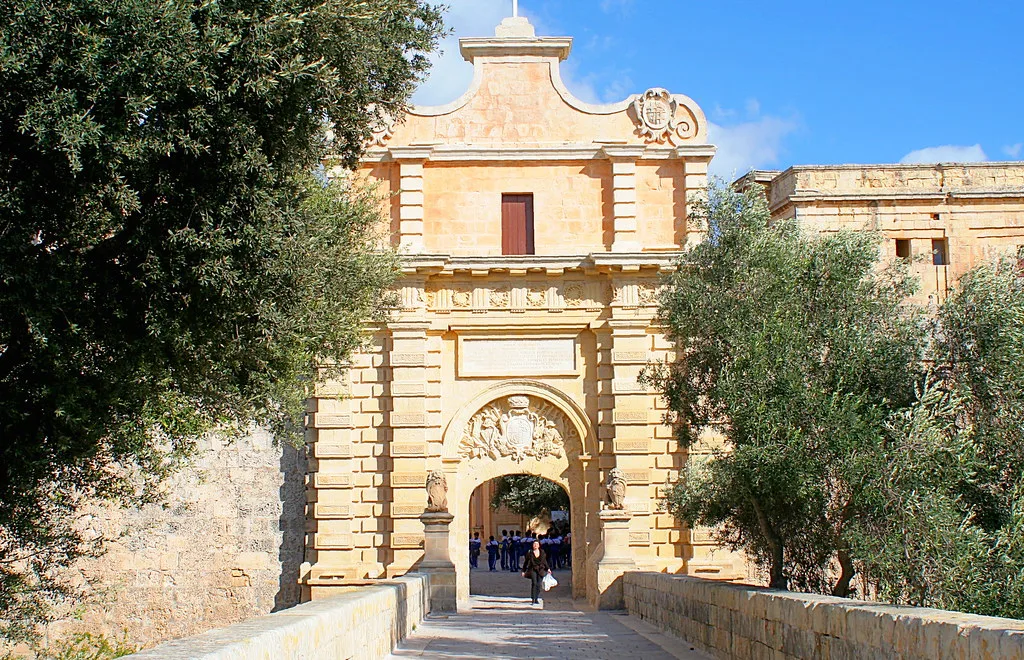
Mdina Gate is the main gate into the fortified city and the one almost every visitor uses. It was rebuilt in 1724 in the Baroque style under Grand Master António Manoel de Vilhena, with Charles François de Mondion as the architect, and it carries both names in everyday use. The bridge and gateway form the crowning point of the limestone bastions that ring the city.
Because the gate is simply the way into Mdina, it has no ticket of its own and no opening time to plan around. The paid sites begin once you are inside: the cathedral, the palaces and the museums each set their own arrangements, which you confirm with the operator before you travel. Budget your time here around the bridge and the first stretch of street, not around a queue at a turnstile.
Where the gate stands and how you arrive
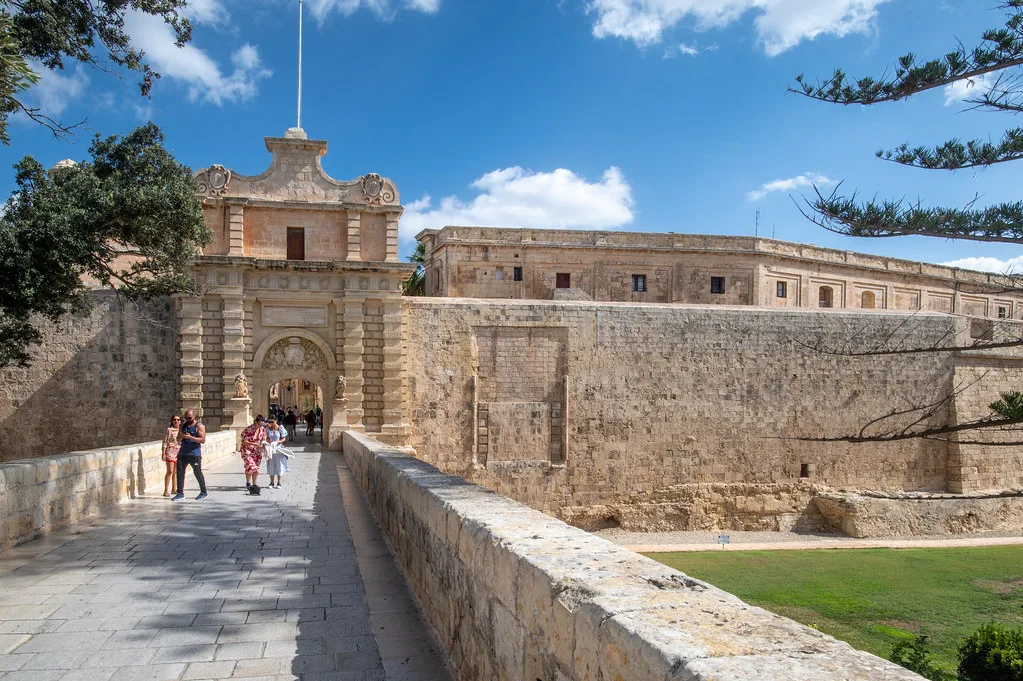
The gate sits at the top of Mdina's hill, approached from the Rabat side along the road that becomes the stone bridge. Buses and cars stop below the walls, and the last stretch is on foot over the bridge and through the gate. From Rabat the climb is short but steady, and in summer heat it is worth doing at a relaxed pace rather than at midday.
Parking near the gate fills quickly on busy days, so arriving earlier in the day leaves more choice. If you are coming by bus, check the current route and stop with Malta Public Transport rather than relying on an old timetable. The bridge is the landmark to aim for: once you see the carved lions and the bastions rising behind, you are in the right place.
Reading the façade from the bridge
The outer face is dressed with double pilasters, the coat of arms of Grand Master António Manoel de Vilhena and the coat of arms of Mdina, a trophy of arms and a Latin inscription. Look up rather than straight ahead: the carvings sit above head height and are easy to walk past while watching your footing on the bridge.
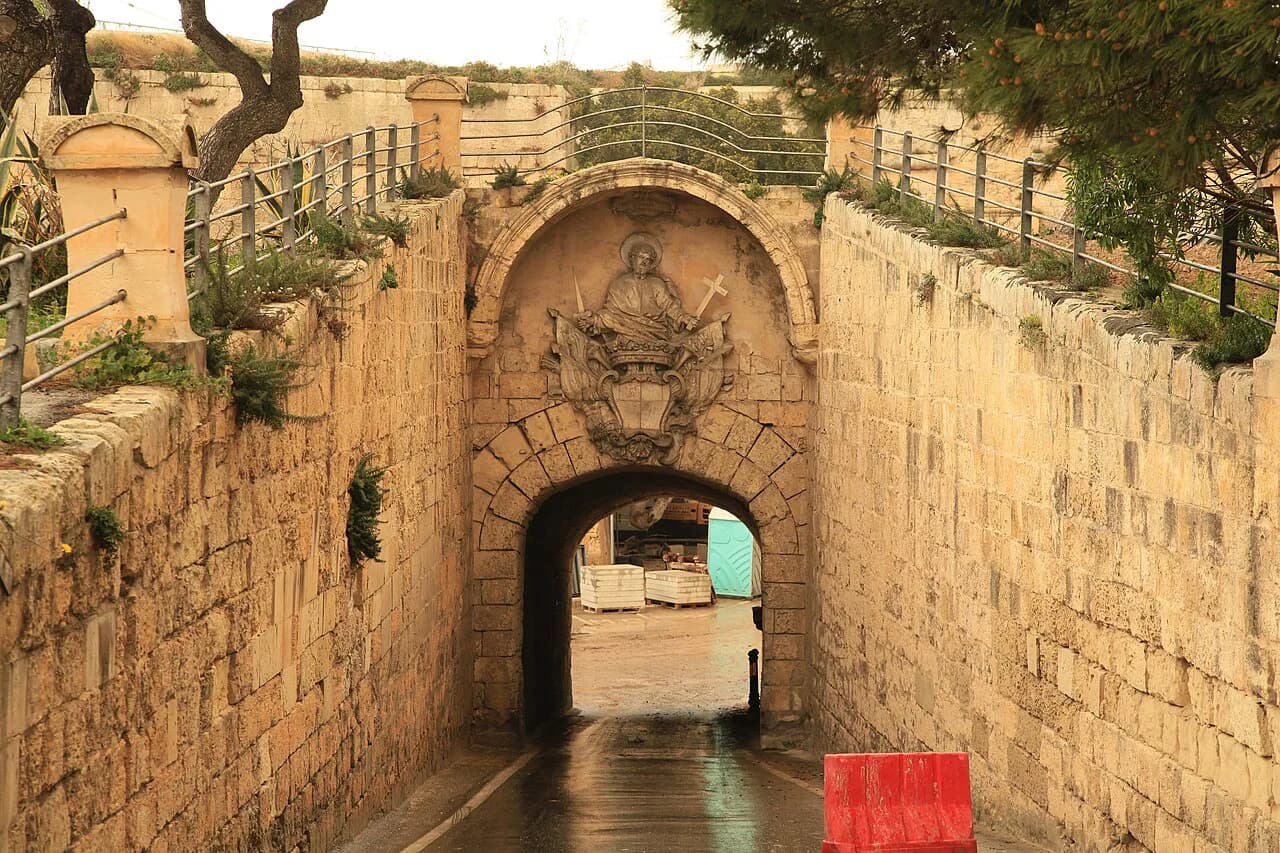
On the inner face, statues of St Publius, St Agatha and St Paul look back towards the entrance. They are the detail most visitors miss, because attention turns to the street ahead the moment they pass through. Step to one side after the arch, turn around and read them before the crowd pushes you on.
Crossing the bridge: timing a quiet pass
The bridge is narrow and the gate is a single opening, so a coach party arriving together fills it for a few minutes at a time. Early morning and later in the afternoon are calmer than the middle of the day, and the light on the limestone is better then too. If a group is ahead of you, wait on the far side of the bridge rather than pressing through, and the gateway clears quickly.
The gate area has drawn attention beyond its architecture, and readers often ask what was filmed here. Plan the visit around the gateway itself, and if film locations matter to you, check a dedicated filming-location source before you go rather than expecting signage on site.
Greeks Gate and Għarreqin Gate: the other two entrances
Mdina has three historic gates, not one. Greeks Gate is the oldest, a medieval entrance traditionally used by residents and servants and the way into the city's former Greek and Jewish quarters. De Mondion added a Baroque exterior to it in 1724, and a painting of St Nicholas breaking bread decorates its interior.
Għarreqin Gate is the third and least known, opened in the 19th century during the British period to improve access to the former railway station outside the walls. It is plain in design and rarely used by visitors, which makes it a quiet alternative if you want to enter without the main-gate bustle. Neither of the secondary gates has a ticket or a fixed opening time.
Tickets and access at the gate
The gate is a public way into the city and there is no charge to walk through it or over the bridge. The museums and palaces inside the walls sell their own tickets and keep their own hours, and those arrangements change, so confirm with each site before your visit rather than assuming a fixed schedule.
Plan on the gate taking minutes and the city taking hours. If you are building a half-day in Mdina, put the paid interiors in the middle of it and keep the gate and the streets around it as the free bookends.
Mdina's hilltop position means little shade on the bridge and full sun on the limestone at midday. A hat and water matter more here than in the shaded lanes further in, and the exposed approach from Rabat rewards an early or late start.
How long to allow at the gate and just beyond
Give the gate itself five to ten minutes, enough for the bridge, the outer carvings and a turn to see the statues on the inner face. The street immediately inside narrows between honey-coloured limestone buildings and leads you on towards the city's squares, so the gate flows naturally into the rest of the visit.
Walk slowly for the first hundred metres: the lanes bend and narrow deliberately, and the buildings close in quickly after the open bridge. This is where the change from approach road to walled city registers, and it costs nothing to linger. Restaurants and cafés line the streets further in if you want to break the walk.
What is nearby once you are through the gate
St Paul's Cathedral, Mdina stands at the heart of the city, rebuilt in Baroque style by Lorenzo Gafà after the 1693 earthquake, and it is a few minutes' walk from the gate. Its interior and any museum arrangements are set by the cathedral authorities, so confirm times before you go.
The Palazzo Falson Historic House Museum in Mdina is one of Mdina's best-preserved medieval buildings, holding period furniture, silver and a library of more than 4,000 books. It rewards a slower visit than the gate, so allow proper time rather than squeezing it in on the way past.
Palazzo Vilhena, rebuilt in the 1720s as a Grand Master's summer palace, now houses the National Museum of Natural History, with displays running from Maltese species to mineral collections. It is the natural companion to the gate, since both carry the Vilhena name and the de Mondion hand.
The Carmelite Priory, north of the medieval centre, opens a window on monastic life and its Church of the Annunciation holds notable art. Bastion Square gives you the view back over the walls and the drop towards Rabat, and the walk down to Rabat itself is short if you want to continue to the catacombs.
Practical reminders for the approach
The climb from Rabat is the part people underestimate. It is not long, but it is uphill and exposed, and doing it in the middle of a hot day drains the time you wanted for the city. Start from Rabat, walk up, and take the descent slowly afterwards.
Wear shoes that cope with smooth, worn limestone, which turns slippery on the bridge and in the lanes after rain. Keep bags zipped in the busier stretches near the gate, as you would in any crowded visitor spot, and carry water for the exposed approach.
Should Mdina Gate be your first stop?
Yes, and not only because it is the way in. The gate is free, quick and the best introduction to the city's Baroque rebuild, with the Vilhena coats of arms outside and the three patron saints inside. Cross the bridge, turn around, then walk on into Mdina with the paid interiors planned for later in the day.
Explore more Mdina guides
Frequently Asked Questions
Is Mdina free to enter?
Walking through Mdina Gate and into the city streets costs nothing. The cathedral, the museums and the palaces inside the walls sell their own tickets under their own arrangements, so check with each site before you visit.
What is special about Mdina Gate?
It is the main entrance to Mdina, built in 1724 in the Baroque style to a design by Charles François de Mondion under Grand Master António Manoel de Vilhena. The outer face carries double pilasters, the Vilhena and Mdina coats of arms, a trophy of arms and a Latin inscription, and the inner face has statues of St Publius, St Agatha and St Paul.
How many gates does Mdina have?
Three. Mdina Gate is the main Baroque entrance, Greeks Gate is the medieval one used by residents and servants, and Għarreqin Gate was opened in the 19th century during the British period. Only the main gate is on the usual visitor route.
How long does it take to see Mdina Gate?
Five to ten minutes covers the bridge, the outer carvings and the statues on the inner face. The city beyond takes considerably longer, so treat the gate as the opening stop of a half-day rather than a destination on its own.