
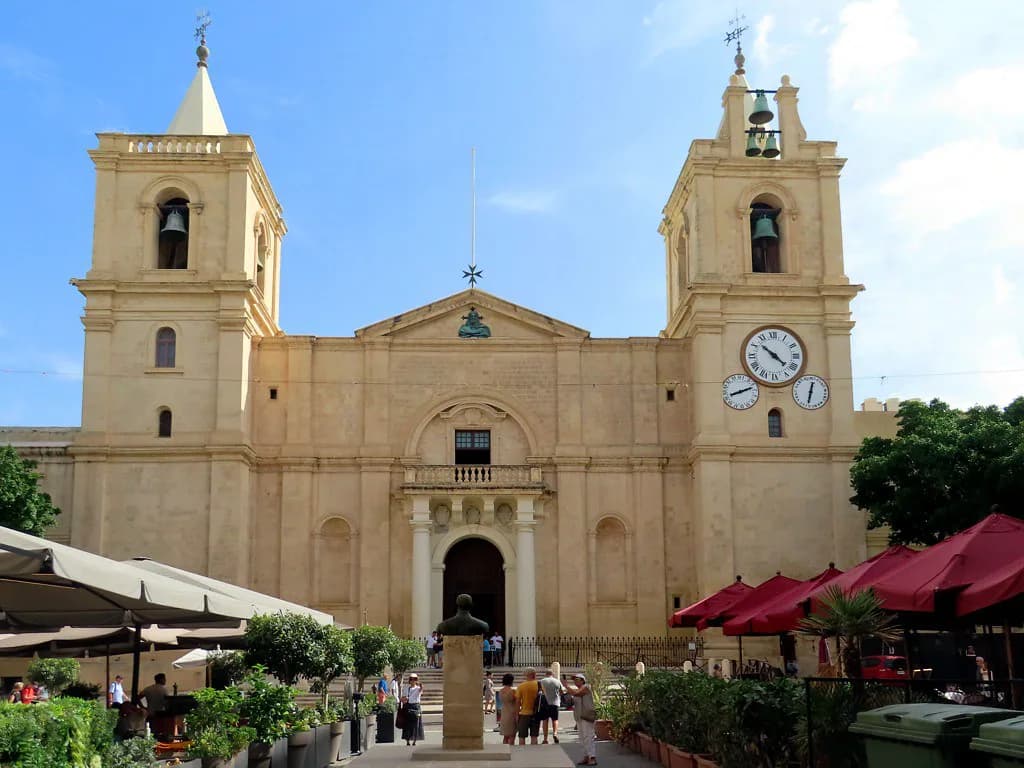
St John's Co-Cathedral, Valletta: A Visitor's Guide
St John's Co-Cathedral is worth an hour of any Valletta day: a plain exterior that opens into a gilded Baroque interior, with knights' marble tombs underfoot and Caravaggio's Beheading of Saint John the Baptist in the Oratory. The ticket covers both the cathedral and its museum. This guide covers where it sits on St John's Street, how to walk there from the City Gate bus terminus, what to look for inside and how to time a visit.
What St John's Co-Cathedral is and why visitors go
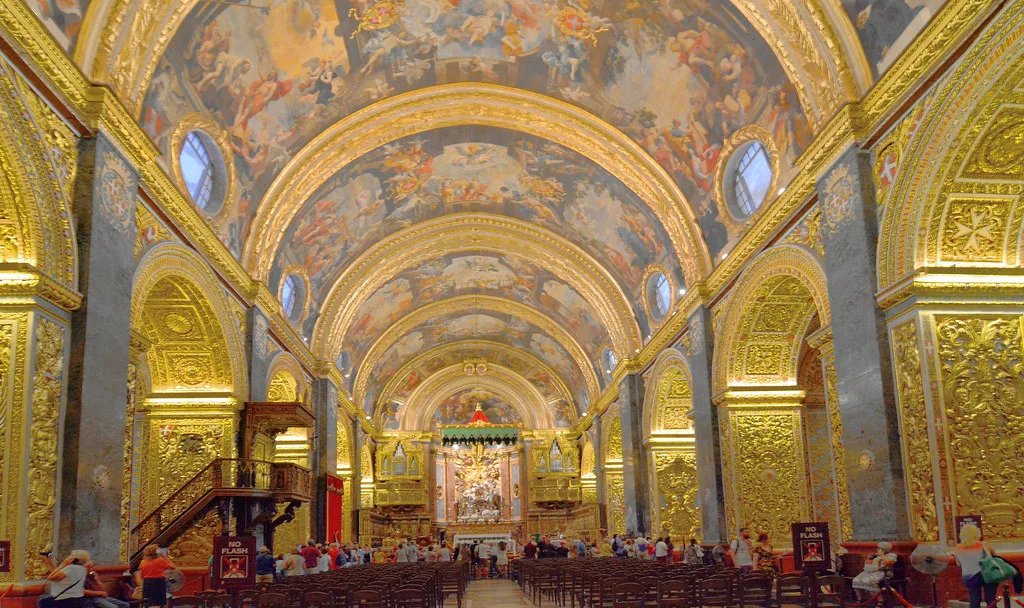
The cathedral, known in Maltese as the Kon-Katidral ta' San Ġwann, was built by the Knights of Malta between 1573 and 1577 and is dedicated to St John the Baptist. Its reputation rests on the interior: carved and gilded stonework, side chapels and a floor of marble tombstones commemorating the knights. Visitors come for the Baroque decoration and for the art in the museum and Oratory, not for the facade, which gives little away from the street.
Where it is on St John's Street
St John's Co-Cathedral stands in the centre of Valletta on St John's Street, a short walk from the Grandmaster's Palace and Republic Square. That position puts it on the natural line of a walking tour of the grid of streets inside the city walls. If you are working out how to fill the rest of the day, our Valletta Attractions guide maps the other sights within a few minutes of the cathedral door.
Getting there from the City Gate bus terminus
Buses from St Paul's Bay to Valletta take roughly 30 to 40 minutes, and the terminus sits just outside the city gates; from there the cathedral is a walk of a few minutes. If you drive, park outside the city gates, because the central streets are pedestrian-only, and allow about 30 minutes for the drive from St Paul's Bay. Arriving by bus leaves you closer to the cathedral than the car parks do.
Opening hours, closures and tickets
As published for 2024, the cathedral opens Monday to Friday from 9:30 to 16:30 with last entry at 16:00, and Saturday from 9:30 to 12:30 with last entry at 12:00, and closes on Sundays and public holidays. The published 2024 admission was €15 for adults and €12 for seniors and students, with children under 12 free when accompanied by an adult; one ticket covers the cathedral and the museum. Treat those as historical figures and buy on the cathedral's own site or at the door for the current rate, which may differ now.
Dress code and behaviour inside a working church
This is an active Roman Catholic cathedral as well as a visitor attraction, so treat it as a church first and keep voices low in the chapels and the Oratory. Leave large bags behind if you can, since you will be moving through crowded side aisles. If you plan to attend a service rather than sightsee, ask at the door or check the cathedral's own site, since no service timetable is reproduced here.
What to see inside
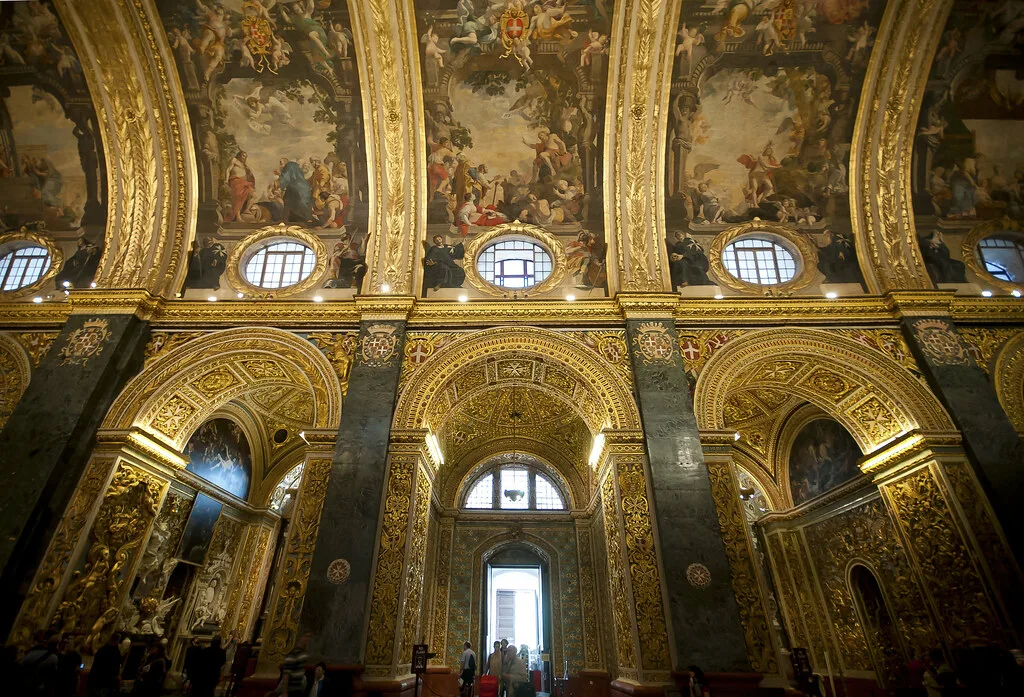
Start with the nave itself. Each side chapel is dedicated to a different langue, the regional division of the Order of St John, so the chapels read as a row of national statements in gilded stone. Look down as well: the floor is lined with ornate marble tombstones commemorating individual knights, which are easy to walk over without noticing.
The museum holds the collections that fill out the story: silverware, illuminated manuscripts and vestments used by the Knights of St John, along with tapestries, sculpture and altarpieces from the 16th and 17th centuries. Give the museum a proper share of your time rather than treating it as an exit corridor. The cathedral complex has a small gift shop on site if you want a book or reproduction on the way out.
Caravaggio's Beheading in the Oratory
The painting most people come for is Caravaggio's The Beheading of Saint John the Baptist, displayed in the Oratory rather than in the main nave. The source describes it as the largest painting Caravaggio created and one of his most significant works, so plan your route to reach the Oratory rather than circling the chapels and leaving. An audio guide is available in several languages and covers the chapels, the artworks and the museum collection.
How long to allow, and when to go
Allow around an hour to an hour and a half: long enough to walk the chapels, read the floor tombs and give the museum and Oratory their due, but short enough to leave time for the rest of Valletta. Mornings are quieter than afternoons, and weekdays are calmer than Saturdays, which close at lunchtime. In tourist season the cathedral gets busy, so arriving early or booking ahead makes for a more comfortable visit.
Nearby after your visit
The Grandmaster's Palace and Republic Square are both within a few minutes' walk, and the cathedral has a small gift shop on site for a book or reproduction on the way out. If you want a longer walk, head downhill to the Upper Barrakka Gardens Valletta for the harbour view and the Saluting Battery below. For a different kind of Valletta morning, the Lascaris War Rooms sit nearby in the same lower part of the city.
Is the cathedral worth an hour of your Valletta day?
Yes, if you want one interior that explains what the Knights of St John built here: the gilded chapel fronts, the marble tombs underfoot and the Caravaggio in the Oratory do more in an hour than a longer walk around the streets. Go on a weekday morning, take the audio guide, and read the floor as carefully as the walls. Then use the rest of the day for the palaces, gardens and war rooms within a few minutes of St John's Street.
Explore more Valletta guides
- Auberge d'Italie, Valletta
- Auberge de Castille
- Basilica of Our Lady of Mount Carmel, Valletta
- Casa Rocca Piccola
- Fort St Elmo and the National War Museum, Valletta
- Grandmaster's Palace, Valletta
- Hastings Garden, Valletta
- Lower Barrakka Gardens, Valletta
- National Museum of Archaeology, Valletta
- National War Museum at Fort St Elmo, Valletta
- St Paul's Pro-Cathedral, Valletta
- Teatru Manoel