

Basilica of Our Lady of Mount Carmel, Valletta

The Basilica of Our Lady of Mount Carmel, or Bażilika Santwarju tal-Madonna tal-Karmnu, is a Carmelite church in the centre of Valletta whose oval dome rises 42 m, putting the top 64 m above street level. Allow 20 to 30 minutes inside, and treat it as one stop on a walk through the grid of streets rather than a half-day destination. This guide covers what you actually see, how the domes on the skyline compare, how to reach the church on foot and what is close by.
Where the basilica stands in Valletta
The basilica sits in the heart of Valletta, within the UNESCO World Heritage Site that covers the whole fortified city. Its dome is one of the landmarks you pick out from Marsamxett Harbour, on the western side of the peninsula, where it reads as part of the skyline rather than a single monument. Because the city is small and grid-planned, you will pass the church on almost any route between the City Gate end and the far tip at Fort St Elmo.
The parish is dedicated to Our Lady of Mount Carmel, the patronage it received when the church passed to the Carmelite Order in the 17th century. Pope Leo XIII raised it to the rank of minor basilica on 15 May 1895, which is why the building carries the basilica title today. Look for the Maltese name on signs and entrance boards: Bażilika Santwarju tal-Madonna tal-Karmnu.
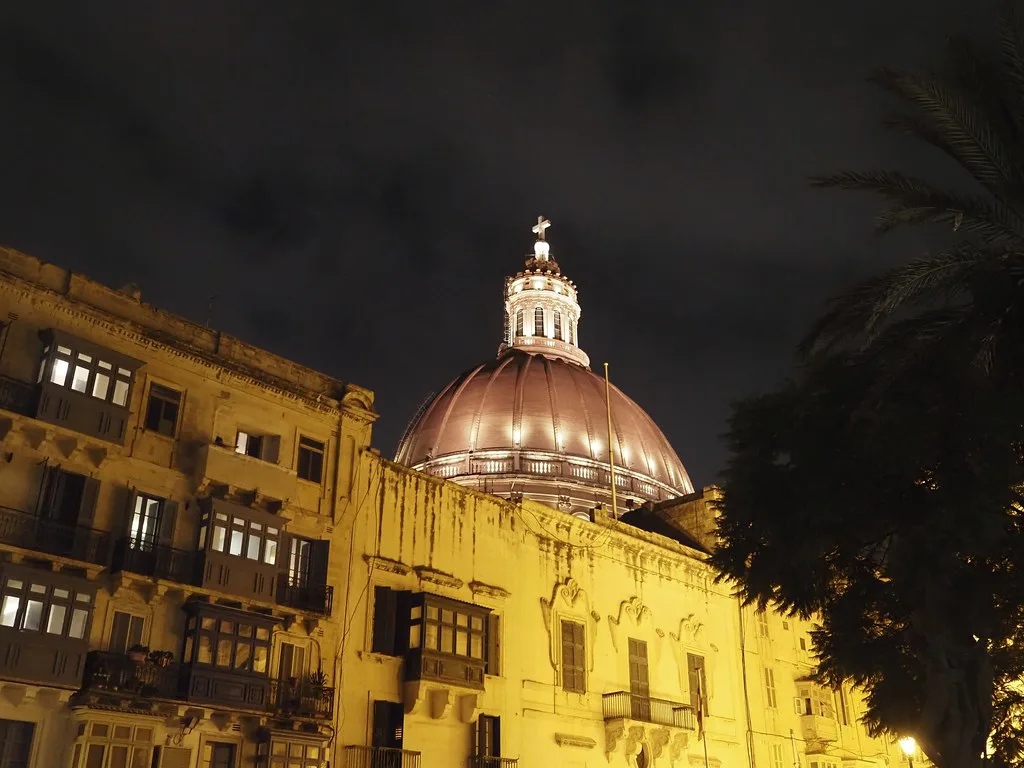
The 42 m oval dome on the skyline
The dome is oval rather than round, and the silhouette shifts as you move along the street below. It reaches 42 m in its own height and stands 64 m above the roadway, and the guide gives its dome as about 3 m higher than the tower of the Anglican Pro-Cathedral of St Paul beside it. That pairing is the practical clue for visitors: two domes compete above the rooftops, and the taller, elliptical one belongs to the Carmelite basilica.
The curve of the roof shows above the terraces at street level, and if you want to see the oval shape from above or across the water, the shared image archive has photographs of it. If you want the wider city panorama, plan that separately at the Upper Barrakka Gardens and keep the basilica as the close-up stop.
Inside: the painting and the red marble columns
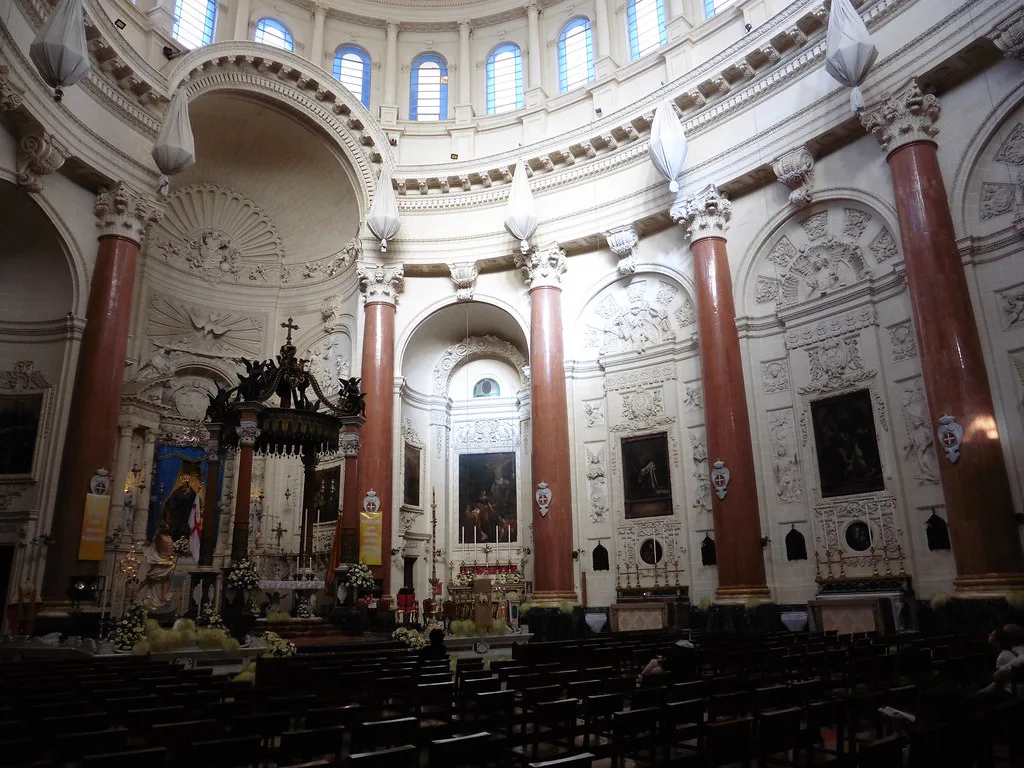
Behind the main altar hangs a painting of Our Lady of Mount Carmel dating from the early 17th century, and the interior is dressed in columns of red marble, the work that took sculptor Joseph Damato 19 years to complete. It gives the nave a warmer, heavier feel than the pale limestone outside. Walk the side chapels too: the basilica holds relics and further artworks rather than a single showpiece.
Step in for the interior rather than the façade, and budget your time for the nave and altar. Photography inside is best kept quiet and unobtrusive when mass is on.
What survives from Cassar and Bonavia, and what is 1958 to 1981
The first church on the site was designed by Girolamo Cassar and built around 1570, originally dedicated to the Annunciation before it passed to the Carmelites. A new façade by Giuseppe Bonavia followed in 1852. Second World War bombing damaged the church so badly that it had to be demolished, taking many historic objects with it, so the interest inside is not in old surviving stone.
The present basilica was built between 1958 and 1981 to a neoclassical design, which is why the interior reads as mid-20th-century work rather than a 16th-century shell. Knowing this changes what you look at: the interest is in the proportions, the marble and the surviving painting, not in old stone.
Reaching it on foot from the city centre
From the City Gate end of Valletta, the basilica is a straightforward walk uphill through the grid of streets towards the centre of the peninsula. No bus, taxi or lift is needed once you are inside the walls, and the streets are short enough that a wrong turn costs you two minutes. Much of the approach is on an incline, so pace yourself in the heat.
If you are coming up from the waterfront below, the walk to the upper gardens and then inland to the basilica suits anyone combining the church with the harbour views in one loop.
For a complete Valletta route that starts with the sea views, walk the bastions first at Upper Barrakka Gardens and then cut inland to the church when the sun gets high; the wider Valletta Attractions: 16 Visitor Guides collection covers the rest of the circuit.
How long to allow, and when to go
Twenty to thirty minutes covers the nave, the altar painting and a look at the dome from below; add ten minutes if you want to sit and take in the marble. The church is a working parish, so the practical constraint on timing is the mass schedule rather than a queue.
Go in the morning or late afternoon rather than at midday, when the sun heats the limestone streets and the walk between sights becomes the hard part of the day. Valletta's centre is busy on cruise days, so if the streets feel packed, do the basilica early and save the open squares for later.
Mass times and visiting access
Mass is held on weekdays at 07:00, 08:00, 10:00 and 18:30, on Saturday at 18:30, and on Sundays and feast days at 07:00, 08:00, 10:00, 11:00 and 18:30. Treat these as the published schedule for planning around a service rather than a visitor timetable, and confirm the times for your date with the parish before you build a day around them.
The church is a place of worship rather than a ticketed sight, so visiting is subject to service times and you should dress modestly with shoulders and knees covered. Confirm current visiting access with the parish before a special trip.
Nearby: what else is within a short walk
The Lascaris War Rooms, Valletta sit in the tunnels below the upper gardens and make a natural pairing with the basilica on a half-day circuit of the centre. They are a separate ticketed attraction with their own hours, so check times before walking down.
Also near the gardens, the Saluting Battery, Valletta fires its daily gun and is worth timing your walk around if you are in the area.
For a quieter garden stop, the Lower Barrakka Gardens, Valletta look out over the Grand Harbour and the Siege Bell memorial, a short walk from the basilica.
If you want a theatre evening, the Teatru Manoel, Valletta is a small historic playhouse in the centre and pairs well with a late afternoon in the basilica.
Two further short stops worth adding to the same walk are the Auberge d'Italie, Valletta, now home to a national art collection, and Hastings Garden, Valletta, at the City Gate end of the peninsula.
Is the basilica worth a short detour?
Yes, if you are already walking the centre of Valletta: the dome, the early 17th-century painting and the red marble interior justify a short stop, and the church sits naturally between the City Gate end and the harbour gardens. It is not a destination on its own, and anyone short of time should prioritise the fortified sights and gardens before adding a second religious interior.
Explore more Valletta guides
Frequently Asked Questions
Do I need a ticket to visit the Basilica of Our Lady of Mount Carmel?
The basilica is an active parish church rather than a ticketed attraction, so visiting is subject to service times; plan around mass and dress modestly with shoulders and knees covered. Confirm current visiting access with the parish before a special trip.
How do I tell the Carmelite basilica from the Anglican pro-cathedral in Valletta?
The Carmelite dome is oval and, according to the local guide, sits about 3 m higher than the Anglican tower, standing 42 m in its own height and 64 m above the street. The Anglican Pro-Cathedral of St Paul sits beside it and is the lower, more slender tower.
How long does a visit take?
Plan on 20 to 30 minutes for the nave, the altar painting and the dome seen from below, and add about ten minutes if you want to sit and take in the marble. That is enough to look properly without turning the church into a full afternoon.