One Day in Valletta: A Walking Itinerary for 2026
Plan one day in Valletta with a walkable route past St John's Co-Cathedral, the Grandmaster's Palace and Upper Barrakka Gardens, with timings and prices.
On this page
One day in Valletta is enough for the city's headline sights if you walk it in the order things open: coffee first, St John's Co-Cathedral at 9am, the Grandmaster's Palace next, then the climb to Upper Barrakka Gardens. The city is one of Europe's smallest capitals, so the distance is never the problem; the crowds, the hills and the number of interiors you try to fit in are. This route covers the morning essentials, a lunch break, an afternoon choice at the far end of the city and an evening back among the squares, with prices and opening hours given where the sources support them. For a broader overview before you start, see Things to Do in Valletta, and keep the Valletta Map handy for the streets between stops.
Treat the itinerary as a spine rather than a checklist. Valletta is compact and grid-like but hilly, with steep and uneven stretches underfoot, so comfortable shoes matter more than a detailed plan. Book the one or two interiors you care about most in advance and let everything else fill the gaps.
Start early: why arriving before 9am matters
Aim to be inside the city gates before 9am. Many attractions open at 9am and shops at 10am, and cruise passengers arriving from the Grand Harbour can flood the main streets later in the morning, so the first hour is the calmest. Valletta is busy year-round, and the difference between an early start and a mid-morning one is mostly queue time at the cathedral.
If you come up from the waterfront, the Barrakka Lift saves the stiff climb into the upper city and puts you within a short walk of the gardens and the cathedral. From the bus terminus at Triton Fountain, the walk up Republic Street is straightforward but uphill in places.
Stop 1: coffee before the sights open
Use the gap before 9am for coffee and breakfast. Manouche sits on St John's Square opposite the co-cathedral, and Lot 61 is on Old Theatre Street behind the Grandmaster's Palace; Lot 61 roasts its beans in Burmarrad, and Manouche buys its beans from Lot 61. Both serve food. Sitting on St John's Square with the cathedral facade in front of you is a good way to get your bearings before the day starts properly.
If you would rather start with something traditionally Maltese, Caffe Cordina in the city centre opened in 1837 and serves pastizzi and qassatat, with marbled floors and chandeliers to sit under while you eat. Either way, keep breakfast short: the first interior is the one place on this route where arriving early pays off most.
Stop 2: St John's Co-Cathedral at opening time
Go straight to St John's Co-Cathedral when it opens at 9am, and arrive about fifteen minutes early in summer, when queues build through the day. Tickets cost 15 euros for adults, with an extra 5 euros per person for the belfry and clock tower tour, and the cathedral is open Monday to Saturday from 9am to 4.45pm, with last admission at 4.15pm. Allow between one and one and a half hours including the belfry if you take it.
Inside, the draw is the Baroque interior built by the Knights of St John in the 1570s, the marble tombstones underfoot and Caravaggio's The Beheading of St John the Baptist and St Jerome Writing, with an interactive museum devoted to the painter's work. The belfry tour climbs a spiral staircase to the clock workings and the bells, and gives you a view over the skyline; skip it if stairs and time are against you.
Stop 3: the Grandmaster's Palace on St George's Square
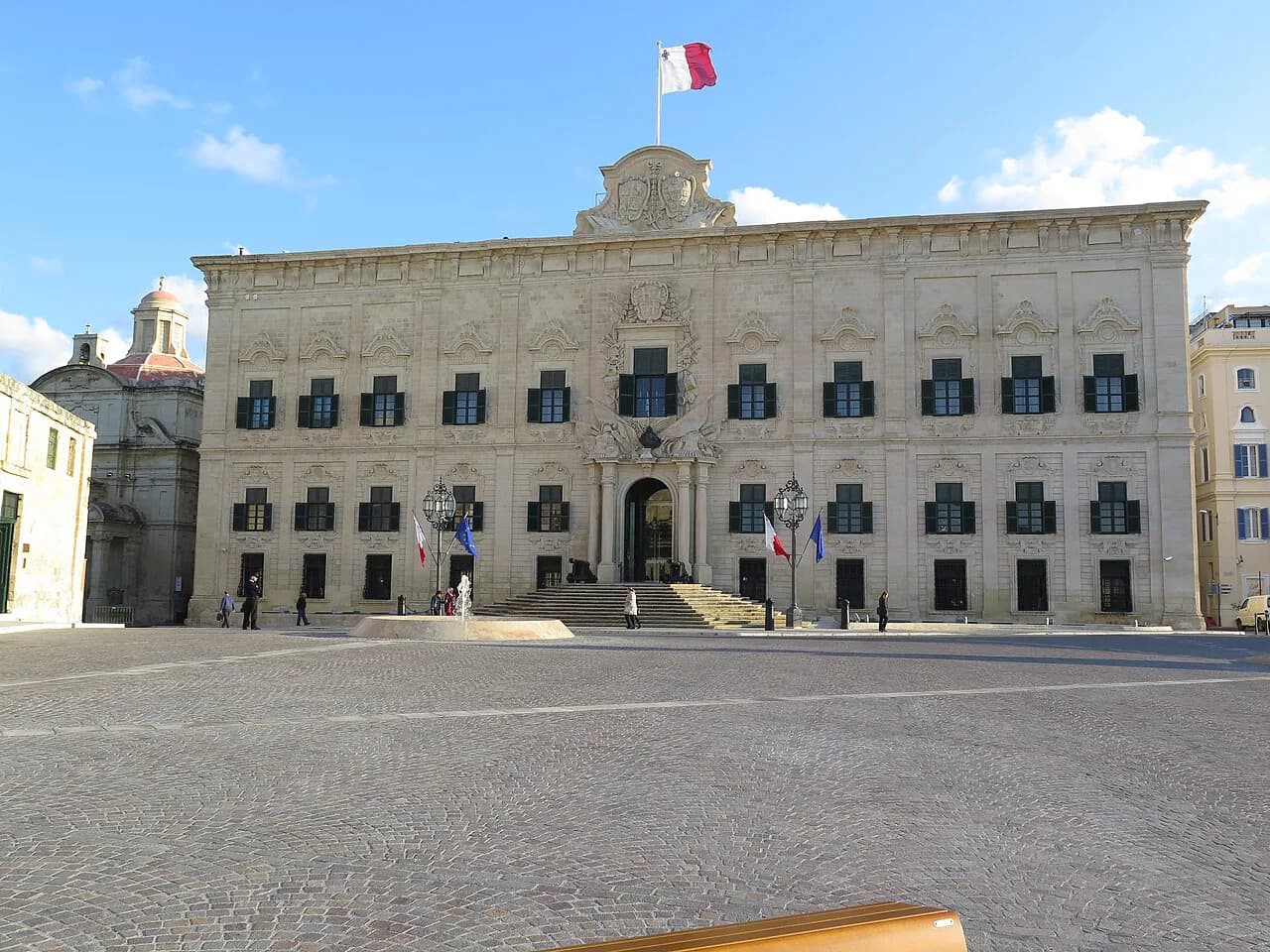
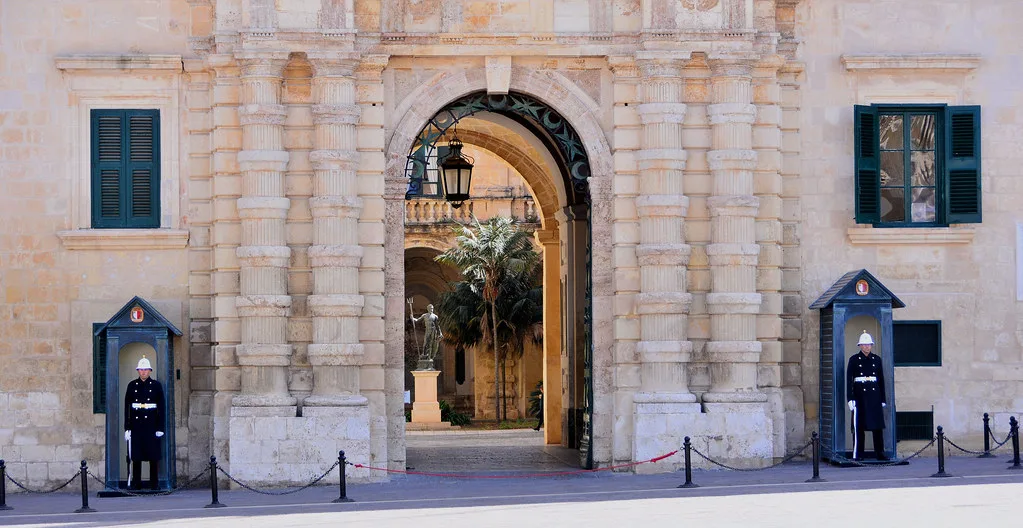
The Grandmaster's Palace is a two-minute walk from the cathedral and should be your second stop. It sits on St George's Square, opens daily from 10am to 6pm, and costs 12 euros for adults and 8 euros for children aged 6 to 11; allow around an hour. The Piano Nobile corridors and State Rooms are the heart of the visit, and the Armoury holds the suits of armour of Grand Masters Alof de Wignacourt and Jean de Valette alongside Ottoman weapons and artillery.
If your day is running late, this is the interior to cut short rather than the cathedral, because the State Rooms reward half an hour and the Armoury can be walked briskly on the way out.
Stop 4: Upper Barrakka Gardens and the Saluting Battery
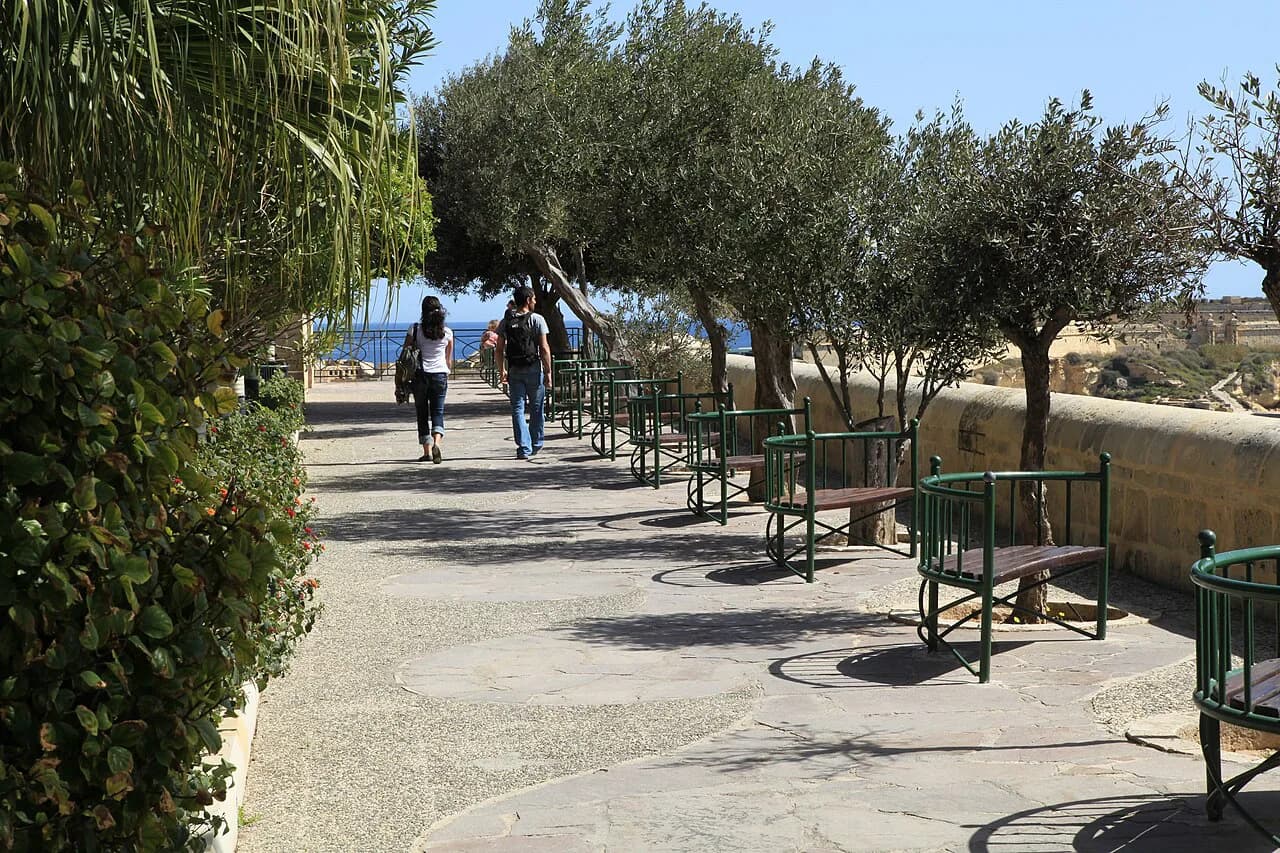
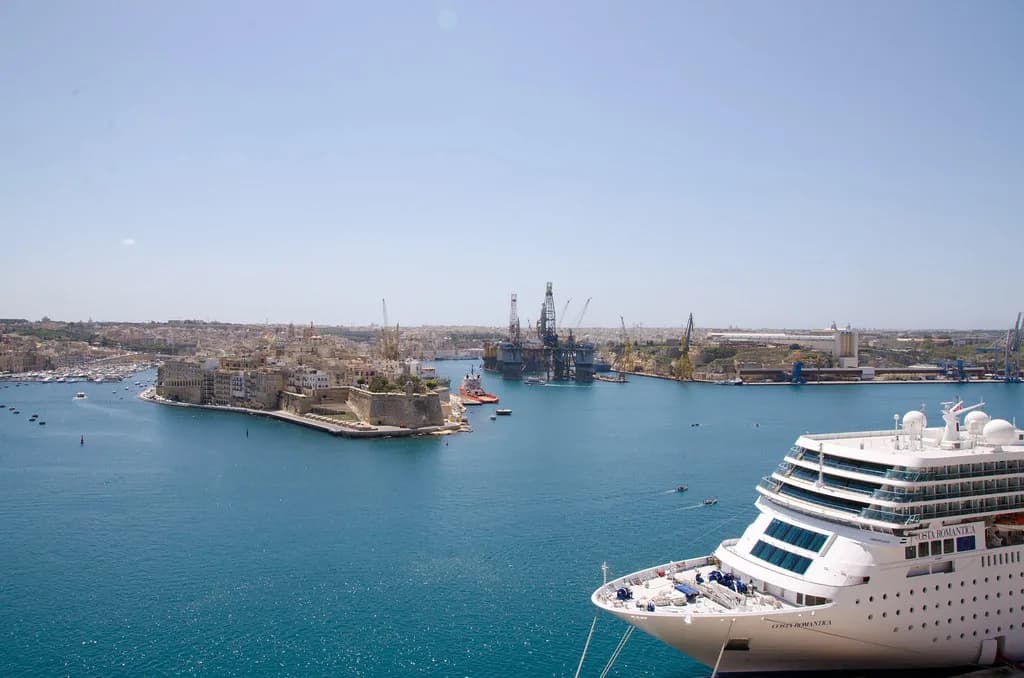
From the palace, head up Merchants Street towards Upper Barrakka Gardens, the public terrace with the widest view over the Grand Harbour and across to the Three Cities. Time your arrival for 12pm, when the cannons fire in the Saluting Battery on the level below the gardens. The gardens and the battery together make the natural midpoint of the walk, and there is seating if you want to eat lunch later rather than now.
From the battlements you can see the dgħajsa water taxis working the harbour below, which is worth noting for the afternoon if you decide to cross to Birgu (Vittoriosa), Senglea (L-Isla) and Cospicua (Bormla).
Lunch: a quick bite or a sit-down Maltese meal
For a fast stop, either of the coffee places from the morning works, and the street around Merchant Street has bakeries and shops selling ftira and pastizzi for eating on the move. For something slower, Café Jubilee in the historic core is a family-run restaurant that specialises in the cooking of Gozo, with dishes such as rabbit stew and sheep's cheese ravioli.
Book ahead if you have a particular restaurant in mind, especially for dinner, because Valletta's better-known tables fill on cruise days. A sit-down lunch costs you an hour of the afternoon; that is a fair trade if you are skipping Fort St Elmo, and a bad one if you are not.
Stop 5: Fort St Elmo and the National War Museum
At the far end of the city from the gardens, Fort St Elmo and the National War Museum together take one to two hours, so they suit a full day rather than a rushed one. The 16th-century star fort and the museum covering Malta's wartime position make the best pairing on the peninsula if you want twentieth-century history after a morning of Baroque interiors.
Walking from the cathedral area to Fort St Elmo is a straightforward downhill stretch along the city's spine; walking back up is the part that catches people out in the afternoon heat.
Afternoon alternatives to the fort
If you would rather not walk the length of the city, Casa Rocca Piccola is a 16th-century palace that remains a family home, with hourly tours lasting about 45 minutes and rooms full of Maltese and imported treasures, plus wartime shelter tunnels beneath. It is an easy substitute for the fort and leaves you closer to the centre for the evening.
For a lighter afternoon, Valletta Design Cluster hides a rooftop garden on a quiet side street, reached by lift, with trees, a pond and a view over the surrounding rooftops. Teatru Manoel runs twice-daily tours at 11am and 3pm on weekdays, which fits neatly after lunch if theatre architecture interests you more than military history.
Museum-goers have several other options close at hand, including the National Museum of Archaeology and MUZA, and the Lascaris War Rooms near the Saluting Battery for the wartime command story. Choose one, not three: this is the point in the day where most one-day visitors overreach.
Crossing the harbour: the dgħajsa to the Three Cities
An afternoon crossing to the Three Cities is the best change of scene available on a one-day visit. The dgħajsa water taxis leave from water level below the Upper Barrakka Gardens, cost a few euros per person and take around 15 minutes each way, so a return trip fits inside two hours including a walk through Birgu. You can also ask the skipper for a longer harbour tour if you prefer to stay on the water.
Treat the return leg as part of the plan rather than an afterthought: decide your crossing time before you step off in Birgu, and keep the last crossing in mind if you have dinner booked back in Valletta.
Evening: dinner and a last walk through the squares
Finish near the waterfront or in the historic core. The Harbour Club on the south Valletta waterfront faces Fort St Angelo and the Three Cities, serves dishes named after city streets, and offers a seven-course vegan tasting menu alongside the meat menu. Sally Port and Luciano are other evening options in the city for a sit-down dinner.
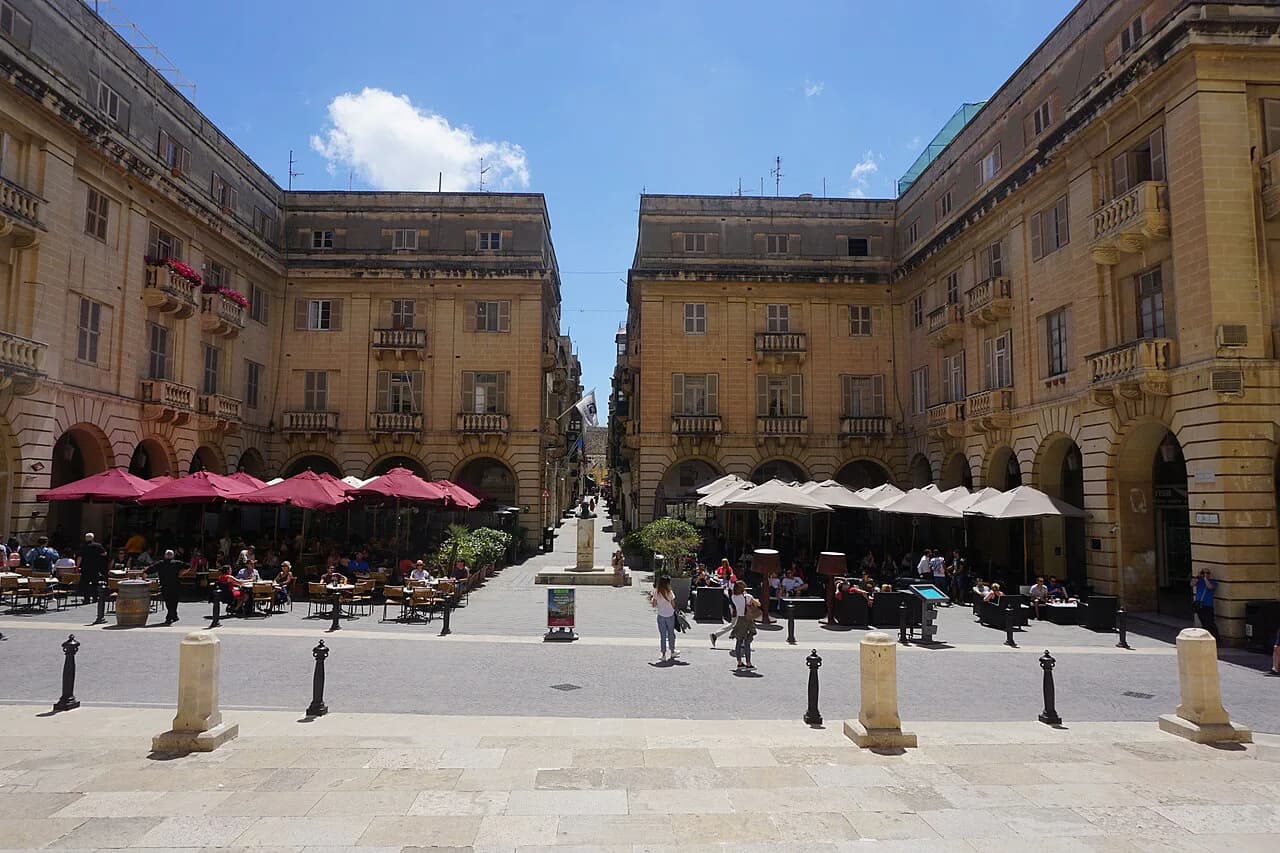
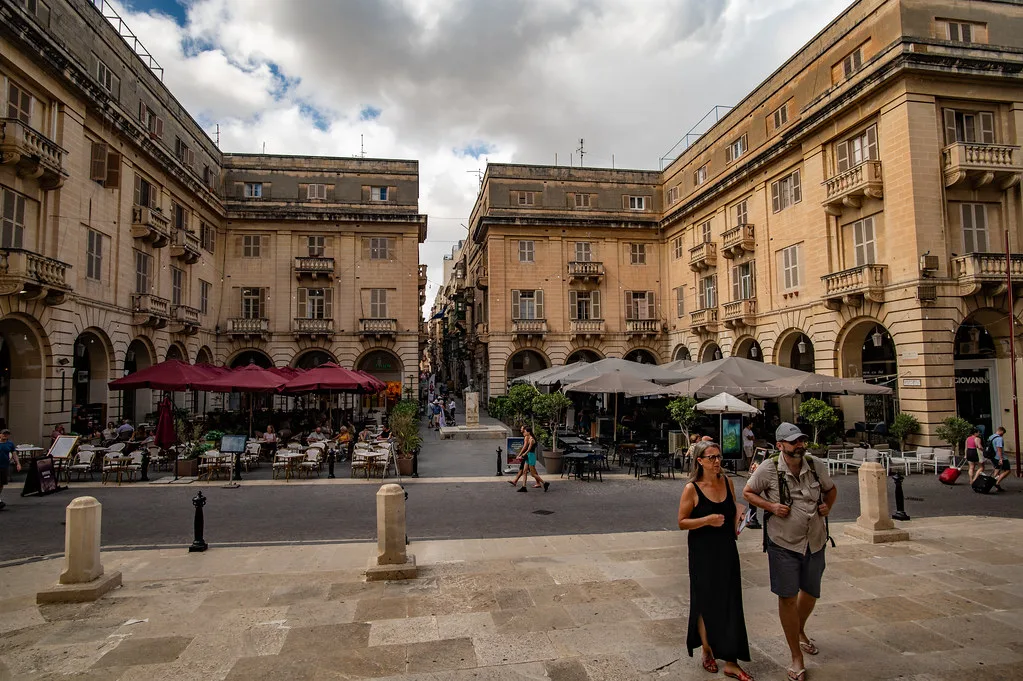
Leave time for a last walk back through St John's Square and St George's Square once the day visitors have gone, when the honey-coloured stone and the closed cathedral doors are at their best. City Gate and the Triton Fountain are a sensible final landmark before you find your way back to the bus terminus or the waterfront.
What to skip on a one-day visit
Skip island day trips. Mdina, the temples and the Hypogeum all need their own half-day or more, and trying to bolt one onto Valletta leaves you with neither. Lower Barrakka Gardens, the Siege Bell War Memorial and Hastings Garden are pleasant but secondary if the Saluting Battery has already given you the harbour view.
Choose either the National War Museum or Casa Rocca Piccola as your second interior, not both, and leave the belfry tour at the cathedral for a return visit if stairs are difficult. With one day, three interiors plus the gardens is a full and satisfying pace.
Practical points: hills, steps and shoes
Valletta is easy to navigate but hilly, with steep, uneven surfaces and a lot of walking, so wear shoes you would happily walk several miles in. The heat at midday is real in summer, and the stretch between the gardens and Fort St Elmo offers little shade.
The city's attractions are best seen on foot, and some streets are closed even to city taxis, so plan on walking rather than hopping in and out of vehicles. The Barrakka Lift is the one shortcut worth knowing, cutting the climb between the waterfront and the upper city.
Which Valletta route should you walk?
If you want the classic day, follow the route in order: coffee on St John's Square, the cathedral at 9am, the Grandmaster's Palace, the 12pm gun at Upper Barrakka Gardens, lunch, then Fort St Elmo and a slow evening near the waterfront. If you would rather see two places than one, swap the fort for the dgħajsa crossing to Birgu and spend the afternoon on the other side of the harbour. If you want to compare this walk with the rest of the city before committing, browse more things to do in Valletta.
Either way, book the cathedral and any restaurant you care about in advance, wear proper shoes and start early. That combination does more for a one-day visit than any extra stop on the list.
Explore more Valletta guides
- Cafés in Valletta
- Is Valletta Worth Visiting?
- Valletta Boat Trips
- Valletta Churches
- Valletta Gardens
- Valletta Grand Harbour
- Valletta Market (Il-Monti)
- Valletta Restaurants
- Valletta Streets
- Valletta viewpoints
- Valletta Walking Tour
- 3 Days in Valletta
- Free Things to Do in Valletta
- Things to Do in Valletta When It Rains
- Valletta Fort
Frequently Asked Questions
How long do you need to walk around Valletta?
A full day on foot covers the cathedral, the palace, the gardens, lunch and one further interior or the harbour crossing. Walking the length of the peninsula takes well under an hour; it is the stops that fill the day.
Is Valletta a walkable city?
Yes. The city is compact and laid out on a grid, and most streets are pedestrian-friendly, though it is hilly with steps and uneven surfaces. The Barrakka Lift shortens the climb between the waterfront and the upper city.
What not to miss in Valletta?
St John's Co-Cathedral, the Grandmaster's Palace, Upper Barrakka Gardens and the Saluting Battery, and a walk along the waterfront. Fort St Elmo and the National War Museum are the best additions if time allows.
Sources
Notes for your Malta trip
Optional updates when we add or correct a Malta or Gozo guide.
You might also like
Continue reading
More guides you'll find useful