Aljotta: Malta's Fish Soup, What's in It and How to Order It
Aljotta is Malta's fish soup of garlic, tomato and rice, often served with bread. Learn what goes into it, how it is served and what to check on a menu.
On this page
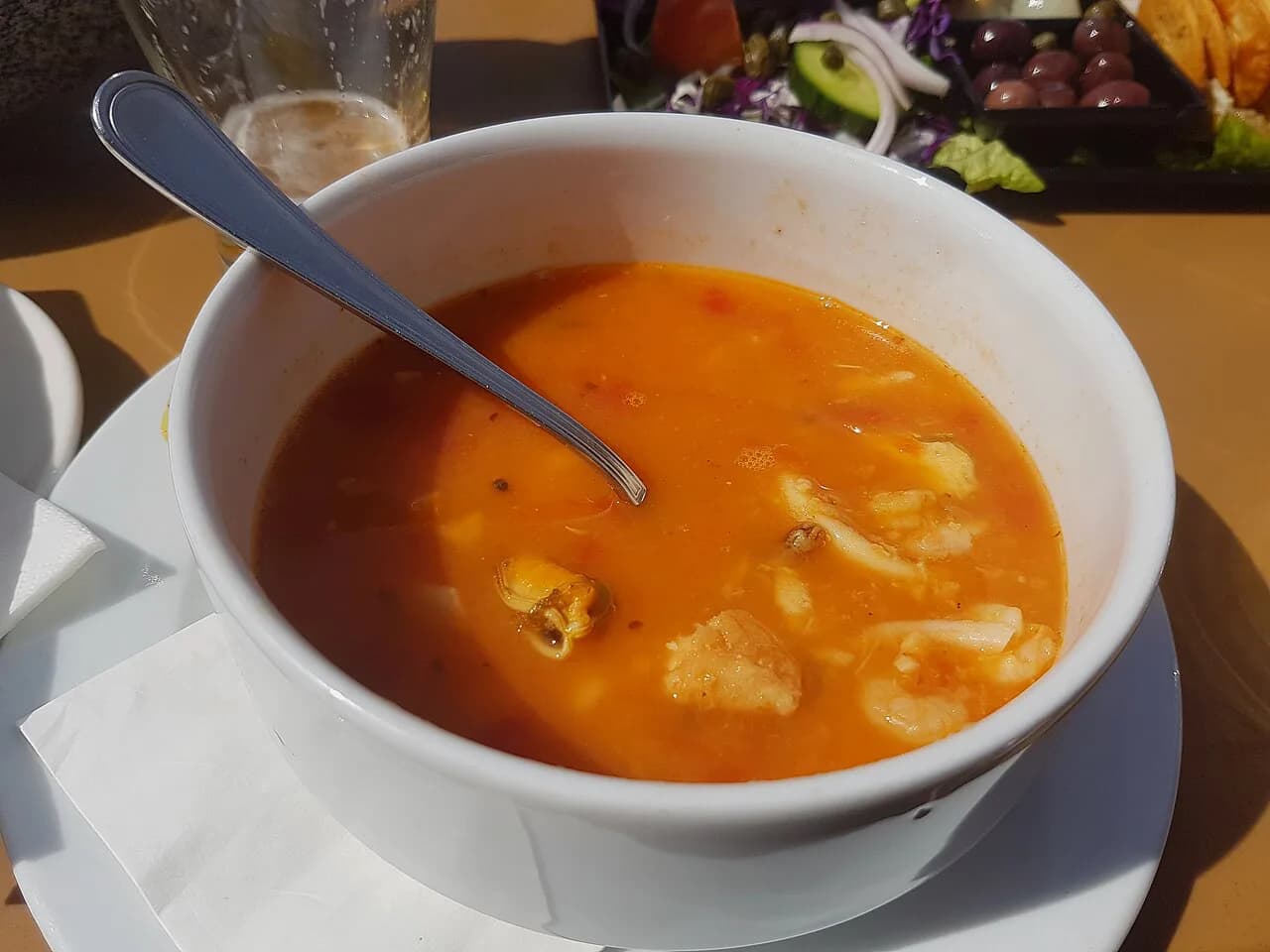
Aljotta is Malta's fish soup: a garlicky, tomato-rich broth that usually carries rice, and the one dish on a Maltese menu that most reliably tells you whether the kitchen cooks in the local idiom. If you see it listed, order it for a light lunch rather than a heavy dinner, and expect a bowl of strained broth rather than a plate of fish. This guide covers what goes into aljotta, how it is made and served, and what to ask before ordering.
Recipes vary between households, so the bowl you are served will not match any single written version. The accounts that describe it agree on the broad shape: fish, garlic, tomato, herbs and rice, with lemon added at the end.
What aljotta is
Aljotta is a fish soup with plenty of garlic and tomato, often served with rice. It belongs to the home kitchen as much as the restaurant: cooks make it with small fish, stretch the broth with water and finish it with rice so that one pot feeds a table. That is why it reads as a modest dish rather than a restaurant showpiece, and why it suits a midday meal in Malta when you want something warm but not heavy.
The dish appears under its Maltese name on menus rather than as "fish soup", so scan for aljotta first and treat any English description as a translation rather than a different dish. Versions exist in family cookbooks and online recipe archives, and they differ in herb, tomato quantity and whether the rice is cooked in the broth or separately.
What goes into aljotta
A typical ingredient list runs to small fish, onion, garlic, tomatoes, bay leaf, mint or marjoram, oil, lemon and rice. One published version uses 800g of small fish with onion, garlic, six tomatoes and about 100g of rice for four servings, seasoned with pepper, salt and bay leaf and finished with lemon and fresh mint if you have it.
A second version bulks out the base with two onions, three garlic cloves, five tomatoes and a spoon of tomato paste, adds marjoram alongside the mint, and simmers about 900g of small fish in eight cups of water before adding half a cup of rice. Both finish with lemon juice and both serve four, which shows how far the detail can shift while the structure stays the same.
Lampuki, the dolphinfish that Maltese kitchens use in autumn, can go into aljotta too, and a cook's note suggests fish heads work in place of small fish for the broth. If you are reading a menu rather than a recipe, that flexibility is the useful part: the fish changes with what is available, so ask what went into the pot rather than assuming one fixed species.
How it is made and served
The method explains what arrives at the table. The onion and garlic soften in oil, the tomatoes go in with the herbs and water, the fish simmers until cooked, and then the whole mixture is strained so only the liquid returns to the pot. The rice cooks in that broth until soft, lemon goes in at the end, and the soup is served hot.
Because the solids are pressed through a sieve or blended and strained, the bowl should reach you as a smooth, fairly thin soup with visible grains of rice and no fish flesh floating in it. A version that skips the straining step is a different dish altogether, closer to a fish stew, and the menu wording may not make the difference clear.
One cook's note says the soup is better on the second day and suggests doubling the recipe for a second meal, which tells you something about how it is eaten at home: made in quantity, reheated, and treated as an economical pot rather than a delicate first course. Expect a generous bowl rather than a small refined starter.
Why it suits a light lunch in Malta
Aljotta works as a lunch because it is broth-based, comes with rice built in and does not need a second course to feel like a meal. Order it with bread for dipping and a wedge of lemon on the side, and you have something that sits well before an afternoon of walking rather than weighing you down in the heat. The garlic and tomato give it enough acidity to feel fresh rather than rich.
If you want a wider choice of local cooking alongside it, our guide to the best restaurants in Malta sets out where Maltese dishes sit on menus across the islands, and the best restaurants in Valletta, Sliema and St Julian's all appear there. Use it to judge whether a kitchen is cooking Maltese food seriously or listing one local soup as a token.
Bread matters more here than you might expect, since the broth needs something to soak it up and Maltese bread is built for the job. Our guide to Maltese bread explains the loaves you will see in bakeries and what to ask for.
What to look for on a Maltese menu
Look for aljotta named as such, usually in the soup or starter section, and read the English line beneath it for words like "fish soup" or "with rice". A menu that describes it as a fish stew, a chowder or a bisque is signalling a different bowl, and the price will not tell you which you are getting. Where the description mentions the fish used, that is a good sign that the kitchen is cooking it to order rather than opening a tin.
Menus change with the season and with what the boats bring in, and no published source sets a price, a portion size or a fixed list of places serving aljotta. Judge it at the table: ask what fish is in it that day and whether the rice is cooked in the broth. Do not treat any single restaurant as a guaranteed source of the dish.
If you would rather meet the dish as part of a wider introduction to Maltese eating, a food tour or market visit can put it alongside other local plates. Our comparison of Malta food tours covers what the formats include.
Questions to ask before ordering
Ask whether the fish is strained out of the broth, because that single answer tells you whether you are getting soup or stew. If bones worry you, say so: the straining step removes them, but a kitchen that serves the fish in the bowl will not have done so. A cook's note also suggests straining again after blending if you are nervous about bones, which is worth remembering if you plan to make it at home.
Ask which fish went in, and whether lampuki is among them in autumn. Ask whether the rice is already in the soup or served on the side, since both approaches appear in written versions. And ask about the herbs, because mint and marjoram vary between recipes and the difference changes the flavour noticeably.
If you are eating on the move rather than sitting down, our guide to Malta street food explains the quicker local options that fit around a day of sightseeing.
Should you order aljotta?
Order it if you want a warm, garlicky broth with rice that leaves room for the rest of the day, and skip it if you were expecting a plate of fish. The dish rewards curiosity about how Maltese kitchens cook rather than promising a restaurant centrepiece. Ask about the fish and the straining before you commit, and use the answer to judge the kitchen as much as the soup.
Explore more Malta guides
Frequently Asked Questions
Is aljotta served with the fish in it?
Usually not. The standard method simmers the fish with the vegetables and herbs, then strains the whole mixture so only the broth returns to the pot before the rice is cooked in it. Some versions blend and strain again to catch any bones. If you are unsure, ask whether the fish is removed before serving.
Can I make aljotta at home?
Yes, and the published versions are straightforward: soften onion and garlic in oil, add tomato, herbs and water, simmer small fish until cooked, strain, then cook rice in the broth and finish with lemon. Quantities vary between recipes, so treat any single list as one cook's version rather than a fixed formula.
Sources
Notes for your Malta trip
Optional updates when we add or correct a Malta or Gozo guide.
You might also like
Continue reading
More guides you'll find useful