Maltese Bread (Ħobż tal-Malti): What It Is and How to Eat It
Maltese bread (ħobż tal-Malti) is a crusty sourdough loaf baked in wood ovens. Here is what goes into it, why Qormi is the bakers' town, and how to eat it.
On this page
Maltese bread, ħobż tal-Malti, is a crusty sourdough loaf baked in traditional wood ovens, and it is the item to buy first if you want to eat like a local. The loaf has a hard, dark crust and a soft, chewy crumb, and it is eaten plain with olive oil or split and filled. This guide explains what goes into it, why Qormi is known as the bakers' town, how to spot a good loaf and how to order it as ħobż biż-żejt.
What Maltese bread is and what makes it different
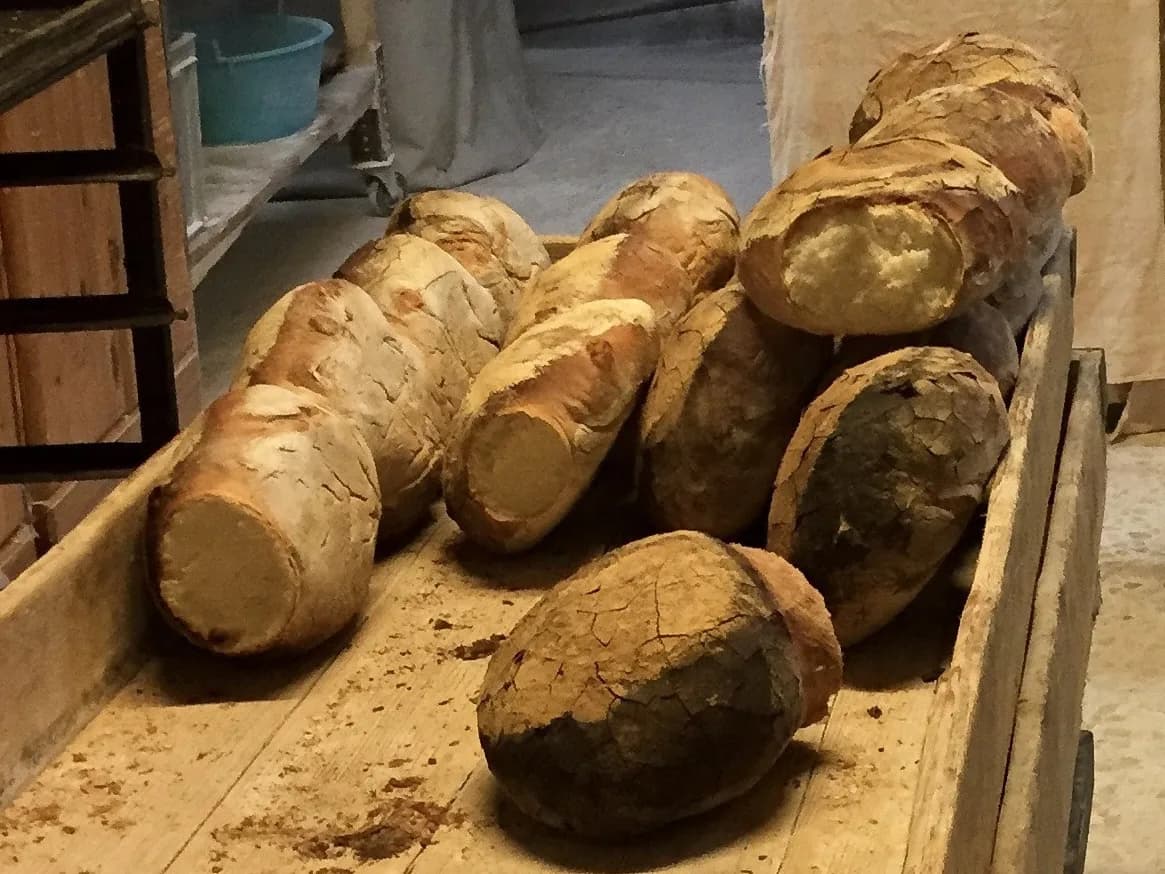
Maltese bread is a round or oval country loaf with a thick, crunchy crust and an open, chewy interior. It is made with a sourdough starter rather than only commercial yeast, which gives the crumb its tang and helps it keep for a day or two. That starter, sometimes called the mother dough, is a piece of dough held back from the previous bake and worked into the next.
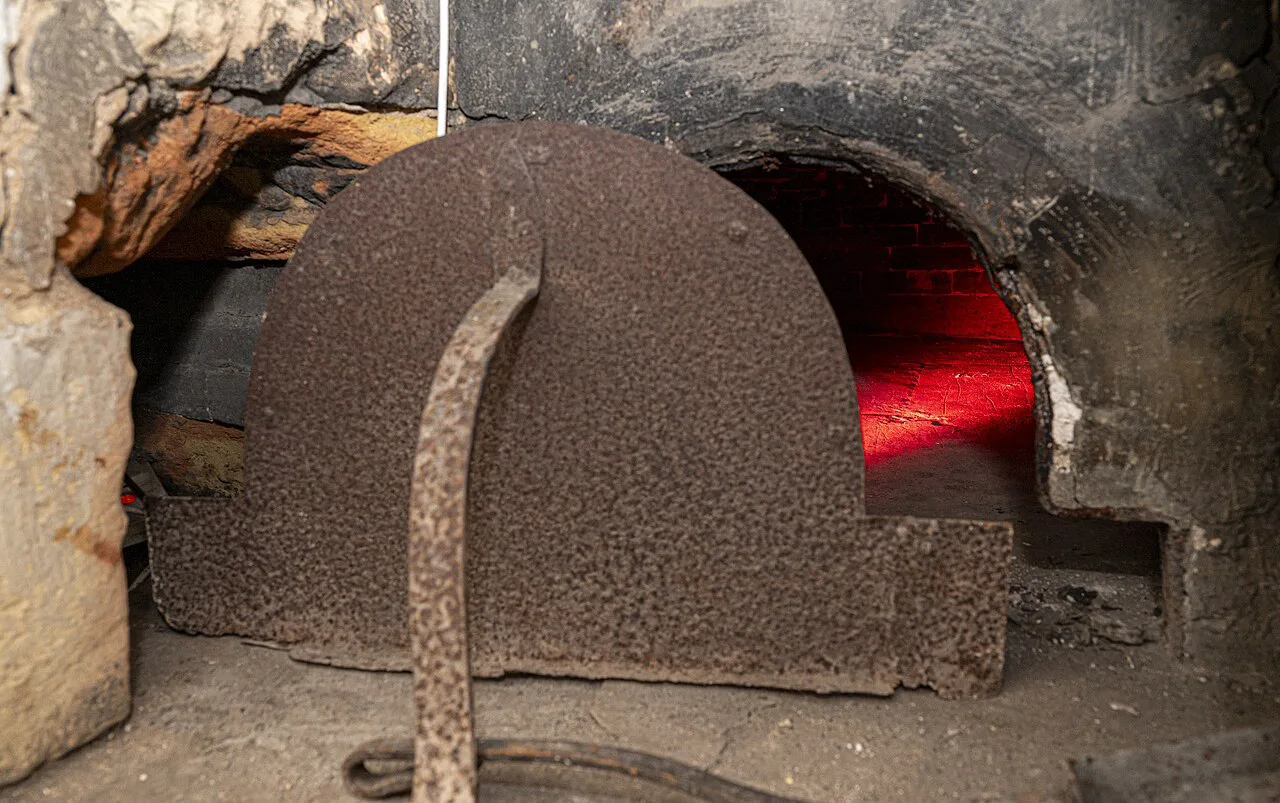
The other defining feature is the bake itself: traditional loaves go into a wood-fired oven, which gives a fast, hot blast of heat and a crust that a domestic oven struggles to match. Bakers score the top before baking, most commonly with a cross known as tas-salib or a single slash down one side known as tas-sikkina.
Because the traditional loaf is baked without preservatives or artificial additives, buy it on the day you plan to eat it. A loaf bought in the morning is at its best by late afternoon; after that, slice and toast it or turn it into a filled sandwich.
The ingredients and the slow fermentation
The core ingredients are flour, water, sea salt and yeast, with recipes varying from one baker to the next. Some versions add olive oil. A home version typically uses about a kilogram of flour with a fist-sized piece of leftover dough, the mother dough, to carry the fermentation.
The method is simple but slow: mix to a smooth, non-sticky dough, leave it to rise, knock it back, then let it rise a second time before shaping and baking. Two rises of roughly two hours each are typical, with a bake of around forty minutes in a very hot oven. That timetable is why a good loaf is a morning purchase, not an afterthought.
The dough is forgiving on proportions, which is part of why every baker claims a slightly different result. Salt can go up a little, but go easy on the yeast, particularly when the mother dough is already doing the work. If you bake at home in Malta, follow the packet instructions on whatever yeast you buy.
Qormi and the bakers: Casal Fornaro
Qormi, just inland from the Grand Harbour, is the town most associated with Maltese bread, and it has the nickname to prove it: Casal Fornaro, the bakers' town, from the Knights' period. That is where to point yourself if you want to buy the loaf where it is most closely identified.
The town marks the trade with Lejl f'Casal Fornaro, a night of bread and food held on the third Saturday of October each year. If your trip falls in that window, check the current year's arrangements before you build an evening around it.
You do not need to go to Qormi to find the bread: bakers across the islands sell it, and many cafés and traditional restaurants serve it as a matter of course. For a wider sweep of where to eat in Malta, the guide to the best restaurants in Malta is the place to start.
What to look for in a loaf
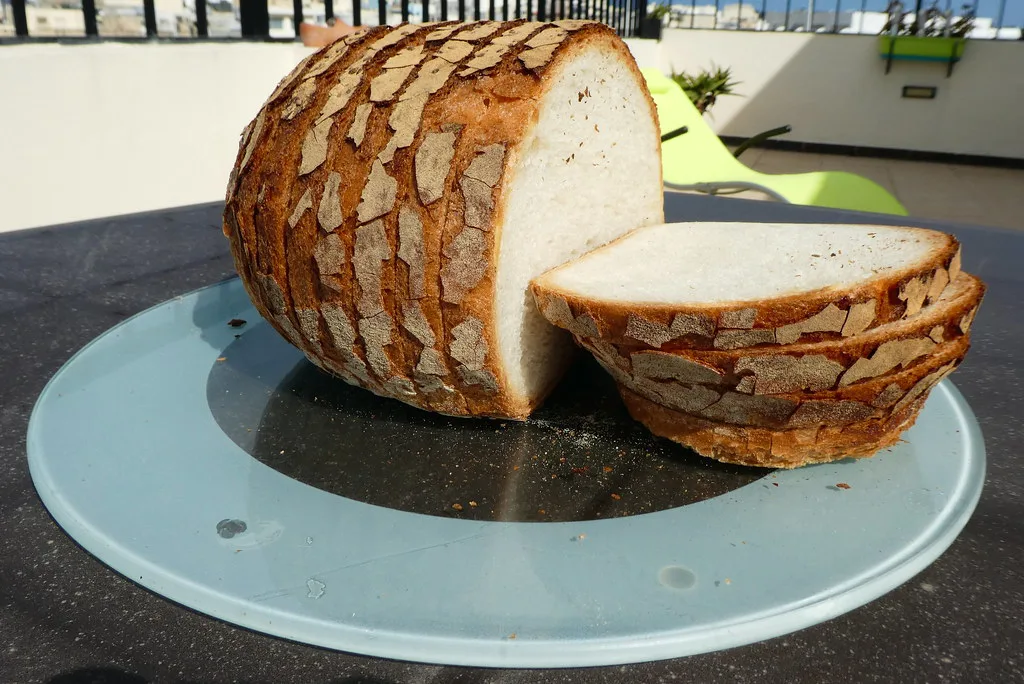
Judge a loaf by the crust first: it should be deep brown, firm and slightly rough, not soft or pale. Tap the base and listen for a hollow sound, which suggests the crumb inside is set rather than doughy. A heavy, dense loaf usually means it was rushed.
Cut into it and the crumb should be pale, open and a little glossy, with a chew rather than a crumble. The flavour is mildly sour, wheaty and salty, and it should taste of something on its own before you add anything. That is the test of whether the slow rise has done its job.
The shape runs from a round boule to an oval, and the top may carry a cross, a single slash or nothing at all. Buy from wherever the turnover looks brisk; a loaf that has sat on the shelf since yesterday will have lost the crust's snap.
How to eat it: ħobż biż-żejt
The way to eat Maltese bread is ħobż biż-żejt: a slice or a split loaf rubbed with fresh tomato, then drizzled with olive oil and sometimes spread with tomato paste. It is not a dish so much as a method, and it is what to order or assemble if you want to understand the bread rather than just eat it.
Fill the same split loaf with tinned tuna, olives, capers, onion and a spoon of kunserva, the local tomato paste, and you have the standard sandwich. Other common additions are bigilla, a bean paste, and ġbejna, the small local cheese. Garlic, parsley and plenty of olive oil finish it.
If you would rather someone else did the assembling, look for it on menus as a filled loaf or a platter. Malta street food covers the portable end of this, including the snacks that go alongside a bread-based lunch.
Ftira: how it differs from the round loaf
Ftira is a variation sold alongside the Maltese loaf, and bakers usually make it before the loaves. It is flatter than the round sourdough loaf, so it takes fillings and toppings well. If you want a sandwich that holds together, it is often the better choice.
In practice, ask for ftira when you want something to eat on the move in Valletta, Birgu or Mdina, and ask for ħobż tal-Malti when you want a loaf to take back to your accommodation. Both are sold by bakers and both turn up on café menus.
Where to try it on a Malta trip
Start with a bakery in Qormi for the loaf itself, then work through the towns you are already visiting. In Valletta and the Three Cities, cafés and traditional restaurants serve bread as a matter of course, and a filled loaf makes a cheap, quick lunch between sights. Sliema, St Julian's, Mellieħa and Victoria on Gozo all have bakeries and cafés where you can buy by the loaf or the sandwich.
For a structured introduction, a food tour that includes a bakery visit or a bread tasting is worth considering, particularly if your time in Malta is short. Compare what is actually included before booking, since routes and stops differ considerably.
Leave room for what comes after the bread, too: the same bakeries and cafés sell the pastries and sweets that fill the gap between meals. Maltese desserts covers the almond and honey end of the counter.
Bread in Maltese sayings and daily eating
Bread turns up in everyday Maltese speech as a stand-in for livelihood and luck. Someone doing well has ħobżu maħbuż, his bread is baked, while someone who has lost a job has tilef ħobżu, he has lost his bread. The phrases show how tightly the loaf is tied to work and survival rather than to restaurants.
That everyday status is why the bread matters to a visitor: it is not a delicacy to seek out once, but the thing on the table at breakfast and lunch. Buy a loaf, rub it with tomato, and you have eaten the local way for very little.
Which loaf should you buy?
Buy the round ħobż tal-Malti if you want the classic crusty sourdough loaf to eat over a day or two, and buy ftira if you want something flatter and sturdier to fill for lunch. Buy it in the morning, eat it the same day, and rub the first slice with tomato and olive oil before you add anything else.
For where to eat it once you have crossed the island, the guide to the Best Restaurants in Malta is the practical next step, and Malta Street Food covers the quicker end of the same ground.
Explore more Malta guides
Sources
Notes for your Malta trip
Optional updates when we add or correct a Malta or Gozo guide.
You might also like
Continue reading
More guides you'll find useful