Malta in WW2: The Siege, the George Cross and the Sites to See
Malta in WW2 saw 3,343 air raids and the George Cross. See the story through the National War Museum, the Lascaris War Rooms and the Saluting Battery.
On this page
Malta in WW2 was a British-ruled island base in the middle of the Mediterranean, bombed from Sicily from 11 June 1940 and defended, supplied and eventually awarded the George Cross for holding out. The story runs from the first raid on Fort St Elmo to the last all-clear in August 1944, and most of the places that tell it are packed into Valletta. This guide sets out the chronology, the figures that show the scale of the siege, and how to match each date to a site you can actually stand in today. The Siege of Malta in WW2 covers the campaign in more detail.
It is written for travellers who want the history straight before they walk the peninsula: who held Malta, what the bombing cost, and which museum, memorial or underground headquarters is worth an hour of a short trip.
Who held Malta in the Second World War?
Malta was a British colony and a naval and air base, which is why it was attacked from Sicily within a day of Italy entering the war in June 1940. The island's position between mainland Europe and Africa had made it strategically valuable long before 1939.
That mattered because the Grand Harbour and the airfields were the base from which Malta-based forces struck at Axis shipping, and the island in turn depended on convoys for food, fuel and munitions. Malta-based submarines sank 390,660 tons of Axis shipping between 1 January 1941 and 1 May 1942, with HMS Upholder responsible for 128,353 tons alone.
For visitors, this is the context that turns a harbour view into a story: the creeks you look down on from Valletta's bastions were the target, and the airfields inland were the reason the bombing kept coming.
The siege in numbers: what the bombing cost
The figures are the clearest way to grasp the scale. Malta recorded 3,343 air raids over the war, spending 2,357 hours under alert, with 15,000 tons of bombs dropped on the islands.
Civilian casualties were 1,581 killed and 3,780 injured, alongside 7,500 servicemen and merchant seamen lost on operations connected with the battle. A further 10,761 buildings were destroyed or badly damaged, most of them private dwellings, and another 20,000 homes needed repairs.
The population of Malta and Gozo at the start of the war was 270,000, and about 50,000 people were made homeless by the bombing, roughly 18.5 per cent of the total.
The full chronology, raid by raid, is set out in our account of the siege of Malta ww2, which follows the campaign from the first alerts through to the convoys.
April 1942 and the worst months of the bombing
April 1942 was the hardest month, with 282 raids in 30 days and 6,700 tons of bombs dropped in that month alone.
Between them, the spring of 1942 brought 154 successive days and nights under aerial attack, a period in which the island went a single 24-hour stretch without an alert between January and June. Of the 3,343 raids recorded across the war, 2,031 came in 1942.
Landmarks were not spared: the Royal Opera House in Valletta was destroyed in the bombing of April 1942, and a bomb that hit Mosta Church failed to explode, sparing the people sheltering there.
If you want to understand how people survived those nights underground, Malta's air raid shelters are the places to look for, since public shelters were cut into the rock beneath towns and are still visible in several places.
The George Cross: two dates, one award
King George VI awarded the George Cross to the people of Malta on 15 April 1942, in recognition of the island's endurance under sustained bombing. The medal itself was presented at St George's Square, also known as Palace Square, on 13 September 1942 by Lord Gort, then Governor, to Chief Justice Sir George Borg on behalf of the Maltese.
The two dates are often run together, but they mark different things: the citation in April and the ceremony in September. The George Cross was afterwards incorporated into Malta's national flag, first appearing in a Blue canton in December 1943 and retained, with a red fimbriation, at independence in 1964.
Malta's George Cross is the award, the wording of the citation and the flag story in one place, and it makes a useful read before you walk into Palace Square or look up at the flag over the bastions.
Operation Pedestal and the Santa Marija convoy
By August 1942 the island was close to starvation, and Operation Pedestal was mounted to resupply it. Fourteen merchant ships took part, escorted by a support group of 65 vessels including four aircraft carriers, two battleships and 32 destroyers.
Nine of the fourteen merchant ships were sunk; five reached Grand Harbour, delivering about 32,000 tons of supplies, including roughly 10,000 tons of fuel brought in by the SS Ohio. Around 350 Royal Navy and Merchant Navy personnel were killed during the operation.
The convoy arrived on 15 August 1942, the feast of the Assumption, which is why it is remembered as the Santa Marija convoy and is credited with saving Malta from starvation or surrender.
The defenders: Gladiators, Hurricanes and Spitfires
When Italy entered the war in June 1940 there were still no fighter squadrons on the island. The first defence came from a handful of Gloster Sea Gladiators, drawn from crates stored at Kalafrana and flown by volunteers, mainly flying-boat pilots used to much larger aircraft, with three usually airborne and a fourth held in reserve.
Reinforcement came by carrier: Hurricanes were ferried from Gibraltar and flown off to Malta's airfields from August 1940 onwards, and Spitfires began arriving from 7 March 1942. Even so, the Luftwaffe's Messerschmitt Bf 109F outclassed the Hurricanes when it returned to Sicily in November 1941.
Malta's airfields were themselves prime targets: Luqa, completed in April 1940 and the only tarmacked field at the time, and the older Ta' Qali aerodrome taken over by the RAF in October 1940, both absorbed heavy bombing.
The wider story of the island before the war, from its rulers to the fortifications the British inherited, sits in our pages on Malta history, which put the 1940s in a longer sequence.
Where to see it in Valletta: the National War Museum at Fort St Elmo
Start at the National War Museum, housed inside Fort St Elmo at the tip of the peninsula facing Marsamxett Harbour. The fort was built by the Knights of St John to defend against Ottoman attack and later played a central part in the Great Siege of 1565, and the museum's collection spans from prehistoric material to the Second World War.
Give the museum the largest block of your day: it is the one stop where the raid figures, the George Cross and the convoy story can be read together with objects rather than memorials. Check the museum's current opening days and ticket terms before you travel, since they are not fixed for the season here.
The Lascaris War Rooms under the Upper Barrakka Gardens
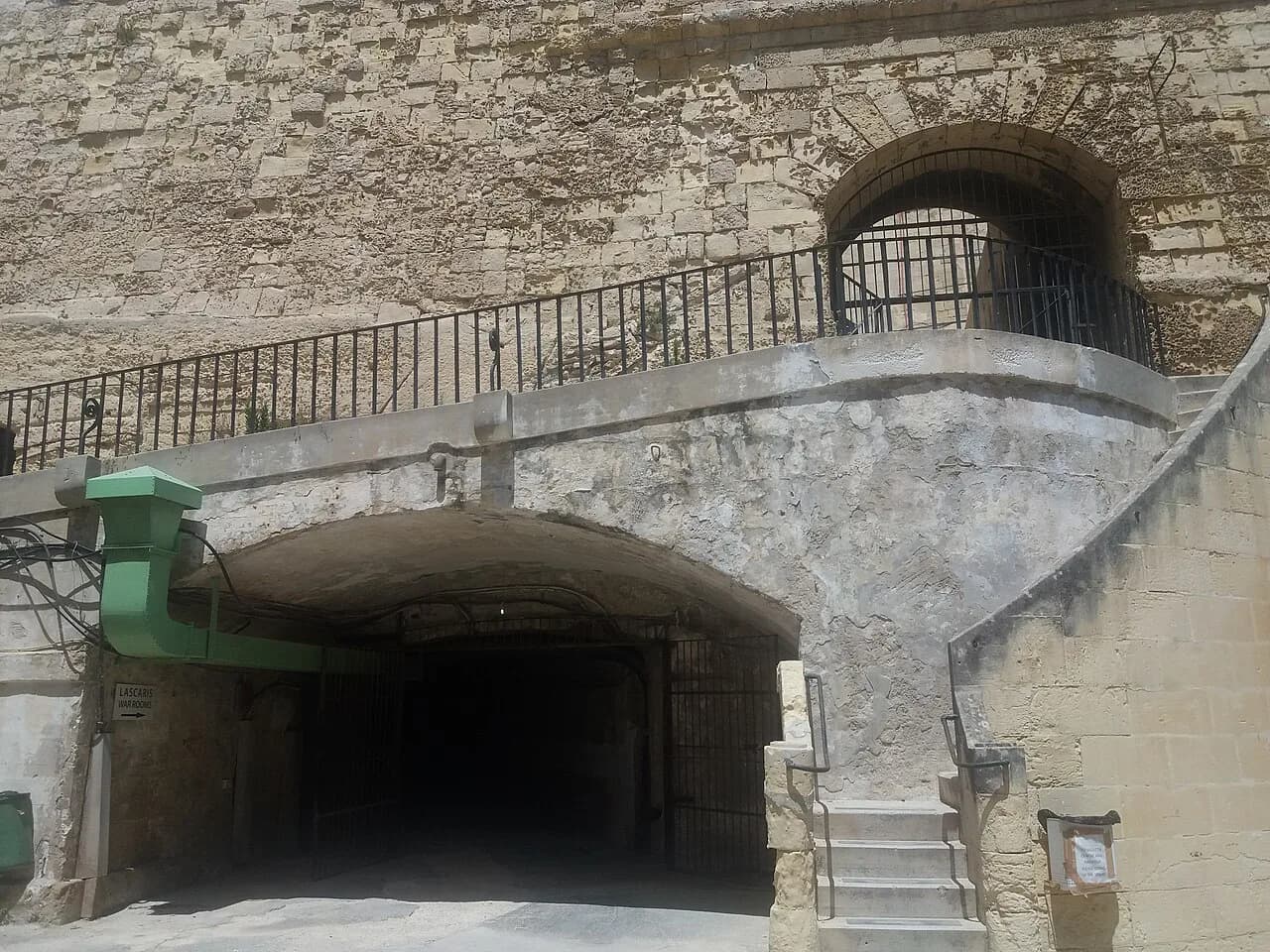
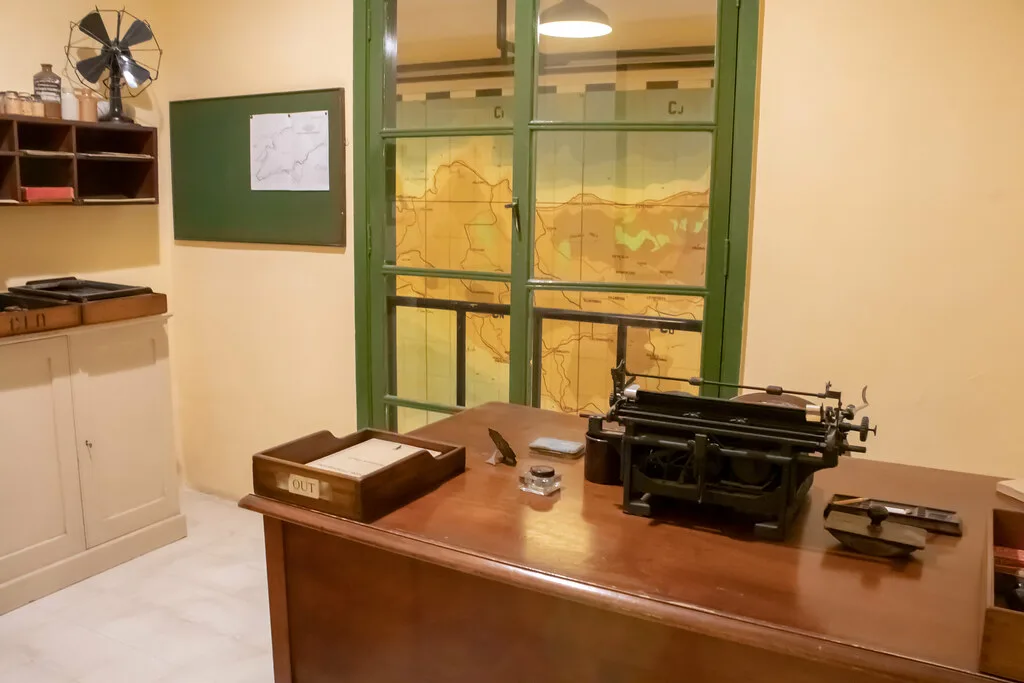
The Lascaris War Rooms lie roughly 400 feet below the Upper Barrakka Gardens, a network of tunnels used as the British war headquarters during the Second World War. They were central to the planning of Operation Husky, the invasion of Sicily, in July 1943, and were later the headquarters of the Mediterranean Fleet and then a NATO strategic communication centre before opening to the public.
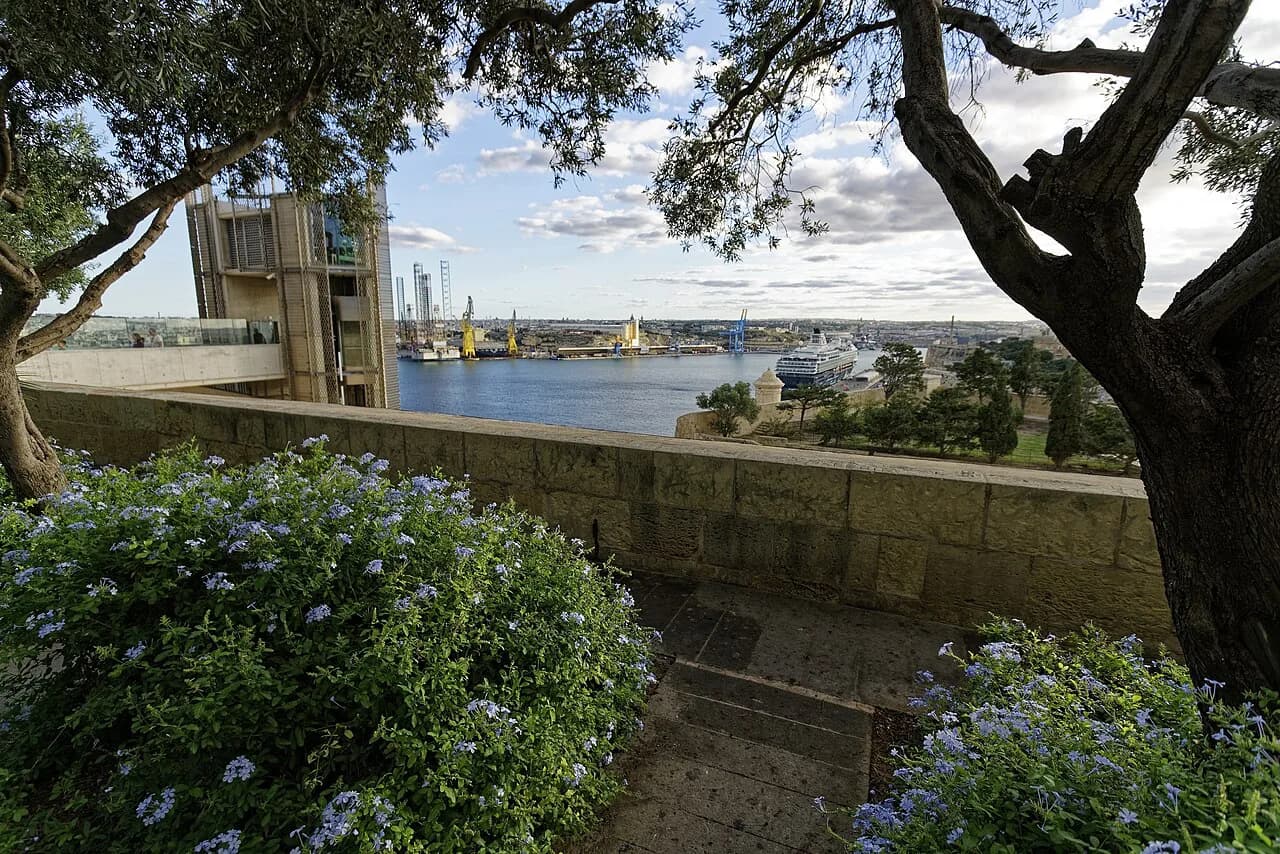
Because they are underground, the war rooms are the sensible choice for the middle of a hot day, when the open bastions and memorials offer no shade. Pair them with the gardens above: the Upper Barrakka gives you the harbour view that makes the Operation Husky planning suddenly legible, and the Saluting Battery sits on the same terrace.
Siege Bell, Saluting Battery and the Opera House ruins
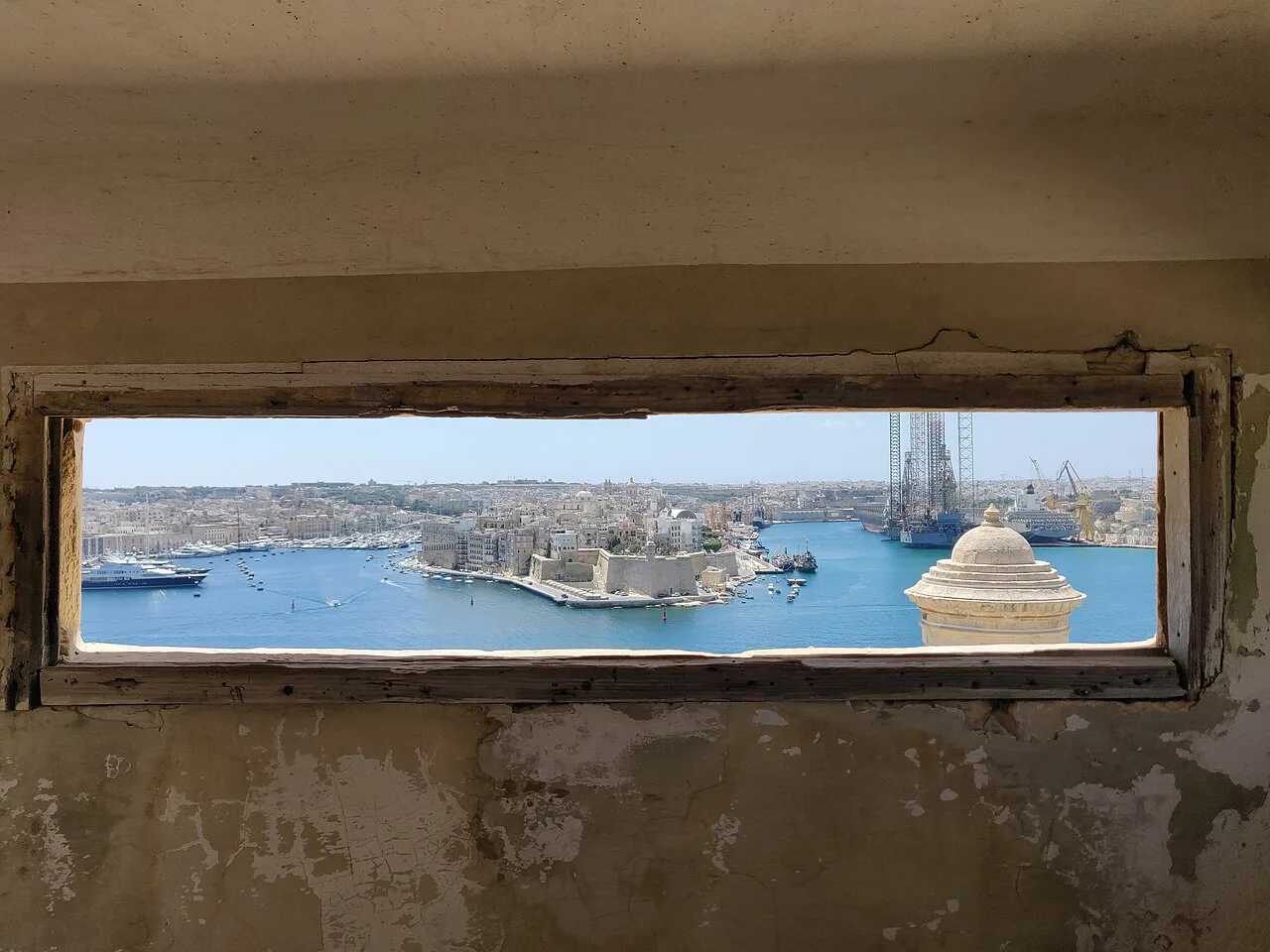
The Siege Bell War Memorial stands at the tip of the Valletta peninsula above the Grand Harbour, a modern belfry with a commemorative plaque and a statue of the Unknown Soldier, unveiled by Queen Elizabeth in 1992. It is an open, exposed site with a wide harbour panorama, best worked into a morning or late-afternoon walk rather than the midday peak.
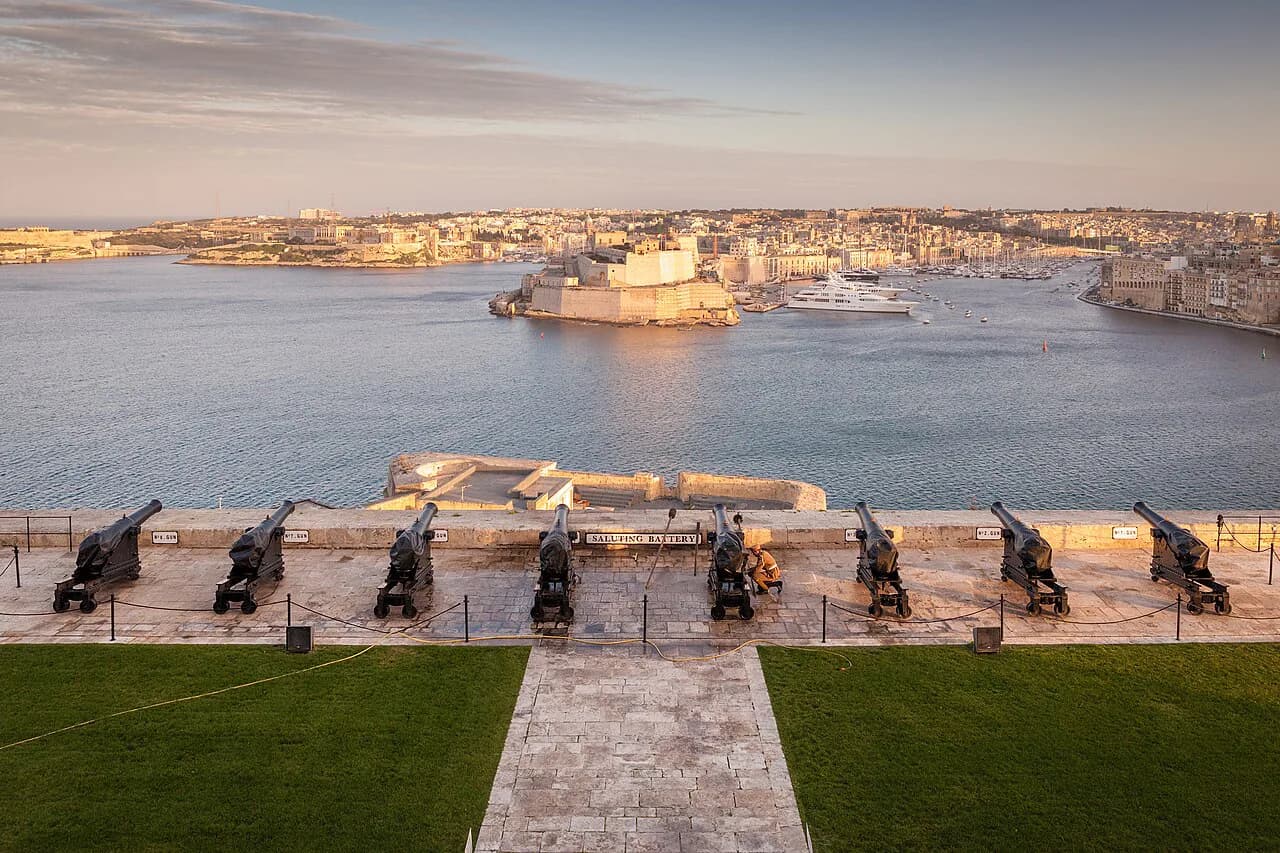
Nearby, the Saluting Battery on the same stretch of fortifications looks out over the Grand Harbour and the Three Cities, and its ceremonial platform is where gun salutes are still fired.
For a different kind of wartime monument, walk to Pjazza Teatru Rjal, the open-air theatre built inside the ruins of the Royal Opera House. The building opened in 1866, was damaged by fire in 1977 and had earlier taken a direct hit in the wartime bombing, and it was later reworked into an open-air performance space by the architect Renzo Piano.
If your interest runs to Victorian fortifications as well, fort Rinella in Kalkara across the harbour is the natural companion stop, reached by crossing from Valletta.
How to plan a war-history day in Valletta
A workable order is Fort St Elmo and the National War Museum first thing, the Lascaris War Rooms and Upper Barrakka Gardens in the heat of the middle of the day, and the Siege Bell and Saluting Battery later, when the light on the Grand Harbour is better and the stone has cooled. The Opera House ruins sit on the route between the city gate end and the bastions, so they cost you only a few minutes.
The trade-off is depth against distance. The museum and the war rooms each deserve an unhurried hour, and squeezing both plus three outdoor memorials into one day means walking the length of the peninsula twice; if you only have half a day, choose the museum for context or the war rooms for atmosphere, and take the harbour views from the Barrakka terrace rather than chasing every memorial.
The other constraint is the sun. The Valletta peninsula is exposed stone with little shade on the bastions, so put the underground war rooms and the museum at the hottest hours and keep the outdoor stops for the edges of the day.
Where war history fits with the rest of your trip
Most of the wartime sites are in Valletta itself, which makes the capital the obvious base for this theme, with the Three Cities visible across the water and the airfields you have read about inland. If you are staying in Sliema or St Julian's, the ferry and bus connections into Valletta put the whole day within reach without a car.
After a morning underground and an afternoon on the bastions, a long lunch or an early dinner in Valletta or across the water is the sensible close to the day; our pick of the best restaurants in Malta covers where to eat without undoing the walking you have already done.
Museum or war rooms first?
If you have one day, do the National War Museum at Fort St Elmo first for the full chronology, then the Lascaris War Rooms for the underground atmosphere, and finish with the Siege Bell and the harbour from the Barrakka terrace. If you have only a couple of hours, the war rooms plus the Upper Barrakka Gardens give you the strongest sense of place for the least walking.
Either way, read the raid figures and the George Cross story before you go, so the memorials and the ruined opera house read as evidence rather than scenery.
Explore more Malta guides
Frequently Asked Questions
Was Malta a British colony in the Second World War?
Yes. Malta was under British rule and served as a naval and air base in the central Mediterranean, which is why it was bombed from Sicily from June 1940 and supplied by convoy for much of the war.
Why is the Siege of Malta famous?
It is remembered for the scale and duration of the bombing and for the island holding out. Malta recorded 3,343 air raids and 2,357 hours under alert, and was awarded the George Cross on 15 April 1942 in recognition of the population's endurance.
Where can I see Second World War history in Malta?
Most of it is in Valletta: the National War Museum inside Fort St Elmo, the Lascaris War Rooms beneath the Upper Barrakka Gardens, the Siege Bell War Memorial, the Saluting Battery and the ruins of the Royal Opera House at Pjazza Teatru Rjal.
How long does a war-history day in Valletta take?
Allow a full day to cover the museum, the war rooms, the Siege Bell and the Saluting Battery at an unhurried pace, since the sites are spread along the peninsula. With half a day, choose the museum or the war rooms and take the harbour views from the Barrakka terrace.
Sources
Notes for your Malta trip
Optional updates when we add or correct a Malta or Gozo guide.
You might also like
Continue reading
More guides you'll find useful