Fort Rinella, Kalkara: the 100-ton gun, tickets and how to get there
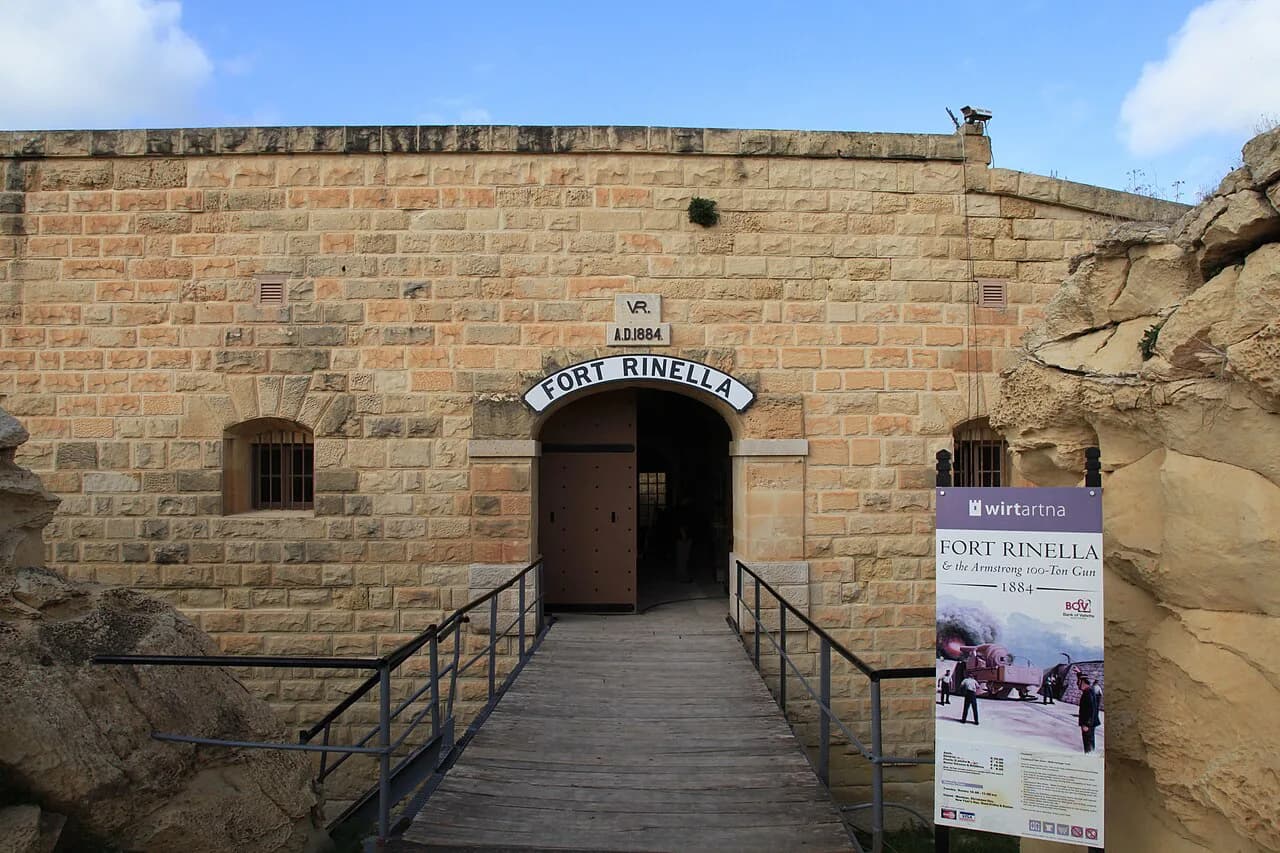
Fort Rinella in Kalkara is a Victorian fort built by the British in 1878, home to the Armstrong 100-ton gun. Here are the opening hours, ticket prices and bus route.
On this page
Fort Rinella is worth two hours of a Malta trip if the Armstrong 100-ton gun and Victorian garrison life interest you. The fort sits in Kalkara on the eastern side of Grand Harbour, and one admission covers a guided tour, an audio guide and the Soldiers of the Queen exhibition, so you are not paying separately for each part.
This guide sets out what the fort is, what the gun could do, how to time a visit around the demonstrations, the opening hours and closed days, the ticket options, and the bus and driving routes. It also covers the night group tours and the sensible pairing with the Malta at War Museum in Birgu (Vittoriosa).
What Fort Rinella is
Fort Rinella was built by the British in 1878 as one of the coastal batteries guarding Grand Harbour against a perceived threat from the Italian navy. It stands above the shore east of the mouth of the harbour, between Fort Ricasoli and Fort St Rocco, and it was laid out as an irregular pentagon surrounded by a deep dry ditch with caponiers covering the approaches.
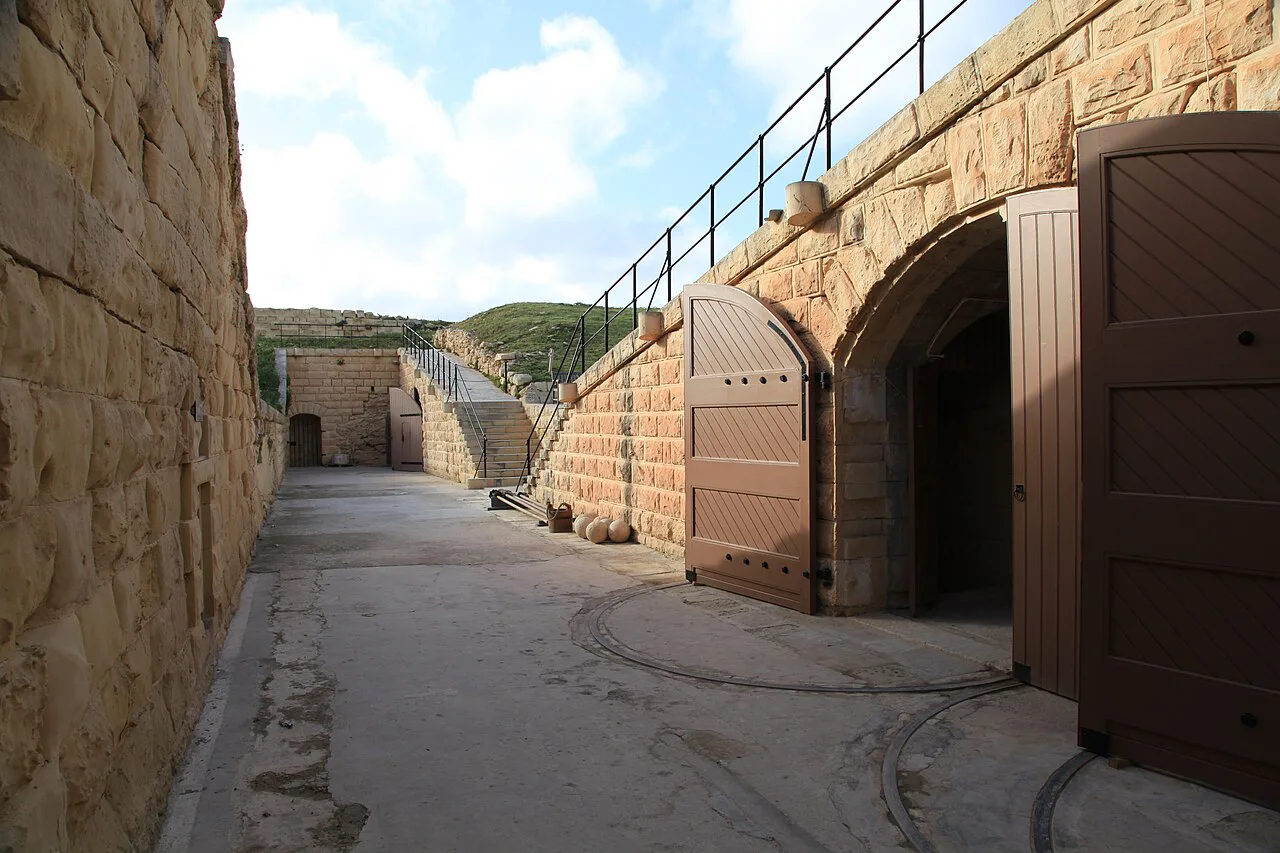
The fort has two levels: an underground magazine and loading chamber, and a ground level with the defensible barracks, engine room and machinery chambers. Much of that original fabric survives — the bent entry, ditch, caponiers, lift shafts and magazines — which is why the site reads as a working fort rather than a museum room with a gun in it.
It is a single, compact site, not a full day out. Build the visit around the gun and the scheduled displays, then use the rest of the day for Birgu or the Three Cities rather than trying to stretch Kalkara itself.
The Armstrong 100-ton gun
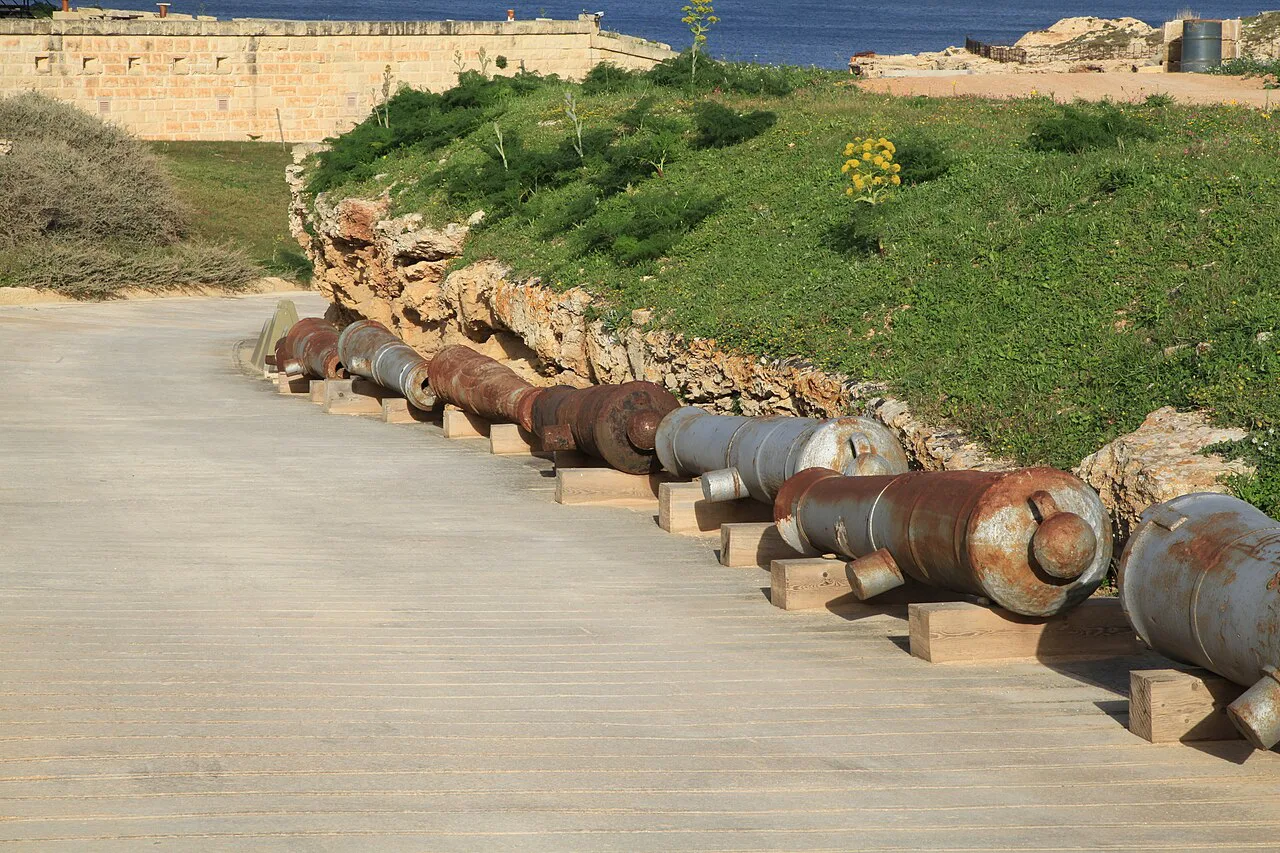
The gun is the 17.72-inch Armstrong rifled muzzle-loading weapon designed by Sir William George Armstrong of Newcastle, and Wirt Artna describes it as the world's largest muzzle-loading gun in history. It fired a one-ton shell propelled by a quarter-ton gunpowder charge, and the hydraulic system of ammunition lifts, rammers and traversing gear meant it could be loaded, trained and fired in about six minutes.
The scale is the point. The barrel is around 11 metres long, and moving the gun into position took a team of around 100 men three months of manual work. It was declared obsolete in 1906 after roughly 20 years of service, and the fort was later stripped of its machinery and abandoned.
Of the four 100-ton guns the British built for Malta and Gibraltar, only the one at Fort Rinella and the example at Napier of Magdala Battery in Gibraltar remain. That survival, plus the restored hydraulic setup around it, is what separates a stop here from a general military museum.
What a visit includes
Admission includes an interactive guided tour in English led by guides in Victorian gunner dress, a free audio guide (available in a dozen languages including Maltese, English, Italian, German and French) and entry to the Soldiers of the Queen exhibition. The exhibition covers Queen Victoria's army from 1837 to 1901 and displays around 3,000 period objects, from weapons and uniforms to equipment.
There is also a film show on the history of the fort and the gun that runs hourly, so you can slot it in around the tour rather than waiting for a single fixed screening. You can walk the fort at your own pace if you prefer to skip the guided element.
For the wider story of the island at war, the Malta in WW2 guide covers the convoys, the bombing and the home front that the fort's Victorian garrison life sits before.
The demonstrations and when to arrive
The demonstrations are the reason to arrive before lunch rather than at random. The published schedule lists a military signalling display at 12:00 using 19th-century equipment, a swordsmanship display at 13:00 tracing the evolution of the sword, and a guided tour with historical re-enactment at 14:00 including drill, fighting skills, live historic artillery firing and a cavalry show.
A sane plan is to reach the gate when it opens, take the tour and exhibition in the morning, then stay for the 12:00 and 13:00 displays. If you only have one slot, aim for the early afternoon so you catch the re-enactment alongside the gun itself.
Demonstration times are drawn from the fort's published schedule, so check the day's running order at the gate when you arrive and build in some slack.
Opening hours and closed days
Fort Rinella opens Monday to Saturday from 09:30 to 17:30, with last admission at 17:00, and it is closed on Sundays. It also closes on 24, 25 and 31 December, 1 January, Good Friday and Easter.
Sunday closure matters for weekend city breaks: a Saturday in Malta is the last chance, and a Sunday visit needs to move to Birgu or elsewhere. Allow at least two hours inside the gate so you can take the tour, see the exhibition and catch a display without rushing.
Tickets and prices
The operator, Wirt Artna, lists €12 for adults (16+), €7 for children aged 5 to 15 and €28 for a family of two adults and three under-16s, with members free; that price covers the guided tour, the audio guide and the Soldiers of the Queen exhibition. The fort's online ticket store lists a higher tariff of €14 for adults and €12 for seniors and students for the same visit.
The online ticket store describes buying online as the cheapest and most convenient way to visit, so compare the two tariffs on the operator's pages before booking.
Getting there from Valletta and the Three Cities
Bus route 3 runs from Valletta's main bus station to Kalkara and stops outside the fort's main gate, roughly every half hour from Monday to Saturday. The address is St Rocco Road, now Triq il-Kanun tal-Mija, Kalkara.
By car, head for Cottonera (the Three Cities) and follow signs for Kalkara; the fort sits on the eastern side of Grand Harbour below the road. A taxi from Valletta is the simplest option if you are combining the fort with a later stop in Birgu.
Night group tours
Groups of five or more can book a night tour, held between 18:00 and 23:00 and lasting about three hours, at €15 per adult and €5 per child under 16. These are group bookings rather than a nightly public opening, so a solo traveller or couple would need to join an existing group.
Treat the night fee as indicative rather than fixed: confirm the current rate and minimum group size when you book. If you have a small group, this is the more atmospheric way to see the gun and the ditch after dark.
Pairing it with the Malta at War Museum in Birgu
The obvious half-day pairing is the Malta at War Museum in Birgu (Vittoriosa), also run by Wirt Artna, which sits at the town's front gate, Couvre Porte, two minutes from the bus station. It is open Monday to Saturday from 09:30 to 17:30, and the same bus 3 back towards Valletta will drop you within walking distance.
Together the two sites cover both ends of Malta's military story: the Victorian coastal defence at Rinella and the underground wartime experience at Birgu. The underground shelters beneath the Birgu museum are the stronger counterpart to the fort's Victorian displays, and The Siege of Malta in WW2 article sets out the wider campaign those shelters belong to.
If you have a spare hour in Birgu, ask at the gate about the Malta's air raid shelters and how they relate to the Couvre Porte complex; the underground tour is included in the museum admission.
The War H.Q. Tunnel Tour is a separate site
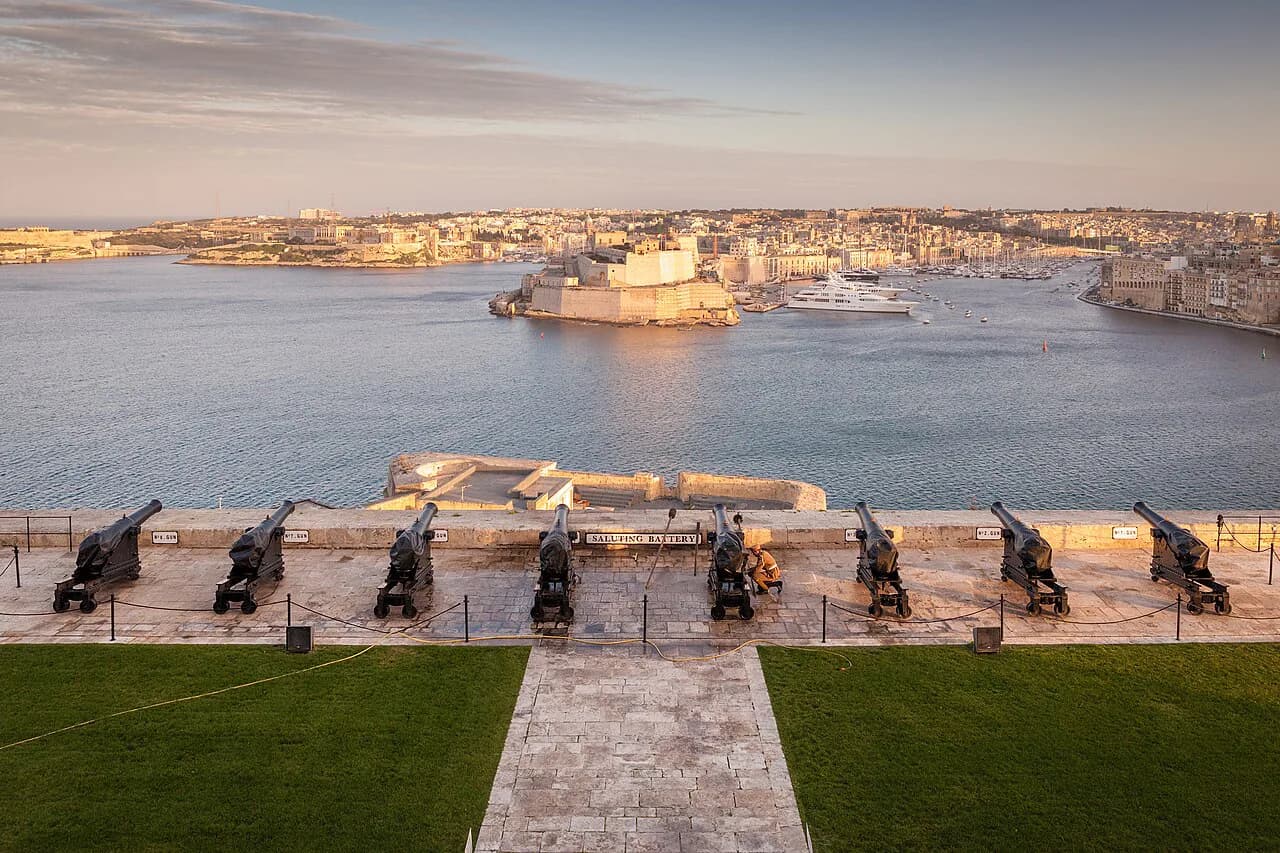
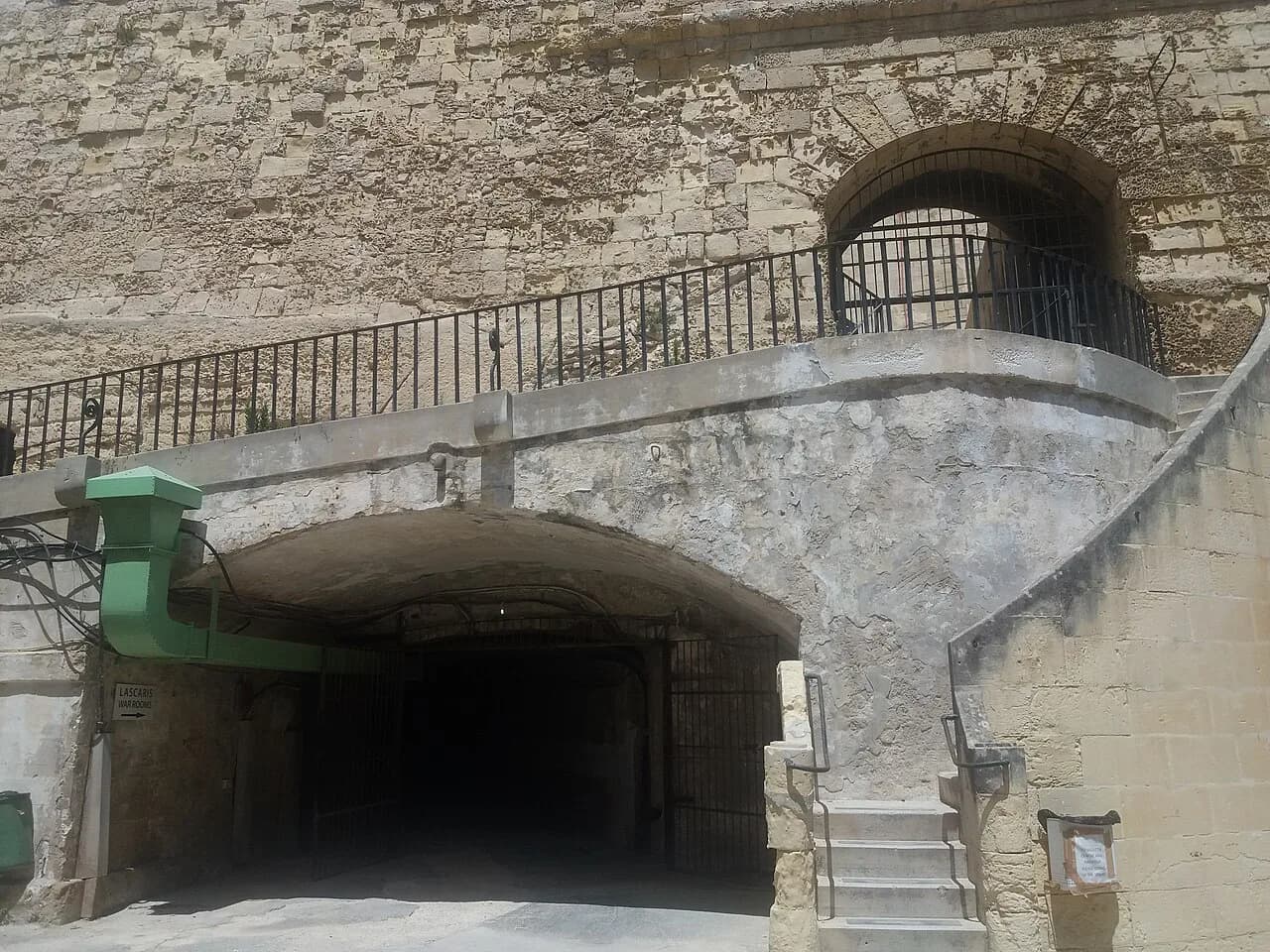
Don't confuse the fort with the War H.Q. Tunnel Tour. That is a separate Wirt Artna experience departing from the Saluting Battery in Valletta, with guided tours at 10:00 and 13:00 and a fee of €17 per person; the tunnels housed the Combined War Headquarters from 1940 and were used by NATO until 1977.
If you want both the Victorian gun and the wartime tunnels, treat them as two bookings on different days or at least different parts of the day. The Malta George Cross article explains why the island's wartime defence earned that award, which gives the tunnels their context.
Is Fort Rinella worth the trip to Kalkara?
Yes, if you have any interest in Victorian artillery or garrison life, and especially if you time your visit around the 12:00 and 13:00 displays. A single admission at Wirt Artna's €12 adult rate covers the tour, audio guide and Soldiers of the Queen exhibition — good value for a compact, focused visit, though the online store quotes €14.
Pair it with the Malta at War Museum in Birgu for a military-history half-day, and check the closing dates before you go if your trip falls around late December or Easter.
Frequently Asked Questions
When was Fort Rinella built?
The British built Fort Rinella in 1878 as one of four 100-ton gun batteries, two of them in Malta and two in Gibraltar, and it housed the Armstrong 100-ton gun until that was declared obsolete in 1906.
How long does a visit to Fort Rinella take?
Plan for around two hours to cover the guided tour, the Soldiers of the Queen exhibition and one or two of the demonstrations without rushing. If you walk the fort at your own pace and skip the tour, an hour is enough for the gun and the ditch.
Is Fort Rinella open on Sundays?
No. The fort opens Monday to Saturday from 09:30 to 17:30 with last admission at 17:00, and it also closes on 24, 25 and 31 December, 1 January, Good Friday and Easter.
Do I need to book Fort Rinella in advance?
Not necessarily, but the online ticket store describes buying online as the cheapest and most convenient option, and it avoids queueing at the gate. Night tours for groups of five or more need to be booked separately.
Sources
Notes for your Malta trip
Optional updates when we add or correct a Malta or Gozo guide.
You might also like
Continue reading
More guides you'll find useful