Ftira: Malta's Ring Bread and the Filled Snack Explained
Ftira is Malta's ring-shaped bread, and ftira Ghawdxija is the open Gozitan bake. Here is how each is made, what goes on top and what to order.
On this page
Ftira is the Maltese leavened bread you meet in two forms: a flat ring-shaped roll that gets cut and filled, and an open Gozitan flatbread baked with a raised rim to hold its toppings. The name is used for both, so knowing which one is in front of you is the first useful thing to learn. This guide separates ftira Maltija from ftira Ghawdxija, names the fillings and toppings, and covers the sandwich that made the ring roll famous.
The bread has been part of Maltese food culture for nearly 300 years, and SBS reports that ftira was added to the UNESCO Intangible Cultural Heritage of Humanity list, which safeguards the recipe and concept. That listing is why the ring shape and the traditional bake are treated as something to preserve rather than reinvent.
What ftira is: the Maltese leavened ring bread and the two forms you meet
Ftira is a leavened bread, not a flat crispbread, and the familiar version is a flat ring-shaped roll with a hole through the middle. Bakeries and supermarkets sell it as plain bread, and sandwich shops cut it horizontally to use as a carrier for fillings. The second form is ftira Ghawdxija, sometimes called Gozitan pizza, which stays open and is topped before baking.
The word itself comes from Arabic and means pie or pizza, which fits the open Gozitan version better than the ring roll. Pronunciation is roughly ftee-rah, with the f and t kept close together rather than separated by an extra vowel. That single word covering two bakes is the main source of confusion for visitors ordering at a counter.
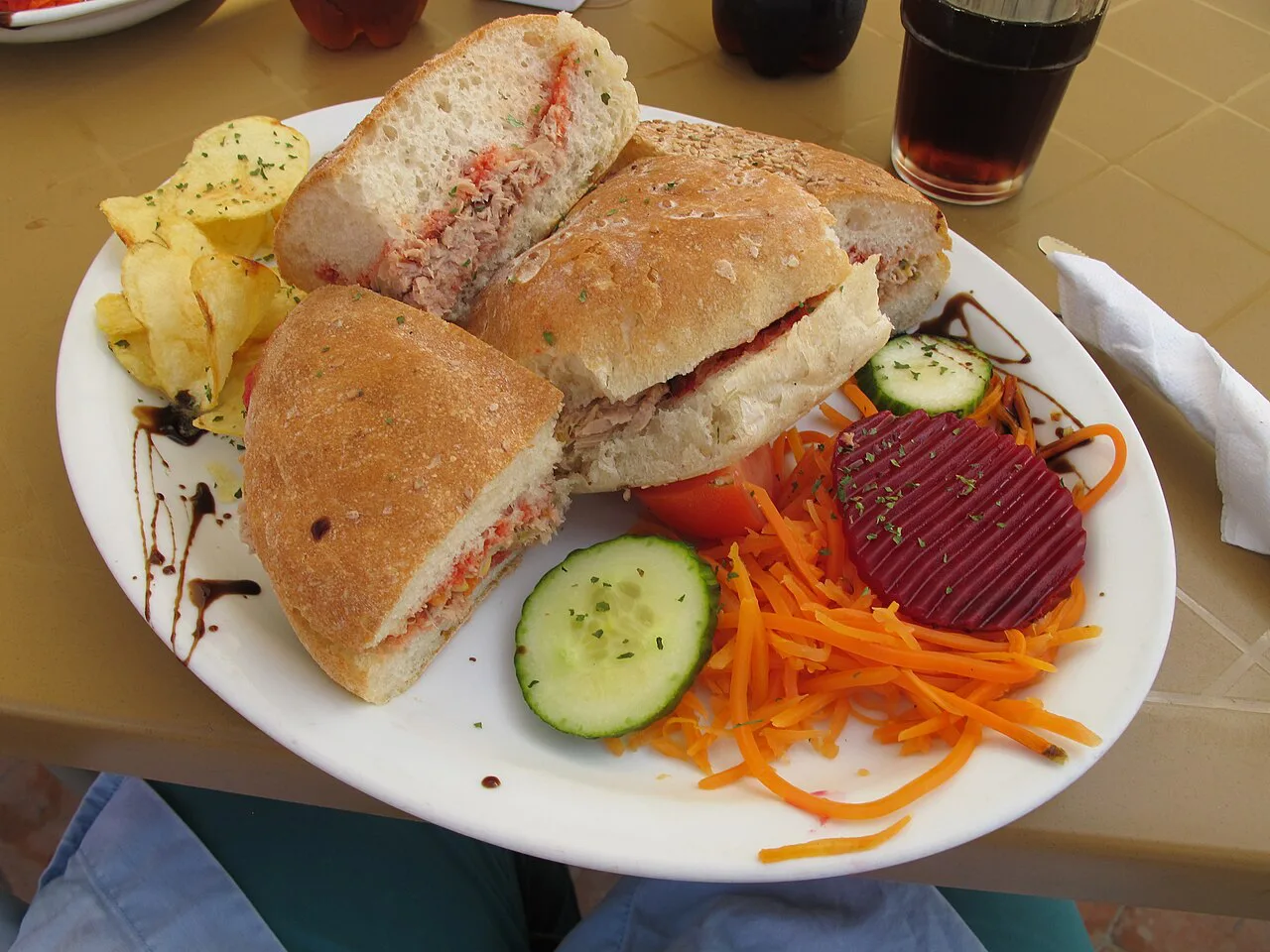
Ftira Maltija: the ring roll cut and filled, and what goes inside
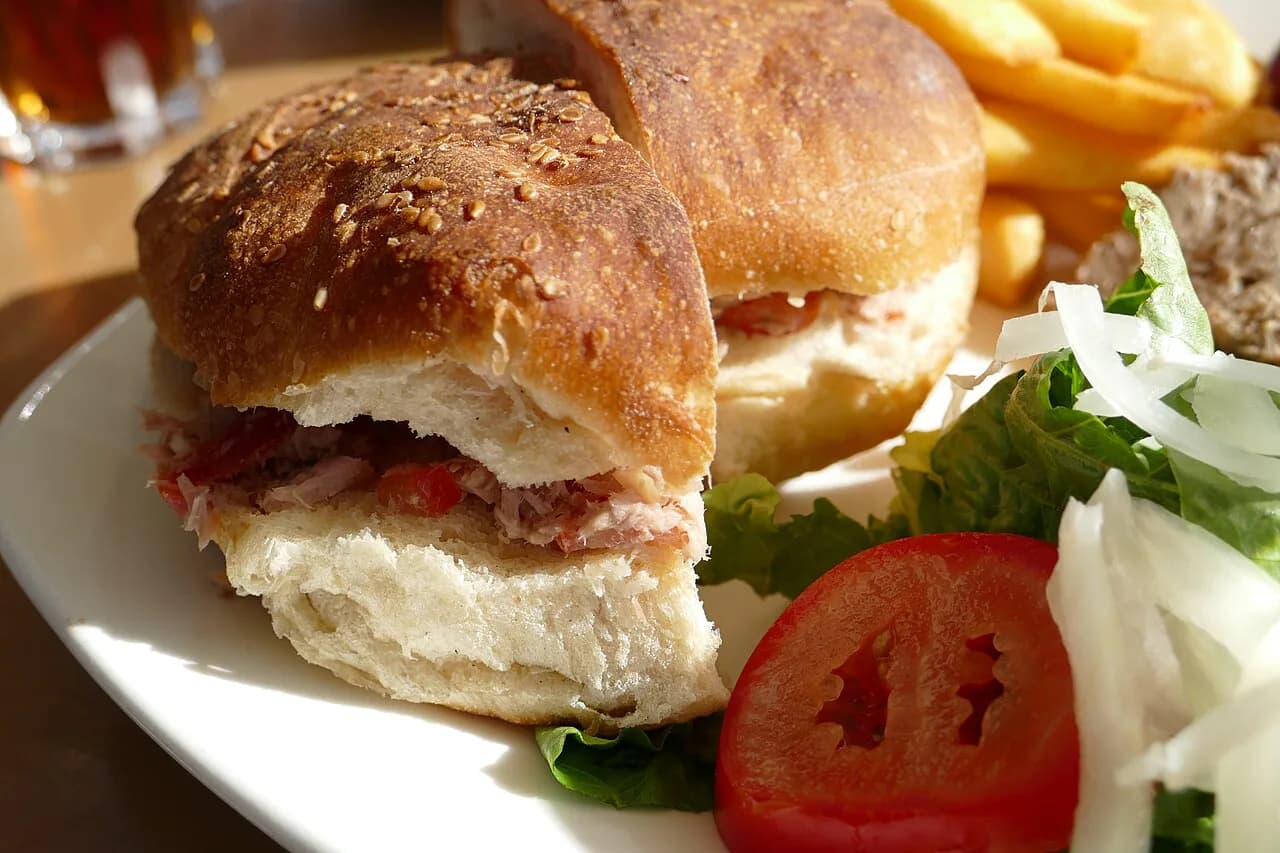
Ftira Maltija is the ring-shaped roll, similar to a small traditional Maltese loaf, sliced through the middle and dressed. The usual build is kunserva tomato paste and olive oil first, then tuna, olives, capers, onion, and often lettuce, peppered ġbejniet cheeselets and broad beans. The result is a Mediterranean sandwich rather than a pizza, and it is the version most likely to appear on a lunch menu.
A Maltese takeaway menu lists a Maltese Tuna Ftira filled with tuna, tomatoes, capers, onions, olives and olive oil, alongside build-your-own ftira and versions with salami, gammon, chicken Caesar or corned beef and pickled cabbage. If you want the traditional combination rather than a deli-style sandwich, order the tuna one by name. The fillings are listed plainly, so you can see what you are getting before you commit.
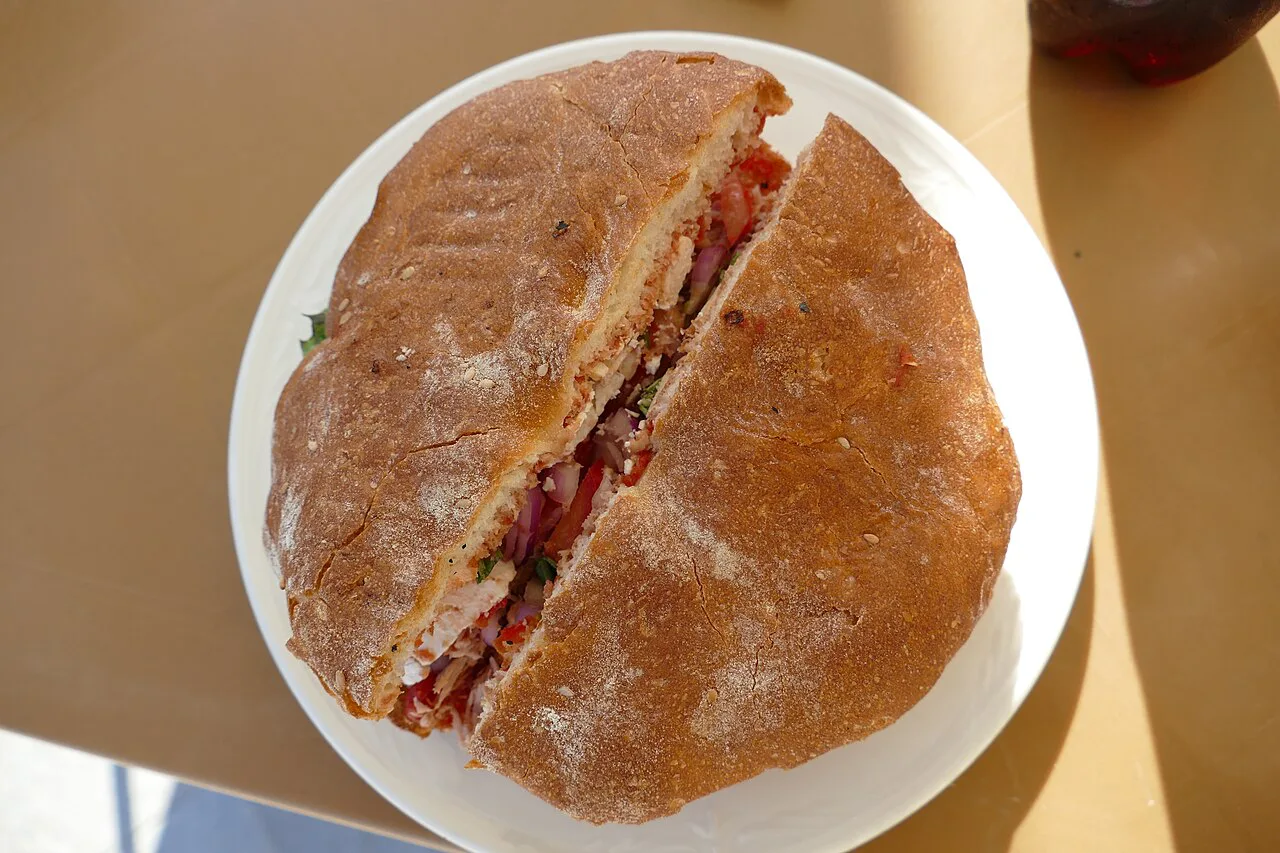
Ftira Ghawdxija: the Gozitan open bake with a raised rim, and its toppings
Ftira Ghawdxija is the open version, closer to a pizza than a sandwich, but without a mozzarella and tomato-sauce base. The dough is rolled into a circle, topped, and then the outer edge is lifted and folded so it rises into a wall that holds the filling in place. Toppings typically include tomato, anchovies or tuna, potato, onion, olives and capers, with some versions using fresh ġbejniet or ricotta, and others Maltese sausage or meat instead of tuna.
Chef Karl Mallia describes the method in the same way: shape the dough into a circle, add tomato, anchovies, potatoes, onions, tuna and local cheese, keep the outer rim clear, then lift and fold the edges to create a wall. The rim is the visual cue that tells you which bake you have been served. If your ftira arrives with a pale raised border and an open centre, it is the Gozitan style.
How ftira is baked: dough, shaping and the hot oven
Ftira dough is a simple flour, water, yeast and salt mix. A home-baking account gives rough quantities of three to four cups of flour, a sachet of dried yeast, a tablespoon of salt, a teaspoon of sugar, two tablespoons of oil and two to three cups of water, then a rest of two to three hours before shaping. The dough is rolled to roughly a centimetre thick, which is what allows the ring roll and the open flatbread to share the same base.
Baking temperatures are high. Karl Mallia says the oven is heated to about 300 to 350 degrees Celsius and that a log oven gives a smoky taste. That heat is why the rim sets quickly and why the base stays crisp under a wet topping of tomato and onion. Home cooks without a wood oven should expect a domestic oven to need its highest setting and a preheated tray.
Ħobż biż-Żejt: the filled ftira sandwich and its classic filling
Ħobż biż-Żejt is the Maltese name for the filled ftira sandwich, and it is the form most travellers actually eat. The classic filling is a tuna mix of finely chopped onions, capers, black olives, butter beans, fresh mint and parsley, olive oil and kunserva spread, all packed into the ring roll. The butter beans and mint are what separate it from a plain tuna roll, so look for them rather than accepting a generic filling.
Chef Mark Mizzi describes the same combination, made with ftira and filled with tuna, olives, butter beans, capers, kunserva, onion, tomatoes and parsley, as the sandwich he remembers from Malta. The olive oil matters as much as the fish, so a good ħobż biż-Żejt should taste of oil and tomato paste before it tastes of tuna. Order it at lunch rather than as an evening meal.
What ftira costs: ftira and pastizzi prices from a Maltese takeaway menu
Prices for ftira vary with the filling and the venue. On the Mr Ftira delivery menu, a Maltese Tuna Ftira is listed at €6.50, a Breakfast Ftira at €7.25 and a Mortadella & Cheese Ftira at €7.80, with build-your-own ftira from €6.50. Those are delivery-menu prices, so treat them as a guide to the range rather than a figure that will match every counter in Malta and Gozo.
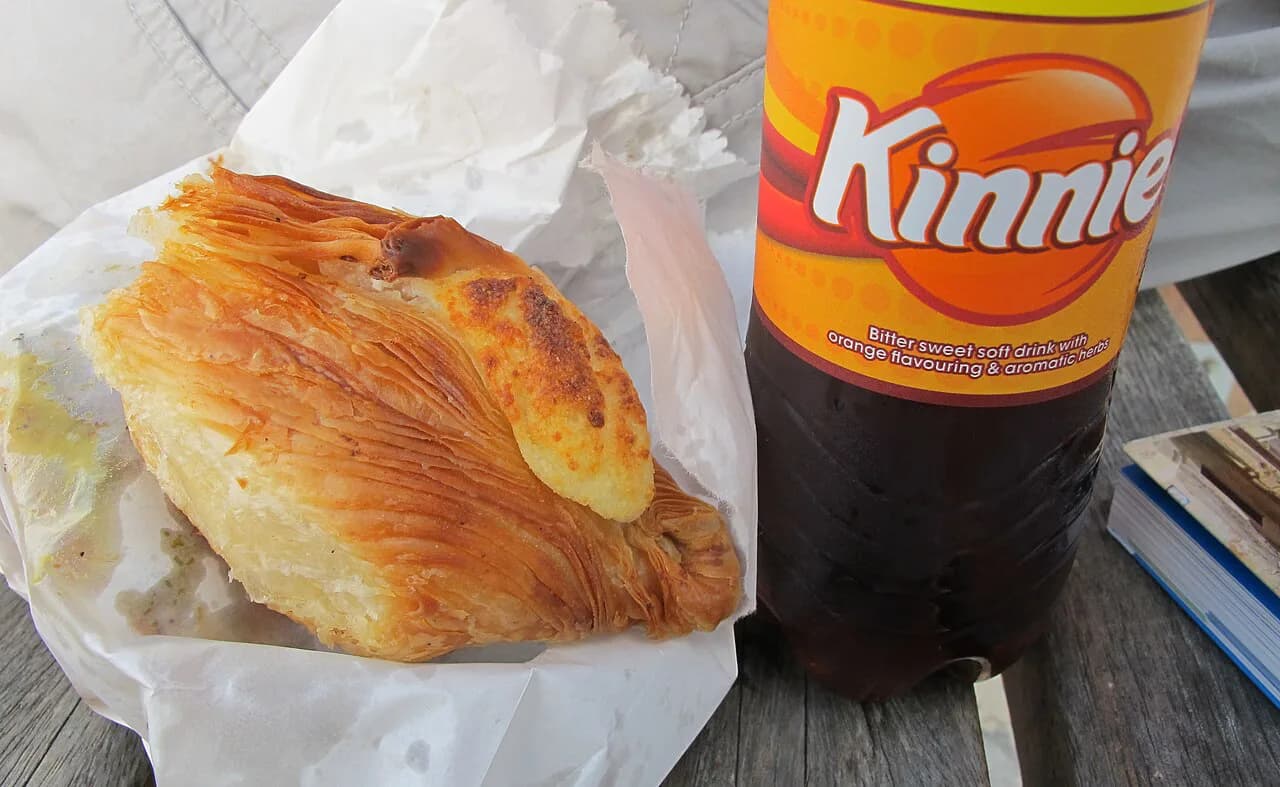
The same menu shows pastizzi ricotta and pastizzi peas at €1.00 each, with chicken at €1.40 and anchovy at €1.20, which makes a ftira and a pastizzi a realistic light lunch. If you are building a food day around Maltese baking, compare that with the fuller picture in the guide to pastizzi, where the pastry and its fillings are covered in more detail. Prices on a delivery menu are a guide to the range only.
Buying ftira to take away: what a packaged Maltese ftira contains
Packaged ftira sold in shops is plain bread, and the ingredient list is short. The Maypole Maltese Ftira Large lists wheat flour, water, a mother dough of wheat and water, salt and yeast, which means nothing beyond flour, water, salt and leaven goes into the loaf itself. That is useful if you are buying ftira to fill yourself rather than ordering a made-up sandwich.
Buying a plain ring roll and adding your own kunserva, tuna, capers and olive oil gives you control over the filling and is cheaper than a made-to-order sandwich. The bread is at its best the day it is baked, so buy it in the morning if you plan to eat it later.
Where ftira fits in a Malta or Gozo food day
Ftira works as a mid-morning or lunch stop rather than a set-piece dinner. Eat it early in the day, then keep the evening for a sit-down Maltese dish such as Stuffat tal-fenek, the rabbit stew that anchors many restaurant menus. That split lets you try the bread without spending a whole meal on it.
On Gozo, ftira Ghawdxija is the version to seek out, since it is the island's own open bake and appears with local cheese, potato and anchovy. On Malta, the ring roll and the filled sandwich are everywhere, from supermarket shelves to takeaway counters. If you only have time for one, order the ħobż biż-Żejt and judge the bread by how it holds the oil and tomato paste.
Which ftira should you order first?
Start with the ħobż biż-Żejt: the ring roll cut and filled with tuna, butter beans, capers, mint and kunserva is the version that shows you what ftira is for. Order ftira Ghawdxija on Gozo, where the open bake with its folded rim and potato, anchovy and cheese topping is the local speciality. Both are inexpensive enough to try on the same trip, and the takeaway menu gives you a rough sense of the price band before you go.
Explore more Malta guides
Frequently Asked Questions
What does the word ftira mean?
The word comes from Arabic and means pie or pizza, which fits the open Gozitan bake better than the ring-shaped roll. In Malta the same word covers both the plain leavened ring bread and the filled sandwich made from it.
Is ftira the same as Maltese bread?
Ftira is a type of Maltese leavened bread, but it is not the same as the large crusty loaf. The ftira is shaped as a flat ring, while the everyday Maltese loaf is a larger round or oval bread. Packaged ftira lists flour, water, mother dough, salt and yeast as its ingredients.
What is the difference between ftira Maltija and ftira Ghawdxija?
Ftira Maltija is the ring-shaped roll, usually cut and filled as a sandwich. Ftira Ghawdxija is an open flatbread topped with tomato, potato, anchovy or tuna, olives and cheese, then baked with a folded rim to hold the filling.
Sources
Notes for your Malta trip
Optional updates when we add or correct a Malta or Gozo guide.
You might also like
Continue reading
More guides you'll find useful