Hop-On Hop-Off Malta: Routes, Stops and What It Costs
Malta's hop-on hop-off buses run north and south island routes plus a Gozo loop. Here is what each covers, how long it takes and what to expect.
On this page
The hop-on hop-off bus in Malta is a single operator product: City Sightseeing runs two open-top loops, a North Route and a South Route, across the island and sells them as 1-day or 2-day passes. Buses arrive every 30 to 60 minutes and the two loops together serve up to 38 stops. What follows breaks down each route stop by stop, the loop times, boarding points and the Gozo version, so you can decide whether a pass earns its place in your day.
One thing to settle first: this bus is a sightseeing loop, not a transport network. It gets you between headline sights with commentary, but it does not run to a tight timetable, so it will not substitute for a bus to the airport or an evening out. The trade-offs section below compares it honestly with Malta's public buses.
What the hop-on hop-off bus in Malta actually is
City Sightseeing Malta operates the open-top double-deckers, using a north-south split rather than one island circuit. The ticket is unlimited hop-on hop-off for the pass duration, with a 13-language audio guide and free Wi-Fi on board. Vouchers stay flexible: quoted bookings describe tickets valid for 12 months and free cancellation up to 24 hours before travel.
You do not have to book far ahead in the way you would for, say, the Hypogeum, because the buses run daily through the year apart from Christmas Day. Booking online still saves you the redemption faff at the stop, since mobile vouchers are scanned at two fixed points only. Paper vouchers can be redeemed at any bus stop.
The North Route: Buġibba and Qawra to San Anton and Ta' Qali
The North Route starts at Stop N1 outside the Topaz Hotel in Buġibba and works up through Qawra and the northern coast before turning inland. Named stops on this loop include Qawra Seafront opposite the operator's outlet, the Malta National Aquarium and the Mediterraneo Marine Park, plus San Anton Gardens and Ta' Qali Crafts Village further south. Mellieħa hotels get free return transport from Topaz Hotel at 5pm and 6pm.
If you are staying in Buġibba or Qawra, this is the route that collects you where you sleep, which is its main practical advantage over starting in Valletta. The northern leg suits a slow day: aquarium, seafront and crafts village are all on the same loop. Just note that Stop 3 Bugibba Jetty is closed for roadworks until further notice, so walk to an alternative stop rather than waiting there.
For the bigger picture of which towns deserve a full day and which suit a quick look, our guide to the best places to visit in Malta groups the island by area and helps you choose where to break the loop.
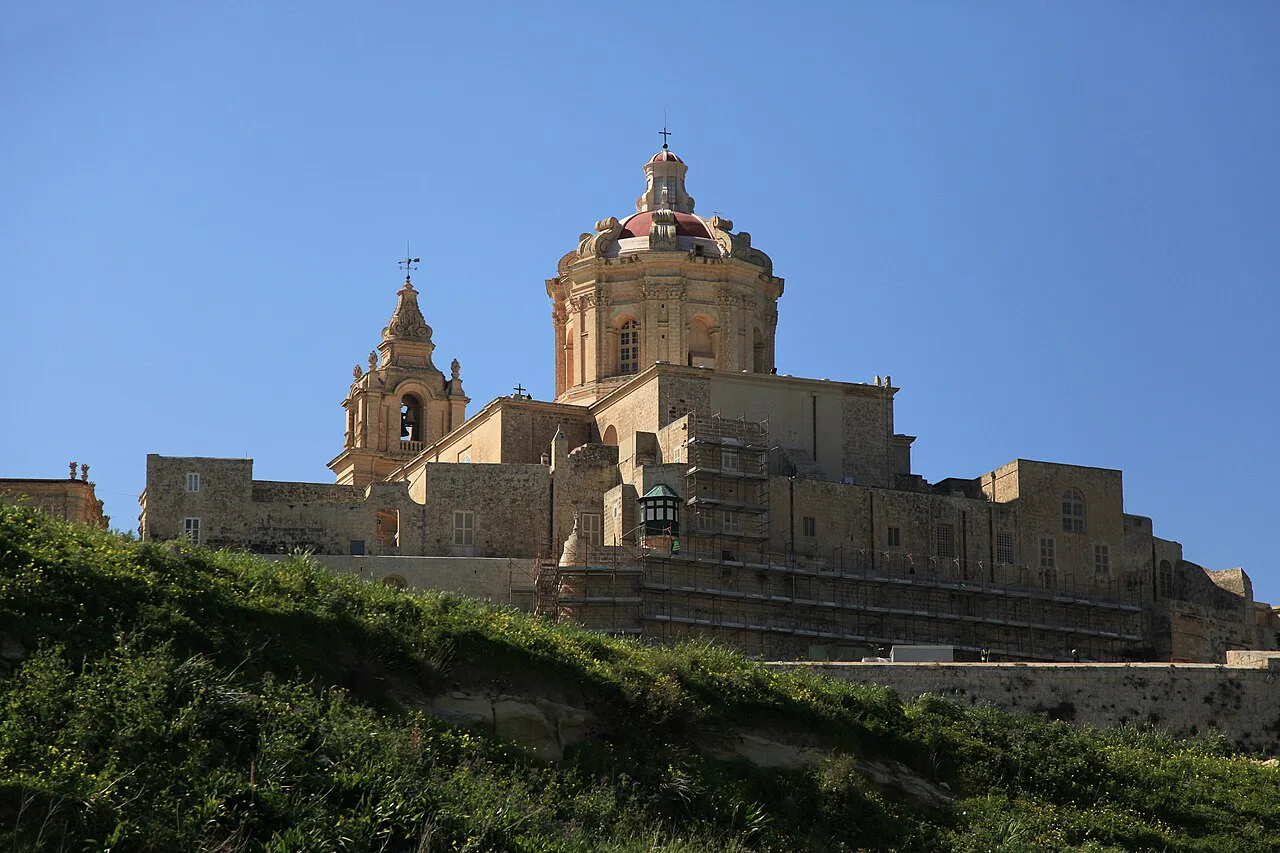
The South Route: Valletta and Vittoriosa to Marsaxlokk and the Blue Grotto
The South Route links the harbour cities with the fishing south. Named stops include Sliema Ferries, Vittoriosa Waterfront, Marsaxlokk fishing village and Blue Grotto, with further stops at Ħaġar Qim and Mnajdra temples and Għar Dalam cave listed among the southern attractions on offer. Marsaxlokk is at its busiest on Sundays, when the market runs.
This is the loop to take if your shortlist is the prehistoric temples, the fishing harbour and the sea caves, because all three sit on one southbound circuit. Vittoriosa, the colloquial name for Birgu, gives you a harbour-front stop within walking distance of the Three Cities' lanes and fortifications. Valletta itself is reached at the Waterfront terminus on this route rather than through the city gates, so plan a short walk or a local bus into the centre.
How long each loop takes and how often the buses run
Allow about 210 minutes for the full North Route and about 180 minutes for the South Route if you stay aboard without getting off. Buses are quoted at 30 to 60 minutes apart on the Malta routes, which is the figure to plan around when you are chaining two or three stops. On a 1-day pass, the realistic plan is one loop with two or three hops, not both loops plus stops.
Published departure times are fixed at the terminals rather than evenly around the loop. North Route buses leave Stop N1 at 08:00, 09:00, 10:00, 11:00, 11:30, 12:30, 13:30 and 14:30, while the South Route leaves Stop S10 at 09:05, 10:05, 11:05, 12:05, 13:05 and 14:05. Later North Route departures run through the afternoon and early evening, so check the current sheet at boarding.
Where to board and redeem a ticket in Sliema and at Valletta Waterfront
Mobile vouchers must be redeemed in person at Sliema Ferries (stop 17) or Valletta Waterfront Terminus (stop 20); paper vouchers can be swapped at any stop. If you are coming off a cruise ship, exit the port gates, turn right and follow the path to the Blue booth where the buses load. Tying your ticket to a stop near your hotel saves a cross-town trip before you have even started.
Sliema and St Julian's are the most convenient bases for the South Route's first departure, while Buġibba suits the North Route. Our Malta map lays out how those bases sit relative to the Grand Harbour and the northern coast, which makes the boarding decision quicker.
What a ticket costs and which pass length to choose
Prices vary with the booking channel and currency, so treat any figure as a check-at-booking number. A quoted bus-and-harbour-cruise option starts from around €28, while a separately copied fare chart lists a basic hop-on hop-off ticket at €18 for adults and €10 for children, and €26/€18 with transport to and from the ferry. Compare the base fare with the cruise-inclusive fare before you decide, because the cruise can be the main difference between them.
Pass length matters more than price here. A 1-day pass covers one loop with stops; a 2-day pass lets you take the North Route one day and the South Route the next, and the two days need not be consecutive. If your trip is three nights or more and you want both coasts, the 2-day option is the one that makes sense.
The harbour cruise add-on: where it leaves from and when it sails
The optional harbour cruise departs from Sliema Ferries at 10:30, 12:30 and 14:45, calls at Esplora in Kalkara about 11:40, 13:40 and 15:55, and returns to Sliema at 12:00, 14:00 and 16:15. Boarding is first come, first served, so arrive about 15 minutes early if you want a seat. Commentary is in English and German, and the route passes Manoel Island and Kalkara.
The cruise is a good pairing with a bus day because it shows the harbours from water level, which the bus cannot. If you want more time on the water, our Malta boat trips round-up covers the wider range of options beyond this add-on.
Gozo's hop-on hop-off bus: routes, stops and how it differs
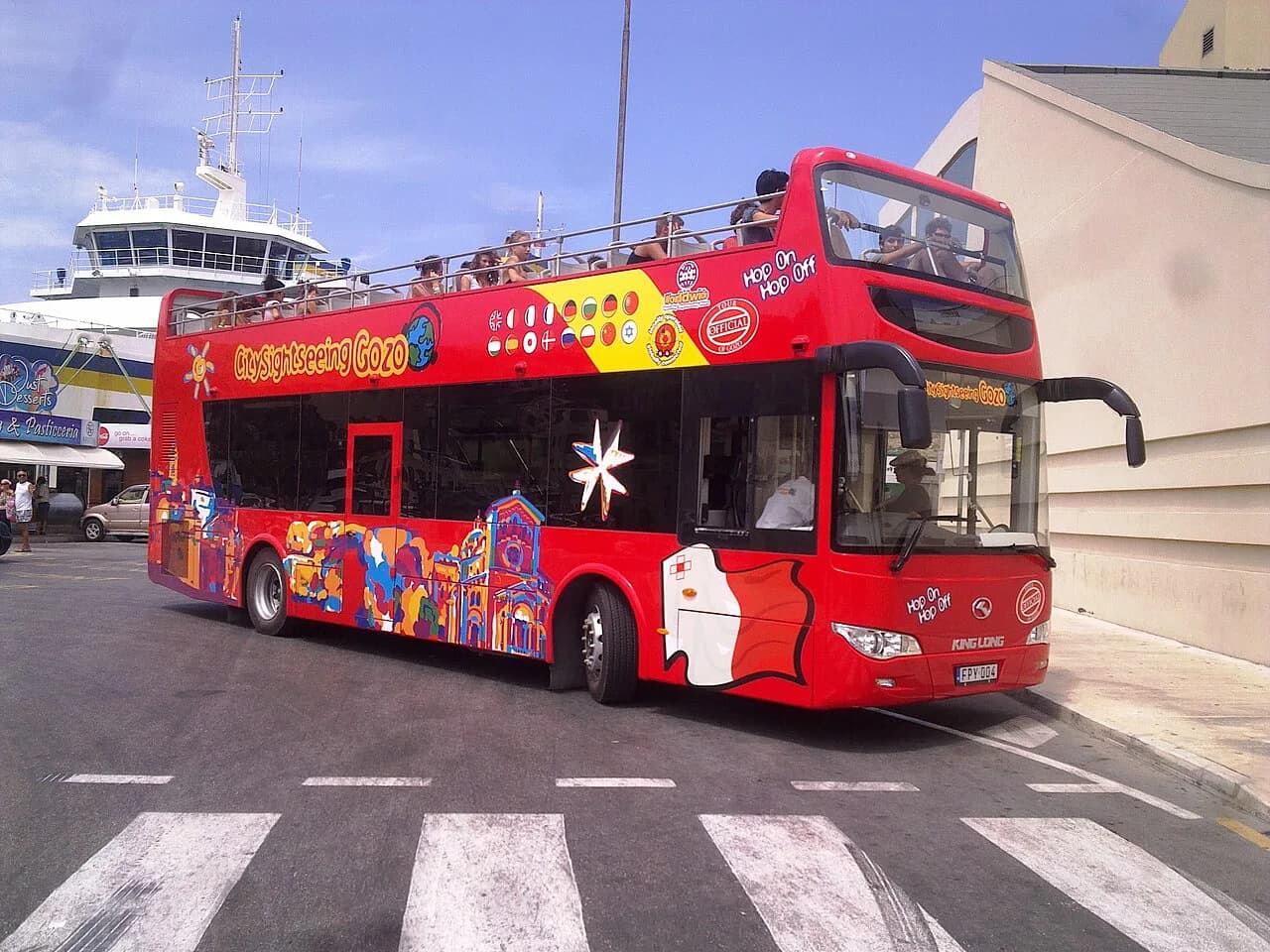
Gozo runs its own City Sightseeing loop, sold separately from the Malta pass. It covers 15 stops across two routes with buses about every 45 minutes, and the audio guide is offered in 16 languages. Named stops include the Ġgantija Temples, the Citadel in Victoria and Xlendi Bay.
This is the version to consider if you are crossing on the ferry for a day and want the temples and the capital without hiring a car. The frequency is better than the Malta loops, but the island's roads are slower, so a single route plus two stops is a sensible day. Book it as a separate ticket rather than assuming the Malta pass carries over.
Hop-on hop-off or Malta's public buses: the honest trade-off
Public buses are cheaper and run to more places, including the villages and the airport, but they are ordinary transport with no commentary and no open top. The sightseeing pass buys you a fixed loop, an audio guide and the freedom to jump off at a temple or harbour without working out a route. For a short trip focused on the big sights, the pass saves planning time; for a longer stay or a village-heavy itinerary, public buses win on coverage.
A middle path works well: use the hop-on hop-off loop for one day to bag the far-flung stops such as Marsaxlokk or the Blue Grotto, then switch to public buses for Valletta's core, where you will walk anyway. Our things to do in Malta guide is the place to build that shortlist before you commit a day to a bus.
Who the bus suits and who should skip it
Take the bus if you have two or three days, want commentary, and your must-sees are spread across the island rather than clustered in Valletta. It also suits travellers staying in Buġibba or Sliema who would rather not navigate public routes on a first visit. Skip it if you are in Malta for a single day in Valletta, if you are happy on ordinary buses, or if your plan is mostly the walled cities on foot.
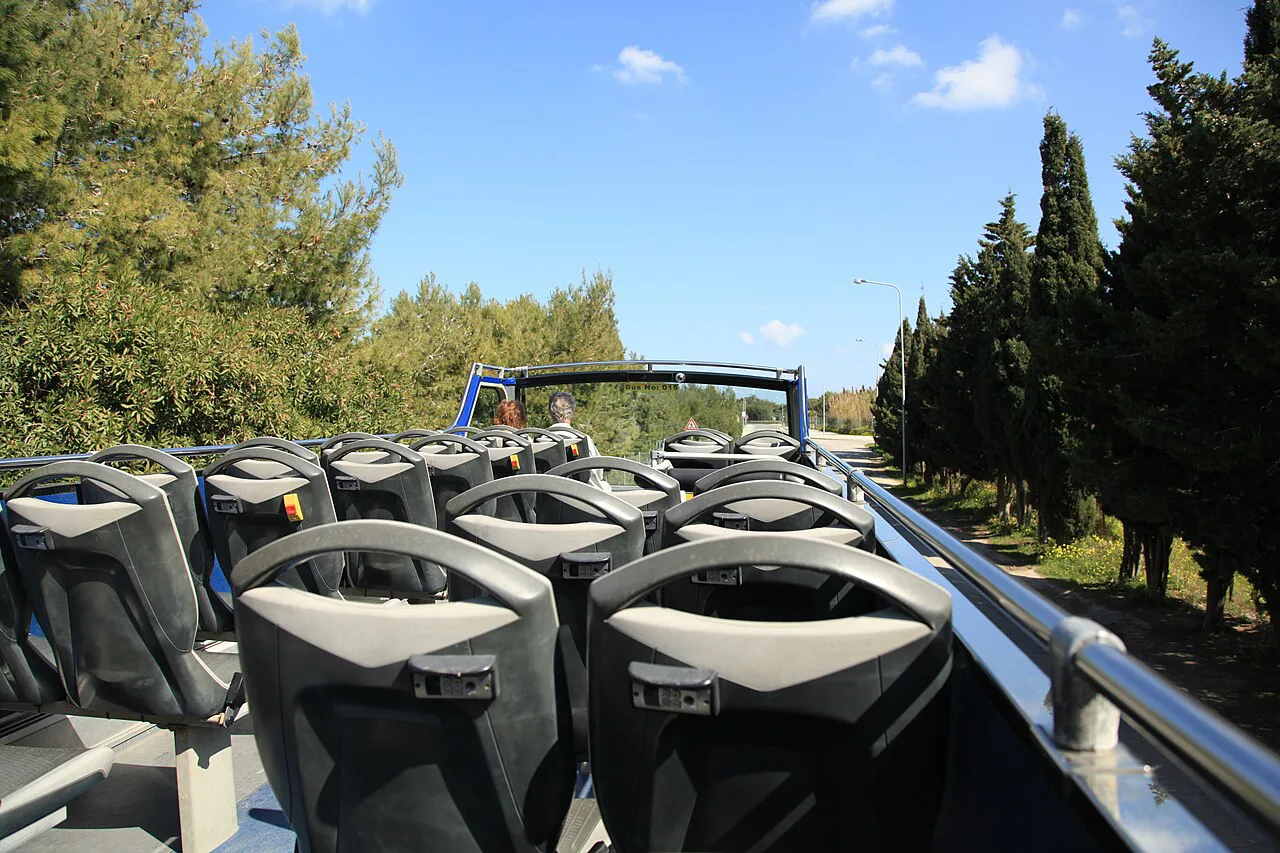
Families and slower walkers get real value from the seated sightseeing, but the open top is exposed to sun and wind, so hats and water matter on the upper deck. Anyone with mobility needs should read the access limits below before buying.
Practical points: the Buġibba Jetty closure and wheelchair limits
Stop 3 Bugibba Jetty on the North Route is closed for roadworks until further notice, so do not build a day around boarding there. Buses are wheelchair and pram accessible, but each bus takes only one wheelchair, with a maximum size of 70cm wide, 120cm long and 135cm high; anything larger needs a call to the operator in advance. Confirm the current stop list at the booth when you redeem, since roadworks can shift boarding points.
One loop or both?
If you have a single day, pick one loop: the South Route for temples, Marsaxlokk and the Blue Grotto, the North Route for Buġibba, Qawra and Ta' Qali. With two days, take the 2-day pass and do one loop per day, using the non-consecutive option to leave a rest day between them.
Sort your boarding point before you book: Sliema Ferries or Valletta Waterfront for mobile vouchers, then a plan of two or three hops rather than a full circuit. Pair the bus with a harbour cruise only if you want the water perspective; otherwise put the money towards a temple ticket and walk Valletta on foot.
Explore more Malta guides
Sources
Notes for your Malta trip
Optional updates when we add or correct a Malta or Gozo guide.
You might also like
Continue reading
More guides you'll find useful