Malta Architecture: What to Look For in Valletta, Mdina and Beyond
Read Malta's buildings as you walk: honey-coloured limestone, Baroque churches and domes, Knights' auberges, gallarija balconies and British-era additions.
On this page
Malta's architecture rewards a slow look rather than a checklist: honey-coloured limestone walls, flat roofs and the enclosed wooden gallarija balcony are the three features that will tell you most about a street within a minute. This guide names the specific buildings, gates, churches and fortifications worth pausing at in Valletta, Mdina, Rabat, the Three Cities and Mosta, and explains what to notice on each facade.
The island's building story runs from the megalithic temple chambers through the Knights of St John's Baroque churches and auberges to British-era porticos and gates, and most of it is visible on foot and free. Pair this with our wider list of things to do in Malta when you are ready to build an itinerary.
What Maltese architecture looks like at a glance
Limestone is the material that ties everything together, and its availability is why the island's buildings share that warm honey colour; Maltese builders have worked in it from the temple period to the present. Temple builders set great blocks into outer walls and lined the interior with cut slabs or stacked coralline stone, sometimes finishing chambers with plaster and red ochre paint.
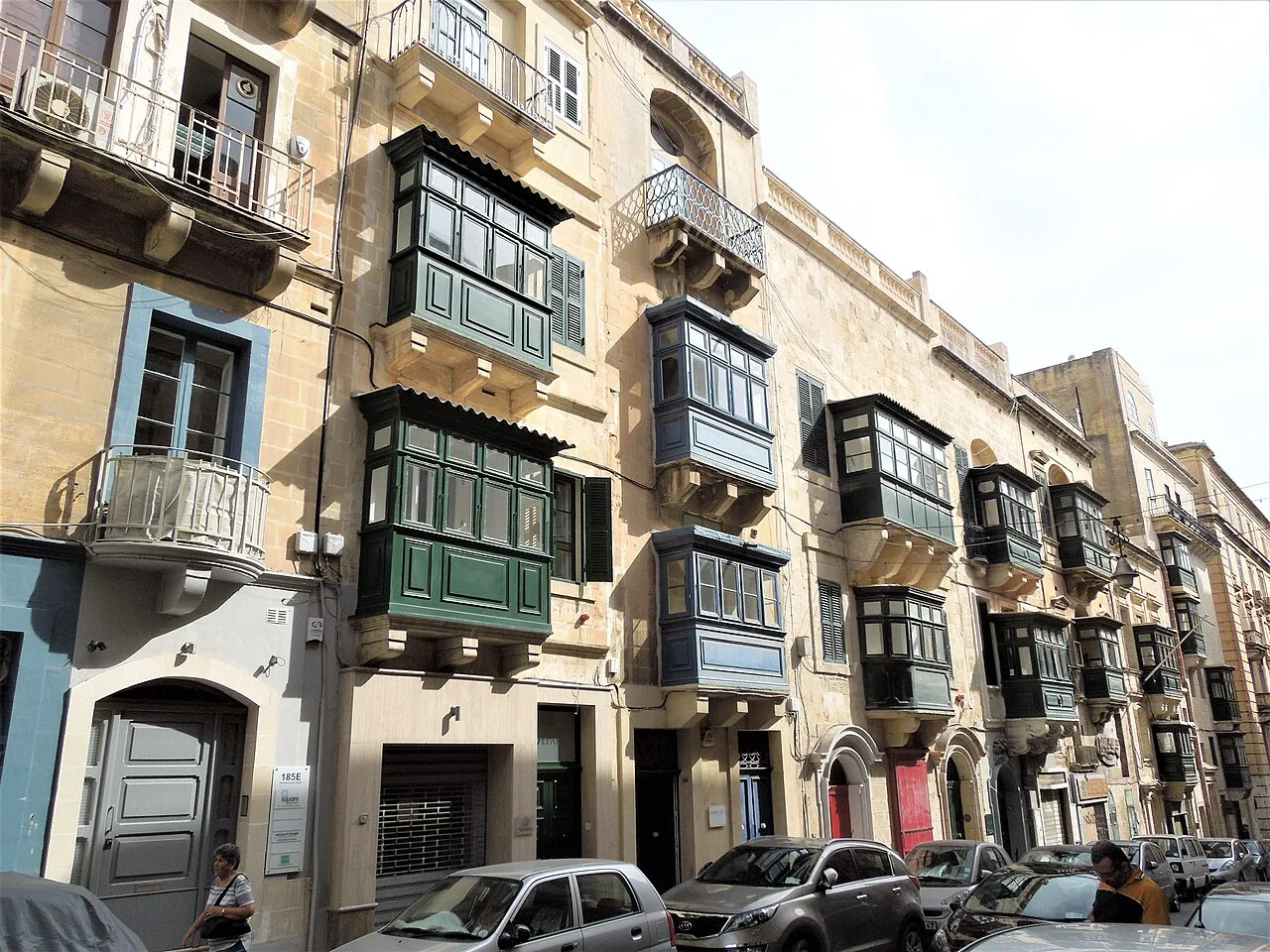
Look up and the roofline is usually flat, with water storage and small stair houses rather than pitched tiles. The other feature you will notice is the gallarija, a boxed wooden balcony that projects from upper floors, allowing a household to sit outside above the street. Once you start spotting gallarijas, you can begin to read a terrace of townhouses as you walk past.
Valletta: the grid, the gates and the Knights' buildings
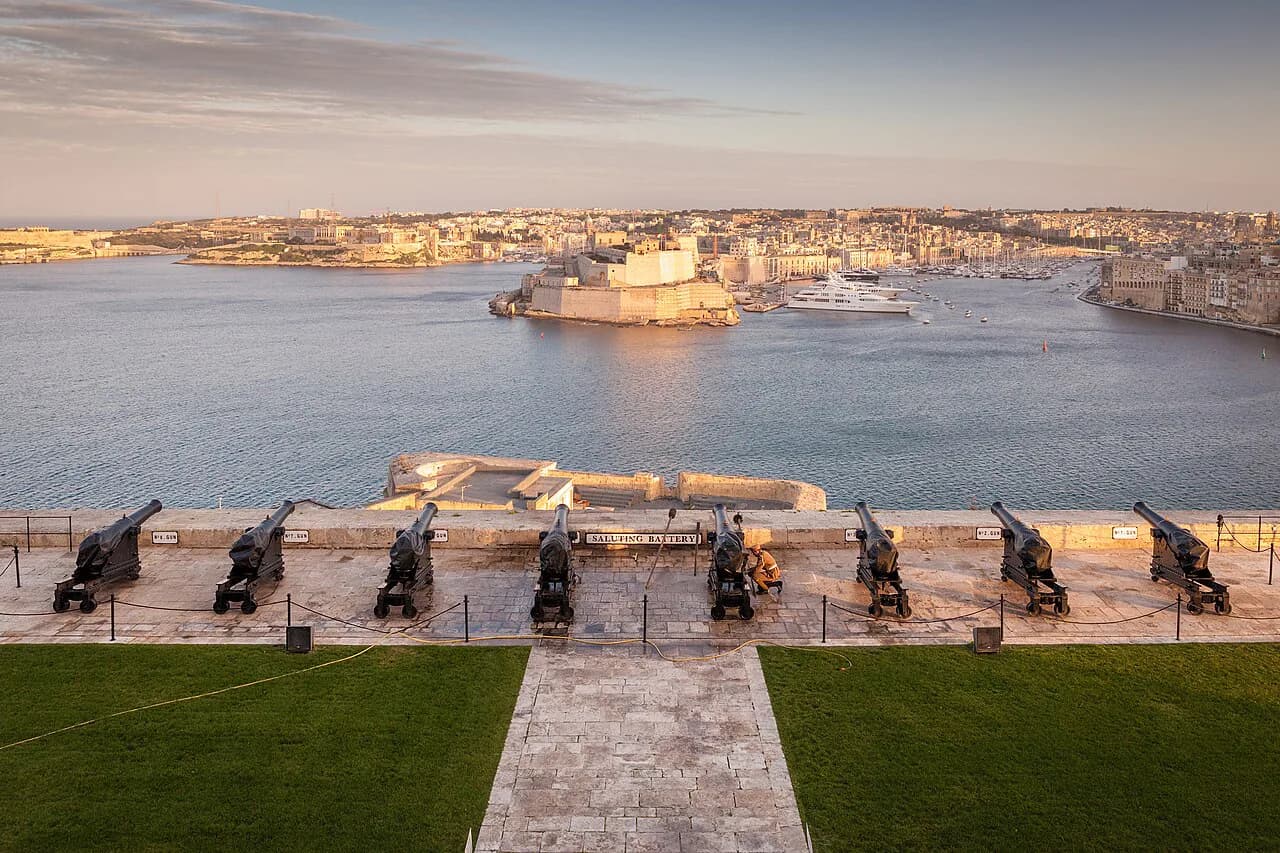
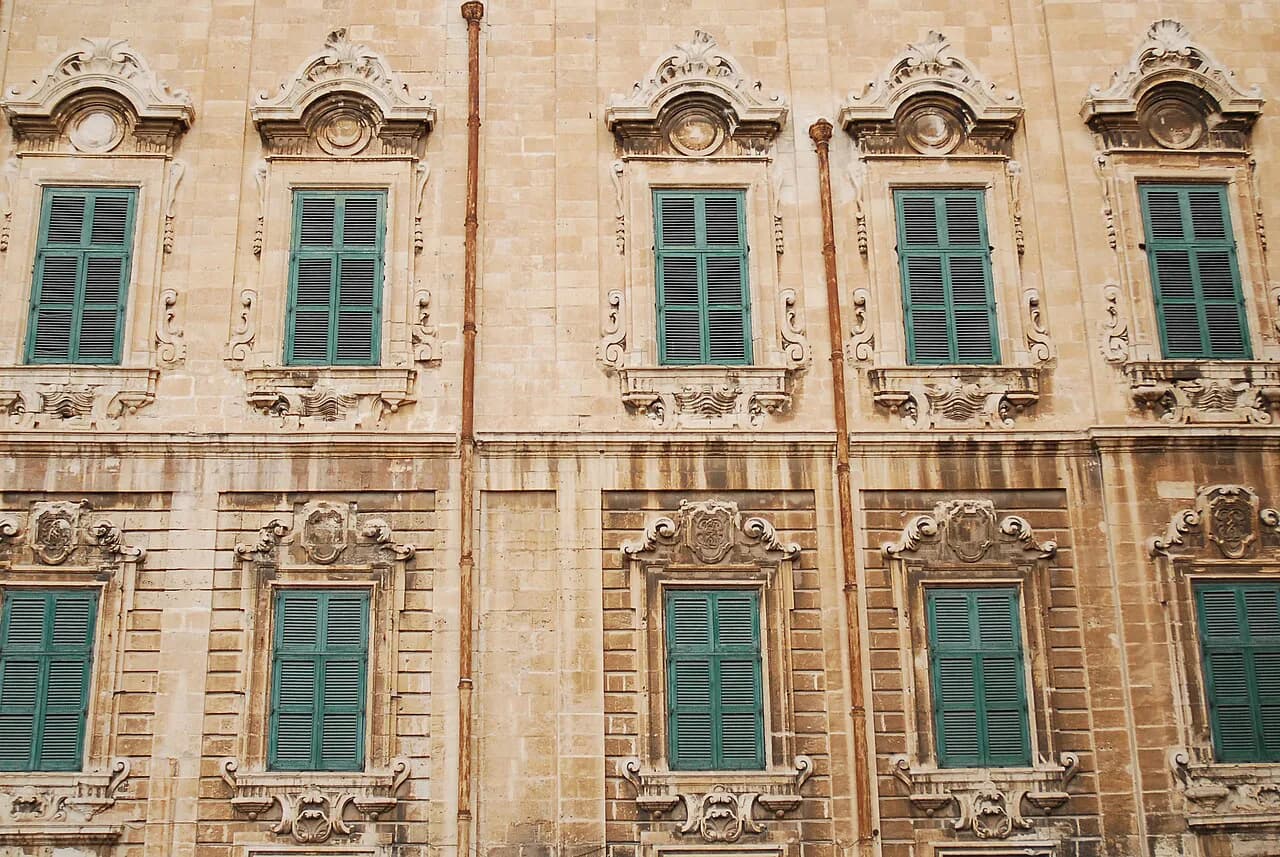
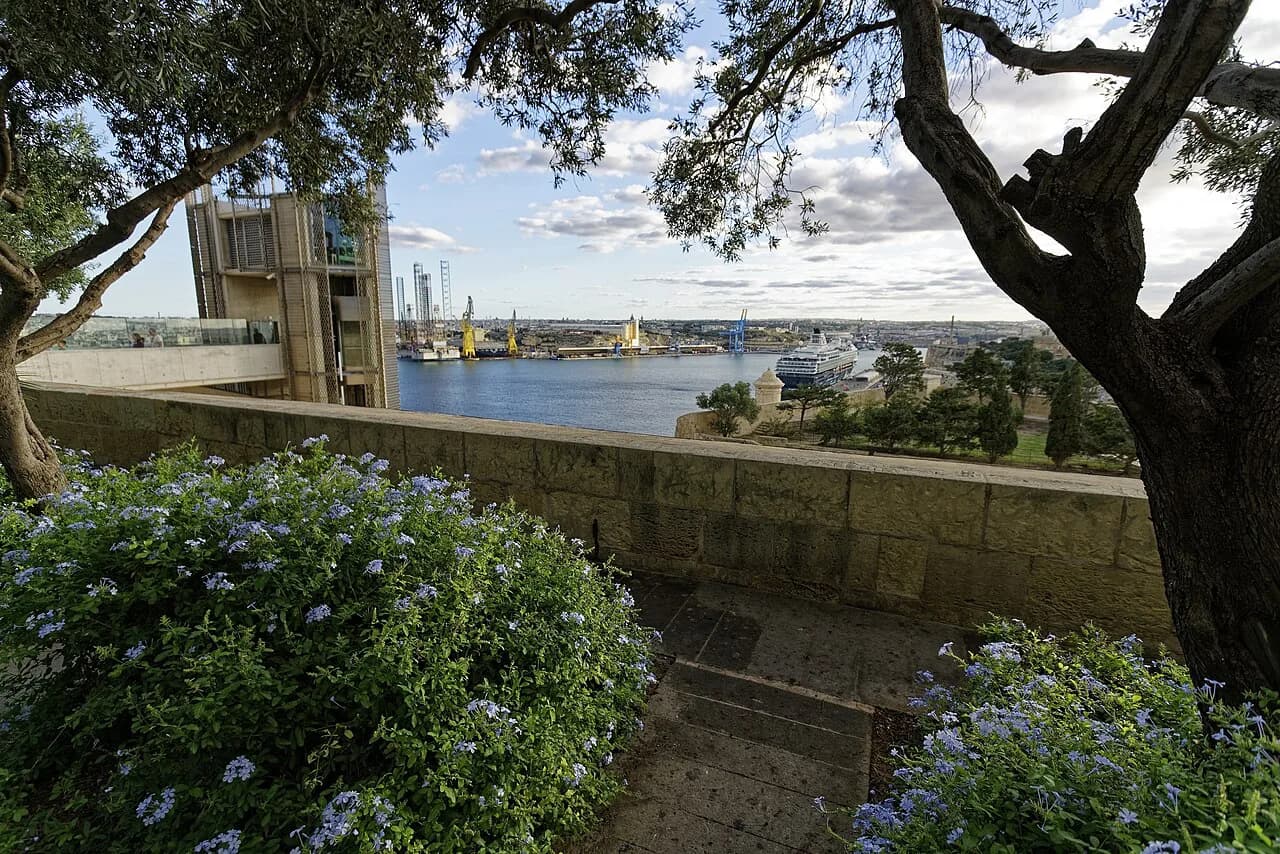
Valletta was laid out by the Order of St John in 1566 on a grid, and the straight streets running downhill towards the Grand Harbour are the clearest evidence of a planned city rather than an organic one. Walk the length of Triq ir-Repubblika and you pass the auberges and palaces the Knights built for their langues, which are best appreciated from the street as working buildings.
Two gates mark the British chapter of the city's architecture. Porta Reale was designed by Colonel Thompson, and the later Victoria Gate by Emmanuele Luigi Galizia is praised for its inventiveness and style, so walk through both if you have the time. The Main Guard in the centre gained a classical English portico in 1814, a small but telling addition to a Knights' square.
For an interior that shows the Baroque richness the Knights commissioned, step into St John's Co-Cathedral and compare its plain exterior with what lies inside. Our guide to things to do in Malta covers it in more detail alongside the rest of the city.
Baroque churches and domes: what to notice
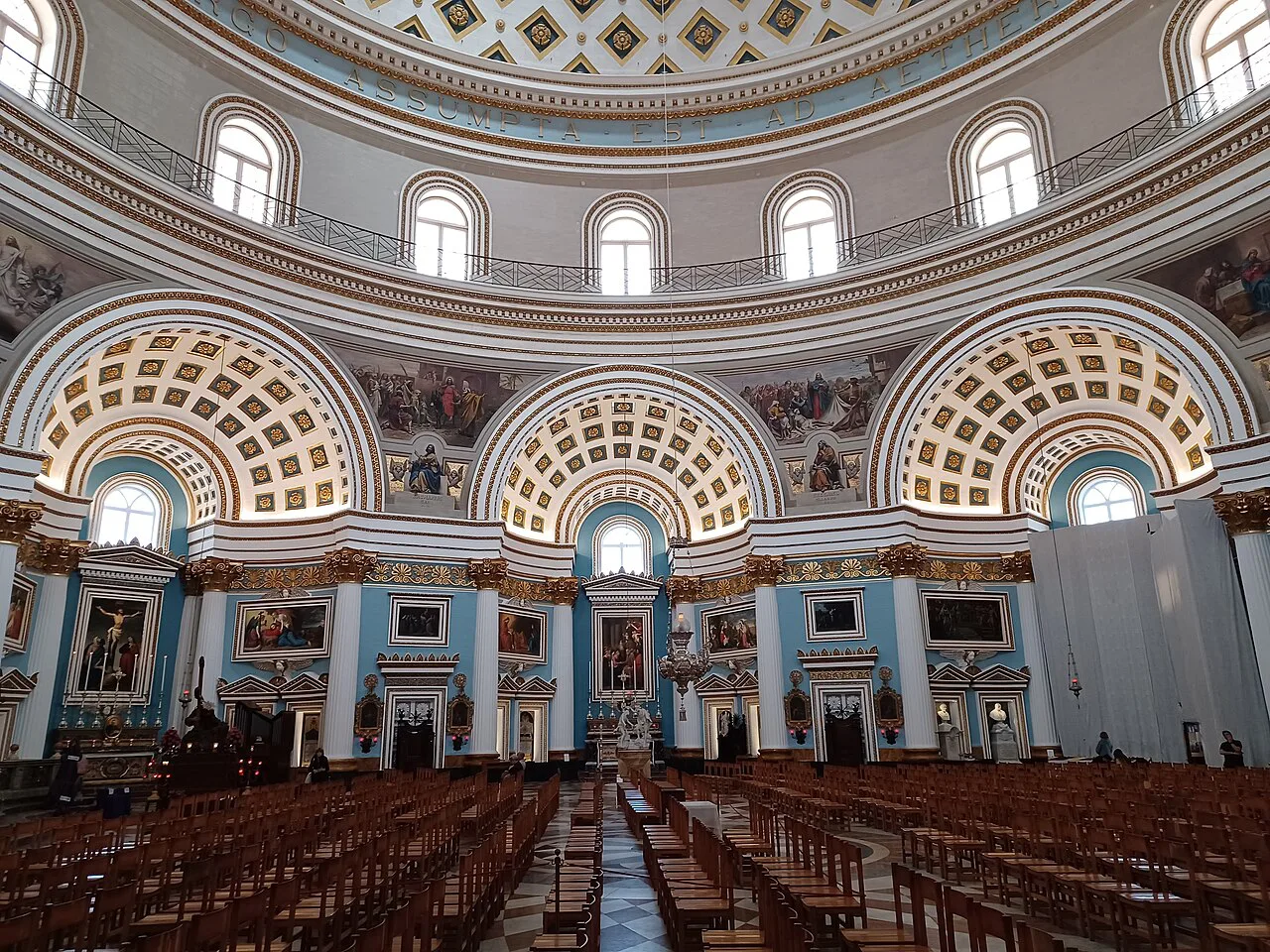
The Baroque movement made the deepest mark on Maltese architecture, and in the seventeenth century engineers reworked plain Mannerist structures into ornate churches across the island. Outside, look for the shaped dome, the paired columns framing a doorway and the carved stone scrolls above windows; inside, the same stone is dressed with gilding and inlaid marble floors.
Churches are working places of worship, so cover shoulders and knees and keep voices low; a light scarf in your bag saves a wasted trip. Mosta's Maria Assunta Church, known as the Rotunda, is the one to see for sheer scale, built by parishioners to a Pantheon-like design by Giorgio Grognet. Its Neo-Classical portico makes it one of the island's most distinctive buildings.
Mdina and Rabat: medieval streets and the edge of the old capital
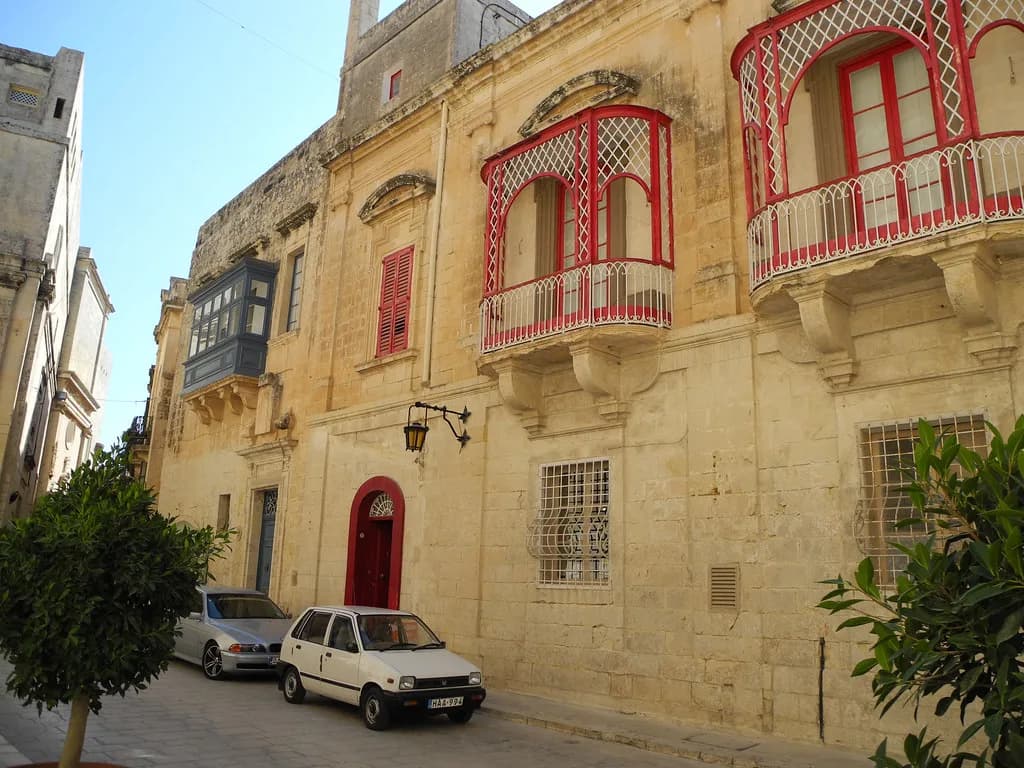
Mdina's streets inside the walls are narrow, tall and mostly residential, which is why the architecture is best read by walking slowly and looking at doorways, stone balconies and the way houses close ranks against the sun. Rabat just outside the walls has its own set of buildings to seek out, including the Casino Notabile, an exuberantly decorative small building designed for social gatherings on the site of an old wash-house.
Between Rabat and Mdina, the Roman Domus archaeological site shows the decorative turn Maltese building took under Roman influence, with mosaic floors, classical statues and marble colonnades. It is a useful counterpoint to the Baroque churches, and a cool place to spend half an hour when the stone streets are glaring.
The Three Cities: fortifications and the Naval Bakery
Across the water from Valletta, Birgu (Vittoriosa), L-Isla (Senglea) and Bormla (Cospicua) are where you see the fortification side of Maltese architecture at close range. Match the signage to the map: Vittoriosa, Senglea and Cospicua are the English names you will see alongside the Maltese ones. Our area-by-area guide to places to visit in Malta is a sensible way to slot the Three Cities into a day.
In Vittoriosa, look for the Naval Bakery, built by William Scamp using Maltese styles with British techniques; contemporary descriptions called it the most splendid bakery in existence. Nearby, the classical wings added to Villa Bichi in 1832 turned it into the Bighi Royal Naval Hospital, a landmark visible across the Grand Harbour.
British-era Malta: porticos, gates and the Addolorata church
The British took over the Knights' buildings without immediately launching large projects, then used architecture to assert authority by adding classical English features to existing structures. The portico on Valletta's Main Guard is the clearest example you can see in a minute, and it is often the single detail that converts a passer-by into someone who starts noticing facades.
Beyond Valletta, the British period produced a wide spread of styles rather than one coherent local school, which is why the island's nineteenth-century buildings range from neo-Gothic churches to iron-and-glass commercial structures. Galizia's Addolorata Cemetery church is regarded as his masterpiece, and the Holy Trinity Anglican Church on Rudolph Street in Sliema has a steeply pitched roof and bell cote that make it look like an English village church.
The covered Valletta Market, designed by Hector Zimelli, broke new ground with cast-iron pillars, girders and a glass skylight in the manner of Les Halles in Paris and the Crystal Palace. It shows that Victorian engineering reached Malta as more than decoration, and it is worth a walk-through even if you are not shopping.
The gallarija and the townhouse: reading a street
Sliema's houses picked up Victorian features such as bay windows and Art Nouveau and Art Deco ornament, layered onto the Maltese townhouse form. Walk a Sliema terrace and you can see the gallarija sitting beside a British-style bay window on the same facade, which is the quickest way to understand how the island absorbed outside influences.
Joseph Psaila's Balluta Buildings are the sculptural high point of this mixing, with flying balconies and carving that make the block read as a sculpture in the round. Look at it from across Balluta Bay as well as from the pavement for the full effect.
Temple and Hypogeum stonework you can still see
Malta's temple buildings share a basic plan: a central corridor leading to two or more elliptical chambers, with a small altar apse beyond. Builders used huge blocks for the outer shells and finished inner walls with cut slabs or stacked coralline blocks, and surviving surfaces carry plaster and red ochre painting.
Ħaġar Qim and Ħal Saflieni reward a visit specifically for the stonework, because the masonry is what you are looking at rather than a museum reconstruction. Book the Hypogeum well ahead: timed slots are limited, so turning up without a reservation is a poor plan.
A short walking route by area
Start in Valletta with Triq ir-Repubblika for the auberges and palaces, take in the Main Guard portico and Victoria Gate, then cross to Birgu for the Naval Bakery and the waterfront fortifications. Keep a half-day for Valletta and a half-day for the Three Cities, with the ferry or a bus filling the gap between them.
Use a Malta map to line up the harbour crossing, and check opening times for the churches and sites you want to enter before you set out. Self-guided walking keeps costs down because most of the best facades are on public streets.
Heat, shade and timing your walk
Maltese limestone reflects glare, and open temple sites and bastions offer little shade at midday, so plan facades and interiors for the morning and late afternoon and keep the middle of the day for churches, museums and the Roman Domus. Carry water and a hat even on a short walk between sights.
If you want a rest between areas, the hop on hop off Malta routes link the main clusters without committing you to a full day of walking. It is a practical fallback when the heat wins.
Which buildings to see first?
If you have one day, do Valletta's grid and gates in the morning and the Three Cities in the afternoon, focusing on the Main Guard portico, Victoria Gate, the Naval Bakery and the Birgu waterfront. Add Mosta's Rotunda or Mdina's streets on a second day, when you have time to look up at domes and gallarijas rather than rush past them.
Our Best Places to Visit in Malta, Grouped by Area puts these buildings into a wider itinerary if you want to plan a longer stay.
Explore more Malta guides
Frequently Asked Questions
What features define Maltese architecture?
Honey-coloured limestone walls, flat roofs and the gallarija, a boxed wooden balcony projecting from upper floors, together define the look of a Maltese street. Baroque churches, the Knights' auberges and British-era porticos and gates add the historic layers.
Do I need tickets to see Malta's architecture?
Most of the buildings described here are visible from public streets, including Valletta's gates, the auberges and palaces, the Three Cities' fortifications and Mdina's streets. Churches, the Roman Domus, the Hypogeum and other sites have their own entry arrangements to check before you go.
How long should I allow for Valletta's architecture?
Half a day covers Triq ir-Repubblika, the Main Guard portico, both city gates and a church interior at a comfortable pace. Add the Three Cities as a second half-day, crossing the harbour by ferry or bus.
Sources
Notes for your Malta trip
Optional updates when we add or correct a Malta or Gozo guide.
You might also like
Continue reading
More guides you'll find useful