Malta eSIM: Plans, Prices and Coverage for Travellers
A Malta eSIM gets you online on arrival across Malta and Gozo. See how plans compare in euros, how much data you need, and how UK and EU roaming rules differ.
On this page
Buy a travel eSIM before you fly and you land in Malta already online, with no queue at a phone shop and your UK or Irish number still live for calls and texts. The catch is picking a data band that matches your trip rather than the cheapest headline bundle. This guide covers which Maltese networks your eSIM rides on, what the plans cost in euros, how much data a week in Valletta or Sliema actually uses, and how post-Brexit rules differ from EU roaming.
What a Malta eSIM is and how it works on arrival
An eSIM is a digital SIM profile built into your phone, tablet or laptop. You buy the plan from the provider's app or website, scan a QR code or tap an install link, and the profile loads onto the device. From then on the eSIM behaves like a normal SIM for data, and you can keep your usual SIM active alongside it.
That buys you a day of sightseeing. A local SIM bought in Malta generally means finding a shop and showing ID, which eats into your first morning. With a travel eSIM the profile is installed at home and connects once you switch it on after landing at Malta International Airport, with no paperwork at the other end. If you are working out what your card will be charged in while you shop for a plan, see our guide to Currency in Malta.
Keep your home SIM in the phone for incoming calls and texts, and set the eSIM as the line for mobile data. Check that your handset is unlocked and eSIM-compatible before you buy, since the plan is tied to the device once installed.
Which Maltese networks your eSIM uses
Malta runs on three mobile networks: Epic, GO and Melita. Travel eSIMs connect through these local networks, so you get everyday coverage along the same lines as a Maltese SIM rather than a separate tourist network.
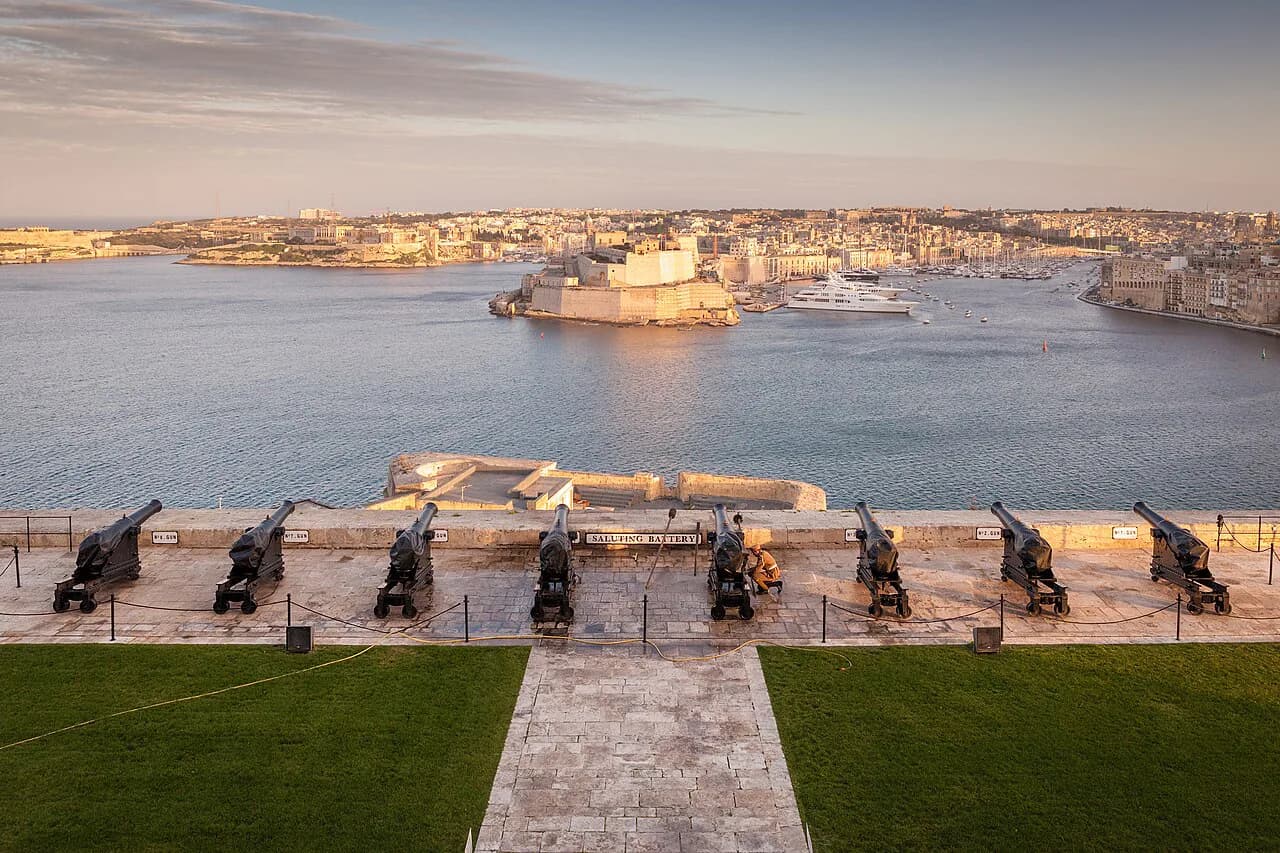
Coverage is strong in the built-up east of the main island and around the harbours, holding up on Gozo and around the Comino channel, though signal dips in a few remote cliffside spots. Valletta, the Three Cities across the water, Mdina and Rabat all sit inside well-covered territory.
5G is rolling out in the main cities rather than everywhere, so treat it as a bonus in Valletta, Sliema and St Julian's and expect 4G as the working standard elsewhere. If you plan to work from the islands, check the plan's data allowance first.
Plan prices in euros: short breaks versus longer stays
Two providers appear repeatedly in comparisons: Ubigi, which leans towards flexible bundles and an unlimited option, and Saily, which sells straightforward per-gigabyte plans with security features built in. Both are one-off prepaid purchases, so you are not signing a contract.
In June 2026, Ubigi's Malta plans ranged from 3 GB for 15 days at €5 to 50 GB for 30 days at €34, with unlimited data at €21 for 7 days, €25 for 15 days and €43 for 30 days. Saily's June 2026 rates started at €3.99 for 1 GB over 7 days, with 10 GB for 30 days at €17.49, 20 GB for 30 days at €24.49 and unlimited for 15 days at €42.99. Treat these as historical figures rather than current prices.
Read the shape of those prices before choosing. A short city break is cheap on the smallest bundle, but a fortnight of maps and photo uploads pushes you towards 10 GB or unlimited. Pay in the provider's currency and your bank sets the rate, so it is worth knowing how the charges land on your card.
How much data suits your trip
For a few days in Valletta, a 3 GB to 5 GB plan covers maps, ticket apps and photo uploads comfortably. That covers Mdina and Rabat too, since both sit within the same coverage area as the capital. Add streaming or video calls and you are into 10 GB territory.
A Sliema or St Julian's stay does not change the data maths much, but it does change the load: the resort strip is the busiest part of the island for social posting and video calls, and the network there is at its densest. For the wider practical picture on the islands, our Malta Tips cover the basics.
Gozo and Comino day trips are the reason a single Malta plan beats juggling local SIMs. Gozo has full 4G coverage and the Comino channel carries signal, so one plan covers the ferry crossing, the island roads and the boat trips in between.
Data-heavy habits are the real driver. Video calls, cloud backups and tethering a laptop chew through a gigabyte far faster than messaging and navigation, so count those before assuming a small bundle will last a week.
Data-only versus a local phone number
Most travel eSIMs are data-only, and for most visitors that is enough. WhatsApp, FaceTime and similar apps handle calls and video over data, so you can ring home and book a restaurant without a Maltese number.
A local number matters if you need to receive verification texts, call a hotel landline or deal with a car hire desk. Some providers sell plans with a Maltese number, so check before you buy rather than assuming the top-up will do it.
Keeping your own SIM active covers most of that anyway: incoming calls and texts still arrive on your usual number while the eSIM carries the data. The trade-off is paying your home operator's charges if you answer a call.
UK travellers after Brexit versus EU visitors
The rules split by passport. Travellers from EU and EEA countries can use their home data allowance in Malta at no extra charge under EU roaming regulations, though fair-use policies still apply. UK travellers lost that protection after Brexit, so a travel eSIM is the simpler route than paying home rates.
Visitors from the US, Australia and elsewhere outside the EU sit in the same position as UK travellers. Check your home carrier's roaming allowance before buying an eSIM, because a generous inclusive allowance may already cover a short trip.
Either way, the eSIM keeps your home line free for calls while data runs separately, which is the practical reason many people buy one even when roaming is included.
Installing and activating before you fly
Install the eSIM at home on reliable broadband, not in the arrivals hall. Buy the plan, scan the QR code or follow the in-app link, label it clearly so you can tell it apart from your home line, and leave it switched off until you land.
At the airport, switch the eSIM on for mobile data and keep your usual SIM as the line for calls and texts. Test it before you leave the terminal: open a map, load a bus app and send a message. If nothing loads, check the data line is set to the eSIM rather than your home SIM.
Check the plan's validity period against your dates, since the clock usually starts at activation. A 7-day unlimited plan bought for a 10-day trip leaves you hunting for a top-up mid-holiday.
Where signal holds up across the islands
The main island's east coast is well served: Valletta, the Three Cities across the Grand Harbour, Sliema and St Julian's all sit in strong coverage. Mdina and Rabat in the centre are covered too, which matters if you are relying on maps to find a gate or a bus stop.
Gozo is fully covered on 4G, and the Comino channel between the islands carries signal despite being a small uninhabited island. The realistic weak spots are remote cliffside stretches, where a screenshot of your route saves a frustrating five minutes.
Which eSIM should you actually buy?
For a short break based in Valletta or Sliema, a small bundle from either Ubigi or Saily is enough and cheap; for a fortnight with Gozo and Comino days built in, buy 10 GB or unlimited. Decide on your data habits rather than the headline price, and install the profile at home.
UK and US travellers should treat the eSIM as the default and check their home allowance first; EU visitors may need nothing at all. Whichever you choose, keep your own number active so calls and texts still arrive while data runs separately.
Explore more Malta guides
Sources
Notes for your Malta trip
Optional updates when we add or correct a Malta or Gozo guide.
You might also like
Continue reading
More guides you'll find useful