Maltese Language for Visitors: English, Words and Pronouncing Place Names
Maltese and English are both official in Malta, and public signs usually appear in both. Here is what the language is, plus the words and place names you will meet.
On this page
You can travel through Malta, Gozo and Comino on English alone: Maltese and English are both official languages, and English is widely used in shops, hotels and on signage. Maltese is the everyday language you will hear around you and read on place names, so a little recognition goes a long way. This guide covers what the language is, how it is written, and how to read the names that appear on stops, buses and tickets.
Do you need to speak Maltese in Malta?
No. English is an official language of Malta, alongside Maltese, and street signs commonly appear in both, which makes finding your way straightforward without a phrasebook.
The practical gap is not conversation but recognition. Bus displays, stop signs and tickets may use the Maltese form of a place name, which can differ from the form on your booking. A little familiarity with Maltese spelling saves a moment of doubt at the stop.
Treat Maltese as a bonus rather than a requirement. A courteous greeting goes a long way, and the rest of the trip runs perfectly well on the English you already have. For the wider practical picture, from money to plug sockets, keep our Malta tips page open while you plan.
What Maltese actually is and how it is written
Maltese is a Semitic language in the Afro-Asiatic family, on the Arabic branch, and it has also taken a great deal of vocabulary from Italian. It is written in the Roman alphabet rather than Arabic script, which is why a Maltese street name looks like something you can attempt to read aloud.
That alphabet is the reason the language feels approachable on paper: the letters are the ones you already know, plus a handful of marked consonants that carry their own sounds. You will see those marks in place names constantly, so they are worth a few minutes of attention.
Is English an official language in Malta?
Yes. English sits alongside Maltese as an official language, and Italian is also widely spoken, so a visitor arriving with English only is in comfortable territory.
This is not the same as claiming that every resident speaks English fluently, which no source supports. Think of English as the safe default for official information, menus, tickets and transport displays, while the Maltese conversation around you carries on regardless.
The euro replaced the Maltese lira as the official currency on 1 January 2008, so cash and card matters are simple for UK and Irish travellers. Our guide to currency in Malta covers notes, cards and change.
Everyday Maltese words and phrases you will see and hear
A few words recur on signs, shopfronts and buses, and recognising them is more useful than memorising a list of tourist pleasantries. Welcome signs, street furniture and public notices commonly pair a Maltese word with its English counterpart, so you can read the English and let the Maltese wash past.
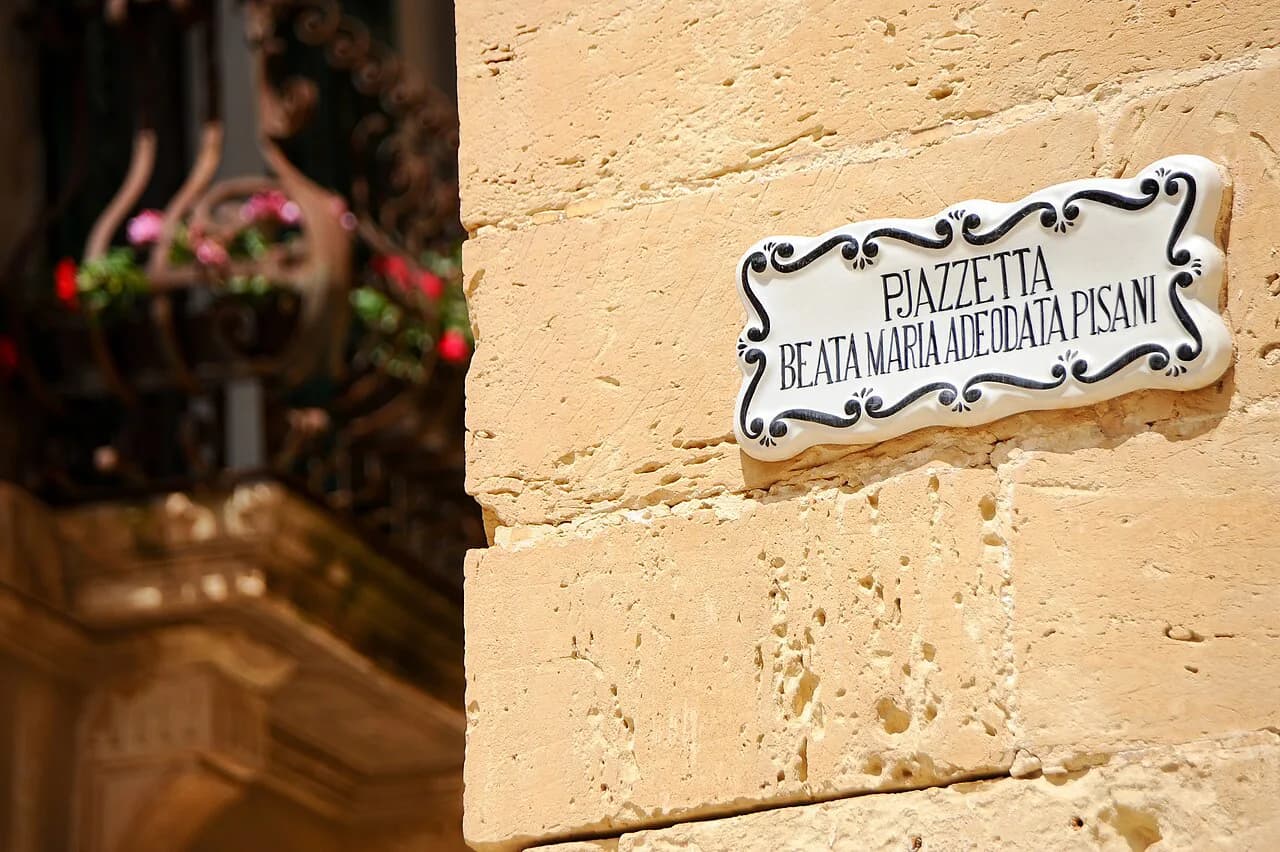
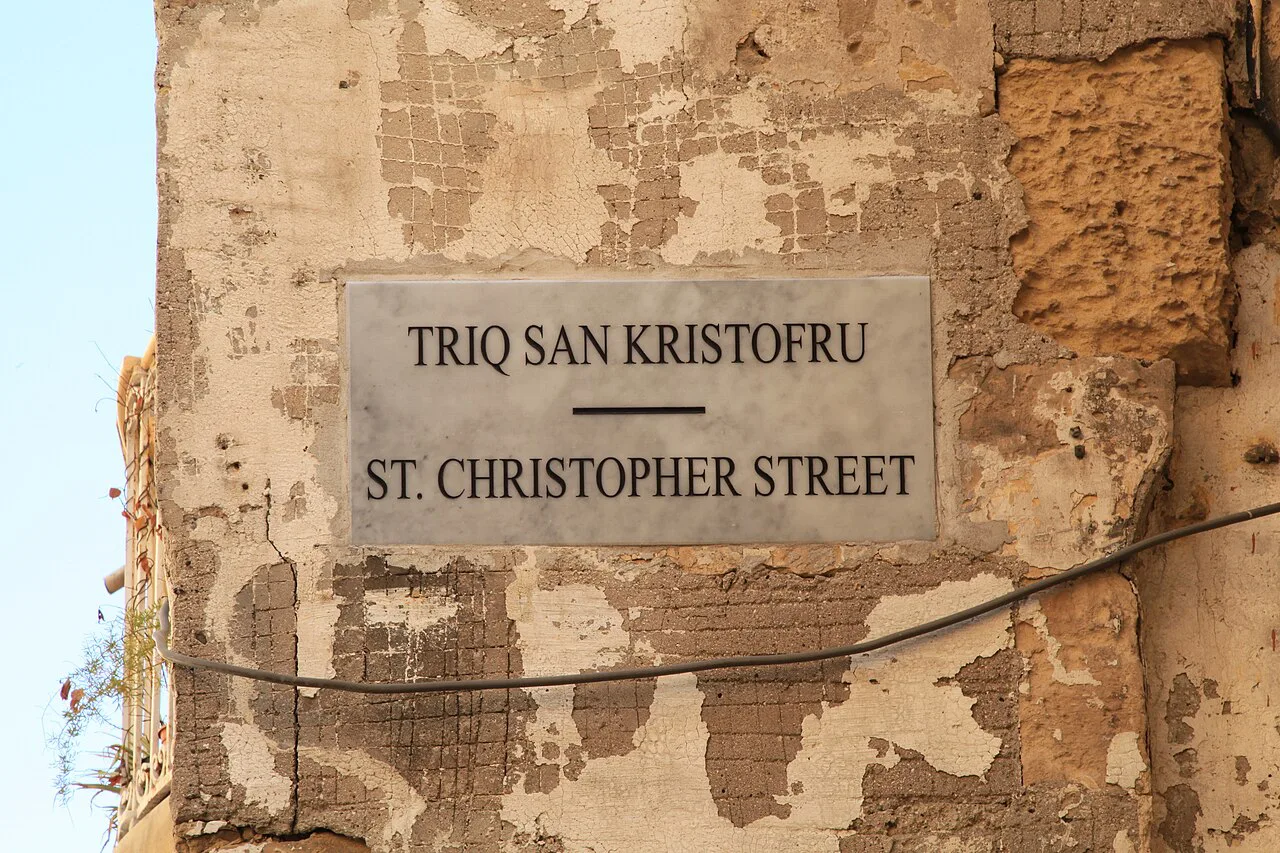
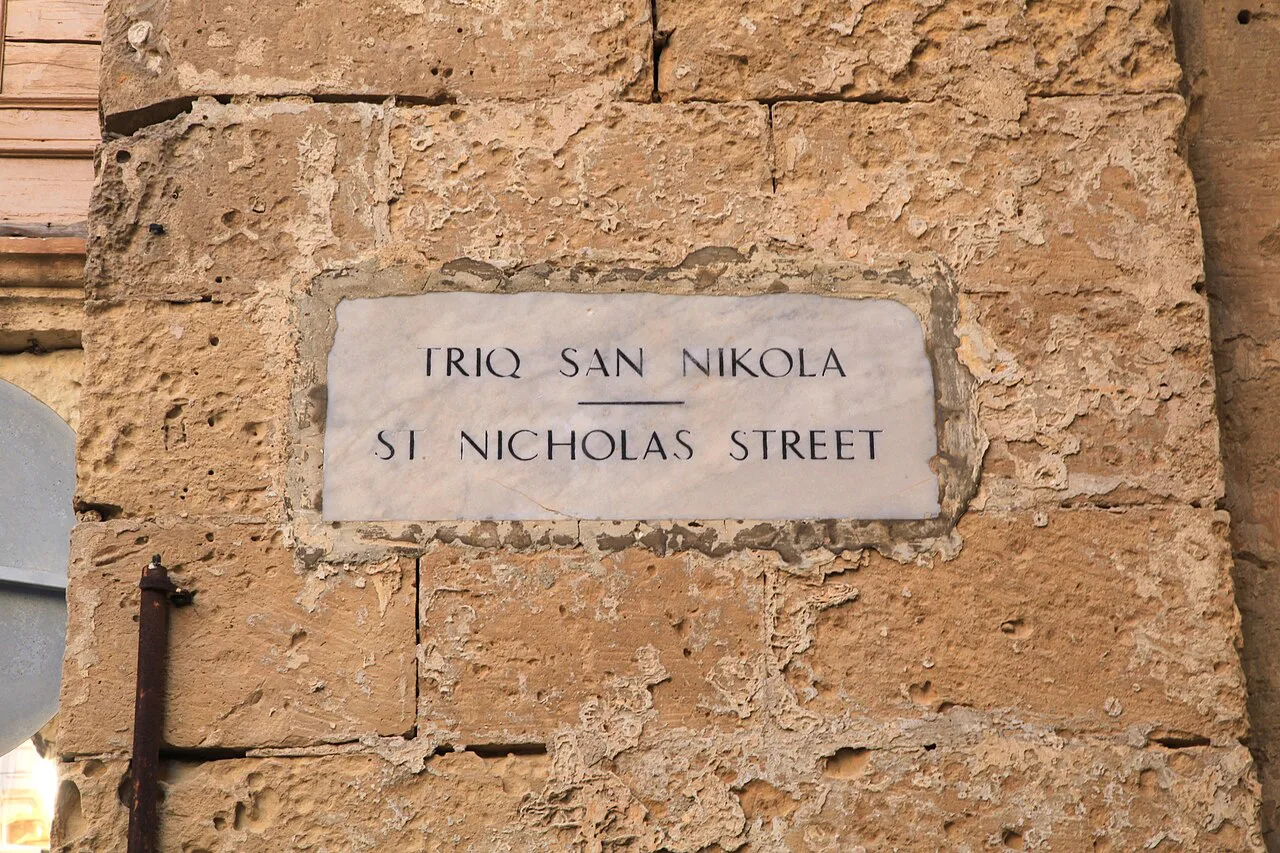
Street and public signs are commonly printed in English as well as Maltese, and English is an official language, so the practical information on a sign is rarely Maltese only. Match the Maltese name to the English one you already have and carry on.
Where a word matters, on a bus destination, a ferry sign or a ticket, match it letter by letter to the name you already have written down rather than trying to sound it out first. That single habit removes most of the confusion a visitor meets.
How to say hello in Maltese and what reply you will get
Maltese greetings and courtesies are worth a few words of effort, and a beginners' course or phrasebook is the realistic way to pick them up properly. The University of Cambridge Language Centre lists Maltese learning materials and dictionaries if you want to study before you go.
A friendly greeting is usually met warmly, and the conversation may well continue in English once the other person hears your accent. That switch is normal and not a rebuff; it simply keeps things moving.
If you want to take the language further, a beginners' course or dictionary from that same resource list is a realistic starting point for a few weeks before you travel. Otherwise, a handful of greetings and a ‘thank you’ cover the everyday courtesies.
Maltese place names on signs: matching the spelling
This is where visitors most often trip up, and it is a spelling problem more than a speaking one. Maltese adds marked consonants to the Roman alphabet, so the same name can look unfamiliar on a bus display or stop sign. Focus on matching the shape of the word rather than producing a perfect pronunciation.
Mellieħa, Buġibba, Xagħra on Gozo and Żurrieq in the south are among the names visitors meet. Maltese is written in the Roman alphabet with marked consonants, and those marks carry the sounds that make a name look unfamiliar on a sign.
Some places have an English and a Maltese form in daily use. Around the harbours, Birgu is also known as Vittoriosa, L-Isla as Senglea and Bormla as Cospicua, and Gozo's capital is Victoria or Rabat depending on the sign. Knowing both forms means a destination board never catches you out.
When you book a taxi, a boat or a tour, have the exact spelling in front of you and show the driver the screen rather than attempting the name aloud. It is quicker, avoids confusion and works in any language.
Reading the letters: ħ, ċ, ż and other marked characters
Maltese uses the Roman alphabet, the letters you already know, plus a handful of marked consonants that make a name look unfamiliar. Those marks are what separates a Maltese street name from an English one, and they repay a few minutes of attention before you travel.
The marked consonants are the ones that catch visitors most, and they appear in the names of many towns and villages. Rather than trying to sound each letter, treat the whole written form as one word to recognise, and you will spot the name faster on a sign.
These characters are not decorative; a name without them is a different spelling and may not match a printed timetable or a ticket. Copy names exactly as they appear when you search or book online, accents included, and you will find the right place first time.
Getting by without a phrasebook: signs, numbers and English fallbacks
Public information in Malta is built for people who do not read Maltese: signs are almost always in English as well as Maltese, and that includes transport and street signage. Photograph the stop name or destination on your phone before you set off, then match it visually on the return trip.
If a display is Maltese only, say the name in English or show it written down; staff and drivers switch without fuss. Numbers, times and platform-style information are the parts you actually need, and those are the parts least likely to defeat you.
Should you run into a word you cannot place, a translation app with a downloaded Maltese pack is the quickest fallback, and it works without a signal. Pair that with your own offline map and you will not be caught out in a village square with a Maltese-only sign.
Do you need to learn any Maltese before you go?
Learn two words, not twenty. A greeting when you enter a shop and a ‘thank you’ when you are served cover almost every exchange a visitor has, and English handles the rest because it is used on public signage.
Spend the time you save on the written forms instead: the marked letters in names such as Mellieħa, Xagħra, Żurrieq and Ġgantija are what you will actually need to match against a bus display or a ticket. Get those, and the language stops being an obstacle and becomes part of the landscape.
Check current details such as timetables and ticket information directly with the operator before you travel, since these change and are not fixed here. The rest — greetings, place names and the English fallback — you can carry without any further preparation.
Explore more Malta guides
Frequently Asked Questions
Is English widely spoken in Malta?
English is an official language alongside Maltese, and Italian is also widely spoken. Public signs are commonly printed in English as well as Maltese, so visitors can rely on English for transport, menus and official notices.
Do I need to know any Maltese before I arrive?
No. English is an official language of Malta, alongside Maltese, and signs are almost always in English as well as Maltese. Knowing a Maltese greeting or word of thanks is a welcome courtesy, but the practical information you need is available in English.
Why do Maltese place names have extra dots and bars?
Maltese is written in the Roman alphabet with additional marked consonants, such as ħ, ċ and ż. These marks are a genuine part of the spelling, so a name written without them may not match a bus display or ticket. Copy names exactly as printed.
Sources
Notes for your Malta trip
Optional updates when we add or correct a Malta or Gozo guide.
You might also like
Continue reading
More guides you'll find useful