Ġbejna: Malta's Sheep's-Milk Cheeselets Explained
Ġbejna are Malta's small sheep's-milk cheeselets, sold fresh, air-dried or peppered. Here is how each type differs, what they taste like and how to buy them.
On this page
Ġbejna are small, round Maltese cheeselets made from sheep's milk, salt and rennet, and you will meet them on Gozo and Malta in three distinct forms: fresh, air-dried and peppered. This guide explains the name and its plural, how the cheeselets are shaped and dried, how each type tastes and how to eat them, plus the practical question of which form to buy and how to get it home.
What ġbejna are: milk, salt and rennet
A ġbejna is a homemade cheese made with whole raw milk from the Maltese breed of sheep and its crosses. The recipe is short and plain: sheep's milk, salt and rennet, with no long ageing or complicated rind. That simplicity is why the cheeselet reads as farm food rather than a cheeseboard luxury, and why a small round bought in a village is often more interesting than a wrapped one from a supermarket fridge.
The name is a diminutive of ġobon, the general Maltese word for cheese, narrowed down to this specific cheeselet rather than any cheese at all. One practical point for travellers is less obvious: the cheese is made from both pasteurised and unpasteurised milk, so if unpasteurised dairy is a concern for you, ask which you are being sold before you buy a batch for the journey home.
How to say it and why the plural matters
The word is pronounced roughly jbeina, and the plural is ġbejniet, which is the form you will hear when someone offers you more than one. Menus and market labels often switch between the singular and plural without explanation, so knowing both saves a moment of confusion when you are ordering. Keep the Maltese letters when you write the word down, because the ġ and the għ are part of the spelling rather than decoration, and a shop sign in Victoria or Xagħra will use them.
In English, the closest everyday rendering is simply sheep's-milk cheeselet, which is what the word describes rather than a brand or a protected name you need to memorise. Use the Maltese when you ask at a counter and the English when you explain it to someone at home.
Fresh, air-dried and peppered: the three types
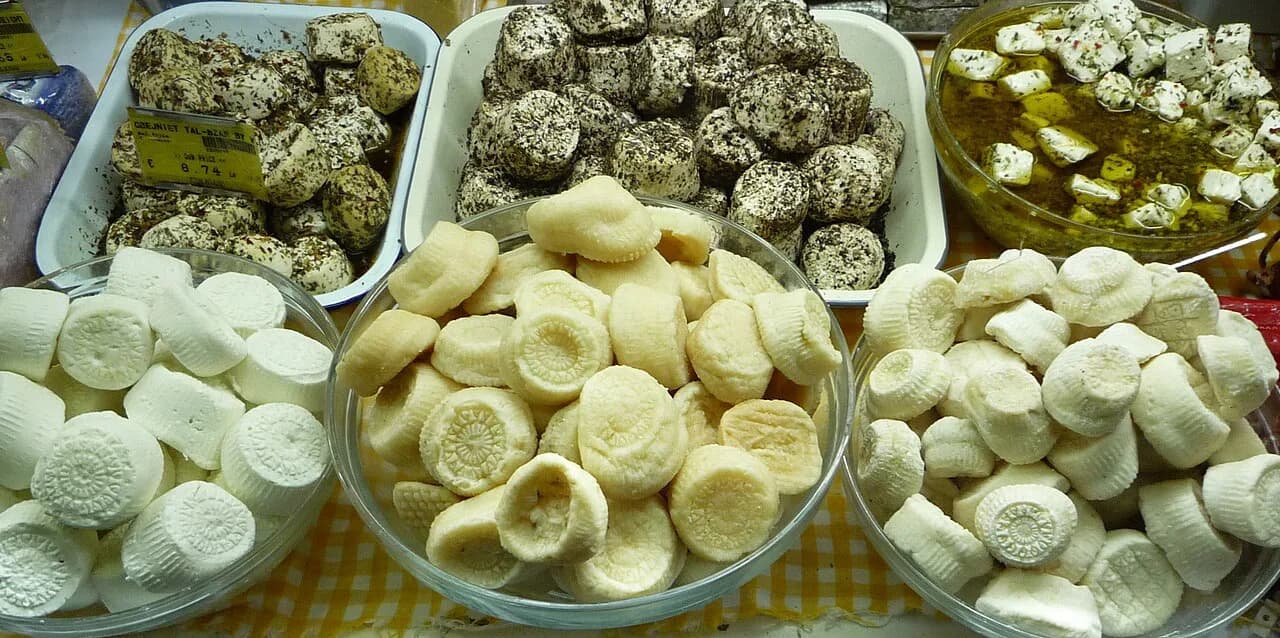
The fresh form, ġbejna tan-nagħaġ friska, is soft and mild and is the one to eat within a day or two of buying. It is the least travelled version and the most delicate, so it suits a picnic or a plate of bread rather than a suitcase.
Air-dried ġbejna tan-nagħaġ niexfa are firmer and saltier, and they are the form that survives a journey best. The drying step removes moisture, which concentrates the flavour and firms the texture, so a dried cheeselet grates and slices where a fresh one would collapse.
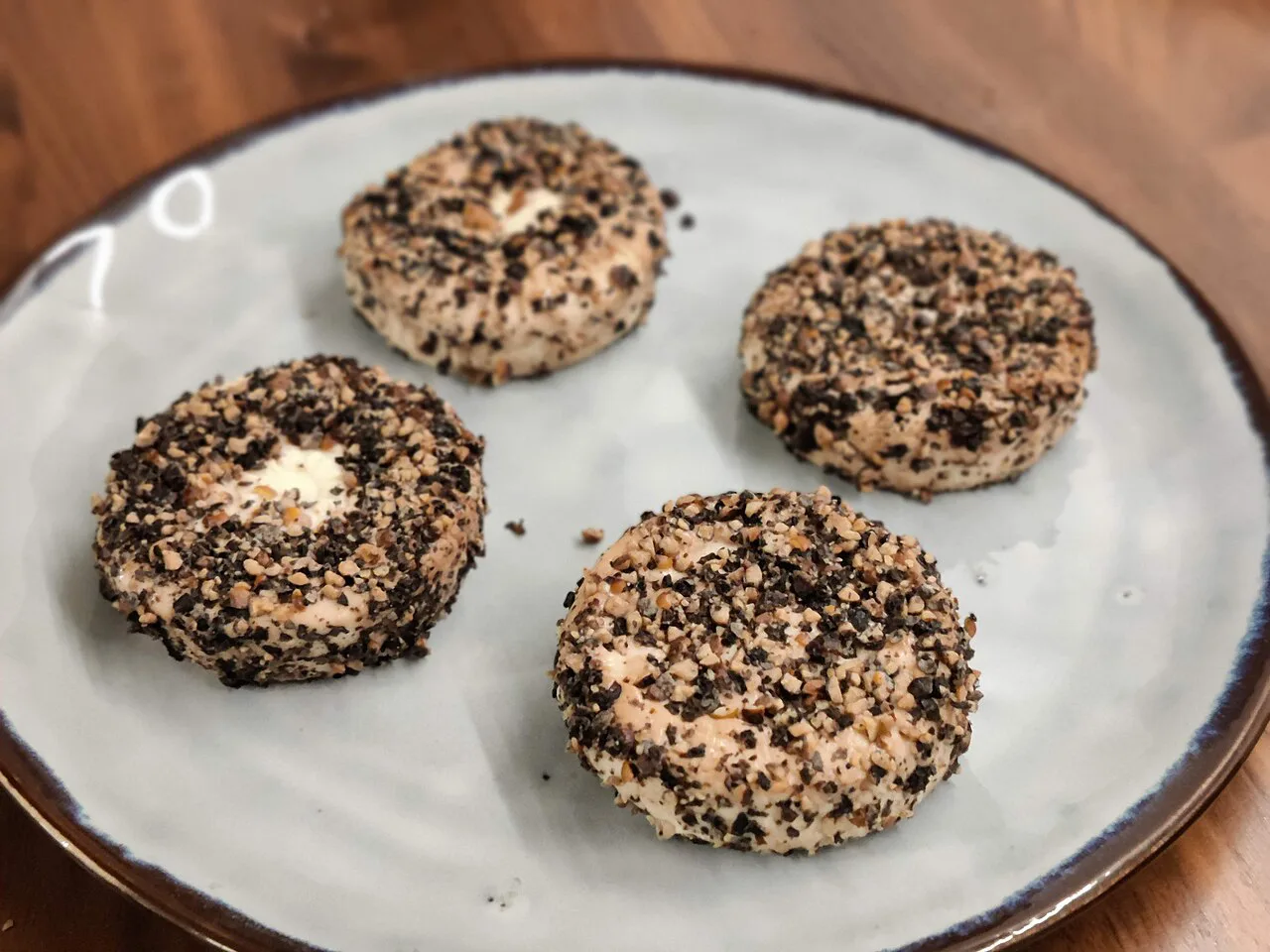
The third type, ġbejna tan-nagħaġ tal-bżar, is pickled and peppered, which gives it a sharper, spicier edge and a longer life in the fridge once opened. If you want one form to take home as a gift, this is the practical pick: it holds up, it tastes of something distinct and it needs no special handling beyond a cool bag.
How the cheeselets are shaped and dried
Ġbejna are shaped in a hurdle made of dried reeds, though plastic versions are also used now, which is why a good cheeselet carries a faint ridged pattern on its surface. The shape is not decorative: the small mould drains the curd and gives the cheeselet its even, round form.
They are traditionally dried in small ventilated rooms with windows protected by a fine mesh mosquito net, so air moves around the cheeselets without insects getting to them. That slow, breezy drying is the reason the niexfa type ends up firm and salty rather than merely old, and it explains why the texture changes so much between the fresh and dried versions.
One story worth treating as a story: it is said by some that sea water, rather than rennet, was once used to curdle the milk. Take it as local lore rather than a fact about the cheese you are buying today.
What ġbejniet taste like on the plate
Expect a fresh sheep's-milk flavour rather than a sharp one: the friska type is milky, lightly salty and soft enough to spread. The niexfa type is denser and saltier, firmer on the plate, while the tal-bżar version adds pepper and a pickled tang that cuts through bread and oil.
A simple way to judge a batch is to taste it plain first: a good fresh cheeselet should taste of milk and salt rather than of the fridge it came from. The dried forms are better with something moist alongside, which is why they turn up grated or crumbled rather than eaten alone.
How ġbejniet are eaten in Malta
Fresh ġbejniet are eaten simply, with bread, tomatoes and oil, and they also go into pastries and stuffings where their mildness lets other ingredients speak. Dried ones are grated or sliced into salads and baked dishes, and the peppered type is served as part of a plate of small things before a meal.
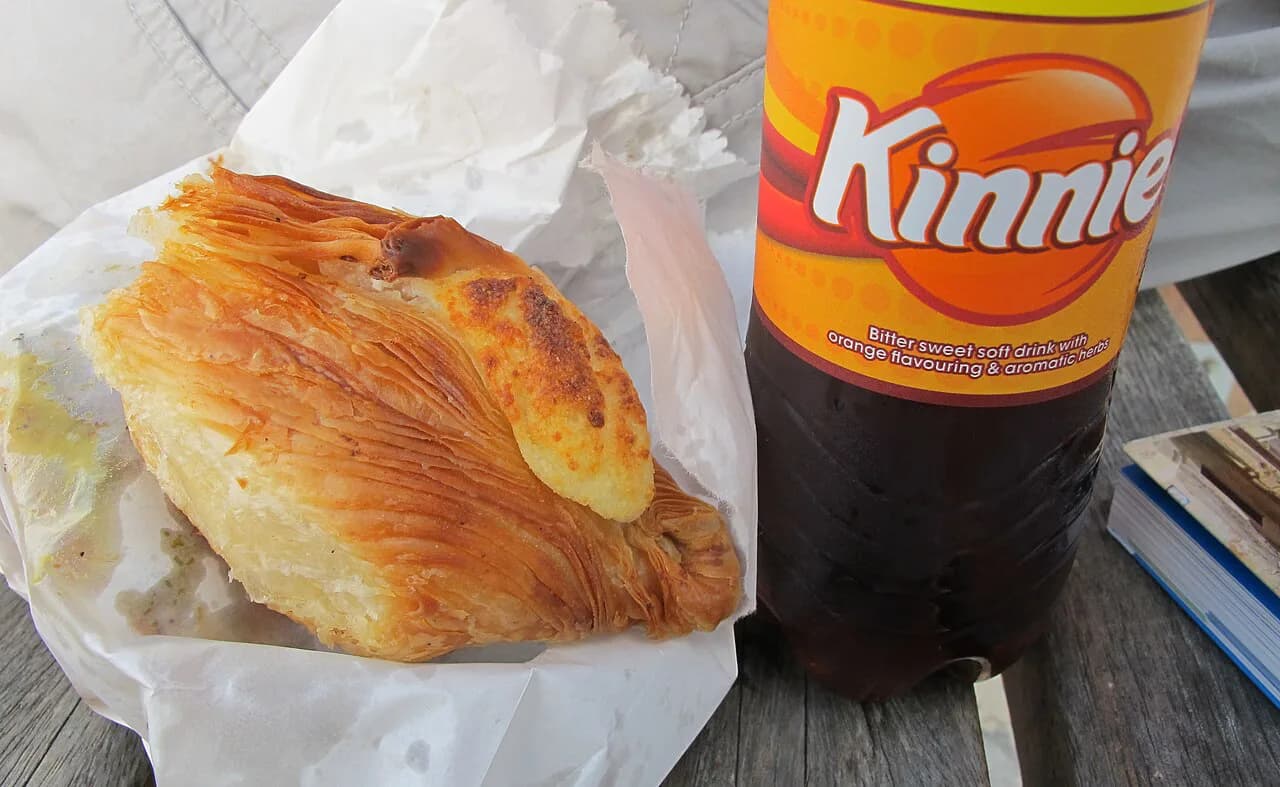
Because the cheese is mild, it pairs naturally with the softer end of the Maltese drinks cabinet, and if you are building a table of local things to try, our guide to Maltese drinks is the place to start. A cold Kinnie, the bitter-orange soft drink, works with the fresh type in the same way a sharp chutney works with a mild cheese, and the contrast is the point rather than the sweetness.
If you are planning a meal rather than a snack, Ħobż biż-Żejt, the Maltese bread with tomato and oil, is the classic partner for a soft cheeselet. The bread does the work of carrying the cheese, so buy the friska type for that and keep the dried ones for grating over something warm.
Buying ġbejniet and carrying them home
Buy from a counter where the cheeselets are sold loose and you can ask which type you are getting, rather than a sealed pack where the distinction between friska and niexfa is easy to miss. Ask about the milk too, since both pasteurised and unpasteurised versions are made, and check the label or ask the seller how the cheeselets have been stored.
For the journey home, the air-dried and peppered forms are the sensible buy: firm, salty and stable, they travel in a cool bag without turning. The fresh type is a same-day pleasure, so eat it on Gozo rather than risk it in a suitcase.
Prices and stockists vary between village shops, markets and delis, and no single figure holds across the islands, so compare at the counter before committing to a large batch.
What earlier records say about ġbejniet
Ġbejna are documented as far back as the earliest reports on Maltese cheesemaking, which record a homemade cheese made with whole raw milk from the Maltese breed of sheep and its crosses. The three forms sold today — friska, niexfa and tal-bżar — continue that farmhouse tradition rather than a modern invention.
For a visitor, the history is a reason to seek out the real thing rather than a reason to expect a formal tasting room: this is still farmhouse cheese sold by weight. Let the counter decide what you actually buy.
Which ġbejniet should you buy?
Buy the fresh type to eat the same day, with bread and oil, and take home the air-dried or peppered forms, which survive the journey and grate into dishes at home. If you only have room for one, choose the tal-bżar version for its longer life and sharper flavour.
Explore more Malta guides
Frequently Asked Questions
What is Gbejna in English?
It is a small sheep's-milk cheeselet, made from sheep's milk, salt and rennet. The plural is ġbejniet, and you will see it sold fresh, air-dried or peppered.
What does Gozo cheese taste like?
Fresh ġbejniet are mild, milky and lightly salty, with a soft texture. The air-dried type is firmer and saltier, and the peppered type adds a pickled, peppery tang.
Are ġbejniet made with pasteurised milk?
The cheese is made from both pasteurised and unpasteurised milk, so if unpasteurised dairy matters to you, ask which one you are being sold before you buy a batch to take home.
Sources
Notes for your Malta trip
Optional updates when we add or correct a Malta or Gozo guide.
You might also like

Continue reading
More guides you'll find useful