Free Things to Do in Malta: Gardens, Bastions and Old Streets
Free things to do in Malta: Valletta's gardens, bastions and squares, Birgu's waterfront, Mdina's streets and Rabat, plus what the free options really cost in time.
On this page
The free half of a Malta trip is mostly walking: Valletta's gates, gardens and bastions, the waterfronts of Birgu and Marsaxlokk, and Mdina's walled streets cost nothing to enter, while the paid interiors next to them are where your budget goes. Plan a morning per area rather than a morning per sight, because the short distances within Valletta and Mdina reward slow wandering more than queueing. This guide groups the free stops by how much of a day each takes and names the transport, interiors and timed tickets that quietly add cost.
Which free sights in Valletta are worth your morning
Start at the City Gate, where the Triton Fountain by Vincent Apap guards the entrance to the capital; it was completed in 1959 and is lit at night, which makes it a good bookend to a day rather than the first stop.
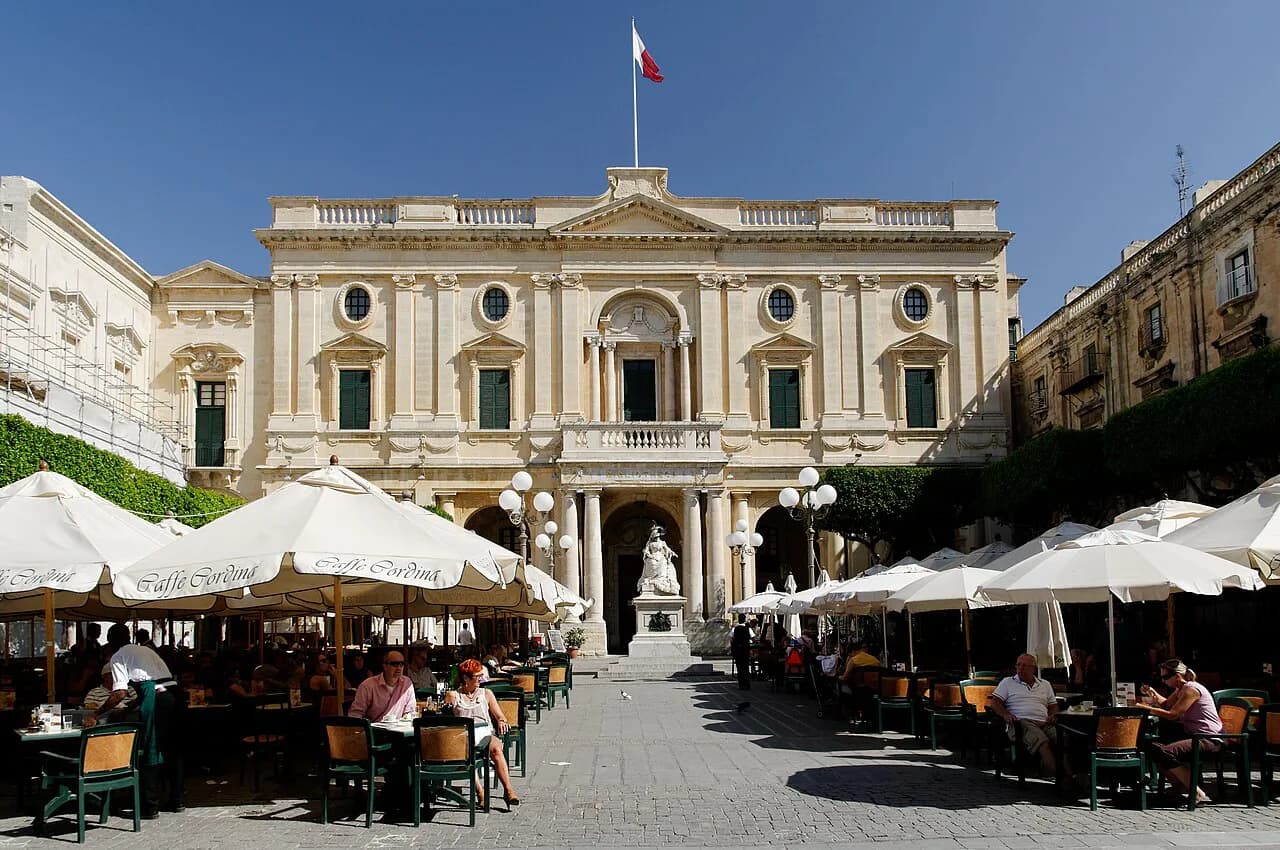
From there, Republic Street runs from the City Gate to Fort St Elmo and is the main pedestrianised spine, lined with cafés and shops and busiest in the middle of the day.
Cut through to Strait Street for a quieter look at the city's old quarter, where the bars that fill the lane at night sit shuttered and photogenic in the morning.
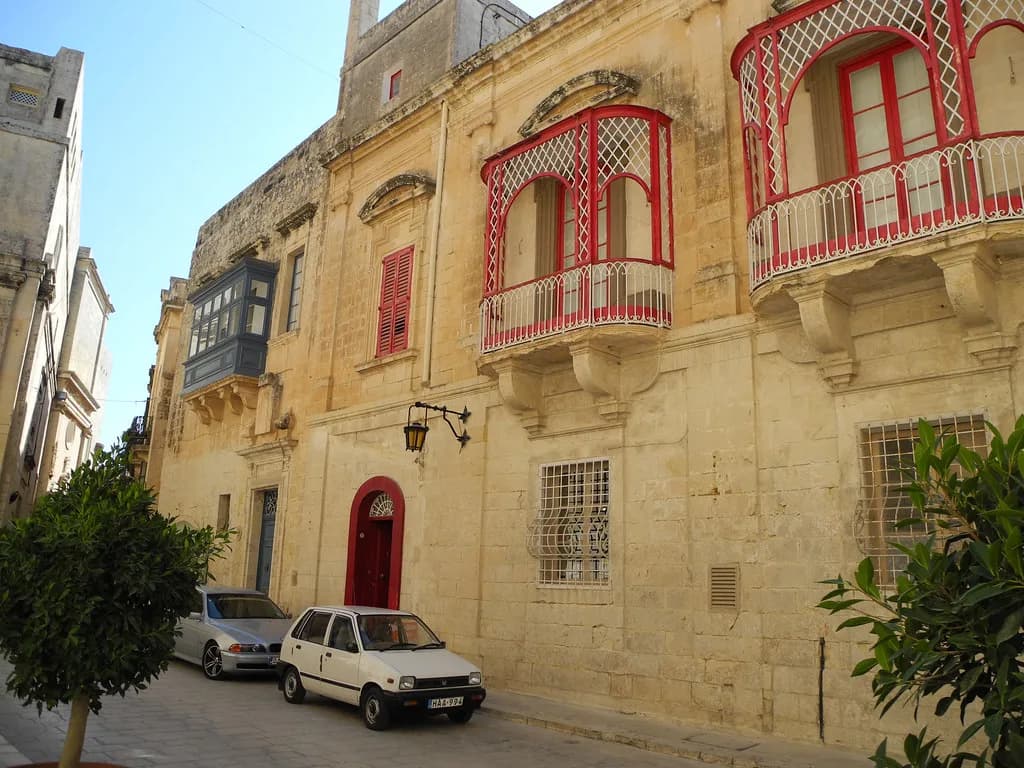
Houses on St Barbara's Bastion are worth a detour for the balconies alone, and the walk along the bastion edge gives you harbour views without a ticket.
Upper and Lower Barrakka Gardens and the Saluting Battery
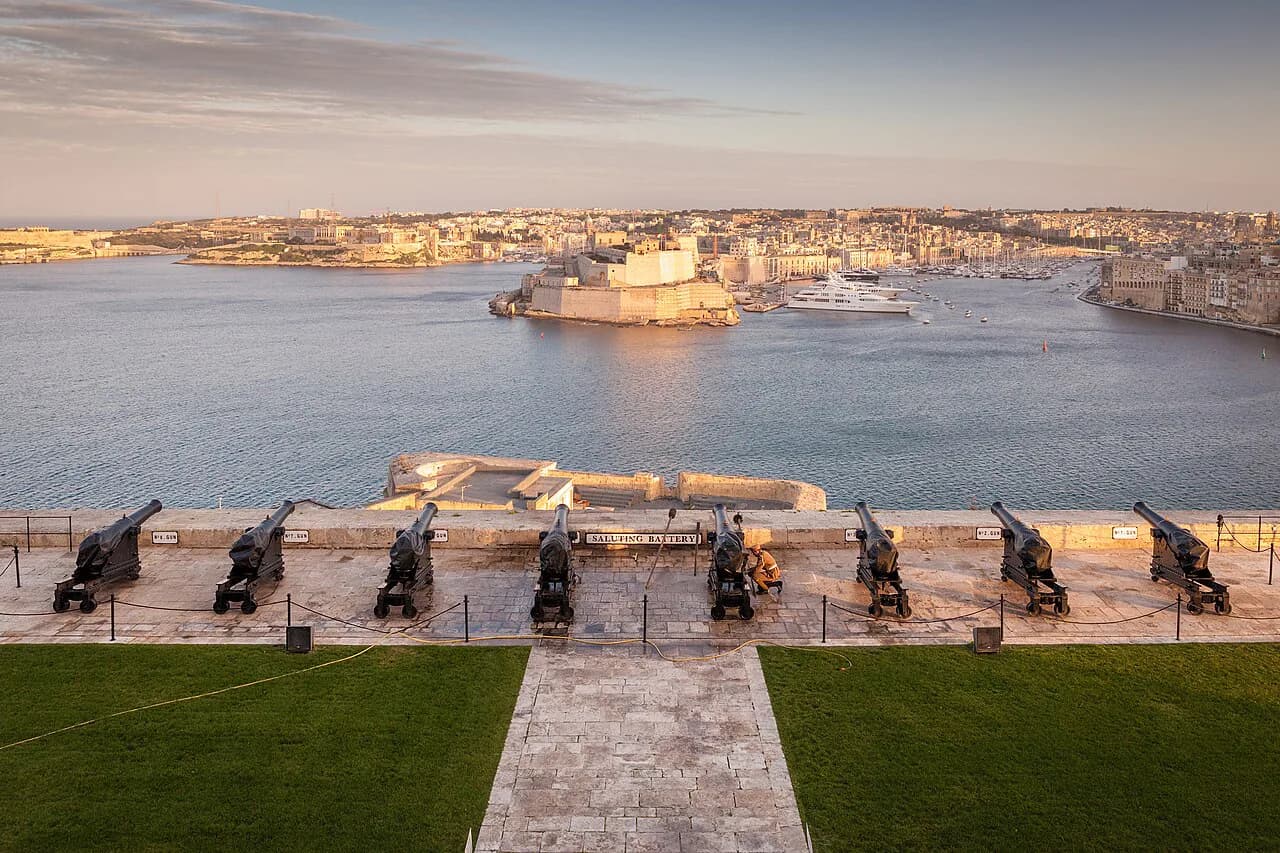
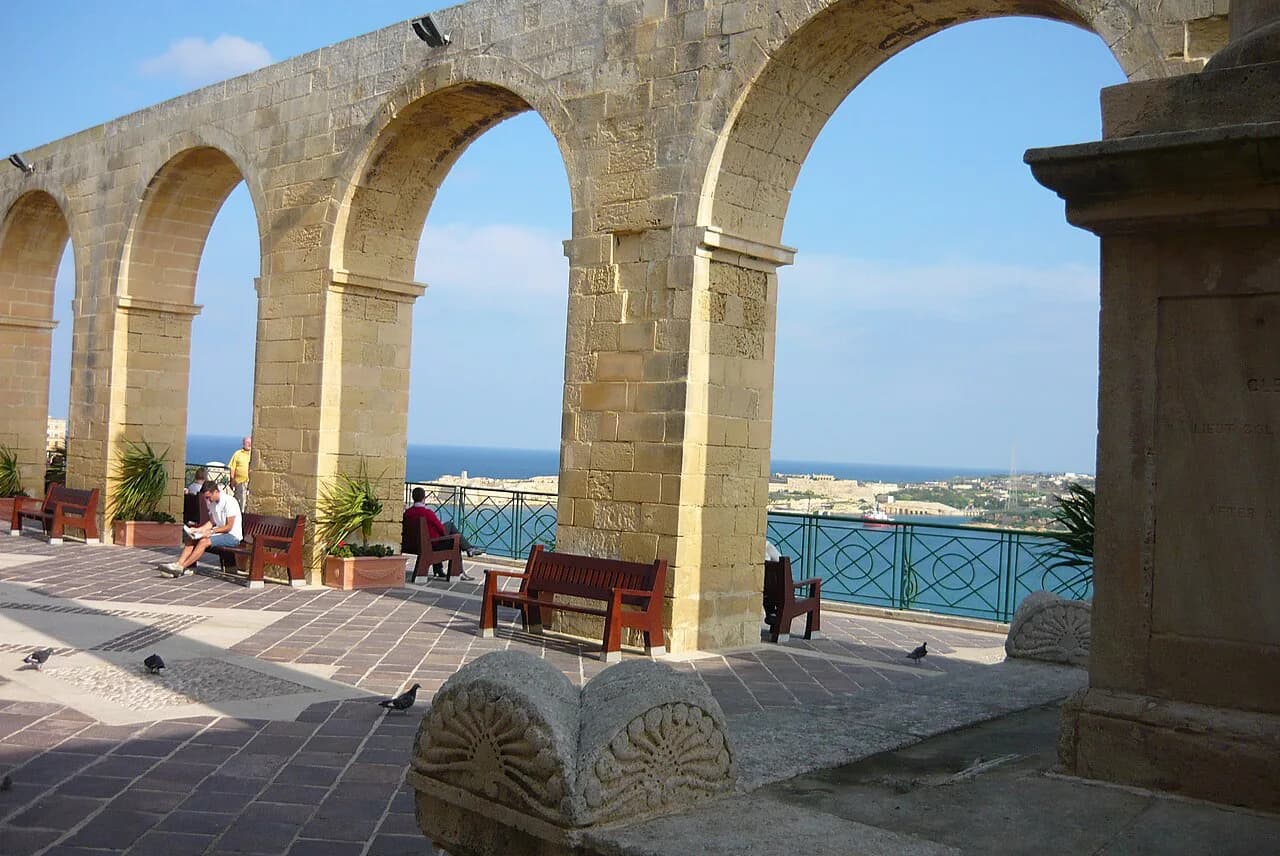
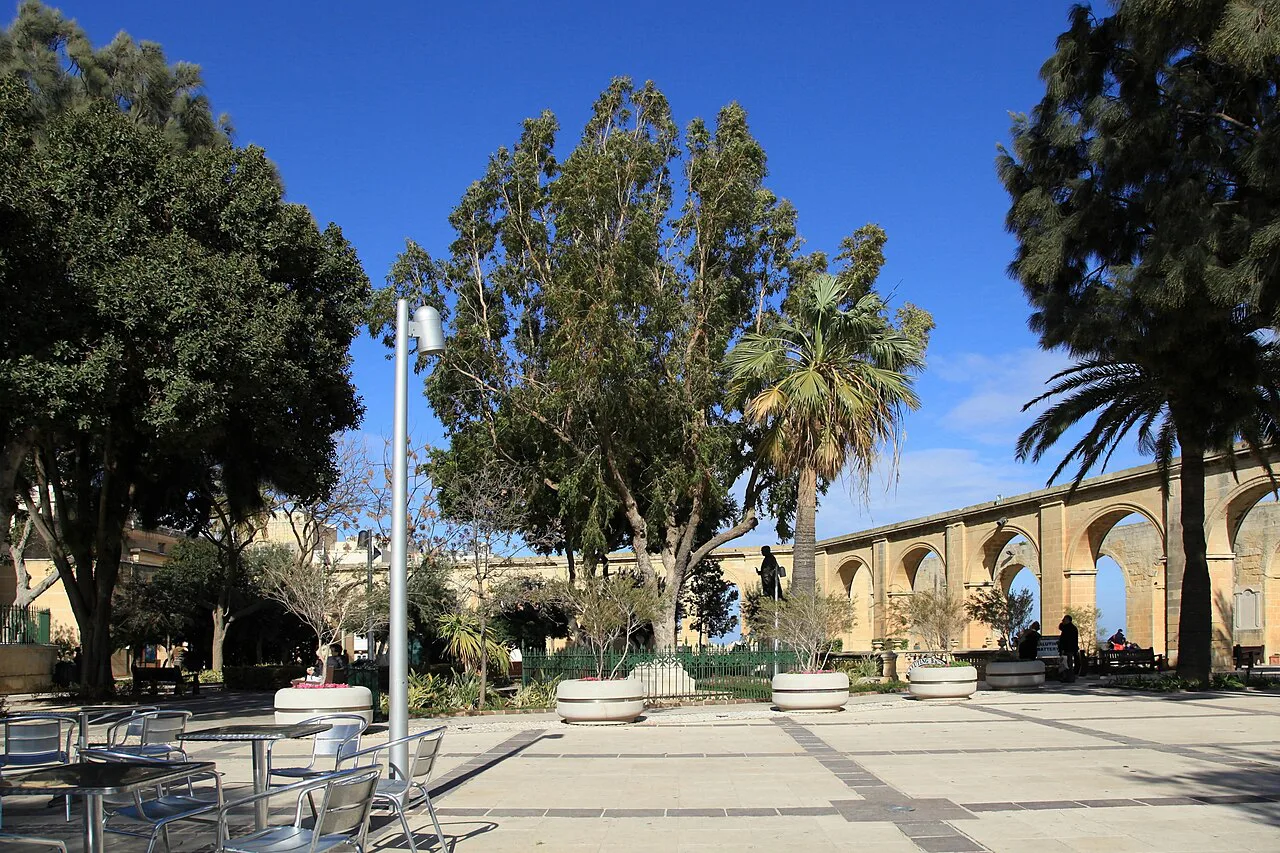
The Upper Barrakka Gardens are shady, give a grandstand view over the Grand Harbour, and have a gun battery that fires a salute twice daily.
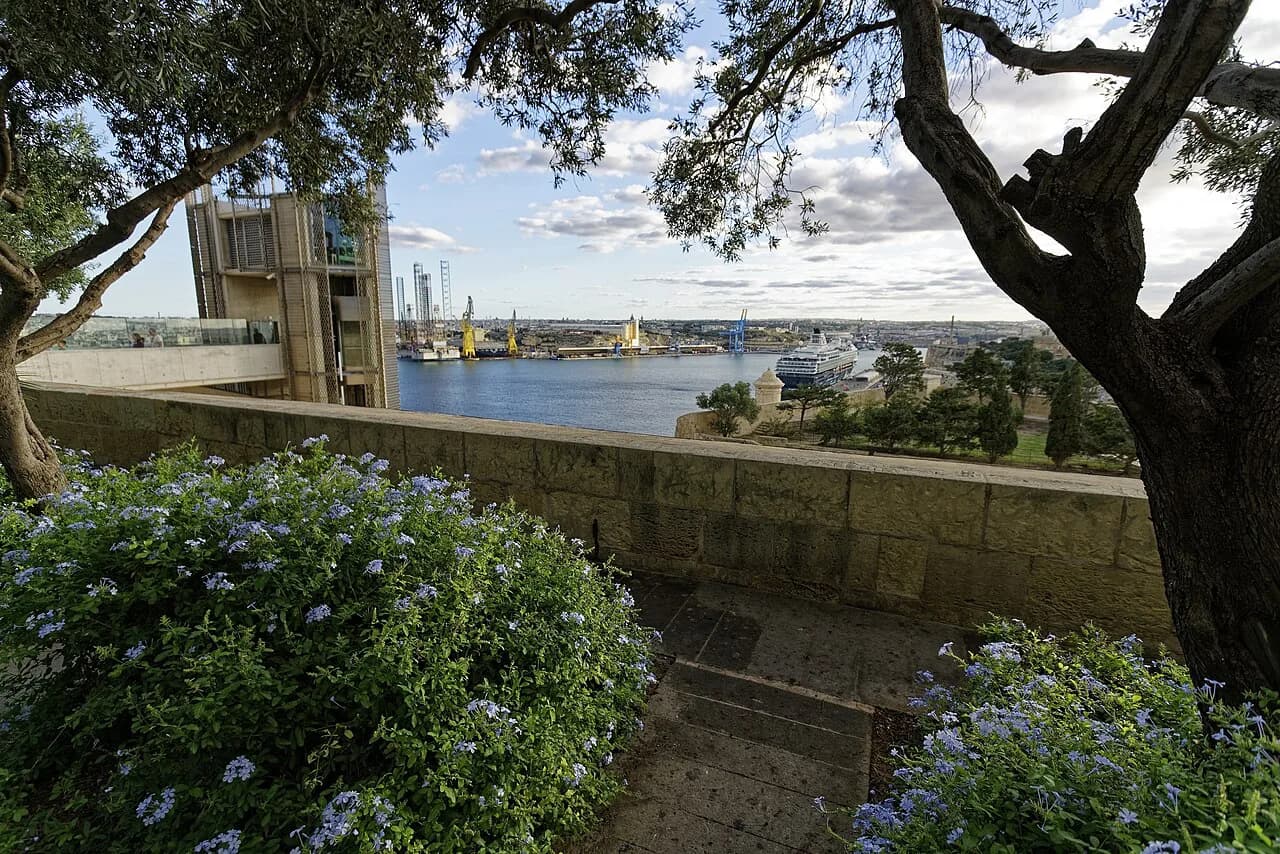
Walk downhill along the bastion to the Lower Barrakka Gardens for a second, quieter terrace and a different angle on the same harbour, which suits anyone who wants the view without the crowd around the battery.
The Saluting Battery is at the Upper Barrakka Gardens, where a gun battery fires a salute twice daily; watch from the free terrace above rather than paying for a separate experience.
The Siege Bell War Memorial and the Valletta Waterfront
The Siege Bell War Memorial, built in 1992, overlooks the Grand Harbour and commemorates those who died in the Second World War; the bell rings daily at noon.
From the memorial, the path down through the fortifications brings you out at the Valletta Waterfront, where the waterfront makes a free end to a Valletta morning.
Budget the walk down as a one-way decision: the climb back up in the heat is the trade-off, so many travellers take the descent slowly and return by the lifts or a bus rather than retracing the steps on foot.
St John's Co-Cathedral: the square is free, the interior is not
St John's Co-Cathedral is the obvious next stop from Republic Street, and the square outside costs nothing to linger in.
The interior is the part that holds the Baroque decoration and a Caravaggio painting, so treat it as a planned purchase rather than a wander-in.
If your budget only stretches to one paid interior in Valletta, it is worth deciding in advance which one matters most to you; St John's Co-Cathedral sits within a few minutes of the free gardens.
Churches and the Mediterranean Conference Centre
Valletta's churches are spread across the grid of streets, and several can be visited, with some free to enter, which makes them a good way to break up a walk without necessarily buying a ticket.
The Mediterranean Conference Centre occupies a 16th-century building that hosts cultural events and exhibitions, and it is worth checking what is on before you cross the city for it.
Church visits are a matter of covering shoulders and knees and keeping your voice down; dress for it and you will be comfortable inside.
Crossing the Grand Harbour to Birgu and the Three Cities
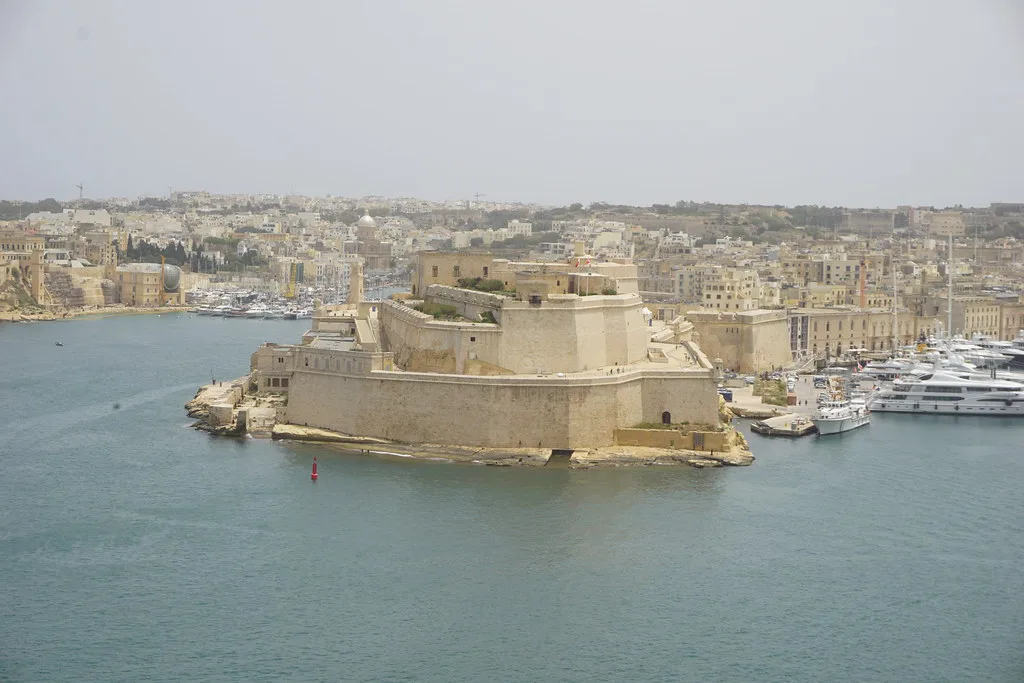
The Three Cities sit across the water from Valletta, and their peninsulas were the first base of the Knights of Malta, which makes them a free counterpoint to the capital's polished streets once you are across.
The harbour crossing itself is a cost to plan for, whether you take the ferry or a boat, and the rest of the visit is walking once you are across.
Once in Birgu (Vittoriosa), the waterfront, the lanes and the views back to Valletta cost nothing, and an hour of wandering covers the core.
The architecture is the draw here rather than any single interior, and the peninsula rewards anyone who walks to its outer edge for the view back across the water.
Mdina and Rabat: one walkable pair
Mdina, the walled medieval city, sits on a hill in the countryside and its streets are free to walk, which makes it a good-value half-day on the island.
The views from the bastions look over a wide stretch of countryside, and the gates and lanes give you the layout in twenty minutes before you slow down for the rest.
Rabat lies outside the walls and is worth adding to the same visit, with paid options such as the catacombs if the free streets leave you wanting more.
Do Mdina and Rabat as one trip rather than two, because splitting them costs you the transport twice and gains nothing.
Marsaxlokk on a Sunday
Marsaxlokk is a fishing village on the south coast, and Sunday is when the market fills the harbour and the painted luzzu boats bob in the water alongside it.
Walking the harbour, looking at the boats and eating a seafood lunch is the whole visit, and none of that needs a ticket; the spend is on food rather than entry.
Get there early if you want the market without the crowds, and check the bus or parking situation before you set out, because this is the one free stop on the list where transport can define the day.
Gozo: Victoria, the Citadella and village streets
Gozo can be visited in a day from Malta, and the historic Citadel at Victoria, the island's capital, is the centrepiece of any visit.
The Cittadella (Citadel) in Victoria can be walked on foot, and the views from its walls and the lanes inside make a free hour before you spend anything.
The ferry crossing is the cost you cannot avoid, and it is the reason a free day on Gozo is never truly free; price the crossing before you plan the rest of the day around it.
Village streets away from Victoria are the quieter free half of Gozo, and the island's smaller scale means an hour of walking covers more than you would expect.
Which free stops suit a short break and which need half a day
For a short break, group Valletta's free stops into one morning: City Gate, the Triton Fountain, Republic Street and the Upper and Lower Barrakka Gardens all sit within a manageable walk.
Mdina, Rabat, Birgu and Marsaxlokk each want at least half a day once transport is counted, and doubling up on two of them in one day leaves you rushing the best part of each.
Gozo needs a full day because of the crossing, even if you only walk Victoria and the Cittadella.
Where free stops turn expensive: transport, interiors and timed tickets
Transport is the main hidden cost: the harbour crossing to the Three Cities, the ferry to Gozo and buses to Mdina and Marsaxlokk can eat a day's budget before you pay for anything on arrival.
Paid interiors next to free sights are the second trap, because the square is free but St John's Co-Cathedral, the museums and the catacombs at Rabat all charge for entry.
Timed tickets matter most for the Ħal Saflieni Hypogeum, where pre-booking is advised to avoid disappointment, especially between early June and late September when Malta is busiest.
Guided walking tours are listed for Valletta, so check the operator's current arrangements before you set out.
What to check before you set out
Check the day's opening hours and any ticketed interior you plan to enter, because the free streets are always open but the buildings beside them are not.
The Changing of the Guards at St George's Square in Valletta is held periodically rather than daily, so confirm the current arrangement before building a morning around it.
Republic Street and the area around the Barrakka Gardens get very busy, and the gardens are the natural place to pause, so start earlier in the day if you want them quieter.
Which free day suits your trip
Pick one area per day and let the walking do the work: a Valletta morning, a half-day to Mdina and Rabat or Birgu, a Sunday at Marsaxlokk and a full day for Gozo. The trade-off is transport, so bundle free stops by proximity and pay for the ferry or bus once rather than criss-crossing the island.
Explore more Malta guides
Frequently Asked Questions
Are there free walking tours in Malta?
Guided walking tours are listed for Valletta, and free walking tours in the city typically ask for a tip at the end, which makes them cheap rather than free. Treat the tip as part of the cost and check the meeting point and time with the operator before you set out.
Is Malta walkable?
Valletta and Mdina are compact and easy on foot, with gates, squares and gardens within minutes of each other. Between towns you need a bus, ferry or car, so plan transport for the day rather than assuming you can walk between areas.
What can you do in Malta on a Sunday?
Marsaxlokk is the obvious free Sunday stop, with its market in full swing and the luzzu boats in the harbour. In Valletta, the streets, gardens and bastions are open whatever the day, while ticketed interiors such as St John's Co-Cathedral need checking for Sunday hours.
Sources
Notes for your Malta trip
Optional updates when we add or correct a Malta or Gozo guide.
You might also like
Continue reading
More guides you'll find useful