Għar Dalam Cave and Museum: What to See and How to Visit
Plan a visit to Għar Dalam near Birżebbuġa: what the cave and museum hold, how long it takes, opening hours, ticket prices in euros and how to get there.
On this page
Għar Dalam works best as a compact stop of about an hour rather than a half-day out: a small museum of Ice Age fossils, a short garden path, then a 144 m blind limestone cave that stays naturally cool. It sits outside Birżebbuġa in the east of Malta, which makes it an easy addition to a day heading towards Marsaxlokk. This guide sets out what you see in order, the published hours and ticket prices in euros, how to reach the site by bus or car, and who should give it a miss.
What Għar Dalam is
Għar Dalam means Cave of Darkness, and the site combines a limestone cave with a Victorian-style exhibition building and a garden of indigenous plants and trees. Excavations from the later 19th century uncovered animal bones along with human remains and artefacts, and the cave's stacked soil layers record both the island's animal life and its first human occupants. The whole property forms part of the Natura 2000 network of protected sites.
The address is in Birżebbuġa, on the east side of Malta, within easy reach of the south-east villages and harbour. If you are working through the island's prehistoric story, it slots in naturally alongside the Megalithic Temples of Malta, though it is a fossil and cave site rather than a temple.
What you see, in order
Your visit starts in the museum on the left, where displays run from the animals that lived on Malta during the Ice Age to the first people who settled the island. The clearest idea to take away is island dwarfism: with limited food, larger species evolved smaller bodies, which is why the cases hold bones of dwarf elephants and hippopotami.
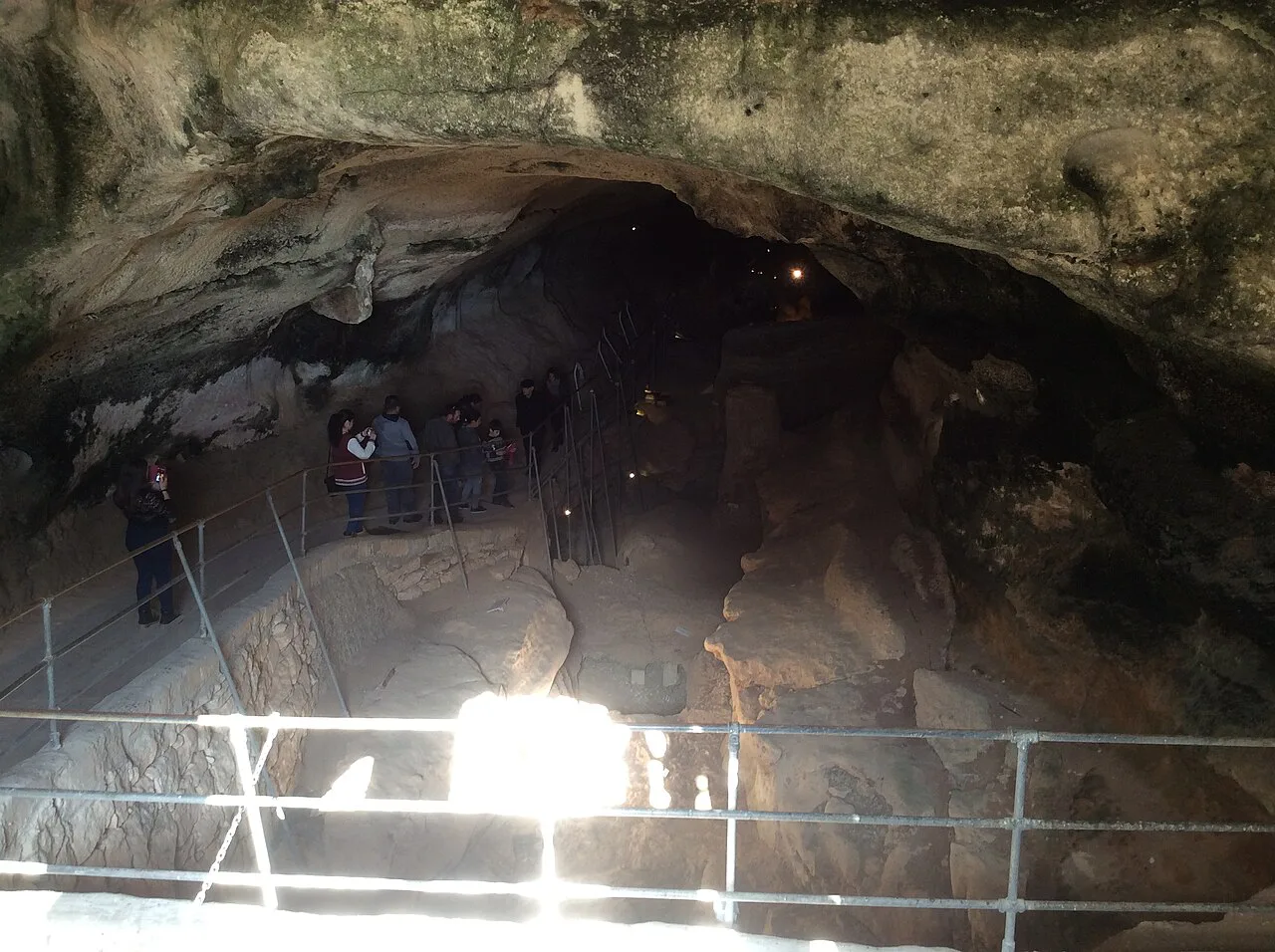
From the museum you continue through the garden, where steps lead down past signs explaining the plants and the surrounding landscape. The path ends at the cave entrance, so the sequence is fixed: museum first, garden second, cave last. Allow a little time on the garden section even on a short stop, since it carries much of the site's context.
The cave itself
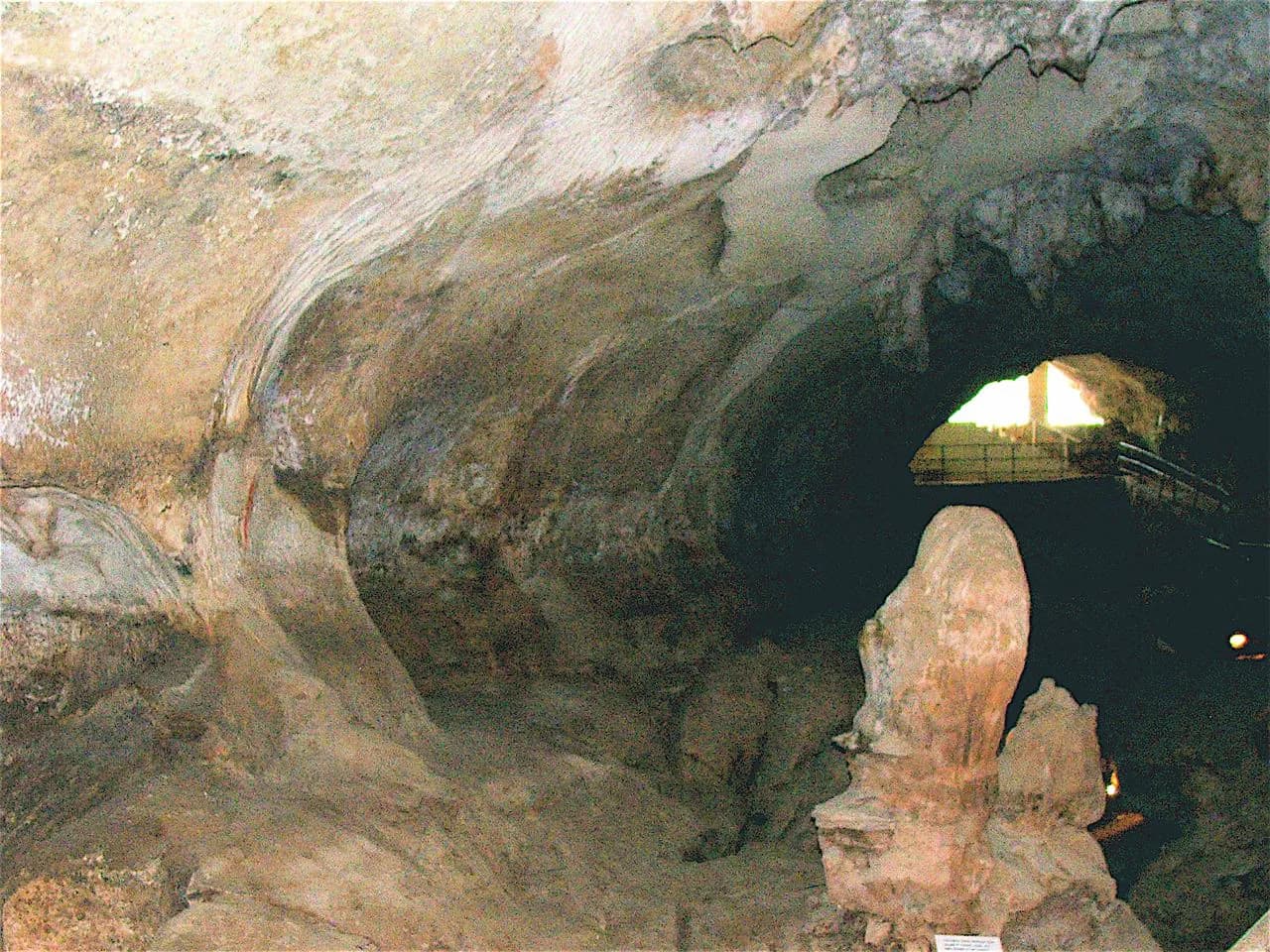
Inside, the cave is a narrow blind passage about 144 m long, and interpretation panels explain the six soil layers found there, each named after a species or a characteristic, from a bone-free clay layer through hippo and deer layers to the domestic layer left by the first people to shelter inside. Stalactites and stalagmites are visible along the route, and birds use the cave for nesting.
The fossils and the layers
The lowest layers, more than 500,000 years old, held fossil bones of dwarf elephants, hippopotami, micro-mammals and birds. Above a pebble band sits the deer layer, dated to roughly 18,000 years ago, and the top cultural layer is less than 10,000 years old and holds evidence of the first humans on the island. Reading the sequence from bottom to top is the point of the visit, so start with the museum cases before walking into the cave.
The earliest evidence of people in Malta
The top cultural layer produced the earliest evidence of human settlement on Malta, dated to some 7,400 years ago. That find gives the site its weight in any account of Malta's prehistory, and it pairs logically with the island's megalithic temples and with the underground burial complex at the Ħal Saflieni Hypogeum. If you are building a short prehistoric itinerary, put Għar Dalam first for the deep time and the temples after for the built monuments.
Opening hours and tickets
Published visitor information lists the museum as closed on Mondays, with doors open from 9am to 5pm on the days it operates. Adult admission is given as €6.50 and child admission €4.00, with a 50% reduction for holders of the Malta Discount Card. Hours and prices are the published rates rather than a guarantee, so confirm them at the ticket desk on the day you travel.
One listing prices a combined Għar Dalam and Borg in-Nadur ticket at €6.50 for adults, €5.00 for seniors, youths, students and concessions, €4 for children aged 6 to 11, and free for infants aged 1 to 5. That is a combo covering two sites, not a single-site ticket, so if you are already heading into the south-east, ask at the desk whether the combo is the structure on offer.
How to get there
By car, a parking area sits right beside the museum. By public transport, the bus stop is next to the site and several routes call there, so you can plan the journey on the island's bus network and step off almost at the entrance. That convenience is why the site suits a stop squeezed between Marsaxlokk and the rest of the south-east rather than a dedicated trip.
How long to allow and when to go
The site is small: a modest museum, a short garden path and a narrow cave, so most visitors will be through it well inside an hour and a half. The cave stays naturally cool, which makes it a sensible midday stop when the heat outside is at its worst, and a welcome contrast to open temple sites such as Ħaġar Qim and Mnajdra. Build it into the middle of a south-east day rather than at either end.
Who should skip it
Skip Għar Dalam if you want a landmark on a Grand scale or a full afternoon out. The museum is small, the cave is narrow and blind, and the pleasure lies in the fossil cases and the layered stratigraphy rather than spectacle. Travellers with limited time in Malta are usually better served spending it at the temples or in Valletta.
Nearby prehistoric sites to pair with it
The obvious pairing is the temple group: Ħaġar Qim and Mnajdra sit on the south coast, and Tarxien temples lie closer to the harbour side, so a fossil-and-temple day is easy to arrange by car. If your interest is burial and underground architecture rather than fossils, the Hypogeum at Raħal Ġdid is the comparable site, and tickets for it need booking well ahead.
Is Għar Dalam worth the stop?
Yes, if you are already in the south-east and want an hour of fossils, cool air and a clear story of how Malta's animals and first people left their traces in one cave. No, if you are short of time or expecting a large museum. Pair it with Marsaxlokk or the temples, check the day's hours and ticket price before setting out, and go at midday in summer when the cave's natural cool is most welcome.
Explore more Malta guides
Frequently Asked Questions
Can you find fossils in Malta?
The cave deposits at Għar Dalam held fossil bones of dwarf elephants, hippopotami, micro-mammals and birds in layers more than 500,000 years old, and the on-site museum displays them. Plan to look at the fossils in the cases rather than collecting anything on site.
What are the prehistoric remains found in Malta?
At Għar Dalam the remains run from Ice Age animal bones through a deer layer to a cultural layer holding evidence of the first human settlement on Malta, dated to some 7,400 years ago. Elsewhere on the islands the prehistoric record continues in the megalithic temple buildings and in the underground burials of the Ħal Saflieni Hypogeum.
Is Għar Dalam open every day?
Published visitor information lists the museum as closed on Mondays, with the site operating from 9am to 5pm on the other days it opens. Hours can vary, so confirm at the ticket desk on the day you travel.
Sources
Notes for your Malta trip
Optional updates when we add or correct a Malta or Gozo guide.
You might also like
Continue reading
More guides you'll find useful